
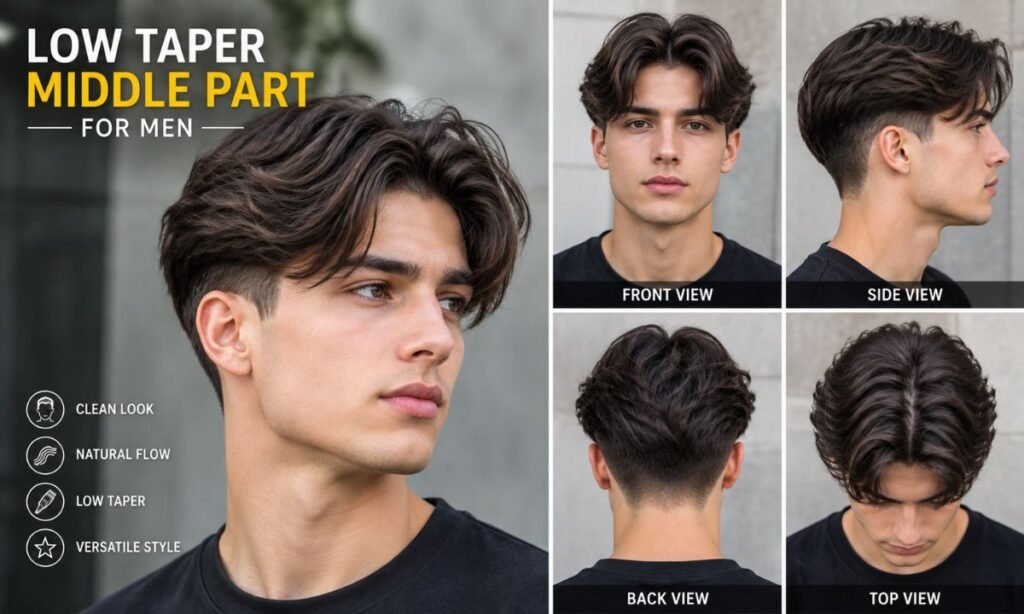

So you’ve seen it everywhere. On your favorite footballer, on TikTok, on that guy at the gym whose hair just works. The low taper fade middle part has quietly taken over as one of the most requested cuts of the year, and there’s a good reason for that.
It’s sharp without trying too hard. It’s low maintenance without looking lazy. And honestly? It suits way more guys than most trends do. Let’s break down exactly what this cut is, who it works for, and how to get it right the first time.Low Taper Middle Part for Men explained!
Whether you’re walking into a barbershop for the first time or you’re just tired of your current cut falling flat by noon, this guide covers everything. Cut types, face shapes, styling routines, product picks, even the questions people whisper into Google at 2am. Let’s get into it.
What is a low taper fade middle part haircut?

At its core, this cut pairs two things: a low taper fade on the sides and back, plus a center-parted top that splits your hair down the middle. Think of it as the calm cousin of the skin fade, minus the drama.
The fade stays close to the hairline, so there’s no harsh line jumping out at you. Up top, you get longer hair on top that falls naturally to either side, giving you that soft, effortless look guys are chasing right now.
What makes this combo click is balance. A fade alone can look plain. A middle part alone, without any fade underneath, can look messy or dated fast. Put them together and you get structure on the bottom and softness on top, which is basically the whole formula behind why this cut photographs so well.
The low taper fade, explained
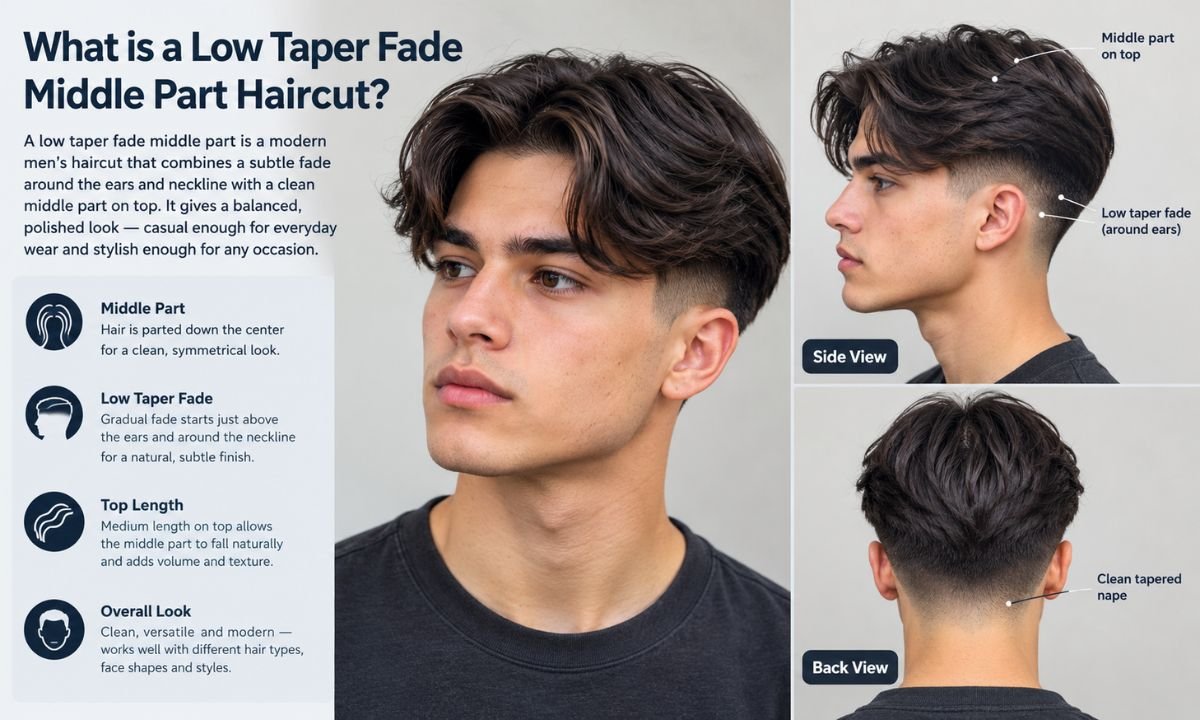
A taper fade haircut gradually shortens your hair as it moves down toward the neck and ears. A low fade specifically keeps that blending action close to the bottom, usually starting an inch or so above the ear.
Compare that to a mid taper fade or a high fade, where the fading starts much higher up the head. The low taper fade is subtler. It’s the version you’d pick if you want clean sides without looking like you just walked out of basic training.
The gradual blend is the whole point here. There’s no visible line where short hair meets long hair, just a smooth gradient that makes the cut look tailored rather than templated. Clippers usually run from a number 1 or 0 near the bottom up to a number 3 or 4 closer to the part line, though every barber has their own preferred sequence.
Why the middle part works with it
Here’s the thing about a middle part haircut: it needs length to actually hold its shape. That’s exactly what a low fade gives you, because it doesn’t eat into your length up top the way a high fade would.
The center part hairstyle also plays nicely with natural texture. Whether you’ve got straight hair, wavy hair, or curly hair, the part creates two even sections that fall and frame your face. It’s simple geometry, really, but it looks intentional every single time.
There’s a psychological piece too. A center part draws the eye vertically instead of horizontally, which subtly elongates your face. That’s a big reason it works for so many different face shapes, even ones that usually struggle with certain haircuts.
Why the low taper fade middle part is so popular
Let’s talk about why this cut blew up. Part of it is nostalgia. The curtain hairstyle from the late ’90s and early 2000s never fully died, it just got a modern haircut and came back sharper.
Part of it is practical too. Guys want a low-maintenance grooming routine that still looks put together. You’re not blow-drying for twenty minutes or fighting your hair every morning. A little product, a comb, done.
There’s also the versatility factor. This style transitions from the office to a night out without you touching it twice. It works with beards, without beards, with glasses, tall guys, short guys. Not many cuts check that many boxes at once.
And let’s be real, social media helped. Barbers post the transformation, the cut goes viral, and suddenly every second guy in your feed is asking for a long curtain style. Trends move fast, but this one has staying power because it’s genuinely flattering, not just photogenic.
There’s also a cultural shift happening in men’s grooming generally. Guys are more comfortable experimenting with texture and softness now than they were a decade ago, when everything trended toward buzzed sides and slicked backs. The low taper fade middle part fits that shift perfectly. It’s masculine, but it’s not rigid. It leaves room for a bit of personality.
Who does it suit best?
Almost anyone can pull off a version of this cut, but some combinations of face shape and hair texture make it look effortless right out of the gate.
By face shape
If you’ve got a round face, the middle part adds visual length by drawing the eye up and down instead of side to side. It breaks up the roundness in a way a full fringe never could.
An oval face is basically the jackpot here. Almost every version of this cut works, so you’ve got room to experiment with fade height and top length without worrying much.
For a square face, keep some softness in the fringe area. Sharp, blunt lines will only emphasize your jaw more than you probably want. A slightly textured, choppy part softens that strong jawline instead of fighting it.
Got an oblong face? Avoid pushing the hair too flat. A bit of hair volume at the crown balances out the length of your face nicely, and it stops the cut from making your face look even longer than it already is.
Guys with a diamond shaped face, wider through the cheekbones and narrower at the forehead and jaw, tend to do well with a mid length top and a slightly rounded part rather than a razor sharp one. It softens the angles a bit.
By hair texture
Straight hair holds a clean, defined part with almost no effort, but it can go a little flat by midday. A light texturizing spray fixes that fast, adding grip without weighing things down.
Wavy hair genuinely might be the best texture for this cut. You get natural movement without trying, and the wavy middle part looks lived in rather than styled, which is exactly the vibe most guys are going for.
Curly hair needs a bit more patience. The curly middle part works beautifully, but you’ll want products that fight hair shrinkage and keep the curl pattern defined instead of frizzy. A curl cream or leave-in conditioner applied on damp hair makes a big difference here.
Thick hair holds shape well but can get bulky fast, so regular thinning during trims keeps it manageable. Fine hair, on the other hand, needs a bit of help from volumizing products since it tends to fall flat without support.
Types of low taper fade middle part styles

This isn’t one single cut, it’s a whole family of styles depending on length and texture choices. Here’s where it gets interesting.
- Textured middle part: choppy, piece-y ends for a more relaxed, undone finish
- Short middle part: keeps things tidy and closer to the head, great for first timers
- Long hair low taper fade: more drama on top, closer to that long curtain look
- Skin fade pairing: swap the low taper for a skin fade if you want more contrast between sides and top
- Neckline taper finish: a soft, rounded neckline instead of a sharp line for a more natural fade around ears and neck
- Curly crop with low fade: shorter on top with defined curls, paired with the same low blend on the sides
- Wolf cut hybrid: layered, shaggier top combined with the low fade for a shag-meets-fade look that’s trending hard right now
Each version pulls from the same base idea but shifts the ratio of length to fade. Talk through these options with your barber before you sit in the chair, not after the clippers are already out. Bringing two or three reference photos actually helps more than one, since it shows your barber the range you’re comfortable with.
How it compares to other fades
So how does the low taper fade stack up against everything else out there? It really comes down to contrast and commitment level.
A high fade gives you way more contrast between the sides and top, and it needs more frequent trims to stay sharp. The low fade is the opposite story, it grows out slower and looks decent even a few weeks past due.
A skin fade takes things down to bare skin near the hairline, which reads bolder and more aggressive. The taper version keeps a touch of length throughout, so it’s softer and honestly more forgiving if your barber has an off day.
Compared to a mid taper fade, the low version sits closer to the classic side. If you work somewhere with a conservative dress code, this is usually the safer, more professional pick.
There’s also the burst fade and drop fade to consider, both of which curve around the ear rather than running in a straight line. They’re flashier and pair better with shorter top lengths, so they don’t suit the middle part quite as naturally. If subtlety and low upkeep are your priorities, the low taper wins on both counts.
How to ask your barber for it
Communication makes or breaks this haircut. Walk in and say “low fade” alone, and you might end up with something completely different than you pictured.
Bring a photo. Seriously, just do it. Say something like “low taper fade, keep the fade around ears subtle, and leave enough length on top for a center-parted top.” That single sentence covers almost everything your barber needs to know.
A proper barber consultation should also cover your hair texture, your face shape, and how much hair regrowth happens between your visits. A good barber will actually ask you these questions before touching the clippers.
It also helps to mention your lifestyle. If you swim regularly, work outdoors, or wear a helmet for your commute, say so. These details change how a barber approaches length and product recommendations, and skipping them is how you end up with a great looking cut that’s impossible to maintain day to day.
How much length you need on top
This is where guys mess up the most. Too short, and you can’t get a proper part or any natural movement. Too long, and it gets heavy and starts flopping instead of falling.
Aim for somewhere between three and five inches on top, depending on your texture. Curly hair and wavy hair can handle slightly shorter lengths because the texture itself does some of the styling work for you.
If you’re unsure, tell your barber you’d rather they take less off. You can always go back for more length removed. You can’t glue hair back on.
How to style it at home
Getting the cut right is half the battle. Styling it yourself every morning is the other half, and honestly, it’s easier than you’d think once you’ve got the routine down.
Start on damp hair, not soaking wet. Towel dry first so the product doesn’t slide right off and pool at your roots instead of coating your strands evenly.
- Apply a lightweight cream or matte clay for a matte finish that doesn’t look greasy
- Comb your part with a fine-tooth comb, working from the crown down
- Blow-dry on a low heat setting while brushing hair away from the part
- Finish with a small amount of pomade if you want extra hold without shine
For a more textured, undone look, skip the comb entirely and scrunch product through with your fingers instead. It gives that relaxed top vibe that’s so popular right now, without looking like you tried too hard.
Styling for different occasions
A gym day calls for almost nothing, just a bit of texturizing spray scrunched in before you head out the door. A work day benefits from a touch more structure, so a lightweight cream and a comb through gets you that professional finish without looking overworked. For a night out, a small amount of pomade adds shine and hold that survives a few hours out without needing a touch up.
Maintaining the cut
This cut is low effort day to day, but it’s not zero effort long term. You still need to show up for your appointments and take care of your hair between them.
Book regular trims every three to four weeks. That keeps the fade crisp and stops the top from growing past the point where it holds shape properly.
Wash your hair with a gentle shampoo two to three times a week. Overwashing strips your natural texture and makes styling products fight harder than they should.
Beyond washing and trims, consider a monthly deep conditioning treatment if you have curly or wavy hair, since the fade sides tend to stay easy but the longer top can dry out faster than you’d expect. A little extra moisture keeps the curl pattern healthy and reduces frizz.
Habits that trip people up
A few small mistakes ruin this haircut faster than anything else. First up, sleeping on wet hair. It messes with your part and creates weird kinks that take half your morning to fix.
Second, skipping trims because “it still looks fine.” The fade grows out unevenly, and by week six you’re basically wearing a mullet without realizing it.
Third, using too much product. More isn’t better here. A dime sized amount usually does the job. Piling on pomade just weighs your hair down and kills the professional finish you’re going for.
Fourth, ignoring sun and heat exposure. If you spend a lot of time outdoors, your top length can dry out and lose its natural shine. A leave-in conditioner or a lightweight oil helps protect against that without making your hair greasy.
Picking the version that fits you
At this point you’ve got the full picture, so how do you actually choose? Start with your lifestyle, not your Pinterest board.
If you’re active or in a fast paced job, go shorter on top and keep the fade simple. If you’ve got more time to style and want a statement look, lean into the long curtain version with extra length.
Think about upkeep too. Some guys love visiting the barber every three weeks. Others dread it. Be honest with yourself about which camp you’re in before committing to a style that demands more attention than you’re willing to give.
Cost and where to get it done
Pricing varies a lot depending on where you live and who’s holding the clippers. A basic low-maintenance haircut like this typically costs less than more intricate designs since there’s no hard part lines or shaved patterns involved.
A barbershop that specializes in fades will usually charge more than a walk in salon, but you’re paying for consistency. Ask around, check reviews, and look at a barber’s actual portfolio photos before booking, not just their follower count.
If you’re new to a shop, book a shorter appointment first. It gives you a low stakes way to test their skill before committing to something more dramatic like the long hair low taper fade version.
Common mistakes to avoid
Even a great cut can go sideways with the wrong choices afterward. Here’s what actually trips guys up most often with this style.
Choosing the wrong fade height for your face shape tops the list. What works on a square jaw might swallow up a narrower face completely.
Skipping the barber consultation is another big one. Guys sit down, say “just a trim,” and end up disappointed because nobody discussed what “trim” actually meant.
Lastly, ignoring your hair texture when picking products. A matte clay built for straight hair often does nothing useful for curly hair, and vice versa. Match the product to what’s actually growing out of your head.
Best products for this haircut
Getting the right products isn’t complicated, but it does make a visible difference. Here’s a quick rundown of what actually earns a spot in your routine.
- Texturizing spray: adds grip and volume to flat or fine hair before you even reach for a comb
- Lightweight cream: the everyday go to for a relaxed top with natural shine
- Matte clay: strong hold with zero shine, ideal for a bold matte finish look
- Pomade: best for special occasions where you want more shine and longer hold
- Leave-in conditioner: essential for curly hair and wavy hair to fight dryness and frizz
- Sea salt spray: great for building texture on straight hair that tends to fall flat
Skip anything with heavy wax or shine unless you’re specifically after a slicked look, since that tends to clash with the soft, natural finish this cut is known for.
How this cut transitions as your hair grows
One underrated thing about the low taper fade middle part is how gracefully it grows out. Since the fade sits low and the top already carries decent length, you don’t hit that awkward in-between stage most fades suffer from around week four or five.
As your hair grows, the part naturally gets a bit heavier and the fade softens slightly. Some guys actually prefer this stretched out look and push their trims closer to five weeks instead of four. It’s a personal call, but knowing the cut ages well gives you flexibility that other fades just don’t offer.
Frequently Asked Questions
Is mid taper fade good for the middle part?
Yes, it works well too. A mid taper fade gives slightly more contrast than the low version while still leaving enough length up top for a clean middle part styling result.
Why does Gen Z like middle parts?
It’s partly nostalgia for early 2000s style, and partly practicality. The center part hairstyle photographs well, suits most face shapes, and pairs easily with the low maintenance aesthetic this generation tends to prefer.
What is a 3 2 1 haircut?
It’s clipper guard shorthand, typically meaning a number 3 guard on top, a number 2 on the sides, and a number 1 near the neckline, creating a subtle gradient similar in spirit to a fade.
How often should you get a low taper fade trimmed?
Most guys need a trim every three to four weeks to keep the fade sharp. Waiting longer lets the neckline taper grow out unevenly and blur the clean lines you paid for.
Does a low taper fade work with curly hair?
Absolutely. The curly middle part actually looks great with this fade because the texture up top contrasts nicely with the tighter, cleaner sides.
What products should I use for a middle part haircut?
A texturizing spray for volume, a lightweight cream for everyday styling, and a matte clay or pomade for stronger hold when you need it to last all day.
Can I do a low taper fade at home?
The fade itself is tricky to do solo since blending takes real skill. Most guys handle daily styling at home but leave the actual taper fade haircut to a professional.
Is a low taper fade professional enough for work?
Yes, it’s one of the more workplace friendly fades out there. The subtle blend and clean sides read as polished rather than trendy, which makes it a safe pick for most offices.
How long does hair need to be for a middle part to work?
You generally need at least three inches on top. Anything shorter and the hair length on top won’t have enough weight to fall into a proper part.
How long does it take to grow out a middle part?
If you’re coming from a short cut, expect two to three months before you have enough hair length on top for a proper part to hold naturally.
Does a low taper fade suit thick hair?
Yes, though thick hair benefits from some thinning during your trim so the top doesn’t sit too bulky against the tighter sides.
What’s the difference between a taper and a fade?
A taper keeps some length throughout and blends gradually, while a fade typically goes down to skin at some point. The low taper fade sits right in between, offering a soft blend without going bare.
Is a low fade good for older men?
Definitely. Its subtlety makes it one of the more age flexible cuts around, working just as well on a fifty year old as it does on a college student.
Can I add a beard to this haircut?
Yes, and most guys find it balances the softness up top with a bit more structure below. Keep the beard fade blending into the same low line as your hair for a cohesive look.
How do I know if my barber did the fade correctly?
Check for a smooth gradient with no visible lines or patches. Run your hand from the neckline upward, if you feel sudden jumps in length rather than a gradual change, the blend wasn’t done right.
Final Thoughts
The low taper fade middle part earns its popularity honestly. It’s flattering across most face shapes, it works with nearly every hair texture, and it doesn’t demand a ridiculous styling routine to look sharp.
Bring a photo to your next barber consultation, be clear about your hair length on top, and stay consistent with regular trims. Do that, and you’ve got a cut that’ll carry you through 2026 without missing a beat.
