
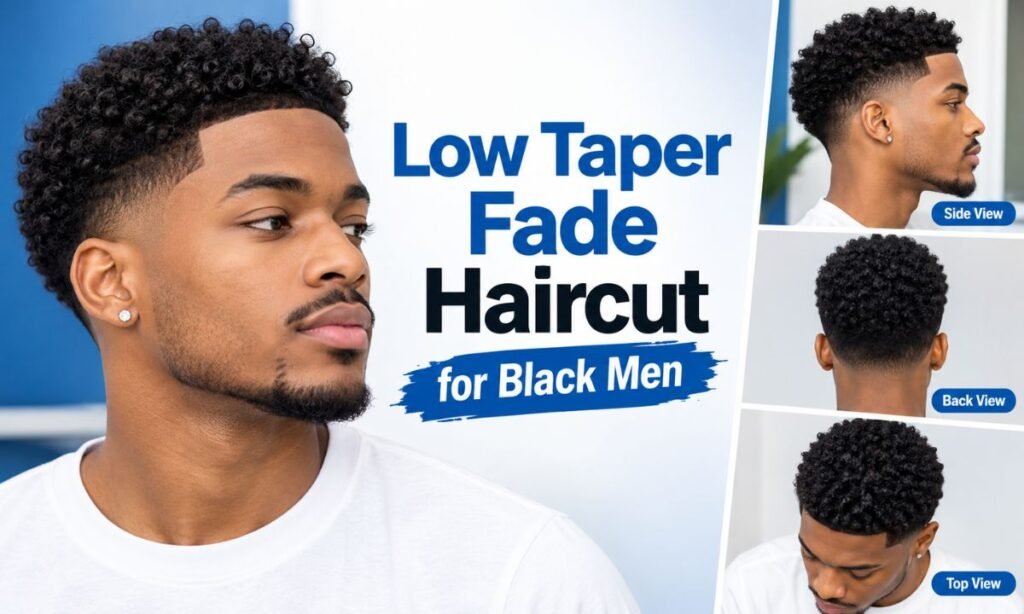
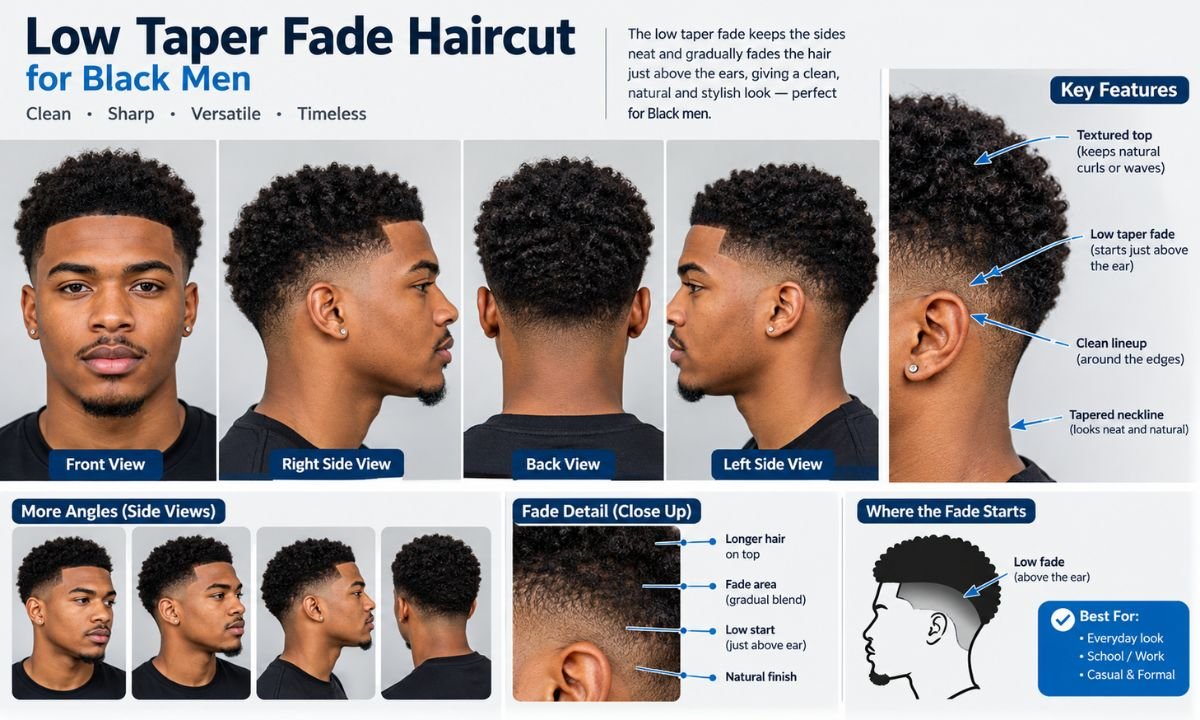
A low taper fade haircut for Black men keeps the hair on top full and gradually shortens the sides around the ears and the neckline. It looks clean, works with waves, curls, afro hair, twists, and locs, and needs a touch-up about every two to three weeks. If you want a sharp cut that still feels natural, this is the safest place to start.
Maybe you’ve sat in the chair and said “just a taper” and walked out with a cut you didn’t ask for. Most of us have. The word means different things to different barbers, and that gap causes a lot of bad haircuts.
So let’s fix that. I’ll walk you through what a low taper fade really is, which styles suit your hair texture, and how to explain it to your barber. You’ll also get a simple maintenance routine, product ideas, and the mistakes that wreck a fresh cut.
What is a low taper fade haircut?

A low taper fade is a tapered haircut that starts right at the hairline near the temples, sideburns, and the back of the neck. The hair gets shorter as it moves toward the skin, but only in a small area. Everything above that stays long and untouched.
Think of it as a quiet frame around your face. You see the clean taper fade at the edges, and the hair volume on top does the talking. That balance is why it looks professional without feeling stiff.
Most men get a natural taper fade with some length left at the bottom, often a soft fade that doesn’t reach bare skin. You can also ask for a skin fade or bald fade finish if you want it sharper. Either way, the fade height stays low.
How it differs from a regular fade
People mix up “taper” and “fade” all the time. A taper shortens the hair gently and usually leaves some length at the bottom. A fade goes much shorter, often down to the skin, and covers more of the sides.
So when you compare a low taper vs low fade, the taper feels softer and the fade feels sharper. A low fade also climbs a bit higher and shows more skin. If you’re asking about taper fade vs fade, think subtle versus bold.
Here’s a simple way to remember it. A taper is a gradual fade that stays close to the edges. A fade is a stronger drop that covers more ground. Many barbers combine them, which is why the low taper fade name exists in the first place.
Why a low taper fade works with Black hair textures

Black hair textures range from loose curls and wavy Black hair to tight coils and kinky hair. Each type behaves differently once it’s cut. A low taper handles all of them well because it protects your natural shape.
On coily hair, the contrast between the tight curl pattern on top and the clean edges looks stunning. On waves, the taper keeps the pattern easy to train. On natural Black hair in an afro, it adds shape without cutting into your hair length.
There’s also a practical reason. A low taper leaves enough hair around the sides to hide the awkward grow out stage. Your regrowth looks even instead of patchy. That’s a big deal for curly and coily textures, which grow outward instead of down.
It’s also kinder to your scalp. Very short cuts can irritate sensitive skin and cause razor bumps. A low taper haircut with a slightly longer guard length gives you the clean look with less risk.
Best low taper fade styles for Black men
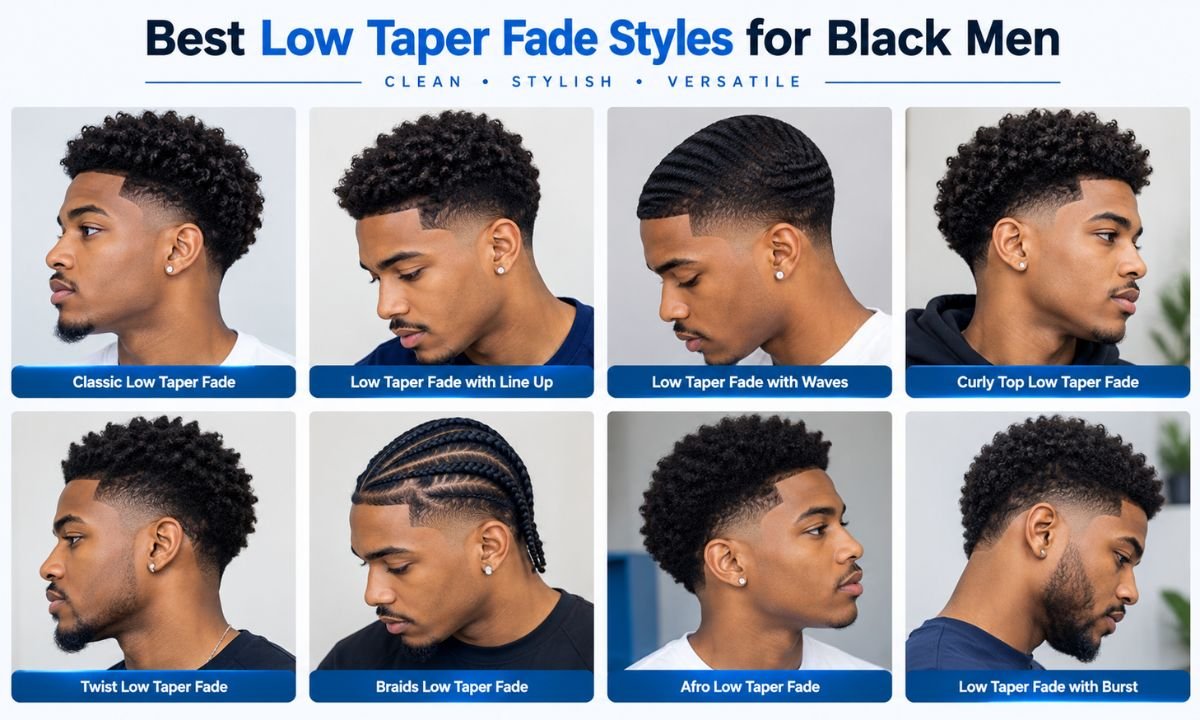
The low taper is a base, not a single style. What you do on top changes the whole feel. Pick the version that matches your hair pattern, your daily routine, and your comfort level with styling.
Below are seven options that work well for Black men’s taper fade lovers. Some are low effort, and some need a bit of love. Read through them and bookmark the one that fits.
Low taper fade with waves
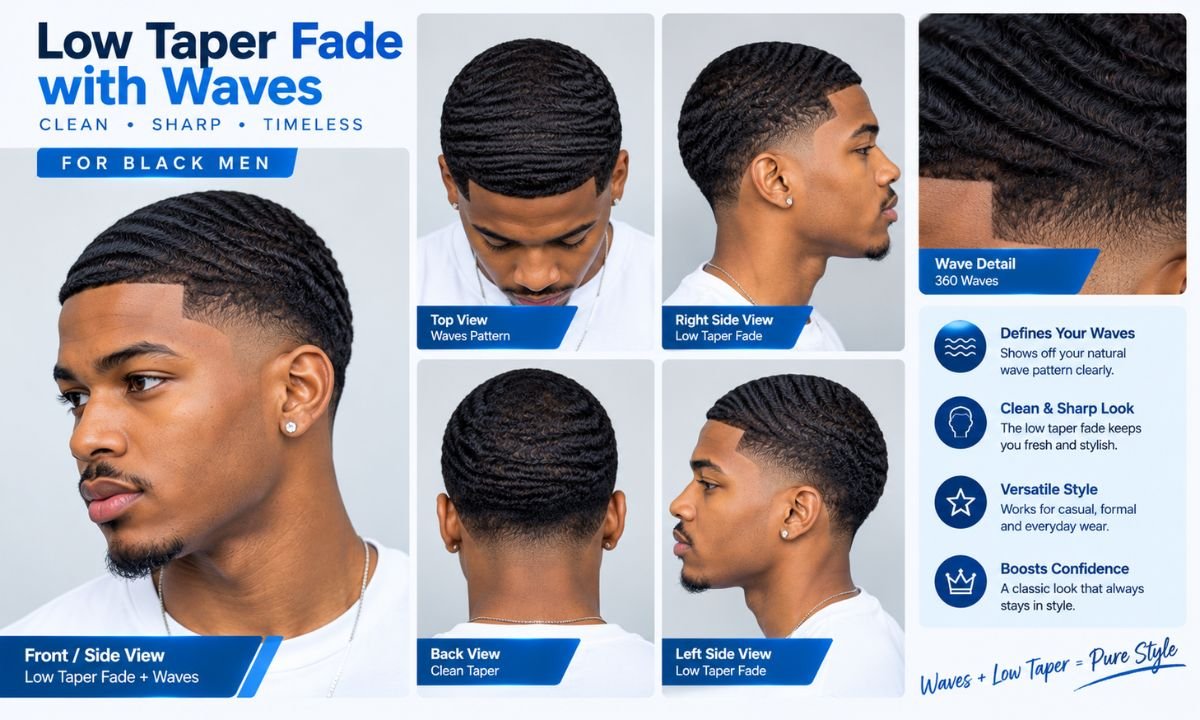
This is a classic. You keep a short, brushed top and let the waves ripple across it, while the taper cleans up the edges. It’s a favorite for men who love the 360 waves look.
You can also go for 180 waves, where the pattern runs mostly across the front and top. Both work with a low taper. The key is a consistent brushing routine and a wave cap or durag at night.
So, can you get waves with a low taper fade? Yes, absolutely. A low taper doesn’t cut into your wave pattern, so it supports wolfing and compression just fine. Just keep the wave brush moving every day.
Low taper fade with curls or an afro

If your hair is naturally curly, let it grow. A low taper fade with curls leaves two to four inches on top, so the curl pattern has room to show. It’s an easy, low-maintenance haircut once you find a good curl cream.
For a low taper fade afro, go longer and use an afro pick to lift the roots. A mini afro keeps things neat and compact. A rounded afro takes more height and suits those who like bold shapes.
The taper keeps the fuller afro from looking wild. It outlines the shape and sharpens the hairline. You get volume, and you also get polish.
Low taper fade with sponge curls, twists, or locs
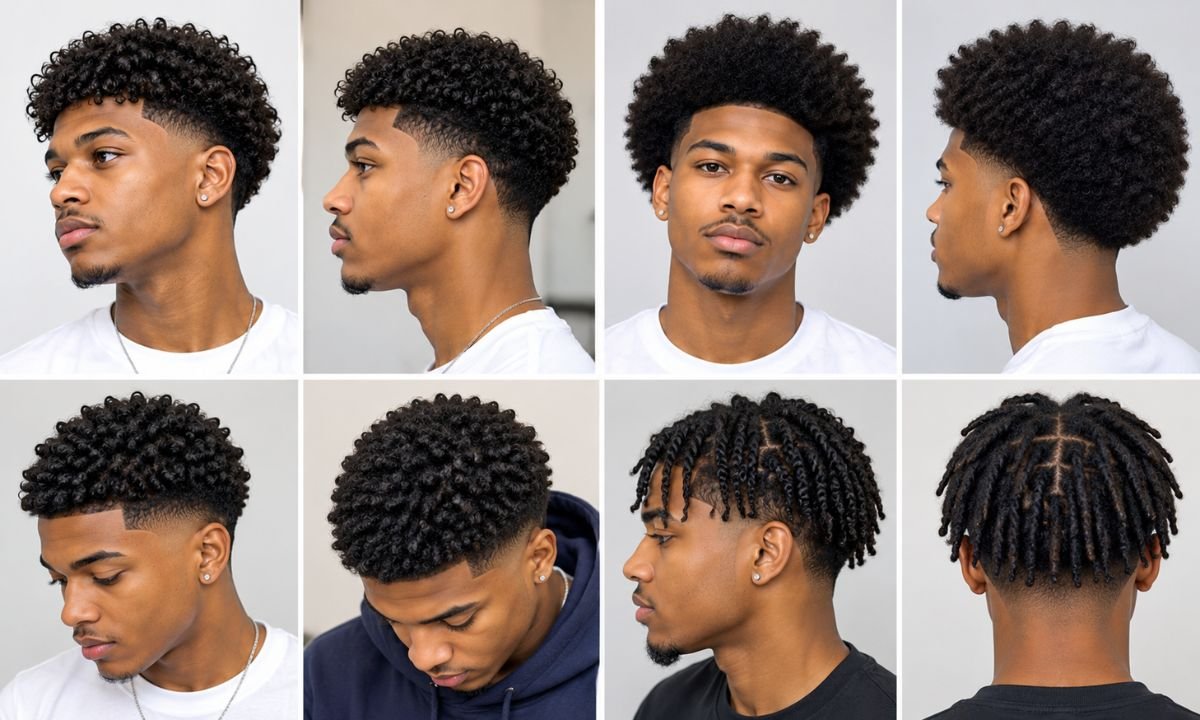
Sponge curls are all about texture. Your barber uses a small sponge to twist the hair into tight, even coils. Paired with a low taper, the result looks stylish and crisp.
Two-strand twists and comb twists work beautifully on top, too. A low taper fade with twists keeps the sides clean while the twists add personality. The same idea applies to locs and dreads.
A low taper fade with locs pulls the sides in so the locs stand out. It also makes your line-up pop. Use beard oil and leave-in conditioner to keep everything moisturized and neat.
Low taper fade with a buzz cut

Want something even lower in effort? Try a low taper fade buzz cut. The hair on top gets clipped short, and the taper blends smoothly into the sides. It’s simple, tidy, and great for hot weather.
A buzz cut also shows your hair growth pattern. If you have thin patches or a receding hairline, plan the guard size carefully. A slightly longer top often looks fuller.
This style works for school, work, or sport. It dries fast and needs only a quick wash. Moisturize your scalp after every shower to avoid dryness.
Low taper fade with a beard and line-up
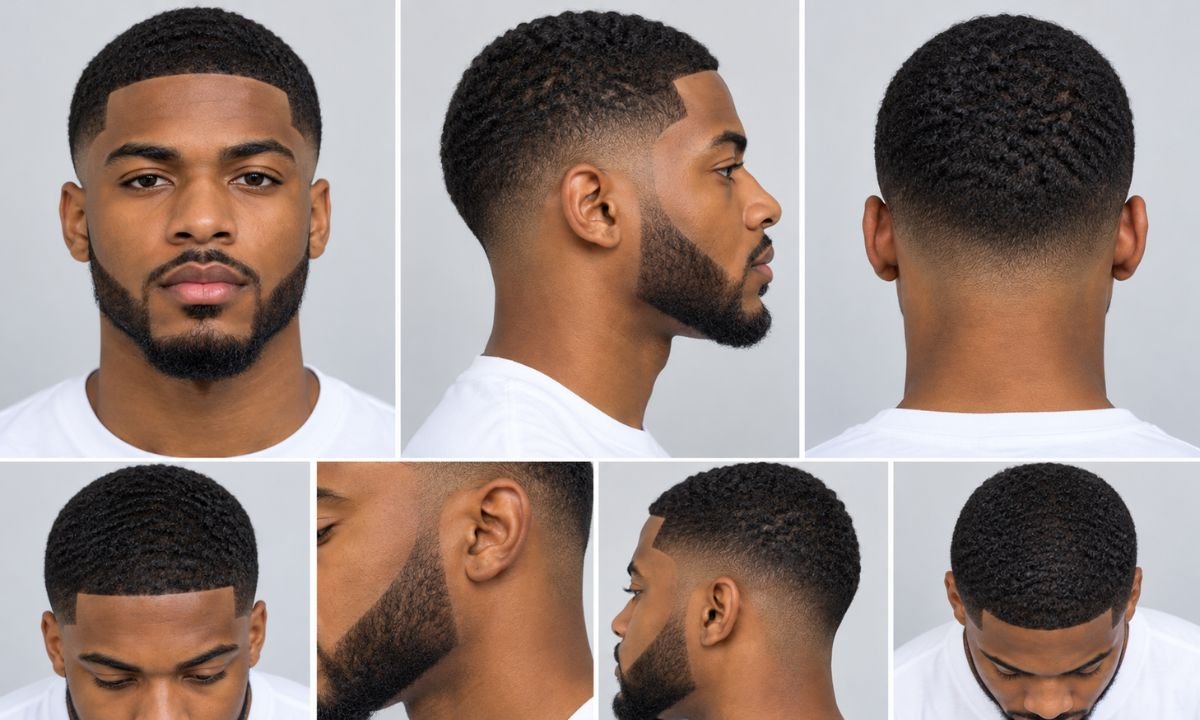
A low taper fade with beard is one of the most popular combinations. The taper flows into a beard blend at the sideburns, so you don’t see a harsh break. It makes the whole face look tied together.
Add a sharp line-up (also called an edge-up) and the look becomes extra crisp. The barber uses clippers or a trimmer to define the hairline and the temples. Does a low taper fade work with a beard? Yes, it works very well.
Keep the beard healthy with beard balm and a little oil. Brush it daily to stay on top of beard maintenance. Without that, even a great taper starts to look scruffy.
Low taper fade with a hair design

If you want something eye-catching, try a small design. This is a thin line or shape shaved into the side of the head. A low taper fade design works best with a clean, low base so the pattern stands out.
Keep it simple the first time. A single line or a small curve is easy to maintain. Complex patterns look fantastic, but they fade fast and need regular touch-ups.
Talk to your barber before the appointment. Show an example and ask whether your hair texture supports it. Good barbers will tell you what’s possible and what isn’t.
Low taper fade with a burst or drop finish

A low taper burst fade curves around the ear and fans out toward the back. It keeps more hair behind the head and shows off a rounded shape. It pairs well with coily haircuts and afro styles.
A low taper drop fade follows the curve of the skull and dips behind the ear. It adds a sleek, modern feel. Both options bring a bit of drama without climbing too high.
These styles need an experienced barber because the lines have to be clean. Check their portfolio before booking. A great burst or drop is all about precision.
Low taper vs mid taper vs high taper fade

Height is the big difference between these types of taper fades. The fade levels change how much hair gets removed and how bold the look feels. Pick based on your face, your job, and how much upkeep you want.
A low taper begins near the ear and neckline. A mid taper sits around the temples and covers more of the sides. A high taper climbs near the top of the head and shows the most skin.
Let’s compare them side by side.
| Feature | Low taper | Mid taper | High taper |
| Starting point | Near ears and nape | Around the temples | Near the top of the head |
| Look | Subtle and natural | Balanced and sharp | Bold and dramatic |
| Maintenance | Lowest | Moderate | Highest |
| Best for | Work, school, grow outs | Everyday style | Strong contrast looks |
When people ask about low taper vs mid taper, the answer comes down to boldness. The mid taper looks sharper, while the low taper looks calmer. If you’re debating low taper vs high taper, the high version gives more drama and more upkeep.
A mid taper fade shows more of the sides, so it needs touch-ups sooner. A high taper fade and a high fade look striking, but they lose shape quickly. A mid fade sits between the two.
If you’re unsure, start low. It’s easy to go higher next visit, and you can’t add hair back. That one rule saves a lot of regret.
How to choose the right low taper fade for your face shape

Your face shape influences how the haircut sits. A good cut balances your facial proportions and highlights your best features. You don’t need to be perfect, but a few small tweaks help a lot.
Think about height on top, hair volume, and the shape of the top. These three elements change how the face looks. Let’s go through the common types.
For a round face, add height and keep the sides clean. A low taper fade for round face with extra length on top creates a longer look. Avoid a very wide, flat top.
For a square face, soften the edges. A rounded top and a gentle taper balance the strong jawline. A low taper fade for square face with textured curls looks great.
For an oval face, almost anything works. You have balanced facial structure, so choose whichever style you like. Waves, twists, and afros all suit this shape.
For a long face, keep the top shorter. Too much height makes the face look longer. A shorter top with a low taper and a bit of fuller sides keeps balanced proportions.
What to ask your barber for a low taper fade

Communication is everything. A barber can only cut what you describe, so clear words matter. Don’t just say “give me a taper” and hope for the best.
Instead, give three details: the fade height, the guard length, and the finish at the bottom. Add a reference photo on top. That combination makes the result predictable.
This section shows you exactly how to explain a low taper fade to a barber. Use it as a script next time you sit down.
Guard lengths and fade height

Start with the fade height. Say “low”, and point to just above your ear. Tell your barber the taper should stay around the ears and the back of the neckline, and not climb to the temples.
Next, choose the guard. For a soft fade, many barbers start with a number two or three on the clippers and blend down. For a tighter finish, they may go to a number one or a skin fade at the very bottom.
So, what guard is used for a low taper fade? There isn’t one fixed answer, since each barber blends differently. Still, a number one or two at the shortest point is common, with the guard going up as the taper rises.
Also mention the neckline. A tapered neckline blends softly and grows out well. A blocked neckline looks sharp at first but gets messy quickly.
If you want temple taper or sideburn taper details, say so. These small areas change the look a lot. A short note saves a lot of guesswork.
Why a reference photo helps
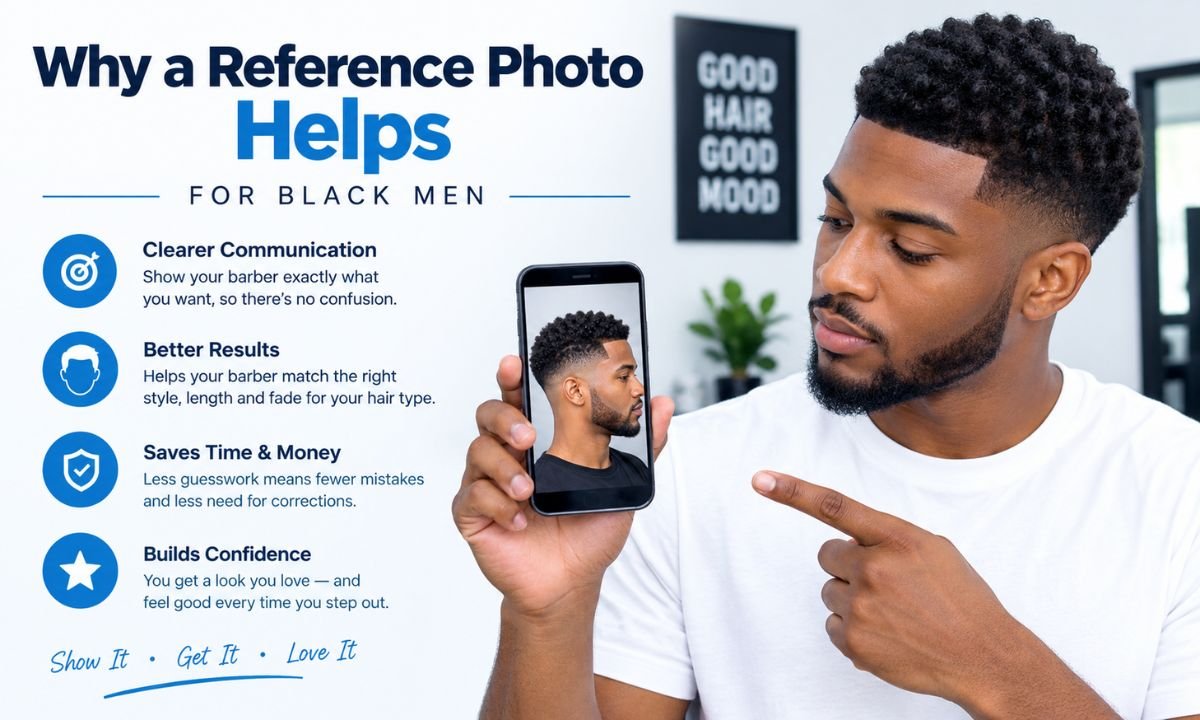
Words are slippery. What you picture as “low” might look “mid” to someone else. A reference photo removes that confusion.
Pick a photo of someone with a similar hair texture and curl pattern. A cut that looks great on loose curls may look different on tight coils. Show two or three angles if you can.
Also tell your barber what you like and don’t like in the photo. Maybe you love the hairline but want a softer top. That kind of detail is gold.
A bad photo can lead you to a wrong reference and a cut you regret. Choose carefully, and ask your barber what’s realistic. A quick chat before the clippers start makes everything smoother.
How to maintain a low taper fade
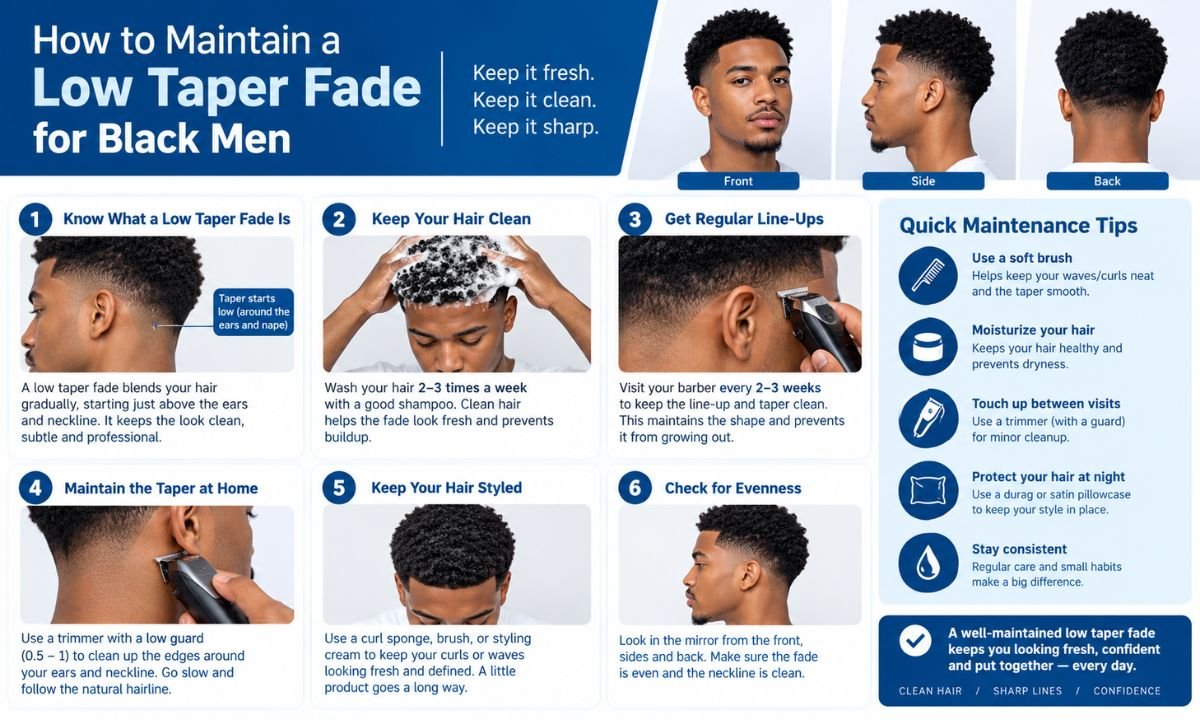
Low taper fade maintenance isn’t hard, but it does need rhythm. The edges grow back quickly, and the shape blurs. A bit of grooming every day keeps the cut looking sharp.
Is a low taper fade low maintenance? Compared with higher fades, yes. It forgives delays better because the sides are not shaved so short. Still, you can’t ignore it forever.
Let’s split the routine into timing, daily habits, and hairline care.
How often to get a touch-up

Most men do well with a touch-up every two to three weeks. If you wear a skin fade or a sharp line-up, aim for every two weeks. A softer low taper can stretch to four.
So, how often should you get a low taper fade? Three weeks is a good middle point. That’s long enough to save money and short enough to keep the shape.
Curly and coily hair grow outward, so the taper loses definition sooner than you think. Book your next barber appointment before you leave the shop. That keeps your haircut schedule consistent.
How long does a low taper fade last? A fresh cut looks best for about seven to ten days. After that, you’ll notice the edges softening. By week three, it needs attention.
Daily and weekly routine
Your daily hair routine should be simple. Moisturize your scalp and hair with a light moisturizer or leave-in conditioner. Then brush or shape your hair based on your style.
If you have waves, brush for a few minutes each morning and night. Use a soft wave brush, then tie a durag or wave cap. This helps with protecting waves and keeping them in place.
For curls and coils, use a curl cream or defining gel to control frizz. Fluff the top with an afro pick if you want more volume. Always handle your hair gently.
Your weekly hair routine needs a bit more care. Wash with shampoo once or twice a week, and follow with conditioner. Add a deep conditioning treatment if your hair feels dry.
Hydration matters, too. Drink water, and keep your scalp moisturized. Healthy hair shapes better and holds a taper longer.
Keeping the hairline fresh
The hairline frames the whole cut. When it softens, the haircut looks older than it is. A little daily care slows that down.
Use a small trimmer to clean stray hairs around the edges between visits. Go slowly, and don’t try to redraw the line. Over-trimming can push your hairline back.
For hairline maintenance and keeping a hairline sharp, remember to moisturize the skin. Dry skin shows flakes and makes edges look rough. A bit of oil or balm helps.
If you have a beard, trim the cheek line lightly, too. Use beard oil to keep it soft. That small effort helps the beard blend stay smooth.
Best products for a low taper fade on Black hair

You don’t need a shelf full of products. A few good ones do most of the work. The right choice depends on your hair texture and style.
For waves, grab a pomade or wave grease in small amounts. Too much creates buildup and flakes. A light layer is enough.
For curls and coily hair, choose a creamy curl cream and a defining gel. Add a leave-in conditioner for hydration. These products reduce frizz and keep the curl pattern neat.
For afros, an afro pick and a moisturizing spray make a big difference. Use them to lift and shape the hair. Skip heavy greases that weigh down the curls.
For beards, use beard oil and beard balm. Oil softens the hair and the skin underneath. Balm gives light hold and controls flyaways.
Don’t forget a gentle shampoo and a rich conditioner. Harsh formulas dry out Black hair fast. Look for ingredients like shea butter, aloe, and glycerin.
Also try a satin durag or wave cap at night. It cuts friction and protects your style while you sleep. It’s a cheap upgrade with real results.
Common mistakes to avoid
Even a great cut can fall apart with a few simple errors. Most of these are easy to fix. Let’s walk through them.
First, don’t skip the consultation. Jumping into the cut without a plan leads to surprises. Spend two minutes explaining your idea.
Second, don’t ask for a fade that’s too high. A taper that climbs too far can make the face look narrow. Start low, and adjust over time.
Third, don’t over-trim at home. A quick pass with the clippers feels harmless, but it can ruin the blend. Leave the shaping to a pro, and only clean small stray hairs.
Fourth, don’t forget your scalp. Dry skin and dandruff show up fast on a short cut. Moisturize, and wash on a regular basis.
Fifth, don’t brush too hard. Aggressive brushing can break strands and irritate the skin. Use a soft brush and gentle strokes.
Sixth, don’t skip the durag. Sleeping without protection flattens waves and frizzes curls. A simple cap solves it.
Seventh, don’t use too much product. Heavy grease clogs pores and causes bumps. Use small amounts and build up slowly.
Finally, don’t wait too long between visits. A taper that grows out loses shape fast. Regular touch-ups keep everything looking fresh.
Low taper fade cost and appointment time

Prices vary a lot depending on your city and barbershop. A basic low taper fade haircut often costs between 20 and 50 US dollars in many places. Premium shops and big cities can charge more.
Extras add to the bill. A line-up or edge-up may cost an extra five to fifteen dollars. A beard blend, a hair design, or twists can add more. Always ask for the full price before you sit down.
So, how much does a low taper fade cost? Expect a range, and confirm with your barber. Tipping is common, usually 15 to 20 percent in the US, though customs differ by country.
How long does it take? A simple low taper takes about 30 minutes. A cut with a beard blend and line-up may need 45 minutes. Designs and twists can run longer.
Plan your visit around your schedule. Book a morning slot if you want a short wait. Weekends fill up fast, so reserve early.
Is a low taper fade good for work, school, and formal events?

Yes, in almost every case. The low taper fade is one of the most professional fade haircut options out there. It looks neat in an office, a classroom, and a wedding.
For school, it’s a safe choice. Most dress codes allow a taper, and the cut stays tidy through the week. A low taper fade good for school also needs little styling in the morning.
For work, keep the top short to medium and the edges clean. A tidy beard and sharp line-up add to the polished look. You’ll feel ready for meetings and interviews.
For formal events, go with a fresh cut a day or two before. That gives the edges time to settle but keeps them crisp. Add a bit of pomade or curl cream for shine and shape.
Of course, some workplaces have their own rules. Check your dress code if you’re unsure. Most conservative settings still welcome a low taper.
How to keep your low taper fade fresh between visits

You don’t need a barber chair to look sharp all the time. A few small habits stretch the life of your cut. They also save you money.
Brush or comb your hair daily, depending on your style. Shape the top and smooth the sides. This simple step keeps the fade looking even.
Wash your head on a regular schedule, but don’t overdo it. Too much washing strips natural oils and dries your scalp. Two washes a week is plenty for many men.
Wear a durag or wave cap every night. It protects your pattern and cuts friction. You’ll wake up with neater hair.
Check your neckline in a mirror every few days. If stray hairs appear, a quick tidy with a trimmer helps. Keep your hand light and your lines clean.
Finally, book your next visit early. A planned touch-up beats a panic cut. Your future self will thank you.
Frequently Asked Questions
Is a low taper fade good for Black hair?
Yes. It works with waves, curls, coils, afros, twists, and locs. The soft edges protect your natural shape and look neat.
Is a low taper fade low maintenance?
Compared with mid and high fades, yes. You can stretch visits to three or four weeks. Still, a daily routine keeps it looking its best.
How often should you get a low taper fade?
Every two to three weeks works for most men. Choose two weeks for a skin fade or line-up. A softer taper can last up to four.
What guard is used for a low taper fade?
It depends on your barber and your look. Many start with a number one or two at the shortest point and blend upward. Ask for a longer guard if you want a softer finish.
How do I explain a low taper fade to a barber?
Say the fade height is low, point to the ears and neckline, and name the guard length. Bring a reference photo, too. Mention the neckline and sideburns.
Can you get waves with a low taper fade?
Yes. A low taper leaves your wave pattern alone and cleans the edges. Brush often and sleep with a durag.
Does a low taper fade work with a beard?
Absolutely. Ask for a beard blend so the sideburns flow into the beard. It makes the face look balanced.
What is the difference between a low taper and a low fade?
A low taper leaves more hair and looks softer. A low fade goes shorter and often reaches skin. Both sit near the ears and neckline.
Is a low taper fade good for school?
Yes. It looks tidy, fits most dress codes, and needs little styling. It’s a safe pick for students.
Is a low taper fade professional?
Yes. It’s clean and subtle, which suits offices and interviews. Keep the top neat and the edges sharp.
How long does a low taper fade last?
It looks freshest for about a week. The shape stays decent for two to three weeks. After that, a touch-up is needed.
How much does a low taper fade cost?
Most shops charge about 20 to 50 US dollars, though prices vary by city. Extras like a line-up or beard blend cost more.
Which low taper fade is best for a round face?
Go for extra height on top and clean sides. That creates a longer look. Avoid a flat, wide top.
Final Thoughts
A low taper fade haircut for Black men gives you a clean look without losing your natural texture. It works with waves, curls, afros, twists, locs, and buzz cuts. It also fits work, school, and special events.
The secret is clear communication and steady upkeep. Bring a reference photo, name the fade height, and talk about guard length. Then build a simple routine with moisture, gentle brushing, and regular touch-ups.
Which style are you going to try first? Drop your thoughts in the comments, share this guide with a friend who needs a new cut, and tell us what your barber says. We’d love to hear how it turns out.
