

You want a haircut that looks sharp but doesn’t scream for attention. You also don’t want to walk out of the barbershop with a shape you never asked for. That’s exactly where a Low Burst Fade Taper comes in.
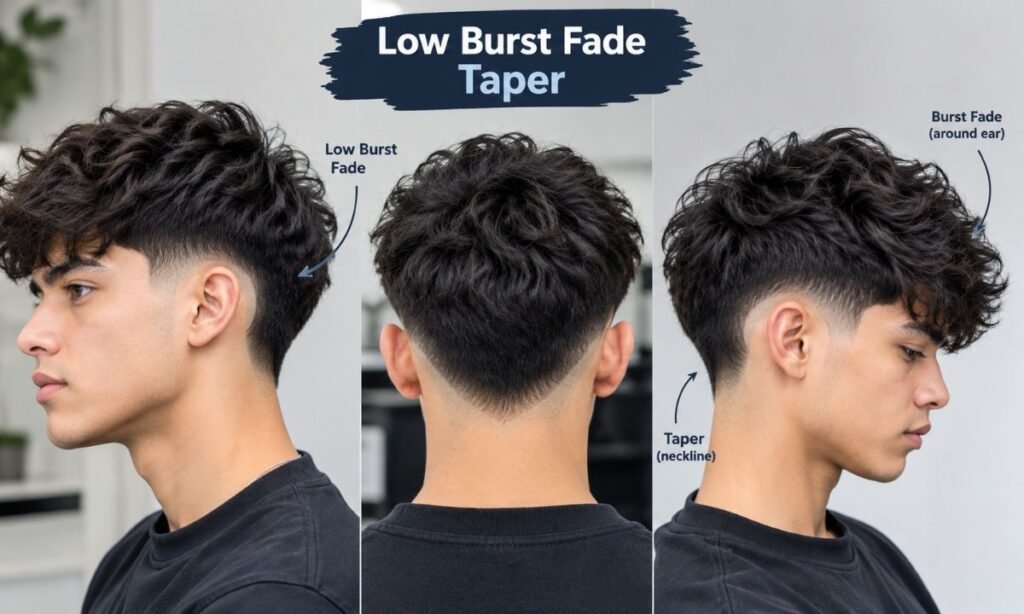
Here’s the short answer. A taper low burst fade blends a gradual taper on the sides with a curved burst that wraps around the ear. The fade starts low, stays close to the neckline, and leaves your top length untouched.So what does that mean for you? It means a clean taper fade that feels modern, wears well in most settings, and grows out without looking messy. This guide walks you through the shape, who it suits, how to ask for it, and how to keep it crisp.
What a Taper Low Burst Fade Is
Picture a half circle that sweeps around your ear. That’s the curved burst. Hair above that curve stays longer, and hair below it drops down fast through a gradual fade toward the skin or a short guard.
The “taper” part keeps things soft near the neckline and sideburns. Instead of a harsh line, the hair shortens in small steps. The “low” part means all of this happens near the bottom of your head, well below the temples.
Why do people love it? Because it gives you contrast without drama. The burst fade taper frames your ears, adds a rounded side profile, and lets your textured top do the talking. You get a modern taper fade that looks planned, not accidental.
Think of it like a spotlight. The curve around the ear pulls the eye toward the front of your face and your top. Everything else stays tidy and quiet. That balance explains why the low taper burst fade keeps showing up on barber boards.
Taper vs Low Fade vs Burst Fade

People mix these terms up all the time. Even some clients who’ve had the cut for years can’t explain the difference. Let’s fix that, because knowing the vocabulary helps you get the barber haircut you actually want.
Each of the three styles solves a different problem. One focuses on subtle shortening, one on placement, and one on shape. A taper low burst fade borrows a little from all of them.
| Style | Where it starts | Main look | Best for |
|---|---|---|---|
| Taper | Sideburns and neckline only | Soft, subtle | Conservative looks |
| Low fade | Just above the ear | Skin or short guard at the bottom | Clean, minimal shapes |
| Burst fade | Curves around the ear | Rounded, dramatic | Textured and longer tops |
Taper

A taper fade haircut shortens the hair slowly along the sideburns and nape. It doesn’t go down to skin in most cases. Think of it as a polite trim that makes everything look finished.
Barbers often call it the safest option. It works well if you want a clean neckline without a big visual change. Offices and classrooms rarely raise an eyebrow at a taper.
The downside? It doesn’t create much contrast. If you want a bold shape around the ears, a plain taper may feel too quiet.
Low Fade
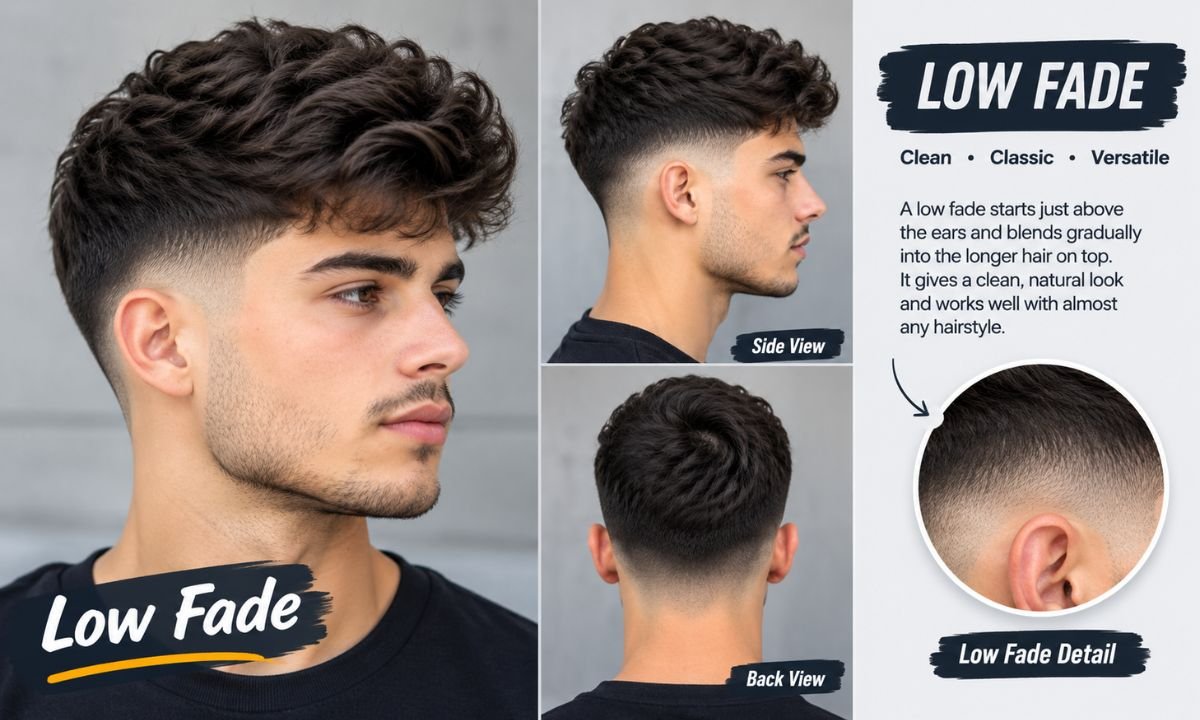
A low fade haircut starts just above the ear and drops to a short guard or skin near the bottom. It sits lower than a mid fade or high fade. That’s why people call it the “wearable” fade.
You’ll see the low fade taper pop up in barber menus too. It combines the low placement with a softer, tapered finish. The result looks neat but not severe.
Because the fade stays low, you keep more hair on the sides. That helps if you’ve got a rounder head or you don’t want the cut to look too stripped back.
Burst Fade

A burst fade haircut is all about the curve. The fade follows the shape of your ear and wraps toward the back of your head. Hair behind that curve can stay longer, which creates that unmistakable curved burst shape.
This style shines with curly hair, textured hair, and mullets. It gives you a built-in frame. When the top is wild, the burst keeps the sides intentional.
Here’s the catch. A burst fade can look rough if the barber blends it badly. You need a pro who understands fade blending and the curve around the ear.
Who a Taper Low Burst Fade Suits
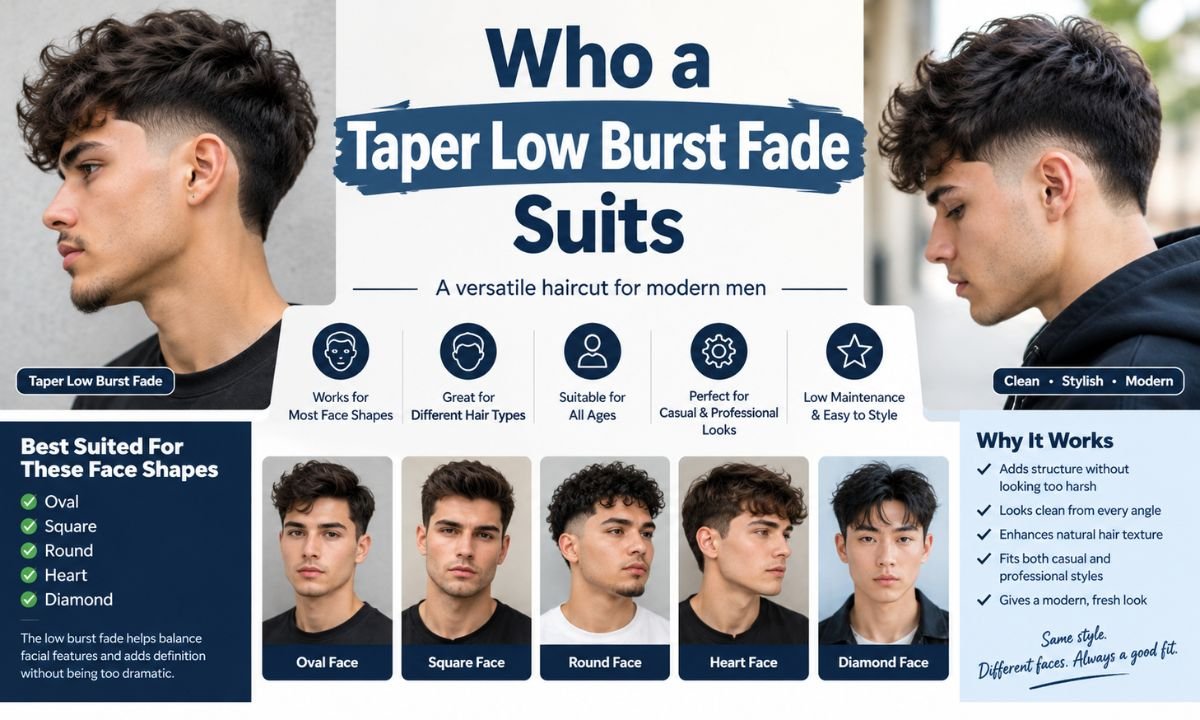
The good news is this cut isn’t picky. It works on most heads and most hair types. Still, a few details decide whether it looks great or just okay.
Think about two things before you book. First, your face shape. Second, your hair texture. Both change how the curve sits and how the top falls.
Face Shapes
Face shape matters because the fade around the ear changes how wide your head looks. A low placement keeps things balanced for most people. Here’s how it plays out.
- Round face: Keep the top a bit taller and the sides tight. A low burst fade for round face shapes adds height and slims the look. Ask for a textured crop with some lift in front.
- Square face: The rounded side profile softens strong jaw angles. A forward fringe or textured fringe works nicely here.
- Oval face: You’ve got the easiest ride. Almost any top length works, so pick based on lifestyle.
- Oblong face: Skip too much height. Keep the top shorter or fuller on the sides so the face doesn’t look longer.
- Heart face: A wider top balanced by a clean low fade helps even out a narrower chin.
None of these are strict rules. They’re starting points. A good barber will adjust the curve based on your temples, crown, and ear position.
Hair Types
This cut handles every texture, which is a big reason it’s so popular. The trick is matching the top to your natural pattern. Fighting your hair rarely ends well.
Straight hair gives you a crisp, sleek shape. A low burst fade for straight hair looks best with a textured top using texture powder or matte clay. Without product, fine strands can fall flat.
Wavy hair gets lovely movement. The burst frames the waves and keeps them from looking bulky. A low burst fade for wavy hair pairs well with a slightly longer fringe.
Curly hair is where this style truly shines. A low burst fade taper for curly hair shows off natural curls while keeping the sides neat. Think curly top or long curls with a tight curve around the ear.
Coily hair and afro hair look incredible with a sharp crisp fade underneath. A low taper afro keeps the shape round and clean. And if you wear 360 waves, a 360 waves haircut with a low burst finish adds a polished border.
Fine hair needs a bit of strategy. Ask for a shorter hair length on top or add some texture so the cut doesn’t look thin. Volume products help a lot here.
Best Styles to Ask For
Once you know the base cut, you can pick the top. This is the fun part. The sides stay the same while the top changes your whole vibe.
Below are the options barbers request most often. Save a couple as reference haircut photos before you go in.
- Textured crop: A short textured top with a messy, forward finish. It’s easy to style and perfect for straight or wavy hair.
- Short top: Clean and low effort. Great for work or school.
- Curly top: Let your natural curls sit on top while the low taper on sides stays tight.
- Long curls: Keep length for movement. The burst adds structure so the curls don’t look shapeless.
- Burst fade mullet: The classic. Short sides, longer back, and a curved border around the ear. It’s bold but wearable.
- Low taper mullet: A softer take. The taper blends into the back so the length looks intentional.
- Burst fade mohawk: A burst fade mohawk gives you height down the middle with a rounded edge at the sides.
- Low taper mohawk: Less dramatic, more refined. It works well for office-friendly edgy looks.
- Forward fringe: Short bangs combed down. It’s a favorite with square face and round face shapes.
- Low burst fade with fringe: A textured fringe softens the forehead and balances the curved sides.
- Burst fade with beard: The fade blends into the sideburns and connects with your facial hair for a sharp, unified look.
Which one should you choose? Start with how much styling time you’ve got. If you’ve got five minutes, a textured crop wins. If you love experimenting, try the burst fade mullet.
How to Ask Your Barber for It
Walking in and saying “burst fade” isn’t always enough. Different barbers use different words, and a vague request can lead to a very different result. The fix is simple. Be specific and show proof.
A little prep makes the chair time smoother. It also gives your barber confidence, which usually leads to a cleaner barber consultation and a better cut.
A Script That Works
Here’s a script you can almost copy word for word. Adjust the guard numbers to your preference.
“Hey, I’d like a taper low burst fade. Start the fade low, around the ear, and curve it toward the back. Use a number one or a skin fade at the bottom, then blend up. Keep the neckline tapered, not blocked. Leave about three inches on top with some texture.”
That script covers shape, height, guard length, neckline, and top length. It’s the same information a barber haircut instructions card would hold. Your barber won’t need to guess.
If you aren’t sure about the numbers, say so. Try this: “I’m not sure about the guard. What would you suggest for my hair type?” Good barbers love that question.
What to Show
Photos beat words every time. Bring two or three barber reference photos from different angles. Front, side, and back are all useful.
Make sure the photo matches your hair texture. A straight-hair photo won’t translate perfectly to coily hair. If you can, find someone with a similar pattern and head shape.
Also point out what you don’t want. Say something like, “I don’t want the fade to go above my temples.” That small line can save you from a haircut you’ll regret for weeks.
Keeping a Taper Low Burst Fade Sharp
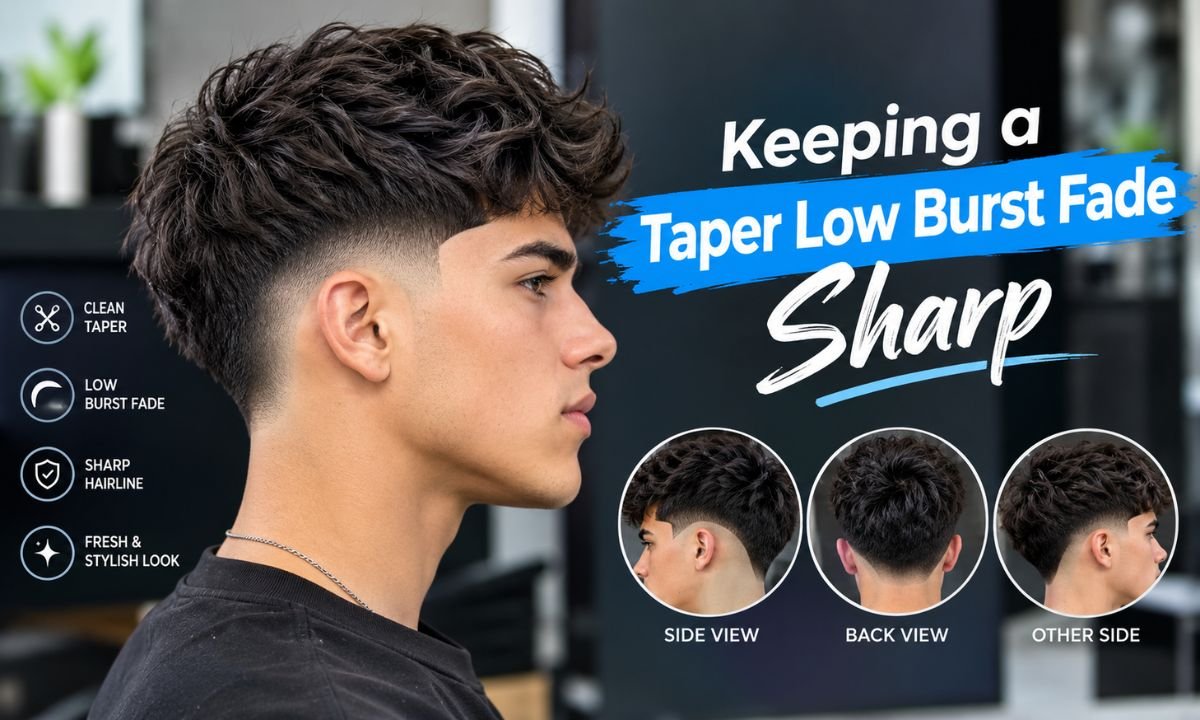
Here’s a truth most guides skip. This cut looks amazing on day one and a bit softer by week two. That’s normal. The short sides grow quickly, and the curved burst loses its edge first.
The upside is that maintenance isn’t hard. You just need a schedule and a few habits. Let’s break it down.
Touch-Up Timeline
Plan a fade touch-up every two to four weeks. If you like a skin fade, lean toward two weeks. If your fade starts with a longer guard, four weeks usually works.
Here’s a simple timeline you can follow.
| Week | What to expect | What to do |
|---|---|---|
| Week 1 | Crisp, clean, and symmetrical | Enjoy it and avoid scratching the neckline |
| Week 2 | Slight fuzz around the ears | Book a quick touch-up if you wear skin fades |
| Week 3 | Fade grow out begins | Tidy at home with a trimmer if you’re comfortable |
| Week 4 | The burst loses its shape | Time for a full barber visit |
If you can’t make it that often, ask for a quick edge-up only. Many barbers do a short haircut touch-up for less money.
Neckline and Sideburn Cleanup

The neckline and sideburns are the first spots that look messy. Even a perfect fade looks tired when the back is fuzzy. That’s why neckline cleanup matters so much.
Ask your barber for a neckline taper instead of a blocked edge. A tapered neckline grows out gracefully. A sharp square edge, on the other hand, looks off within days.
At home, use a small trimmer for light sideburn cleanup. Go slowly. Use a mirror and take small passes. If you aren’t sure, leave it for the barber.
Mistakes That Ruin the Cut
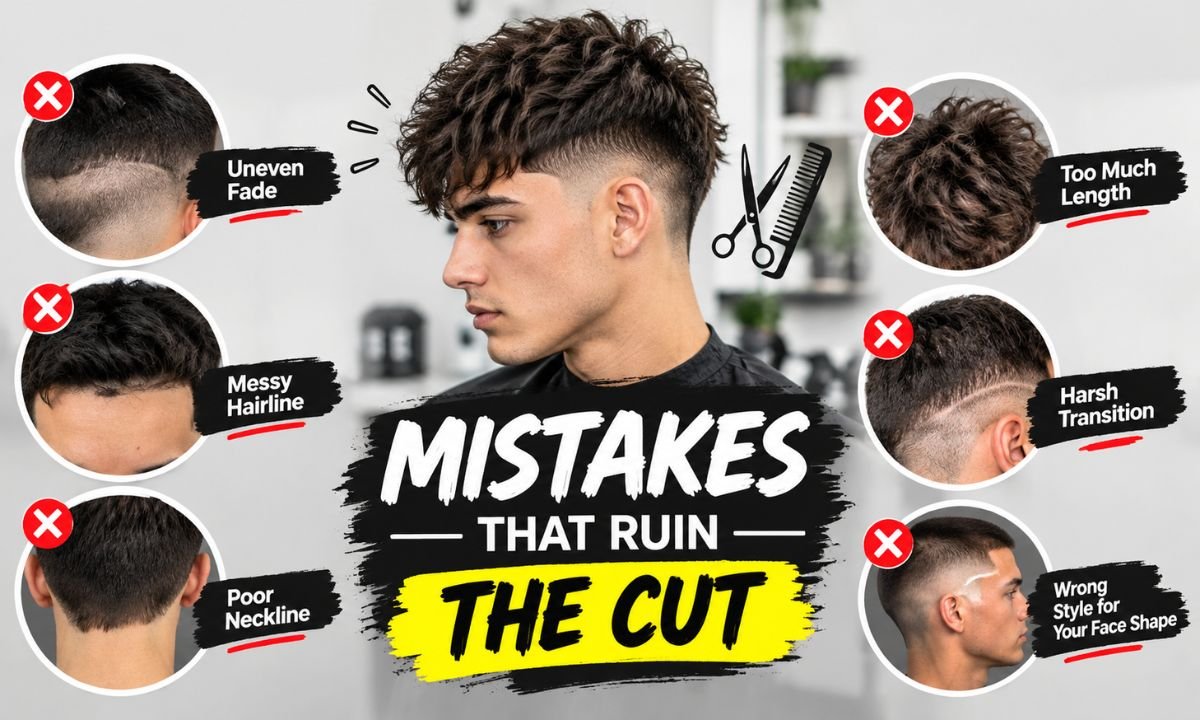
Most bad fades come from the same handful of mistakes. Some are the barber’s fault and some are the client’s. Knowing them helps you avoid both.
- Picking the wrong height. A fade that starts too high can look harsh and ruin the “low” look.
- Skipping the reference photo. Words get lost. Pictures don’t.
- Ignoring hair type. A low burst fade for straight hair needs different styling than curls.
- Letting the top get too long or too heavy. The curve disappears under bulky hair.
- Using too much product. Heavy gel hides the texture and makes the fade look unbalanced.
- Waiting too long between cuts. A fade grow out blurs the burst shape quickly.
- Rushing the barber. Good blending takes time. If you push for speed, you’ll feel it later.
One more point. Don’t be afraid to speak up mid-cut. If the curve looks too high, say so before it’s finished. A polite comment is much easier to fix than a finished mistake.
Styling It at Home
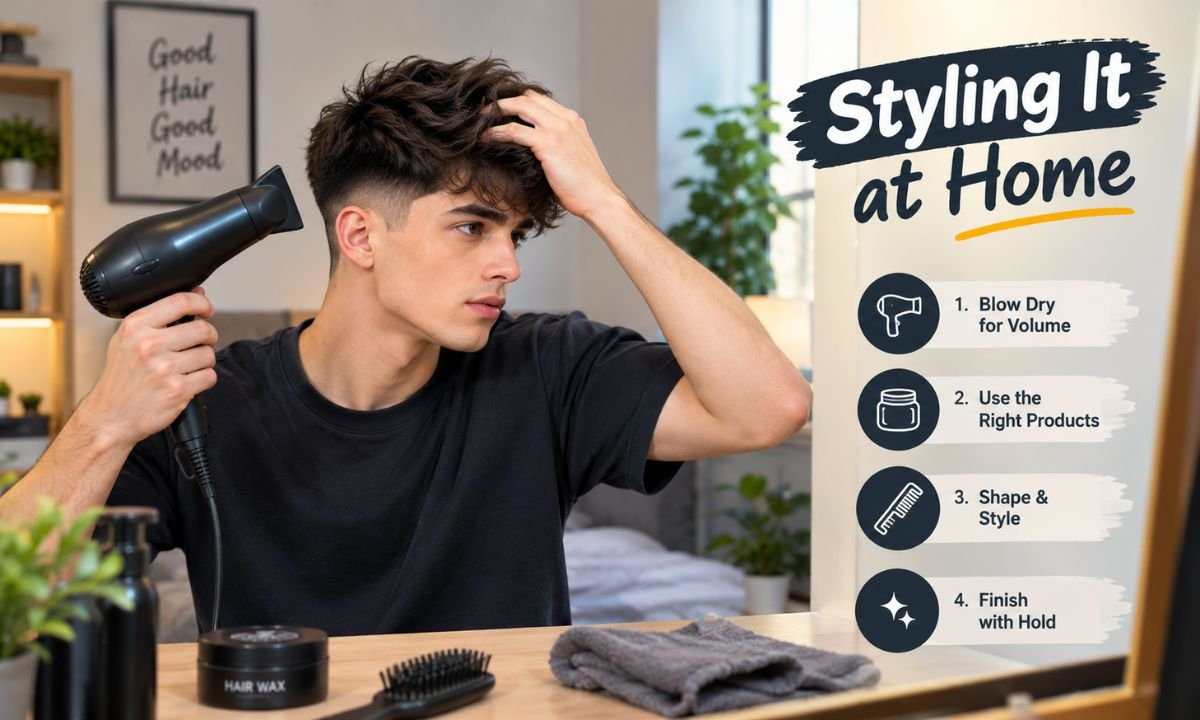
You don’t need a bathroom full of products. A few basics will do the job. The goal is texture, not shine.
Start with a towel-dried head. Add a small amount of matte clay or texture powder, rub it between your palms, and work it through the top. For a slicker look, use a light pomade instead.
Here’s a quick routine for each hair type.
- Straight or fine hair: Use texture powder at the roots for lift. Blow dry with a little forward motion.
- Wavy hair: Apply a light cream, scrunch, and let it air dry. Finish with a touch of matte clay.
- Curly or coily hair: Use a leave-in conditioner and a curl cream. Define with fingers or a brush, then let it dry.
Keep the sides clean with a quick brush each morning. A tidy fade makes any top look better. Also, protect the skin on the sides. Use a gentle moisturizer so the fade doesn’t look dry.
Taper Low Burst Fade vs Blowout Taper

These two styles look similar from far away. Up close, the differences are clear. The blowout taper leans on a big, voluminous top, usually with curls or waves. The low burst fade taper relies on the curved shape around the ear.
Think of it like this. A blowout puts the spotlight on the top. A burst fade puts the spotlight on the frame. You can combine them, but the base cut is different.
If you’ve got thick curls and love volume, the low burst fade vs blowout taper question comes down to personal taste. Do you want the sides to stand out, or do you want everything to blend into a fuller shape? Your answer decides the winner.
Many barbers blend the two ideas. They give you a taper with a small burst curve and a full top. That hybrid works well when you’re not sure which one to pick.
Low Burst Fade vs Low Taper vs Drop Fade

Here’s another common mix-up. The low burst fade vs low taper debate comes up constantly. A low taper fade follows a straight, soft line across the sides. A burst curves around the ear instead.
Then there’s the drop fade. It “drops” behind the ear and follows the head’s curve toward the nape. The low burst fade vs drop fade question is a bit trickier because both curve. The difference is the shape. A drop fade arcs down behind the ear. A burst fade makes a rounded semicircle.
So which should you pick? If you want a clean, subtle shape, go with a low taper haircut. If you want a stylish curve with more contrast, go with the burst. And if you like a longer back, the drop fade is a good middle ground.
Is It Okay for School, Work, or Formal Settings?

This is one of the most common worries. Nobody wants to deal with a dress code problem because of a haircut. The good news is that a low version of this style is very safe.
For school: A taper low burst fade works in most schools. Keep the sides on the longer side, such as a number two guard. Avoid skin fades if the dress code is strict. So, is the low burst fade good for school? In most cases, yes.
For work: Offices usually care about neatness, not specific haircuts. A short top and a clean taper fade look professional. Keep the burst subtle and the neckline tidy.
For formal settings: Weddings and interviews call for a polished look. Style the top with a light pomade and keep the curve soft. A low burst fade for formal settings can look sharp when the top is combed and neat.
When in doubt, ask a trusted friend or check the dress code. A small adjustment, like a longer guard, can make the cut safe everywhere.
Products That Make a Difference

You can spend a fortune on grooming gear. You don’t need to. A few smart picks will cover almost everything.
Matte clay gives you hold without shine. It’s great for textured hairstyle looks and works on most hair types. Texture powder adds lift and grip, especially for fine hair. Light pomade offers a polished finish when you need to dress up.
Beyond styling, think about care. A good shampoo, a conditioner for your hair texture, and a soft brush matter more than any fancy product. Healthy hair holds shape better, and the fade looks cleaner on healthy skin.
What It Costs and How Long It Takes
Prices vary by city and barber. Expect to pay a bit more than a basic trim, since blending takes skill. In many places, a quality fade lands in the mid-range price bracket.
Time in the chair usually runs between 30 and 45 minutes. A complex burst fade mullet may take a bit longer. Don’t rush the process. Rushed fades rarely look right.
If you visit every two to four weeks, the cost adds up. Ask your barber about a shorter touch-up service. Many shops offer one at a lower price, and it keeps the crisp fade looking fresh.
How to Grow It Out Gracefully

Maybe you’re done with fades for now. Or maybe you want to go longer on the sides. Either way, a fade grow out doesn’t have to look awkward.
First, keep the neckline and sideburns tidy. Those two spots make growing hair look intentional. Second, ask for a small trim every six weeks or so. That keeps the shape from getting messy.
Lastly, use a bit of matte clay or cream to control the in-between stage. A tapered shape grows out better than a hard skin fade. That’s one more reason the low taper on sides approach is so friendly.
2026 Trends Worth Watching

Fade culture keeps evolving. This year, more people are asking for softer transitions and natural textures. Hard, stripped-back looks are fading, no pun intended.
You’ll see more curved fade around the ear shapes paired with longer, fluffier tops. The burst fade mullet also keeps growing in popularity, especially with younger crowds. And low taper mohawk styles are showing up in offices, which says a lot.
Trends are fun, but don’t chase them blindly. Choose what fits your face, your hair, and your daily life. A cut you feel good in will always look better than one you copied.
Final Take
A taper low burst fade gives you the best mix of clean lines and personality. It frames your face, supports your hair texture, and works in school, at work, and at events. With the right barber, it feels almost custom made.
Be clear when you ask. Bring photos, use the script, and talk about what you don’t want. Then keep up with touch-ups every two to four weeks so the curved burst stays crisp.
If you do those three things, you’ll walk out with a cut that looks as sharp as you hoped. And you’ll know exactly how to ask for it again.
Go Deeper: Low Taper Fade Guides
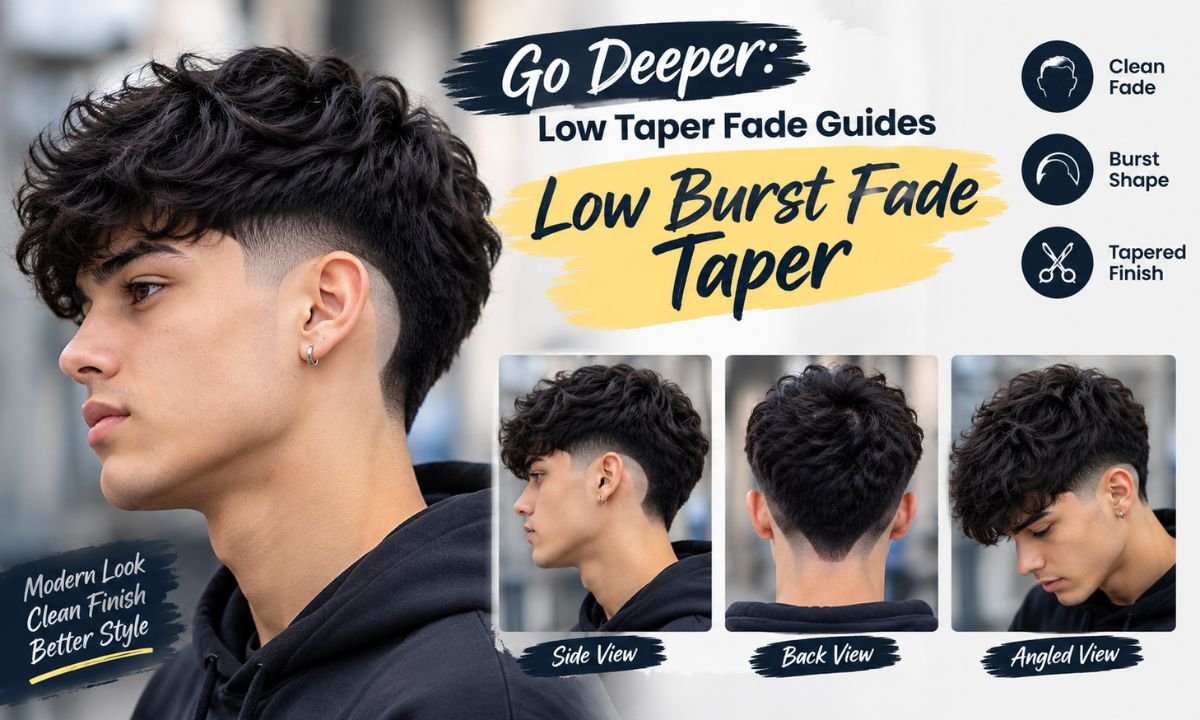
Want to keep learning? Pair this guide with deeper reads on related cuts. Here are topics worth exploring next on your site.
- A full guide to the low taper fade and how it differs from a mid taper
- A breakdown of low taper mullet ideas for different hair types
- A style guide for 360 waves haircut routines and maintenance
- A beginner’s guide to barber consultation and what to say
Internal links like these help readers move naturally through your site. They also help search engines understand how your topics connect.
Frequently Asked Questions
What is a taper low burst fade?
It’s a haircut that combines a gradual taper with a low, curved burst fade around the ear. The sides stay short and blended while the top keeps its length.
Is a low burst fade the same as a low taper?
No. A low taper fade follows a straighter line, while a burst curves around the ear. The burst also creates more contrast.
Does a taper low burst fade work on curly hair?
Yes, and it looks great. A low burst fade taper for curly hair shows off your natural curls while keeping the sides clean.
Can I get it with straight hair?
Absolutely. Add texture powder or matte clay to the top so it doesn’t fall flat. A textured crop is a safe choice.
How often should I get a touch-up?
Every two to four weeks works for most people. Skin fades need attention sooner.
What’s the best top style for a round face?
A taller textured top with tight sides helps. Pair it with a forward fringe or a short crop.
Is the low burst fade good for school?
Usually yes. Choose a longer guard and a subtle curve if your school has strict rules.
Can I wear a burst fade with a beard?
Yes. A burst fade with beard blends the fade into your sideburns for a clean, connected look.
How do I ask my barber for it?
Use clear words and photos. Say, “Low burst fade with a tapered neckline,” and show a reference haircut photo.
What’s the difference between a burst fade and a drop fade?
A burst fade makes a rounded semicircle around the ear. A drop fade arcs down behind the ear toward the nape.
Final Thoughts
Great haircuts come down to clear communication and regular care. You now know the shape, the vocabulary, and the habits that keep a low burst fade looking its best. That’s most of the battle.
Book that appointment, bring your photos, and speak up if something feels off. Your barber wants you to leave happy. And once you find a pro who gets the curve right, keep them.
Have you tried a burst fade? Tell us in the comments which top style you picked, and share this guide with a friend who’s still saying “just a little off the sides.”
