
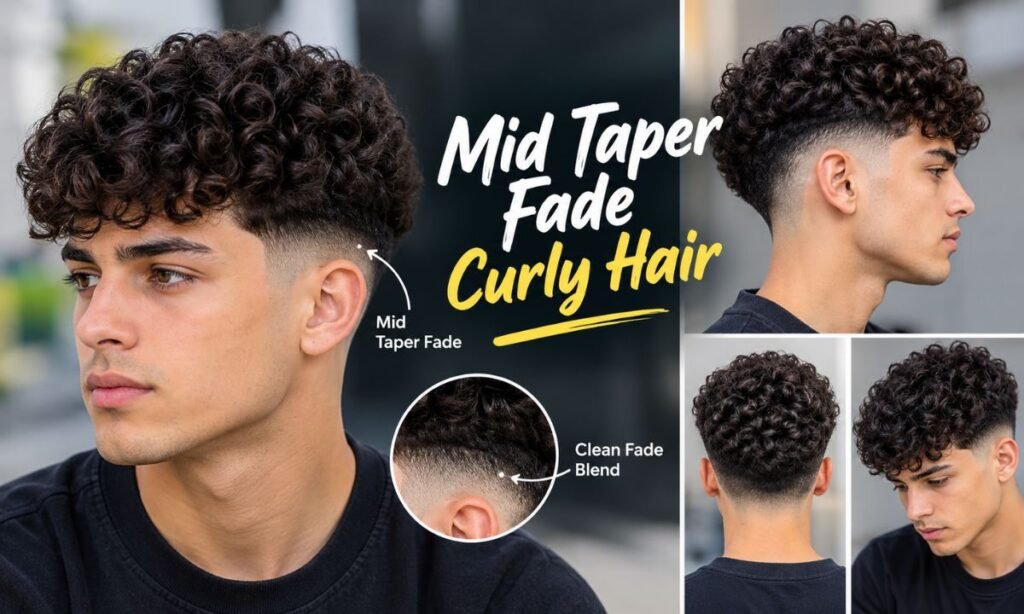

A mid taper fade on curly hair keeps your curls full on top and gradually shortens the sides and back from about the temple level down. It looks sharp, clean, and effortless, and it works on loose curls, tight curls, and coily hair. If you’re wondering how to ask for it, style it, and keep it fresh, this guide walks you through every step.
Maybe you’ve saved a dozen photos and still feel nervous in the barber chair. You’re not alone. Most guys worry about curly hair shrinkage, a taper that sits too high, or sides that end up flat and wrong.Mid Taper Fade Curly Hair explained very well here!
I’ll break it down like we’re chatting over coffee. You’ll learn the real difference between a taper and a fade, which styles suit your curl pattern, and what to say to your barber. We’ll also cover wash day, products, and the common mistakes that ruin a good cut.
What is a mid taper fade on curly hair?

A mid taper fade curly hair cut starts the shortening at a middle point on your head. That point usually sits around the temple and the top of your ear. Below it, the hair gets shorter and shorter toward the neckline.
The curls on top stay long enough to show off your natural curls. That contrast is the whole appeal. You get a tapered perimeter that looks tidy, plus a curly top that has personality.
Think of it like a gentle slope instead of a cliff. A true hair taper blends over a short distance, so it keeps more length near the edges. A skin fade drops all the way to bare skin, which is a bolder choice.
Mid taper vs. mid fade: why the names get confused

Here’s the catch. Many barbershops use “taper” and “fade” as if they mean the same thing. They don’t, even though the finished looks can seem close.
A taper usually leaves some hair at the shortest point, often a soft shadow instead of bare skin. A mid fade goes down to a skin finish and covers more of the sides. So a curly mid taper feels softer, and a mid fade feels sharper.
Why does this matter for curls? Because curly hair grows outward, and a very low guard length can look patchy as it grows in. A taper hides that stage better. If you want a mid taper without skin fade, say so out loud, since the term “fade” often makes barbers reach for the clippers’ shortest setting.
Mid taper vs. low and high tapers on curly hair

The word “mid” describes where the taper starting point sits. Low sits near the ears and nape. High climbs up toward the crown. Mid lands in the middle, which is why so many curly guys choose it.
Picking the wrong height is one of the biggest regrets people have. A taper height that fits your head shape and curl type makes the whole haircut look planned. A wrong one makes the curly silhouette look boxy or top heavy.
Let’s compare them one by one. That way you can match the height to your hair and lifestyle.
Low taper vs. mid taper on curly hair

A low taper is subtle. It trims only the area around the sideburns, ears, and back of the neck. Most of the side weight stays, so your curls keep a rounder, fuller shape.
It’s great if you work in a conservative office or hate the feeling of exposed scalp. It’s also the easiest style to grow out. The downside is that it can feel too soft if you want a standout contrast.
A mid taper takes more off the sides, so your curly crown looks bigger by comparison. You’ll notice stronger shape and cleaner edges. If you’ve been asking yourself about mid taper vs low taper curly hair, the answer is simple: low is calm, mid is confident.
Mid taper vs. high taper

A high taper begins close to the top of the head. It shortens most of the sides and leaves a small curly top that sits like a crown. The look is bold and very modern.
On curly hair, a high taper can create a lot of lift and drama. However, it asks for more upkeep, because the short sides lose their shape quickly. It can also make tight curls look narrow if the top is small.
When people compare mid taper vs high taper curly hair, they often land on mid for balance. It frames the face without exposing too much scalp. It also keeps enough side volume for a natural, proportional look.
Is a mid taper good for your curly hair?

Short answer: yes, for most curl types. The cut is flexible because the sides get managed while the top does its own thing. You don’t have to fight your curls to make it work.
Still, a few details decide how well it turns out. Your hair texture, hair density, and how much your curls shrink all matter. Let’s look at them in plain terms.
If your hair is very thin on the sides, a skin finish can look sparse. If it’s thick, a taper actually removes weight that makes the head look wide. Knowing your type saves you from a bad cut.
Loose curls, tight curls, and coily hair

Loose curls and wavy curly hair are the most forgiving. They stretch out when wet and spring back when dry, so the taper blends easily. You can go a little lower on the sides without much risk.
Tight curls have smaller curl diameter, and they shrink more. A barber should cut them with the dry shape in mind. Otherwise a cut that looked right in the mirror shrinks up a full inch later.
Coily hair and afro-textured hair love a mid taper because the contrast looks stunning. The tight coils on top stand out against clean sides. Just keep the guard length a bit longer if you want to avoid razor bumps.
Short, medium, or long curls on top

Short curly hair gives you a neat, low maintenance shape. You’ll get a defined curly top in minutes. It’s perfect if you hate styling time.
Medium length is the sweet spot for most guys. It gives enough room for curl definition and curly hair volume, and it still looks tidy. You can wear it messy or smooth it down with a bit of cream.
Long curly hair needs more care. It looks incredible with a mid taper, but you’ll need more moisture and gentle handling. Long curls also weigh themselves down, so the shape can flatten without good products.
Best mid taper fade curly hair styles
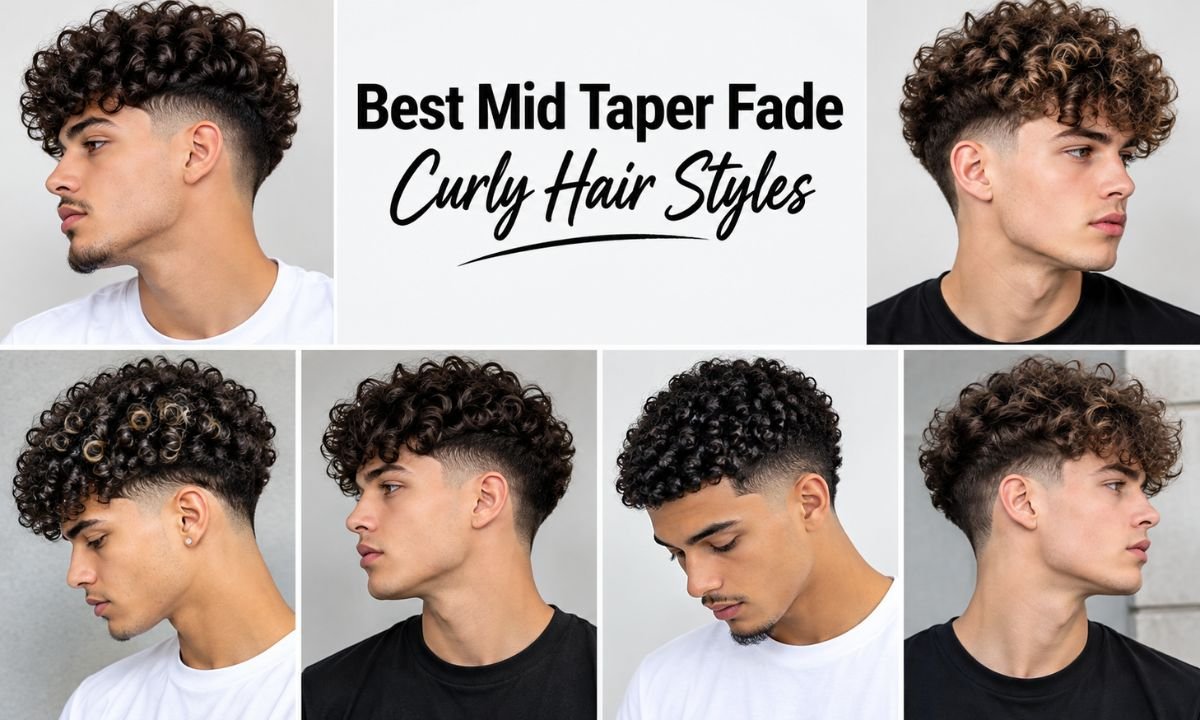
Now the fun part. These styles all use the same base, a mid taper on the sides and back. What changes is the top, the finish, and the extras.
Pick the one that matches your natural curl length and your daily routine. Don’t pick something just because it looked good on a model with different hair. A reference photo only helps if the curl pattern is close to yours.
1. Classic curly mid taper
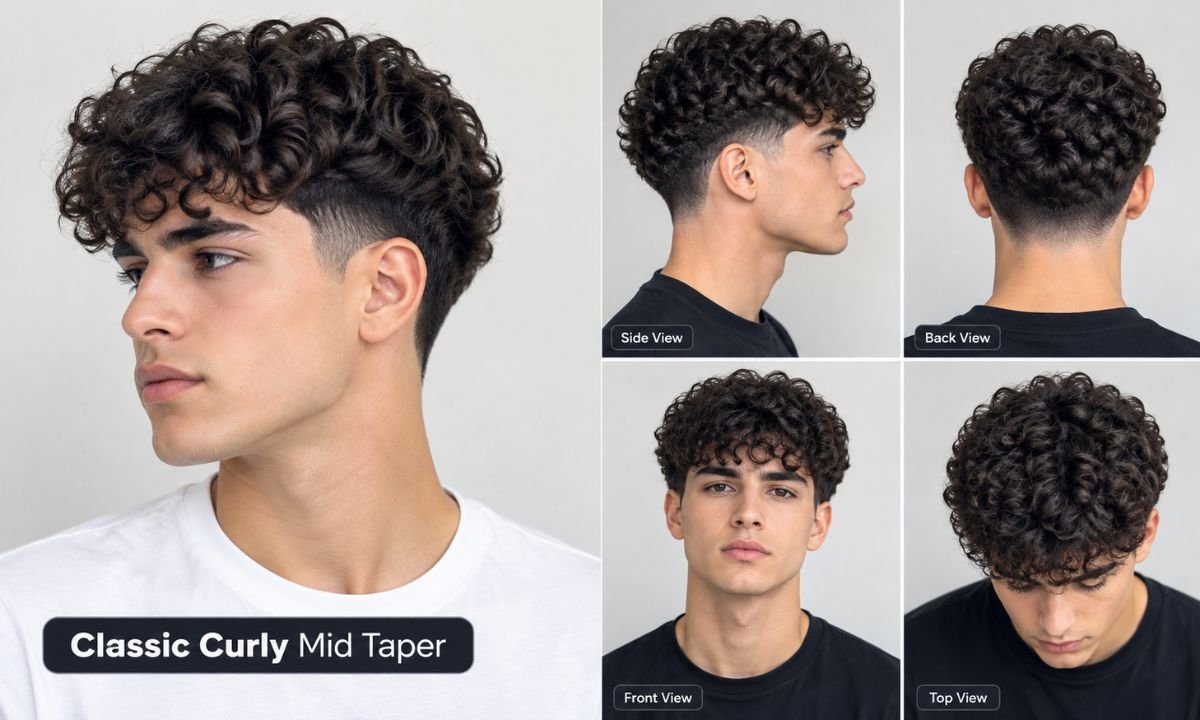
This is the cut everybody recognizes. The sides taper neatly, while the top keeps medium length curls with soft shape. It’s clean, stylish, and works nearly anywhere.
Ask your barber to keep the transition smooth around the temple. A tapered neckline gives the back a finished look. You’ll need only a little curl cream to keep things defined.
It’s the safest choice if it’s your first time. It also grows out gracefully, which means you can stretch visits a little longer. Think of it as the white T-shirt of curly cuts.
2. Mid taper with curly fringe

A curly fringe adds a playful touch. The front curls fall onto the forehead, giving it a youthful, relaxed vibe. The tapered sides keep it from looking messy.
Get the fringe length right, or it will poke into your eyes. Many people ask for it to sit around the eyebrow after shrinkage. Remember that forehead coverage changes between wet and dry hair.
This style suits round and square faces. It softens a strong jawline and adds balance. Just plan on a bit more trimming, since fringes get out of control quickly.
3. Curly blowout mid taper

The curly blowout is all about volume. You stretch the curls with a hair dryer and hair diffuser, then shape them into a fluffy, rounded top. Combined with a mid taper, it looks powerful and eye-catching.
The secret is controlled heat. Use low heat and keep your hands moving so you don’t dry out the curls. Too much heat leads to frizz and breakage, which no haircut can fix.
Expect to spend ten to fifteen minutes. In return, you get a standout shape that photographs well. It’s a favorite among younger guys who want a modern look for events.
4. Short curly mid taper
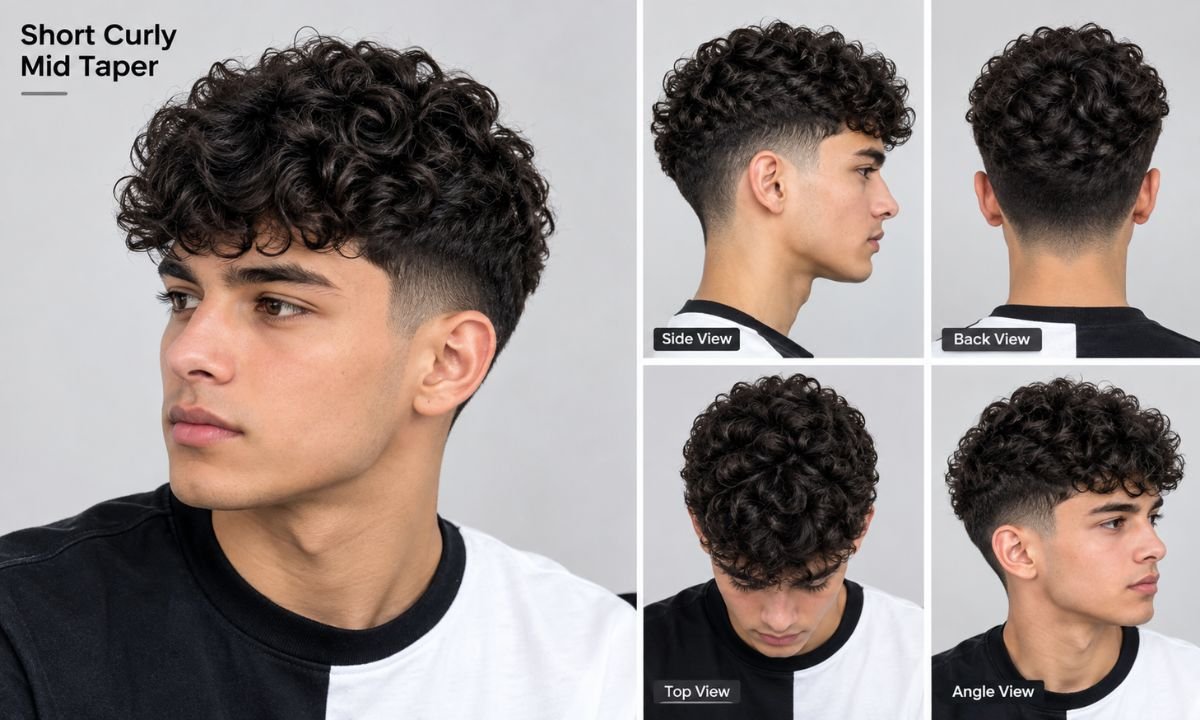
This one keeps the top around two to three inches in dry length. It’s tidy and easy, with a clear curl pattern that needs very little work. Perfect for busy mornings.
Because the top is short, the taper stands out more. That makes neckline shape and clean edges extra important. A good barber touch-up every few weeks keeps everything crisp.
Short curls also make humidity easier to handle. You won’t fight with flyaways as much. If you sweat a lot or play sports, this is a smart choice.
5. Long curly mid taper

Long curls with tapered sides create a dramatic, ultimate contrast. The length on top falls naturally, and the taper keeps it from feeling heavy. You can wear it down, half up, or pushed back.
Talk about side weight with your barber. You want the sides tight enough to show the taper, but not so tight that the top looks disconnected. A smooth blend around the ears solves it.
This style needs real care. Plan on regular conditioning and a satin pillowcase at night. Otherwise, the curls tangle and lose their shape.
6. Curly top with temple taper

Here the focus lands on the temple taper. The barber cleans up the area above the ears and the natural hairline, and leaves the rest of the sides slightly fuller. It’s a gentler look with a lot of polish.
This cut is great if you want a blend around the temple without a dramatic drop. It also pairs well with a rounded curly crown. The shape stays soft, so it works on thick, dense hair.
The style won’t scream for attention, but people notice it. They just can’t say why you look so put together. That quiet confidence is the point.
7. Wavy curly mid taper with texture

If your hair sits between wavy and curly, you can wear it a little messy. Ask for texture on top and let the natural curls do their thing. The mid taper keeps the sides crisp so the mess looks intentional.
A light mousse or sea salt spray gives grip without weight. Scrunch gently and let it air dry. Avoid heavy gels, or you’ll flatten the movement.
This look is effortless, which is exactly why it’s trending. You’ll spend about five minutes on it. That’s a fair price for a haircut that looks expensive.
8. Mid taper with coily or afro-textured hair

A mid taper on coily curls is a classic for good reason. The tight coils create a bold top that stands tall, and the taper adds clean contrast. It’s sleek and attractive from every angle.
Use a longer guard length on the sides if your skin is prone to bumps. Ask the barber to stay a touch above the skin. You can still get a sharp skin finish later if you decide you want it.
Moisture is the main rule. Afro-textured hair dries quickly, so use a leave-in conditioner and seal it with cream. A durag at night helps protect the shape and reduces breakage.
9. Mid taper with line-up or beard blend

A line-up sharpens the forehead and temples with crisp edges. Paired with a mid taper, it makes the whole cut look clean and freshly done. It’s one of the most requested finishes right now.
If you have a beard, ask for a beard blend. The taper flows into the beard so there’s no harsh stop at the sideburns. That smooth link makes the face look more balanced.
Keep in mind that line-ups fade quickly with curly hair. The edges soften within a week or two. So if you love this finish, book short, regular visits.
What should you ask your barber for?
Most bad haircuts come from bad communication, not bad barbers. Curly hair is hard to describe, and a small misunderstanding can change the final result. A few clear sentences solve the problem.
Think of it like ordering coffee. “Medium roast” isn’t enough if you want oat milk and no sugar. Be specific about every detail.
Here’s a simple checklist you can use at your next appointment.
1. Show a reference photo
A reference photo is the fastest way to align expectations. Choose a picture of someone with a similar hair texture and curl type. A straight haired model won’t help your barber at all.
Bring two or three photos. Show the front, the side, and the back if you can. This reduces the risk of a wrong reference photo leading you to a result you don’t love.
Also tell the barber what you like and don’t like in each photo. Maybe you love the top but want a softer neckline. That kind of comment is gold.
2. Say where the taper should begin
This is the taper starting point, and it changes everything. Point to the exact spot on your head. Many barbers will mark it with a comb or finger.
For a mid taper, it usually sits about level with the temple or the top of the ear. Say “mid, not high” so there’s no confusion. A taper height that’s too high can be hard to undo.
If you’re unsure, start a little lower. Barbers can always take more off later. They can’t add anything back.
3. Decide how short the bottom goes
Next, talk about the guard length at the bottom. Do you want a soft shadow, a shadow fade, or a full skin fade? Each one gives a different mood.
Curly hair often looks better with a slightly longer finish at the bottom. It grows in more evenly and shows less scalp. Remember the point about mid taper without skin fade if you want a gentler outcome.
If you have thin hair or a lot of scalp showing, avoid cutting too close. Unwanted scalp exposure can make the whole cut look uneven. A number two or three is a common safe start.
4. Explain how much curl length to keep
This step matters most with curly hair shrinkage. Curls spring up once they dry, sometimes by half their length. So a three inch curl can end up one and a half inches.
Tell the barber your preferred dry hair length instead of the wet hair length. Even better, ask them to cut the top dry. That way you see the real result as it happens.
Wondering how much curly hair to leave on top? For most guys, three to five inches in dry length works well. Go shorter for neat, go longer for volume.
5. Discuss bulk, fringe, and neckline
Finally, cover the details that finish the look. Talk about bulk removal, fringe length, and neckline shape. These small notes decide whether the cut looks polished or rushed.
You can ask for a rounded, squared, or tapered neckline. A tapered neckline blends smoothly and grows out well. A blocked one looks sharp at first but gets messy quickly.
Also warn the barber about excessive bulk removal. Too much thinning makes curls lose shape and can lead to flat curls. Ask for gentle shaping instead.
How do you style a mid taper with curly hair?

Styling takes just a few minutes once you know the routine. The goal is to keep the curl clumps intact and avoid disturbing them. Rough handling turns definition into frizz.
You don’t need twenty products. A leave-in conditioner, a curl cream, and maybe a styling gel will do the job. Keep it simple and repeat the same routine until it feels natural.
Let’s go through it step by step.
Step 1: start with damp, detangled hair

Begin on damp hair, not soaking wet and not dry. Water helps curls clump and lets products spread evenly. If you start on dry hair, you’ll fight puffiness.
Work through the curls gently. Use your fingers or a wide tooth comb, starting from the ends. Detangled hair forms cleaner curl clumps, which improves curl definition.
Practice gentle handling here. Pulling on knots causes hair breakage, especially with coily textures. Add a little conditioner to make the process smoother.
Step 2: add moisture and definition
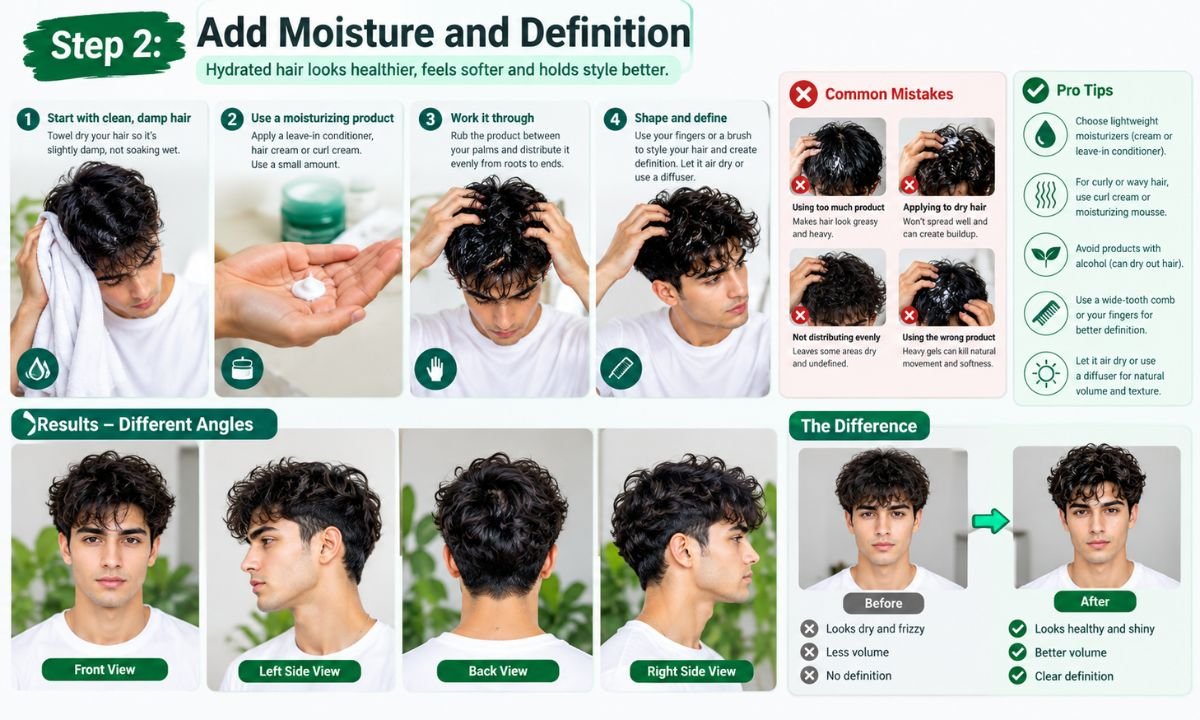
Apply a leave-in conditioner first. It locks in curl moisture and sets the stage for everything else. A dime to quarter sized amount works for most people.
Next, layer on curl cream or a light mousse. Rake it through, then scrunch upward. If you want a firmer hold, finish with a bit of styling gel.
Use less than you think. Over-styling weighs curls down and makes them crunchy. You can always add more after a few minutes.
Step 3: air-dry or diffuse without flattening the shape

You have two main options here. Air drying is gentle and free, but takes longer. A hair diffuser speeds things up and adds curly hair volume.
If you use a diffuser, stay on low heat and low speed. Hold the head tilted, cup the curls, and lift them toward the scalp. Don’t touch them while they dry.
Avoid excessive heat. High temperatures dry out the curl and lead to frizz control problems later. Once the hair is fully dry, scrunch out any crunch with your hands.
Step 4: refresh between wash days
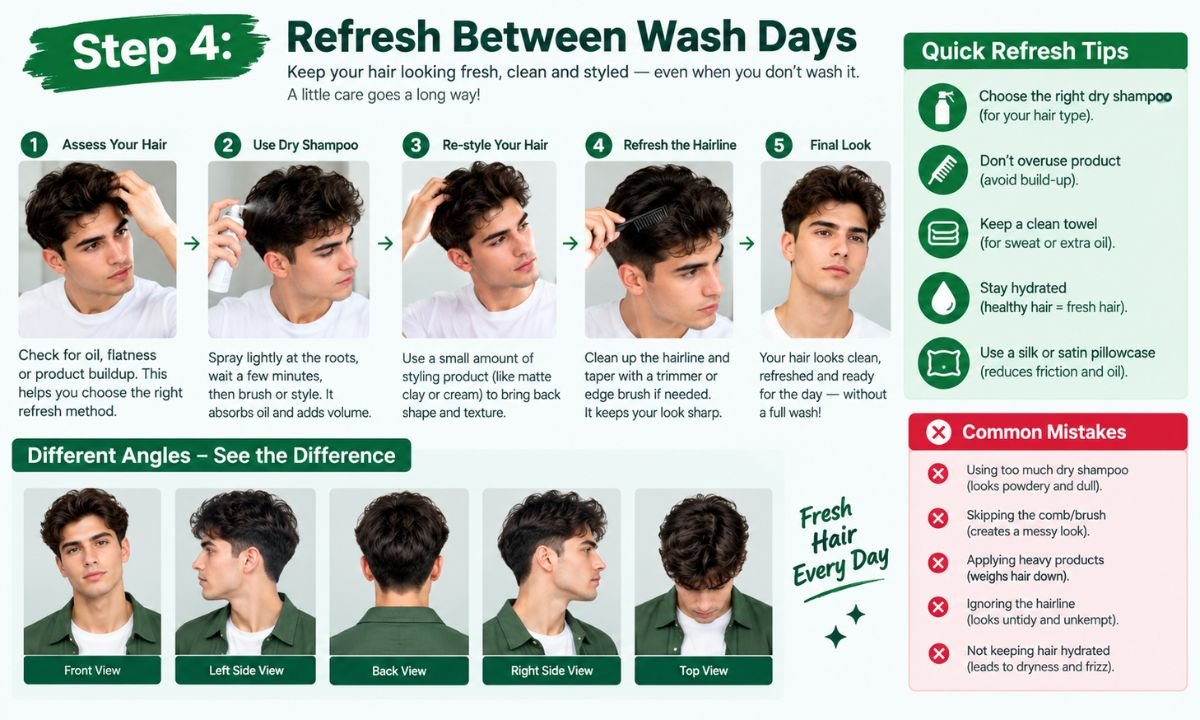
You don’t need to wash your hair daily. In fact, most curly guys do better with two to three wash days a week. Over-washing strips natural oils and dries your curls out.
On off days, do a quick curl refresh. Mist the hair with water, add a bit of cream, and reshape the curls. Use a pick to lift the crown if it feels flat.
At night, protect the shape with a satin pillowcase or a durag. It reduces friction and keeps your curls from frizzing. You’ll wake up with better hair.
How do you maintain a curly mid taper?

A taper looks best when it’s fresh. The sides grow back fast, and the shape starts to blur. A little haircut maintenance keeps it looking sharp.
The good news is that curly tops forgive some neglect. The top can hide growth much better than straight hair can. The sides, however, need regular attention.
Here’s how to handle both parts.
How often should you get the taper cleaned up?
Most people need a barber touch-up every two to four weeks. If you wear a skin finish or a sharp line-up, aim for every two weeks. A softer taper can stretch to four.
Curly hair grows fast, but it also grows outward. So the taper loses shape sooner than you expect. If you’re asking how often to get a curly taper cleaned up, three weeks is a good middle point.
Book your next visit before you leave the chair. That way you never wait too long. It also keeps your haircut upkeep simple and predictable.
How should you care for the curly top?
Treat the top like the star of the show. Use a gentle shampoo, and condition after every wash. Add a deep conditioning mask once a week to fight dry curls.
Trim the ends every six to eight weeks to remove splits. This keeps the curl pattern healthy and defined. Without it, curls can look stringy and weak.
Also watch your heat habits. Skip hot tools, and limit blowouts. Healthy curls stretch less, shrink more evenly, and keep their curl definition longer.
Understanding curl shrinkage before you cut
Shrinkage deserves its own spotlight. It’s the number one reason a good haircut feels wrong at home. A curl that looks five inches long when stretched may spring up to two.
Tight coils shrink the most. Loose curls shrink less, but still change. That’s why you should always judge your length while the hair is dry and in its natural state.
Here’s an easy test. Pull one curl straight, note the length, then let it go. Compare the two numbers and you’ll know your shrinkage rate.
This helps in two ways. You’ll tell your barber a realistic number, and you’ll avoid shrinkage problems after the cut. It also guides you when growing hair out.
If your barber works on wet hair, ask for extra length on top. A good rule is to leave about double what you want to see once dry. Remember that this changes with hair density and curl type.
Best products for a mid taper with curly hair

You don’t need a shelf full of bottles. A few well chosen products handle almost everything. Choose by hair texture, not by hype.
For loose curls and waves, a lightweight mousse gives hold without weight. For tight curls and coily hair, creams and butters add moisture and clump the curls. Gel suits anyone who wants a firmer finish.
Look for ingredients that hydrate, like glycerin, shea butter, and aloe. Avoid heavy alcohols that dry the hair. Always test a new product on a small section first.
On the tool side, a wide tooth comb, a diffuser, and a pick are enough. A soft towel or an old cotton T-shirt helps reduce frizz when drying. Keep a spray bottle handy for a quick refresh.
Which mid taper suits your face shape?
Your face shape can guide the details. The same cut can feel different on different heads. A few small tweaks help you get a better fit.
Round faces benefit from height and sharper sides. Add volume on the curly crown and keep the taper tidy. This lengthens the face visually.
Square faces look great with a soft curly fringe. It softens strong angles. Oval faces can wear almost anything, so choose the style you like best.
Long faces should avoid too much height on top. Keep the curls fuller on the sides and use a mid or low taper. This keeps the proportions balanced.
How to grow out a curly mid taper gracefully
Sooner or later, you might want to grow the sides back. Maybe you’re bored, or maybe life got busy. Either way, a taper grows out better than most fades.
The awkward stage usually hits around week six. The sides puff out, and the top starts to look unbalanced. Don’t panic, because it passes.
Book a trim every six to eight weeks instead of every three. Ask the barber to clean only the neckline and the sideburns. That keeps the shape tidy while the sides catch up.
Use a bit more curl cream during this stage. It controls the puff and keeps flyaways down. Most people find the wait easier with a pick and a good routine.
After about three months, the sides blend into the top again. You can then switch to a low taper or a natural cut. The transition feels smooth because you never lost the overall shape.
Does a mid taper work for every lifestyle?

Your daily routine matters as much as your hair type. A cut that looks great on Saturday can feel like work on Monday. Let’s match the style to real life.
If you’re an office worker, a classic mid taper or temple taper looks polished. It needs little effort and fits most dress codes. A short curly version is even easier.
If you’re an athlete or active type, go short on top. Sweat, helmets, and caps flatten longer curls quickly. A short curly mid taper bounces back with a splash of water.
If you’re a student or creative type, play with fringe and blowouts. These styles give room to experiment. You can change the look every few weeks.
If you hate styling, pick a medium length and a simple routine. Two products and an air dry are enough. Consistency matters more than complexity.
Common mid taper mistakes to avoid
Even a great idea can go wrong in execution. Most of these common mistakes are easy to avoid once you know them. Let’s look at the big ones.
First is picking a wrong taper height. A high taper on a small head can look odd. A very low one on thick hair can look bulky.
Second is cutting wet hair without planning for shrinkage. The result is often too short. Always discuss dry length before the first snip.
Third is ignoring the uneven blend. If the transition from long to short looks choppy, the taper falls flat. Ask your barber to check both sides in the mirror.
Fourth is using a wrong reference photo. Hair type matters more than the style itself. A photo with different texture sets false expectations.
Fifth is over-styling. Too many products create crunch and poor definition. Heavy gel and constant touching also cause frizz.
Sixth is too much heat. Excessive heat causes dry curls, breakage, and loss of curl volume. Keep tools on low and give your hair breaks.
Seventh is neglecting upkeep. A taper that grows out turns into a bad haircut fast. If maintenance feels difficult, choose a lower taper that grows out more gently.
Finally, avoid going too close to the skin if your scalp shows through. Unwanted scalp exposure can age the look and make the hair seem thin. Ask for a softer finish instead.
Alternatives if a mid taper is not the look you want
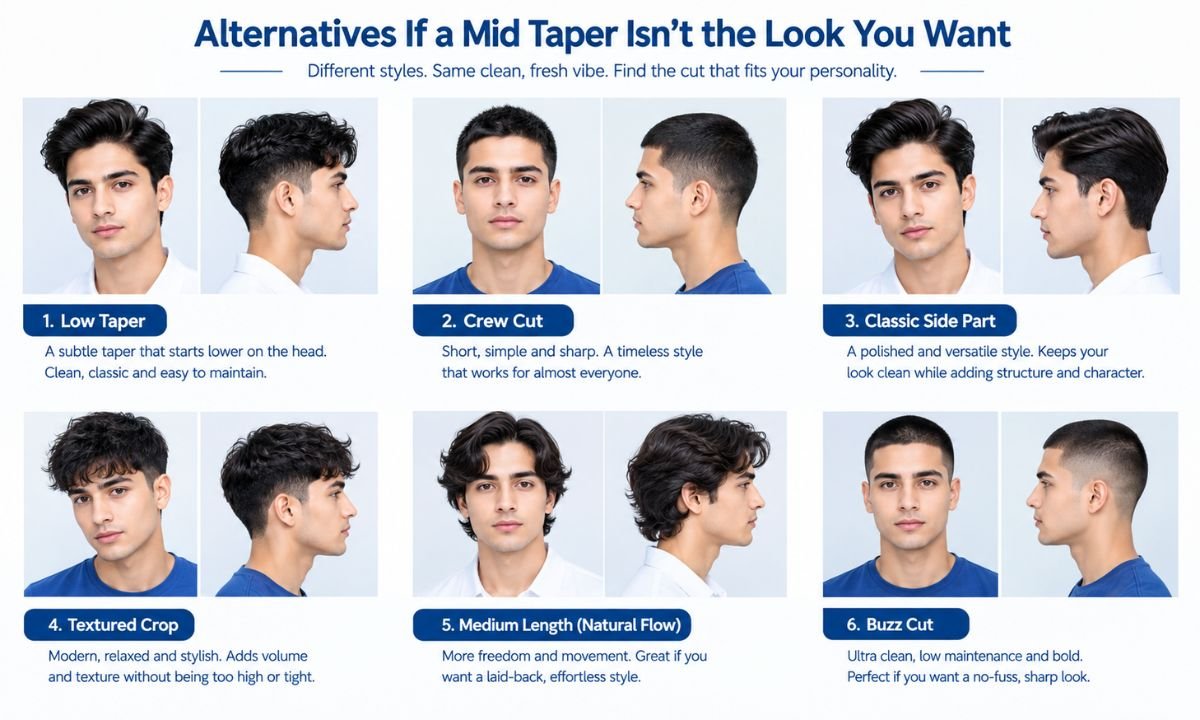
Maybe a mid taper isn’t your thing. That’s totally fine. Several options give a similar polish with different shapes.
A low taper is the gentlest choice. It keeps more length around the sides and looks natural. It’s ideal for work settings and anyone who likes a softer edge.
A high taper or a burst fade adds drama. The burst curves around the ear and leaves length at the back. It’s trendy and works well with a mohawk style top.
A drop fade follows the curve of the head and dips behind the ear. It suits those who like a more defined shape. A temple fade only cleans the area at the front, so it’s very subtle.
If you want zero fading, try a natural cut with a clean tapered neckline and no shaved sides. It keeps the curly silhouette full and relaxed. Many guys choose this when growing out their hair.
Frequently Asked Questions
Is a mid taper fade good for curly hair?
Yes. It balances neat sides with natural curl volume. It works on loose, tight, and coily textures when the barber plans for shrinkage.
What is the difference between a mid taper and a mid fade?
A taper leaves a soft shadow of hair at the bottom. A mid fade usually goes to skin. The mid fade looks sharper, while the taper looks softer.
How much curly hair should I leave on top?
Most people do well with three to five inches of dry length. Go shorter for a clean look, and longer for bigger volume. Always judge by dry length.
How often should I get my curly taper cleaned up?
Every two to four weeks works for most people. Choose two weeks if you have a skin finish or line-up. Choose four weeks for a softer taper.
Can I get a mid taper without a skin fade?
Absolutely. Ask for a longer guard length at the bottom, such as a number one or two. You’ll get a clean look without bare skin.
What should I ask my barber for?
Bring a reference photo, point out the taper starting point, and name the bottom guard length. Then explain how much curl length to keep, and mention neckline and fringe details.
Does a mid taper work with coily hair?
Yes. It’s a great match, since the contrast looks bold and clean. Use a slightly longer guard and keep the hair well moisturized.
How do I stop frizz with a curly mid taper?
Start with damp hair and a leave-in conditioner. Don’t touch the curls while they dry. Sleep on a satin pillowcase or wear a durag.
Will a mid taper make my curls look thinner?
Not usually. A taper removes weight from the sides, which makes the top look fuller by contrast. If your hair is very fine, ask for a longer guard so the sides don’t look sparse.
Can I do a mid taper at home?
You can clean the neckline yourself, but the taper itself is tricky. Blending needs a steady hand and good angles. A barber visit saves you from a mistake that takes weeks to fix.
Final Thoughts
A mid taper fade is one of the smartest ways to wear curls. It cleans up the sides, keeps the top full, and fits almost every style. The trick is choosing the right height, length, and finish for your own hair.
Talk to your barber with clear details. Bring photos, discuss shrinkage, and agree on the taper starting point. Then build a simple routine with moisture, gentle handling, and regular touch-ups.
Try one of the styles above and see how it feels. Which one are you going to try first? Share your thoughts in the comments, send this guide to a friend with curls, and tell us what worked for you.
