
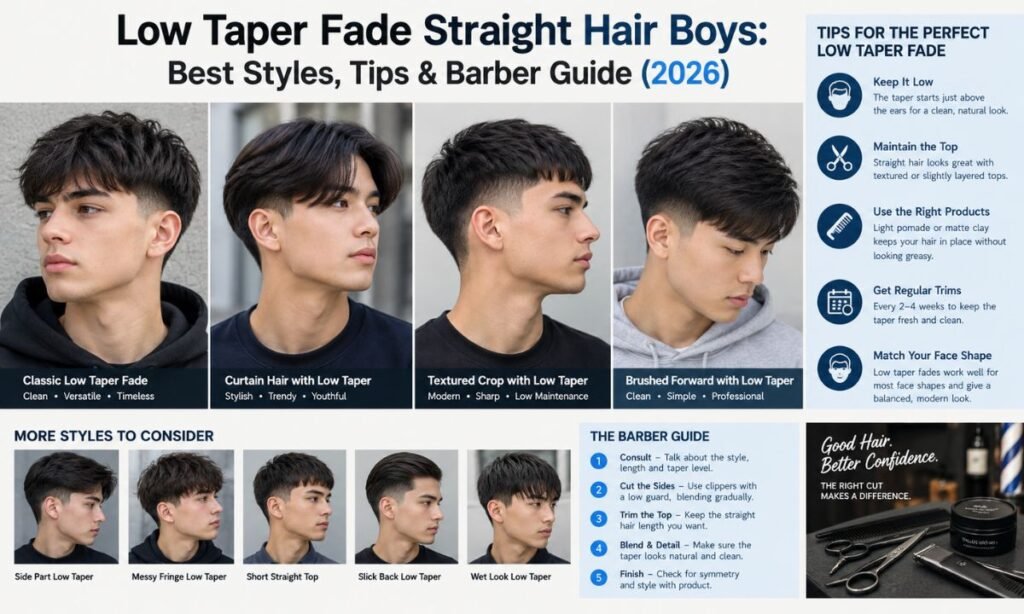

Your son wants a haircut that looks sharp, but you don’t want the barber to overdo it. Sound familiar? The low taper fade is the answer most parents and teens land on, and it works especially well on straight hair.
It also leaves enough length on top to style, and it grows out without an awkward phase. This guide covers the best styles for 2026, from a textured fringe to a middle part, plus the exact words to use with your barber. You’ll find tips for boys at different ages too, from ten year olds to teens heading to prom. We’ll walk through daily styling, product choices, and common mistakes, so the cut stays fresh at home. Read on, and your next barber visit will feel a lot less like a guessing game. Low Taper Fade Straight Hair for boys explained!
What a low taper fade is
A low taper fade shortens the hair gradually around the ears and the back of the neck. The “low” part means the blend starts near the bottom of the head, just above the natural hairline. Everything above that stays longer and fuller.
A taper usually stops short of bare skin, so a little hair stays behind and the transition looks soft and natural. Think of it as a gentle slope instead of a cliff. That softness is why boys can wear it to school, a birthday party, or a family wedding without a restyle.
It’s also different from a high fade, which climbs far up the sides and creates bold contrast. The low version leaves most of the side hair alone and only graduates the last inch or so. That makes it a safe first fade for younger boys and a clean everyday cut for teens.
Why it suits straight hair so well
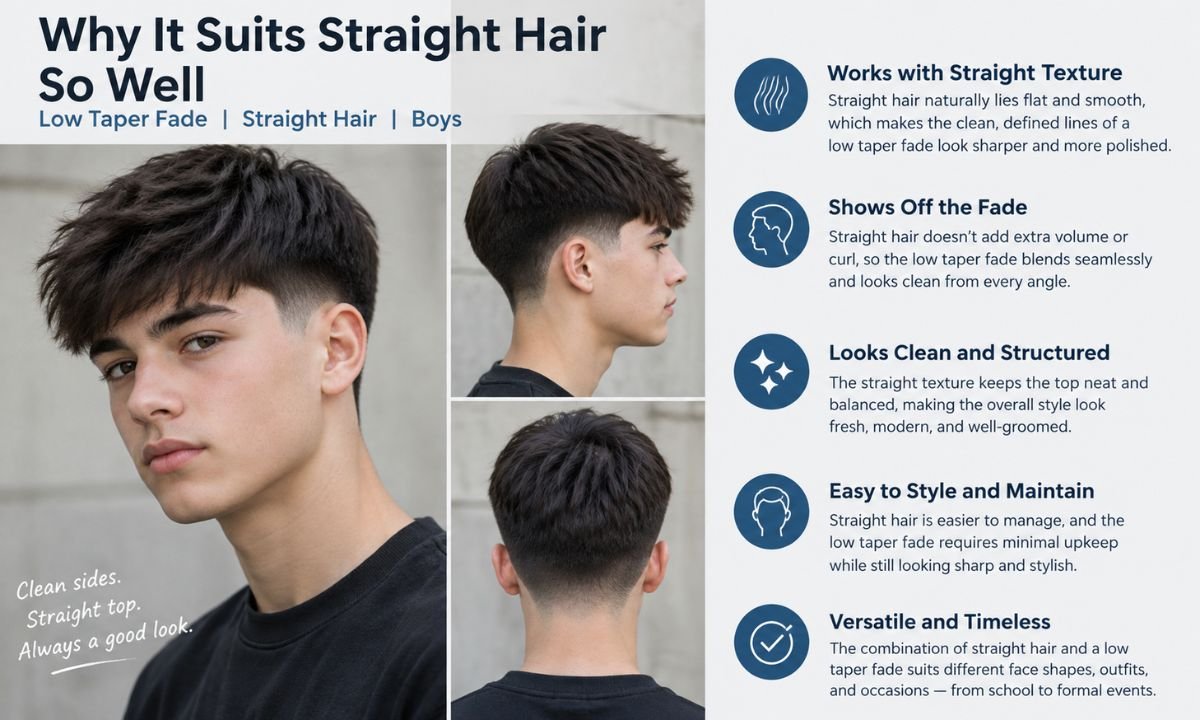
Straight hair lies flat and falls evenly, so every length change in the blend shows clearly. There’s no curl or wave hiding the gradient, which means a skilled barber gets a crisp, smooth result. When it’s done right, it looks like a well drawn line fading into nothing.
Straight hair also responds well to shaping on top. A fringe sits neatly, a middle part stays put, and texture products give it movement without much effort. You get a lot of variety from one simple cut.
There’s one catch. Straight hair shows regrowth fast, and a sloppy blend has nowhere to hide. If your boy has a stubborn cowlick or fine strands, tell the barber upfront so the top is cut to work with the growth pattern instead of fighting it.
The best styles in 2026

Most of the variety in a low taper fade lives on top, while the sides stay roughly the same. In 2026 boys are leaning toward natural movement over stiff, gelled looks. Here are the styles worth showing your barber.
- Textured top: medium length, choppy, and easy to style with clay
- Textured fringe: soft, forward, and very popular with teens
- Middle part: a curtain style that suits straight hair beautifully
- Side part: neat and classic for school photos and events
- French crop: short, blunt, and low fuss for busy mornings
- Brush up: lifted at the front for a bit more height
Pick based on how much time your boy will spend styling. A crop or side part takes two minutes, while a fringe or middle part needs a quick blow dry. The best haircut is the one he’ll actually style himself.
Low taper fade with a textured top

The textured top is the most requested version right now, and it’s easy to see why. The barber leaves medium length and cuts into it so the hair separates and moves. It looks a bit messy in the best way, like you didn’t try too hard.
On straight hair, texture matters even more because the strands are naturally flat. A little sea salt spray or a pea sized amount of matte clay gives it grip. Without that, straight hair can look limp by lunchtime.
This style grows out well too. The top keeps its shape for weeks, and the low taper underneath only needs a light refresh. That’s a big win for parents who don’t want a barber visit every ten days.
Low taper fade with a fringe
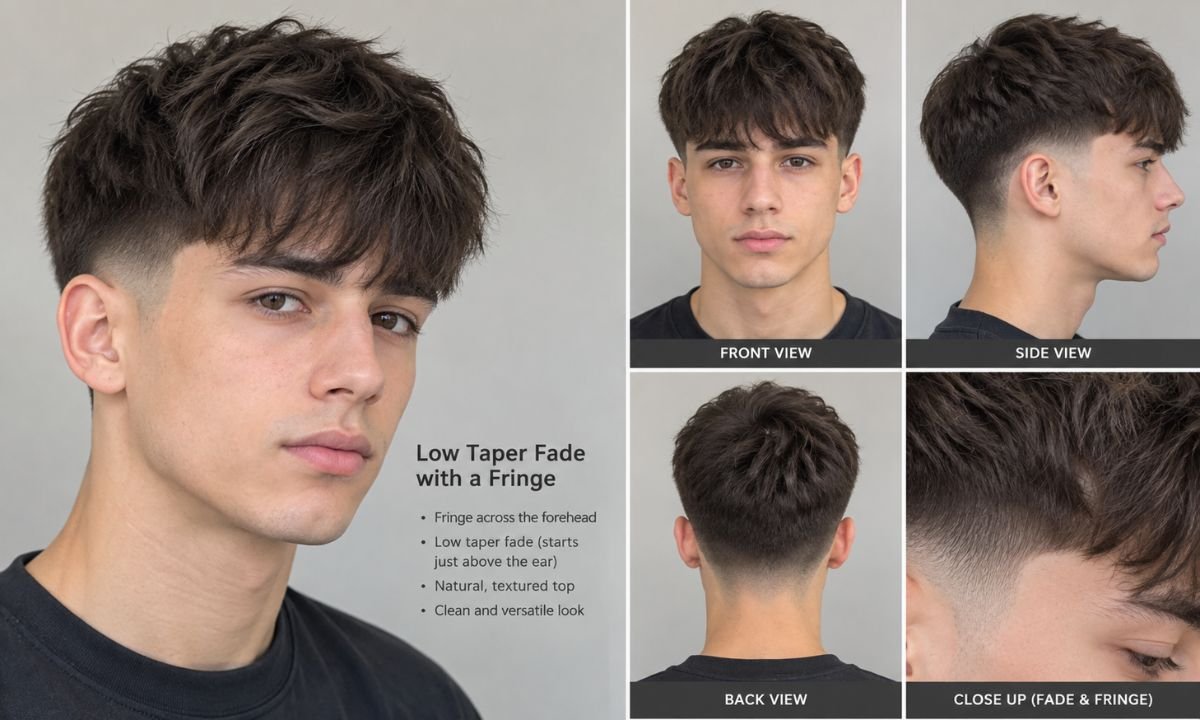
A fringe pushes the hair forward over the forehead, either straight across or swept to one side. Paired with a low taper fade, it gives a clean frame around the face while keeping the top full. It’s one of the most popular looks for teens who want something current without going extreme.
Straight hair is the ideal canvas for a fringe because it falls flat and even. Ask the barber to add light layers so it doesn’t look like a helmet. A slightly choppy edge looks more modern than a razor straight line.
Watch the length, though. A fringe that sits in the eyes gets annoying fast, especially in school. Ask for it to land just above the eyebrows so it stays neat and out of the way.
Low taper fade with a middle part

The middle part, sometimes called curtains, sweeps the hair to both sides from the center. It became a big trend with Gen Z boys and it hasn’t gone away. Straight hair makes it look almost effortless because the strands fall naturally into place.
This style needs a little length, usually three to four inches on top. The low taper fade keeps the sides tight so the hair doesn’t puff out into a mushroom shape. That contrast is what makes the cut look sharp instead of shaggy.
A middle part works best when the hairline is fairly even and there’s no strong cowlick at the front. If the hair fights the part, a side part or a fringe will look better. Your barber can check this in ten seconds before cutting.
Low taper vs mid taper

The difference comes down to where the blend begins. A low taper starts near the ears and neckline, while a mid taper begins higher, around the temple level. That higher start makes the mid taper more noticeable and bolder.
For younger boys and school settings, the low taper is usually the safer pick. It looks tidy without a lot of contrast, and it grows out smoothly. A mid taper suits teens who want a sharper, more defined shape.
- Low taper: subtle, natural, easiest to maintain
- Mid taper: balanced, more visible, still school friendly
- High taper: bold contrast, needs frequent touch ups
If you’re unsure, start low. You can always go a little higher next time, but you can’t add hair back once it’s gone.
Which face shapes suit it
The low taper fade is forgiving, but small tweaks on top make a real difference. Your barber can adjust the length, parting, and volume to balance the face. Here’s a quick guide to match the style to the shape.
- Oval face: handles almost any version, so experiment freely
- Round face: add height on top with a brush up or textured quiff
- Square face: a softer fringe or side part smooths strong angles
- Long face: keep the top shorter and add a fringe to shorten the look
- Heart shaped face: a fringe or side swept top balances a wider forehead
Round faces do best with height, not a flat middle part that adds width. Long faces do better with a fringe than a tall pompadour. It’s a small detail, but it changes the whole look.
How to ask your barber for it
Vague requests lead to surprises. Saying “give him a fade” can land you a high skin fade when you wanted something soft. Be specific about where the blend starts and how short it ends.
Here’s a simple script you can use: “Low taper fade on the sides and back, starting near the ears, not going down to skin. Leave about three inches on top, textured, with a fringe.” That covers placement, finish, and length in one breath.
- Bring two or three photos, ideally on straight hair
- Say “low” and “taper” clearly, not just “fade”
- Mention any cowlick or thin patch
- Tell the barber about school rules before the clippers start
- Ask how often the cut needs a trim
Photos help, but don’t expect an exact copy. Online shots use good lighting and styling products. Aim for a great haircut, not a perfect replica.
Low taper fade for 10 year old boy

At ten, boys usually want something cool but easy. A low taper fade with a short textured top or a neat side part fits well. Keep the sides soft and avoid going down to skin at this age.
Most ten year olds don’t style their hair much, so pick a cut that looks good with a quick comb and a bit of water. A short brush up or a simple crop works well. Skip heavy gel and wax, since it looks overdone on younger boys.
Let him have a say. Boys stick with a style better when they chose it. Show him a few options, then ask the barber to adjust the length so it suits his hair and school routine.
Low taper fade straight hair boys short hair

Short hair on a boy can still look stylish. A low taper fade with a short crop or a slightly longer top keeps things low maintenance and tidy. It’s perfect for boys who play sports or hate fussing in the morning.
Straight, short hair can look flat, so ask the barber to leave a bit of length at the front. Even an extra half inch gives you room for a small lift. A dab of matte paste finishes it without shine.
This version also grows out gracefully. Because the top is already short, the shape stays neat for three to four weeks. It’s a great starter cut for boys trying their first fade.
Low taper Fade 12 year old Boy

At twelve, style starts to matter. Boys this age often want a fringe, a middle part, or a textured top like the older kids at school. A low taper fade gives them that look without going too bold.
Keep the top at a medium length so he has options as his taste changes. A little texture spray or light clay helps him style it himself. Show him how much to use, since twelve year olds tend to overdo it.
School rules come into play more at this age. Some schools limit shaved lines, extreme contrast, or bold designs. A low taper fade usually passes easily, but a quick check of the handbook saves any awkward morning.
Styling and upkeep at home
A good cut is half the job. The rest is daily styling and regular trims. Straight hair keeps things simple if you follow a routine.
- Wash and towel dry, leaving hair slightly damp
- Blow dry with the fringe lifted for volume
- Use a pea sized amount of matte clay or paste
- Finish with a light sea salt spray for grip
- Trim the sides every three to four weeks
Skip the heavy gel. It weighs straight hair down and leaves flakes. A small amount of product goes a long way.
Between visits, use a comb to keep the part clean and a small trimmer for stray neckline hairs. Don’t try to fix the fade at home, though. That blend takes practice, and a bad fix is harder to correct than a slightly overgrown cut.
Best products for straight hair boys
Straight hair needs grip, not weight. The right product adds texture without making the hair look wet. Here are the ones barbers reach for most.
- Matte clay or paste: adds hold and a natural, dry finish
- Sea salt spray: builds texture and lift before styling
- Styling powder: gives volume to flat, fine strands
- Light cream: tames flyaways without shine
Use less than you think you need. Start with a pea sized amount and add more only if it’s not holding. Wash it out at night so it doesn’t clog the scalp.
For very fine hair, powder works better than clay. For thicker straight hair, a bit of paste gives a cleaner hold. If your boy has sensitive skin, look for fragrance free options.
Low taper fade for prom and special occasions
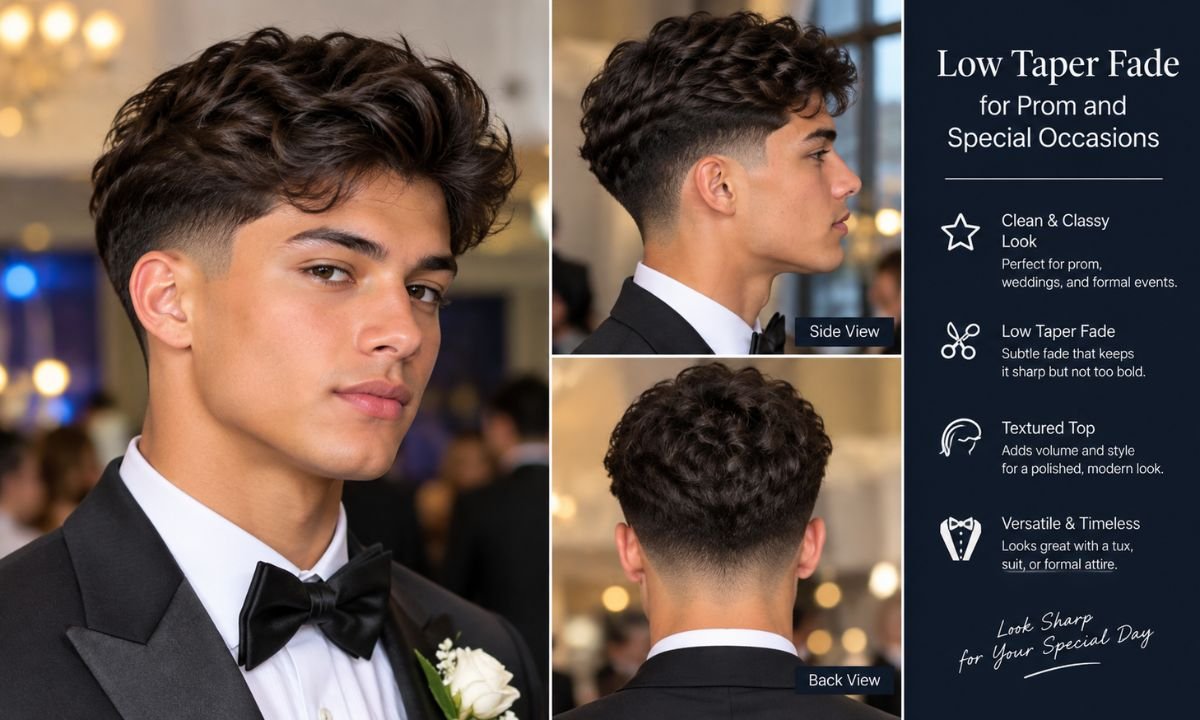
For prom, weddings, or graduation, a fresh low taper fade looks polished without trying too hard. Book the cut three to five days before the event. That gives the neckline time to settle so it doesn’t look raw.
For the day itself, wash the hair in the morning and skip heavy conditioner, which can flatten straight strands. A quick blow dry with the fringe lifted adds shape. Bring a small tube of product for last minute touch ups.
A textured fringe or a neat side part photographs well and suits formal outfits. Ask your barber for a quick demo on how much product to use. It takes two minutes and saves a lot of stress.
Low taper vs low fade vs skin fade

These terms get mixed up constantly. A low taper shortens hair gradually near the ears and neckline but stops before bare skin. A low fade blends down to the skin, which gives a sharper, more dramatic contrast.
A skin fade takes the hair all the way to the scalp at the bottom, creating the tightest, cleanest edge. It looks sharp but needs touch ups every two weeks. It also shows regrowth faster than a taper.
- Low taper: soft, natural, easiest to keep
- Low fade: cleaner edge, more contrast
- Skin fade: sharpest, highest upkeep
For most boys, especially in school, a low taper is the most practical choice. It’s neat, forgiving, and grows out without drama.
Common mistakes to avoid
Even a great haircut can go wrong if you skip a few basics. These are the mistakes barbers see most often with boys’ cuts.
Fade too high
Saying “fade” without “low” is the quickest way to end up with a mid or high fade. That’s a lot more dramatic than most parents expect. Always say low taper and point to where you want the blend to start.
Top cut too short
Once the top is cut short, it has to grow back. Straight hair needs some length to hold texture or a fringe. Tell the barber to leave enough so your boy has styling options.
Reaching for gel
Heavy gel makes straight hair look stiff and greasy. On younger boys it usually looks overdone. Choose a light clay or paste instead and use a tiny amount.
Only describing the fade
The sides are only half the haircut. If you only describe the fade, the top gets left to chance. Explain the top length, parting, and fringe as clearly as you describe the taper.
Skipping school rules
Some schools set limits on shaved lines, extreme contrast, or hair length. A quick look at the handbook avoids a sent home note. A low taper almost always passes, but check before getting fancy designs.
Leaving it too long
A taper that grows out for six weeks loses its shape fast. The blend turns fuzzy and the top gets heavy. Book a trim every three to four weeks to keep it looking sharp.
Thick vs fine straight hair: how the cut changes

Not all straight hair behaves the same. Thick straight hair is heavy and tends to sit flat or stick out at the sides. Fine straight hair is light, soft, and easily weighed down by product.
For thick hair, ask the barber to thin out the top with texturizing shears so it doesn’t feel bulky. Leave the sides tight so the taper controls the shape. A bit of paste gives it a clean hold.
For fine hair, keep the top slightly longer so it has body, and use styling powder instead of clay. A blunt cut can make fine strands look fuller. Avoid layers that are too short, since they can look thin and wispy.
Low taper fade for Asian straight hair

Many boys with thick, straight Asian hair grow strong, dense strands that stand up or flare out at the sides. A low taper fade tames that flare and gives a neat outline. It’s one of the most requested cuts for this hair type.
The key is weight removal. Ask the barber to texturize the top so it moves instead of sitting like a helmet. A soft fringe or a middle part works well when the hair is thinned properly.
Cowlicks and strong growth patterns are common, so mention them before the cut starts. A good barber will cut with the direction of growth, not against it. That small detail decides whether the style stays put all day.
What the barber actually does during the cut

Knowing the process helps you spot a good barber. A typical low taper fade starts with clippers and a guard, usually a #1 or #2 at the bottom. The barber then works upward, switching to longer guards to blend the transition.
Next comes the detailing. They use a comb and clippers over comb to smooth any lines, then clean the ears and neckline with a trimmer. A skilled barber checks the blend from several angles, since straight hair reveals every uneven patch.
Finally, the top is cut with scissors or clippers over comb to add texture. The whole thing takes roughly 25 to 45 minutes. If it’s done in ten, the blend probably got rushed.
How to grow out a low taper fade
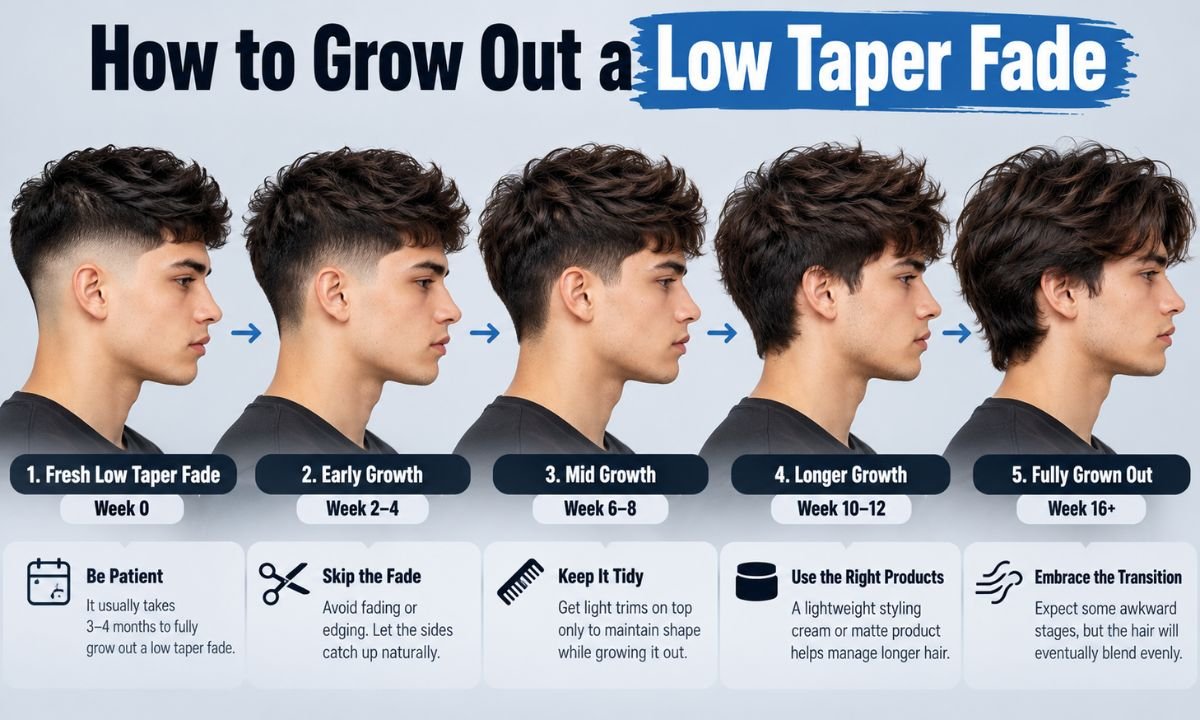
Sometimes a boy wants to switch styles or let his hair grow longer. The good news is that a low taper fade grows out gracefully. The soft blend means there’s no harsh line to work around.
Skip the sides for a few visits and only clean up the neckline so it stays tidy. The top can keep growing while the sides slowly catch up. After two to three months, the whole cut blends into a natural length.
During the awkward middle stage, a light paste keeps the hair neat. A side part or slicked back style hides the in between length. Ask the barber for a shaping trim rather than a full cut.
Signs of a good taper fade

Not every haircut looks the same in the mirror, so here’s what to check before you leave the shop. A well done low taper fade has a smooth, gradual blend with no visible lines or steps. Run your hand over the sides and you shouldn’t feel any sudden change in length.
The neckline should be clean and even, and both sides should match. Look at the ears too, since uneven blending around them is the most common flaw. If something looks off, speak up right away while the barber can still fix it.
Trust your gut. If your boy is happy and the cut looks tidy from the front, side, and back, you’ve found a barber worth returning to.
Low taper fade with a quiff or brush up

Some boys want more height than a flat fringe gives them. A quiff or brush up lifts the front and sweeps it back or slightly sideways. Paired with a low taper fade, it looks confident without being over the top.
This style needs about three to four inches at the front and a bit less at the back. Blow dry the hair upward with your fingers, then set it with a small amount of clay. Straight hair can flop, so a light hairspray helps it hold through the school day.
It suits round and square faces especially well, since the height adds length. Teens who play sports like it too, because it stays out of the eyes. Just expect a slightly longer morning routine than a simple crop.
How to make the haircut last between barber visits
A fresh cut looks best in the first week, but small habits stretch that window. Sleep on a smooth pillowcase if you can, since rough fabric messes up straight hair and flattens the fringe. Wash every day or two, not more, so the scalp doesn’t dry out.
Keep a fine tooth comb handy for the part and the fringe. A quick comb through damp hair resets the shape in seconds. If the neckline gets fuzzy, a barber can do a five minute clean up that costs far less than a full cut.
Watch how quickly the sides grow. Some boys need a trim at three weeks, others at five. Once you learn his rhythm, book the next visit before you leave the shop, so the taper never gets a chance to look tired.
Talking to your son before the barber visit
Boys are more likely to love a haircut they helped pick. Sit down together and scroll through a few photos, then narrow it to two or three. Ask what he likes about each one, whether it’s the fringe, the part, or the shape on the sides.
Be honest about how much styling he’ll actually do. If he won’t touch a hairdryer, skip the middle part and go for a textured crop instead. It saves arguments on school mornings.
Finally, agree on the plan before you sit in the chair. Once the barber starts cutting, changing your mind gets awkward. A two minute chat at home means everyone leaves happy, and your boy walks out feeling good about his new look.
Frequently asked questions
What is the Gen Z boy haircut called?
There’s no single name, but the most popular Gen Z looks are the low taper with a textured fringe, the middle part or curtains, and the two block cut. All of them pair short, tapered sides with a longer, natural top.
What haircut should a 14 year old boy get?
A low taper fade with a textured top, fringe, or middle part suits most 14 year olds. It looks current, stays school friendly, and gives him room to style it his own way.
How much does a low taper fade cost for a boy?
Prices vary by city and barber, but a boys’ low taper fade usually costs about the same as a regular kids’ cut or a little more. Detailed designs or a skilled specialist can raise the price.
How often should a boy get a low taper fade?
Every three to four weeks keeps it neat. Boys with fast growing hair or a skin finish may need a touch up sooner.
What guard number is used for a low taper fade?
Barbers usually start around a #1 or #2 at the bottom and blend upward with longer guards. The exact numbers depend on the hair and how soft you want the finish.
What’s the difference between a low taper and a low fade?
A low taper leaves a little hair at the bottom for a soft blend. A low fade goes down to the skin, which looks sharper and needs more frequent upkeep.
Is a low taper fade okay for school?
Yes, in most cases. It’s neat, subtle, and rarely breaks dress code, but check your school’s handbook if you plan to add lines or designs.
Can boys with thin straight hair get a low taper fade?
Absolutely. The low taper keeps the sides tidy while a textured top and a bit of styling powder add fullness. Ask the barber to leave a little extra length on top.
Final Thoughts
The low taper fade works for boys because it balances neat and easy. Straight hair shows off the blend beautifully, and the top gives plenty of room for personality. Whether he wants a fringe, a middle part, or a simple crop, there’s a version that fits.
Talk to your barber, be clear about the taper and the top, and check the school rules first. Keep a light routine at home and book a trim every few weeks. Do that, and this cut will look good from the first day to the last.
