
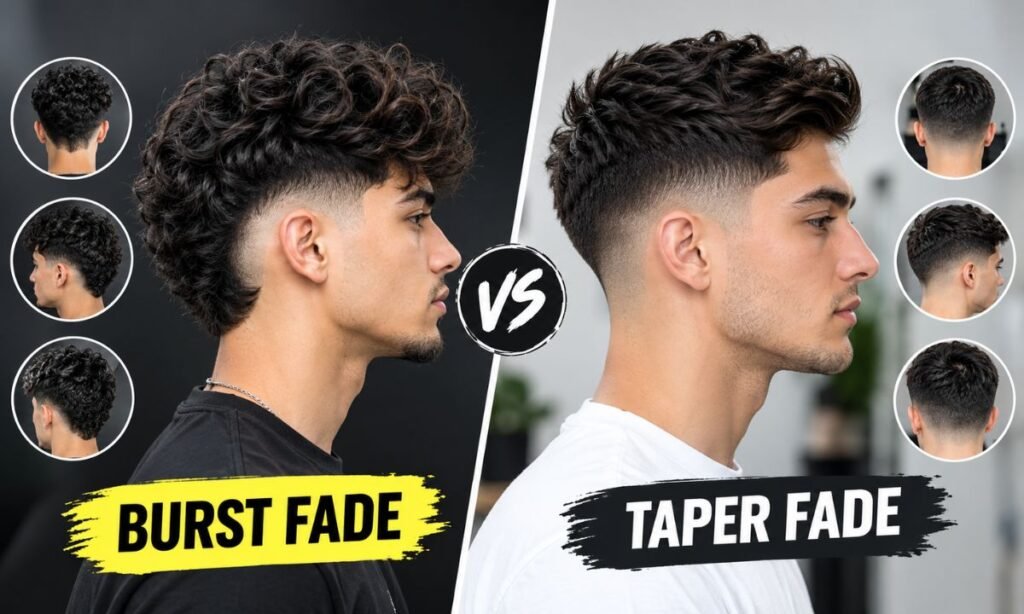
You’re sitting in the barber chair and the question hits. Do you want a burst or a taper? You nod like you know, then panic quietly.Here’s the short answer to burst fade vs taper fade. A taper fade shortens hair gradually along the sideburns, temples, and nape, so most of the side length stays. A burst fade curves around the ear in a half circle and leaves the back length alone.
Pick a taper if you want a clean, low-contrast haircut that works almost anywhere. Pick a burst if you want shape, edge, and a style that shows off a longer back or a curly top. Neither is better in general. The right one depends on your hair texture, face shape, and workplace.This guide breaks down the burst fade haircut and the taper fade haircut in plain words. You’ll learn how each looks from the side and back, what to tell your barber, and how long each lasts. Let’s sort it out.
Burst Fade vs Taper: Ear, Temple and Nape Views

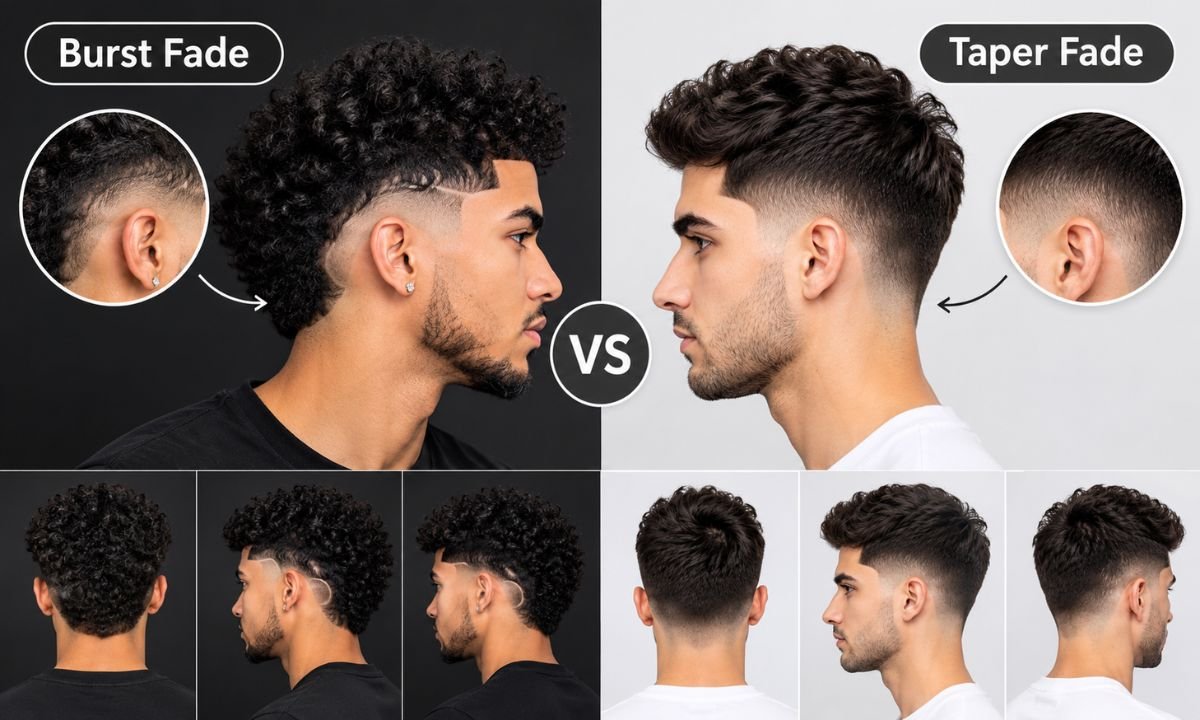
The fastest way to spot the difference is to look at where the haircut lives. A taper hugs the edges of your head. A burst fade circles one spot, the ear.
In a taper fade side view, the hair shortens gently at the temple and in front of the ear. The rest of the side keeps its length. From the back, a nape taper shrinks the neckline softly toward the skin.
A burst fade back view looks very different. The fade bursts out around the ear, then stops at a curved line behind it. Everything past that curve stays long, which is why the style pairs so well with a mullet or a faux hawk.
That curve is the signature. Barbers sometimes call it a curved fade around the ear or an ear-centered fade. Think of a rainbow wrapping the ear, not a ramp running down the head.
| View | Taper fade | Burst fade |
| Side profile | Gradual shortening at temple and sideburns | Curved fade around the ear |
| Back | Tapered neckline at the nape | Back length stays long past the curve |
| Contrast | Low to medium | Medium to high |
| Fade placement | Edges of the head | Semicircle around the ear |
Before you book, save photos from the side and back. A burst fade neckline and a taper fade neckline can look similar in a front shot. The back and side views are where the truth shows up.
What Is a Taper?
A taper is the gentlest way to shorten hair. The cut moves from longer hair to shorter hair over a small area, usually the sideburns, hairline, and nape. Most of the hair length on the sides stays put.
That’s why a taper fade haircut feels so safe. You keep volume on the sides, and the edges look tidy. It’s the cut your dad wore, only sharper.
A temple taper trims the area above the sideburn. A nape taper cleans the back of the neck. Many barbers also add a shadow taper, which leaves a soft shadow instead of bare skin.
Because tapers rely on smooth blending technique, the fade gradient stays subtle. The result is a classic hairstyle that suits a suit and a hoodie. If you’ve ever asked for “just clean it up,” you’ve probably wanted a taper.
What Is a Burst Fade?
A burst fade is a fade with a very specific shape. It starts at the ear and fans outward in a curve. Think of the ear as the center of a small sunrise.
The burst fade haircut shortens hair around and above the ear, then stops. The hair behind the curve stays long. That leftover length is what gives the style its personality.
Barbers use clipper guard changes to build the fade gradient. They start with the shortest setting near the ear and step up as they move away. A smooth blending technique keeps the curve from looking choppy.
Burst fades shine with longer top and back styles. Try one with a curly top, a mohawk, or a textured crop. The curve adds a sharp frame to all of them.
Does a burst fade have to be bald around the ear? No. You can leave a shadow finish or a low burst fade that keeps more hair. It’s your call.
What Does “Burst Taper” Mean?
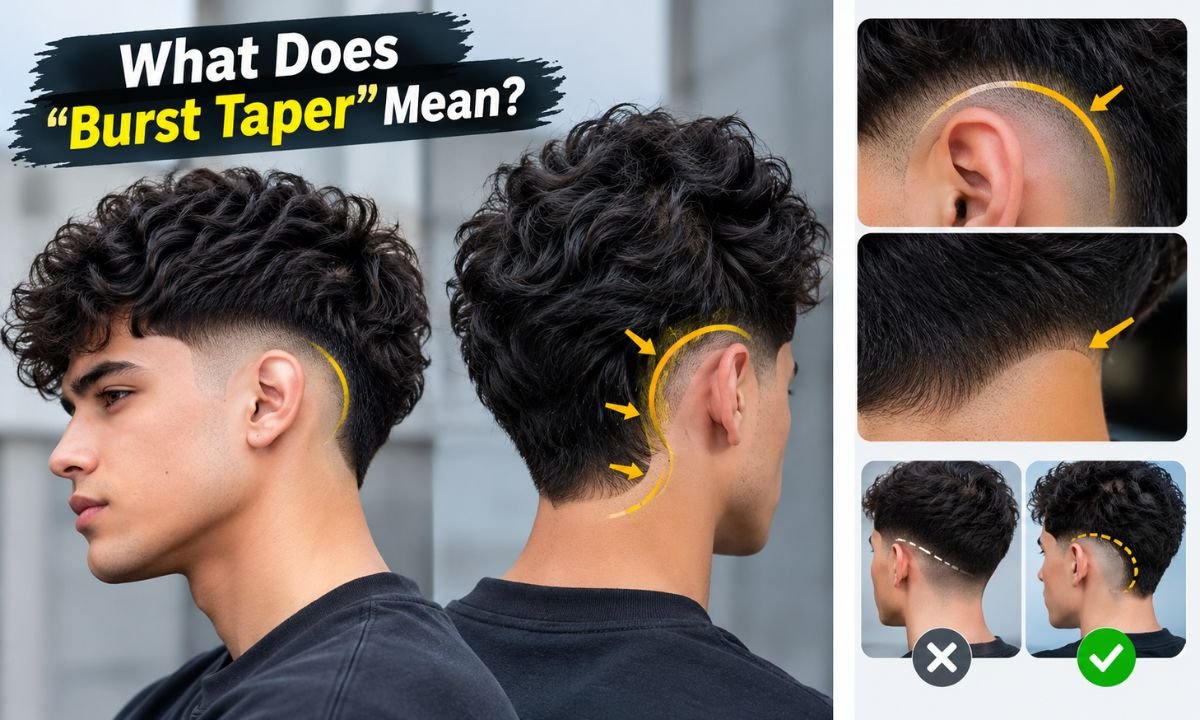
This is where people get lost. Burst taper is a mix of both names. It describes a burst taper haircut that curves around the ear like a burst but fades softly like a taper.
A burst taper vs burst fade question usually comes down to contrast. A burst taper keeps more hair near the ear and blends gently. A full burst fade often cuts closer and creates a stronger edge.
Some barbers use the terms interchangeably. Others treat “burst taper” as a softer version, which fits a soft burst fade or low burst fade. That’s why barber haircut terminology can feel messy.
So is a burst taper a real haircut style? Yes, and it’s popular. When in doubt, show a photo and say “curved around the ear, soft fade, keep the back long.” That’s clearer than any label.
Burst Fade vs Taper Fade: Which Looks Better for Your Hair Texture?

Hair type changes everything. The same haircut can look polished on one head and flat on another. Let’s go through each pattern.
Texture affects three things: how well the fade blends, how much length you can keep, and how the top and back behave. Hair density matters too, since thick hair needs more blending. Here’s how each type reacts.
Straight hair
Burst fade for straight hair looks crisp, because straight strands show the curve clearly. You’ll see every line of the fade gradient. That’s great if you want a sharp, defined cut.
The flip side is that straight hair reveals mistakes. A rough blending technique shows up fast. Pick a barber who does clean work.
A taper also suits straight hair, especially with a side part or a short crop. It’s neat and easy to style. If your hair is fine, the taper keeps the sides from looking thin.
Wavy hair
Wavy hair is the best fade for wavy hair debate’s favorite subject. It’s forgiving, because waves hide small flaws in the blend. Both cuts work.
A taper keeps more side length, so waves can move naturally. A burst fade adds contrast and makes waves on top stand out. Leave a bit more length on top so the pattern has room.
Wavy hair also shrinks as it dries. Ask your barber to cut when it’s dry, or at least check hair length after it dries.
Curly hair
Burst fade for curly hair is a fan favorite. The curve frames a curly top beautifully, and the short ear area keeps things clean. It’s why you see this combo everywhere.
A taper works too, and it keeps more curls on the sides. Choose it if you like a softer, bushier shape. It also grows out more gently.
Ask for the fade to sit below your curls, so you keep top volume. A line-up around the hairline adds sharpness without removing curls.
Coily hair
Taper fade for coily hair is a classic choice. The gradual shortening creates a neat edge and keeps the natural shape of the pattern. It also looks sharp with a line-up.
A burst fade works well too, particularly when the top is a defined coily shape or twists. The curve adds a clean contrast. Ask for a skin finish if you want a bold look.
Coily hair shows regrowth quickly at the edges. Plan regular trims to keep the lines crisp. A little moisture also helps the fade look smooth.
| Hair texture | Taper fade | Burst fade |
| Straight | Clean, easy, safe | Sharp, shows every line |
| Wavy | Natural movement stays | Adds contrast |
| Curly | Soft, bushy sides | Frames a curly top well |
| Coily | Neat edges, easy upkeep | Bold, high contrast |
What About Face Shape?
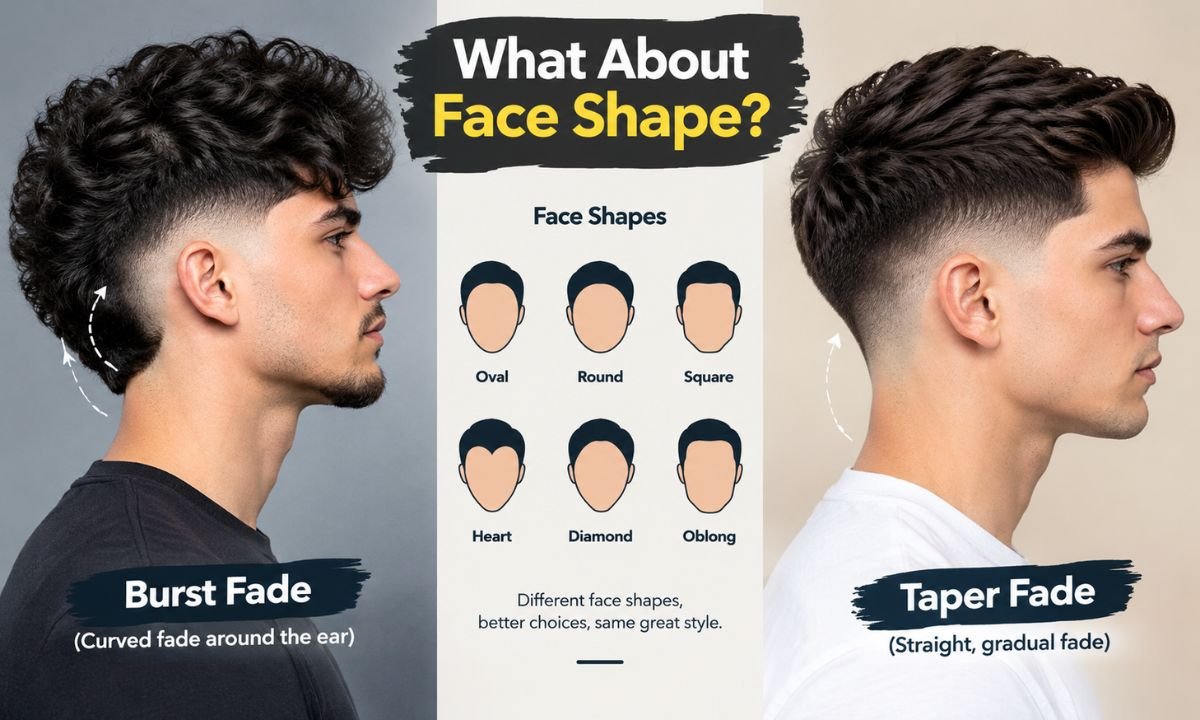
Face shape and head shape matter more than most guys realize. A haircut that flatters one head can shrink another. Let’s make it simple.
Round faces benefit from height and a tighter side. A burst fade with extra top volume creates vertical lines and slims the look. A taper with fuller sides can widen the face, so keep the sides trimmed.
Square faces look strong with either cut. A taper softens the jaw, while a burst fade adds edge. Long faces do best with a taper that keeps some side width, because it balances height.
Oval faces suit almost anything. So burst fade for round face shape is a smart pick when you want extra height. Check your side profile in the mirror and notice where your head looks flat. Ask your barber to add or remove length there.
Which Is More Professional?

If you work in a conservative workplace, the taper wins. The professional taper fade for men looks tidy, understated, and calm. It’s the safest option for interviews and client meetings.
A burst fade can still look professional, but it depends. A low burst fade with a soft blend and a neat top reads fine in most offices. A tall, high-contrast burst with a bold top looks more casual.
The conservative hairstyle rule is simple. Lower contrast equals more formal. A low-contrast haircut with a side part gives a classic, professional hairstyle feel.
So which haircut looks more professional? A taper, usually. But a burst with a restrained finish can also pass. Know your workplace and adjust.
Maintenance and Grow-Out
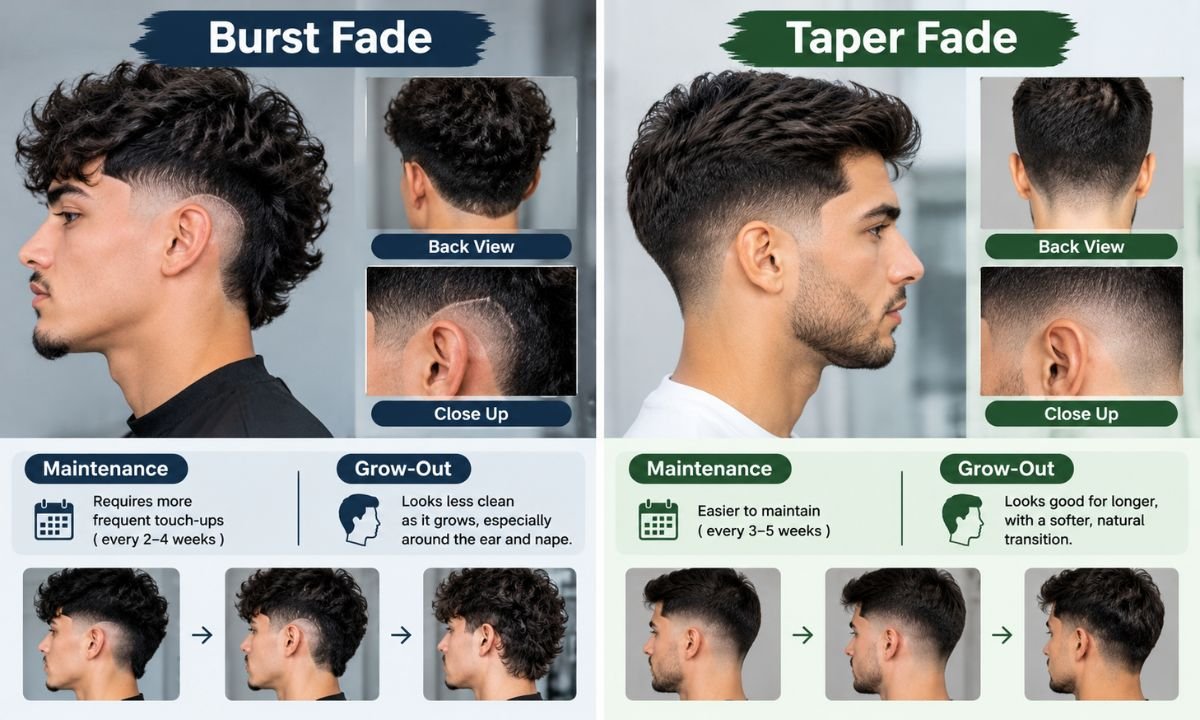
This is the part nobody wants to hear. Fades fade. Hair grows about half an inch a month on average, and the edges go fuzzy first.
A taper needs less frequent visits. Most guys can stretch it to three or four weeks before the neckline looks messy. The low fade gradient also grows out gently, because the contrast stays small.
A burst fade shows regrowth faster around the ear. Since that area is cut short, you’ll notice the curve losing its edge in two to three weeks. If you love a sharp look, plan more visits.
Fade grow-out works differently for each. A taper just gets longer on the edges, and nobody notices. A burst fade can look a little shaggy until the ear area catches up.
| Factor | Taper fade | Burst fade |
| Visit frequency | Every 3 to 4 weeks | Every 2 to 3 weeks |
| Grow-out look | Soft and gradual | Noticeable around the ear |
| Haircut maintenance | Low | Medium |
| Best for | Busy schedules | Style lovers |
So which haircut needs less maintenance? The taper. Which grows out better, burst fade or taper? Again the taper, mostly. Your hair growth rate and maintenance schedule can shift this, so adjust based on how fast you grow.
Skin Taper vs Shadow Taper vs Zero Finish

Finish type changes the whole mood. It tells your barber how short to go at the edges. Here’s the plain version.
A skin taper (also called bald taper or zero taper) fades all the way to skin. It looks sharp and bold, with strong contrast. It also needs more upkeep.
A shadow taper stops just before skin. You get a faint shadow of hair instead of bare scalp. It looks softer and grows out better, which makes it a favorite for offices.
Does a taper fade go to skin? Not always. Plenty of tapers stop at a shadow finish, and some use a zero finish only at the very bottom. You choose.
| Finish | Look | Contrast | Upkeep |
| Skin finish / zero finish | Bare skin at the edge | High | High |
| Shadow finish | Soft, faint stubble | Medium | Medium |
| Longer guard | Short hair, no skin | Low | Low |
Clipper lengths also help. A guard around #1 leaves a faint shadow, while a bare blade goes to skin. Ask your barber which clipper length they’ll use so you know what to expect.
Burst Fade Top Styles That Work

The burst fade shines when paired with the right top. The curve is a frame, and the top is the picture. Here are the best matches.
A faux hawk looks great with a burst, because the long center and curved sides create a strong shape. A mohawk pushes it even further. Both are bold choices.
A mullet is the burst fade’s best friend. The ear curve keeps the sides short while the back stays long, which is the whole mullet idea. For a lighter take, try a textured crop with a burst around the ears.
A side part works if you want a cleaner, retro look. And a curly top turns the burst into a fresh, modern cut. Pair the style with your hair texture, and you’re set.
What to Tell Your Barber
Most haircut disasters start with a vague request. “Short on the sides” means ten different things to ten different people. Clear words fix that.
Bring haircut reference photos from the side and back. Mention the finish you want, the contrast level, and how long the back should stay. Photos beat adjectives every time.
Also tell your barber your daily routine. A guy who hits the gym daily needs a different cut from someone who sees clients all week. Context helps them choose the right fade placement.
What to say in the chair (taper fade)

Here’s a script for a taper. Ask for it like this: “I’d like a taper fade with a temple taper and nape taper. Keep the sides fuller, and leave a shadow finish.”
That tells the barber the finish, the placement, and the length. Add “low contrast” if you want a very soft look. If you want to ask for a low shadow taper, say “low shadow taper, no skin, blended at the neckline.”
Confirm the clipper guard before they start. A quick “what guard are you using at the bottom?” saves regret. Most barbers like clear questions.
What to say in the chair (burst fade)

For a burst, try this: “I’d like a burst fade curved around the ear, with the back left long. Keep the fade low and blend it softly.” Show a photo to confirm the height.
This is also how to explain a burst fade to a barber without confusion. Mention “curved around the ear” and “keep the back length.” Those two phrases carry most of the information.
If you want it bold, add “skin finish.” If you want it softer, say “low burst fade, shadow finish.” And mention your top style so they cut it to match.
Common Mistakes
A few errors pop up again and again. Most are easy to avoid once you know them. Let’s walk through them.
- Using only front photos. The back and side decide the haircut.
- Mixing up terms. Burst, taper, and burst taper aren’t identical.
- Ignoring hair texture. Curly and coily hair blend differently.
- Wrong fade placement. A fade too high can look harsh on a small head.
- Skipping the clipper length. Always confirm the guard.
- Forgetting upkeep. A high-contrast cut needs more visits.
Another common slip is chasing a trend without checking the job. A high-contrast haircut may look amazing online and clash with a strict dress code. Think about where you spend your days.
And don’t forget hair regrowth. If your hair grows fast, plan for more trims. A cut that looks perfect on day one can age quickly.
Compare your preferences
Before deciding, ask yourself three questions. How much time do you want to spend on upkeep? How bold do you want your look? What does your workplace allow?
| If you want | Choose | Why |
| Low upkeep | Taper fade | Longer between visits |
| Bold shape | Burst fade | Curved edge stands out |
| Office friendly | Taper or low burst | Softer contrast |
| Long back or mullet | Burst fade | Preserves back length |
| Easy grow-out | Taper fade | Gradual change |
So how to choose between a burst fade and taper? Answer those three questions, and you’ve got your pick. If it’s a tie, ask your barber to show you both on a photo.
Frequently Asked Questions
What is a burst fade?
A burst fade curves around the ear in a semicircle. It shortens hair around that area and leaves the back long. It’s popular with mullets, faux hawks, and curly tops.
What is a taper fade?
A taper fade gradually shortens hair at the sideburns, temples, and nape. Most of the side length stays. It looks clean and conservative.
What is the difference between a burst fade and a taper?
The taper works along the edges, while the burst curves around the ear. A burst leaves the back length. A taper keeps more side length.
Is a burst taper a real haircut style?
Yes. A burst taper blends the curved ear shape of a burst with the soft fade of a taper. Some barbers use it interchangeably with a soft burst fade.
Is a burst fade better than a taper fade?
Neither wins outright. The burst offers more style and contrast. The taper offers easier upkeep and a more formal look.
Which haircut looks more professional?
A taper usually looks more professional, especially with a side part. A low burst with a soft blend can also work in many offices.
Which haircut lasts longer between barber visits?
The taper. Its low contrast hides regrowth, so you can wait three to four weeks. A burst usually needs a trim every two to three.
Which fade works best with curly hair?
Both work. A burst fade frames a curly top well, and a taper keeps softer curls on the sides. Pick based on how bold you want to look.
Can you get a burst fade with straight hair?
Yes. Straight hair shows the curve clearly, so the result looks sharp. Just choose a barber with strong blending skills.
Does a taper keep more hair on the sides?
Yes. A taper only shortens hair at the edges, so the sides keep their length. That’s why it looks fuller than a bigger fade.
What’s the difference between a shadow taper and a skin taper?
A shadow taper leaves faint stubble at the edge. A skin taper goes to bare skin. The shadow version is softer and grows out better.
How long does a burst fade take to grow out?
It usually looks rough in two to three weeks. Full grow-out can take a couple of months, depending on your hair growth rate. A good blend helps it age better.
What should you tell your barber when requesting a burst fade?
Say “curved around the ear, keep the back long.” Mention the finish, such as shadow or skin. Bring side and back photos.
Can a burst fade preserve length at the back?
Yes. That’s one of its best features. The fade stops at the curve, and the hair behind it stays as long as you like.
Final Thoughts
Burst fade vs taper fade isn’t a fight with one winner. It’s a choice between two moods. The taper is calm, neat, and easy, while the burst is sharp, curved, and full of attitude.
Think about your hair texture, face shape, workplace, and upkeep time. Then give your barber clear words and a few photos. That’s how you get the cut you pictured.
So which one are you leaning toward? Drop a comment with your pick, share this with a friend stuck on the same decision, and tell us how your next visit goes.
