


You’re staring at the barber’s mirror, and one question won’t leave you alone. Should you ask for a low taper or a low fade? They sound almost identical, and yet the two cuts can change how you look for the next month.Low Taper vs Low Fade explaied !
Here’s the direct answer. A low taper shortens the hair gradually and keeps some length at the edges, so the finish looks soft and classic. A low fade keeps cutting until the hair nearly disappears, often down to skin, so the finish looks sharp and bold.
Choose the taper if you want a clean look that grows out gracefully. Choose the fade if you love contrast and don’t mind frequent barber visits. Now let’s go deeper, so you walk out of the shop happy.
The Main Difference
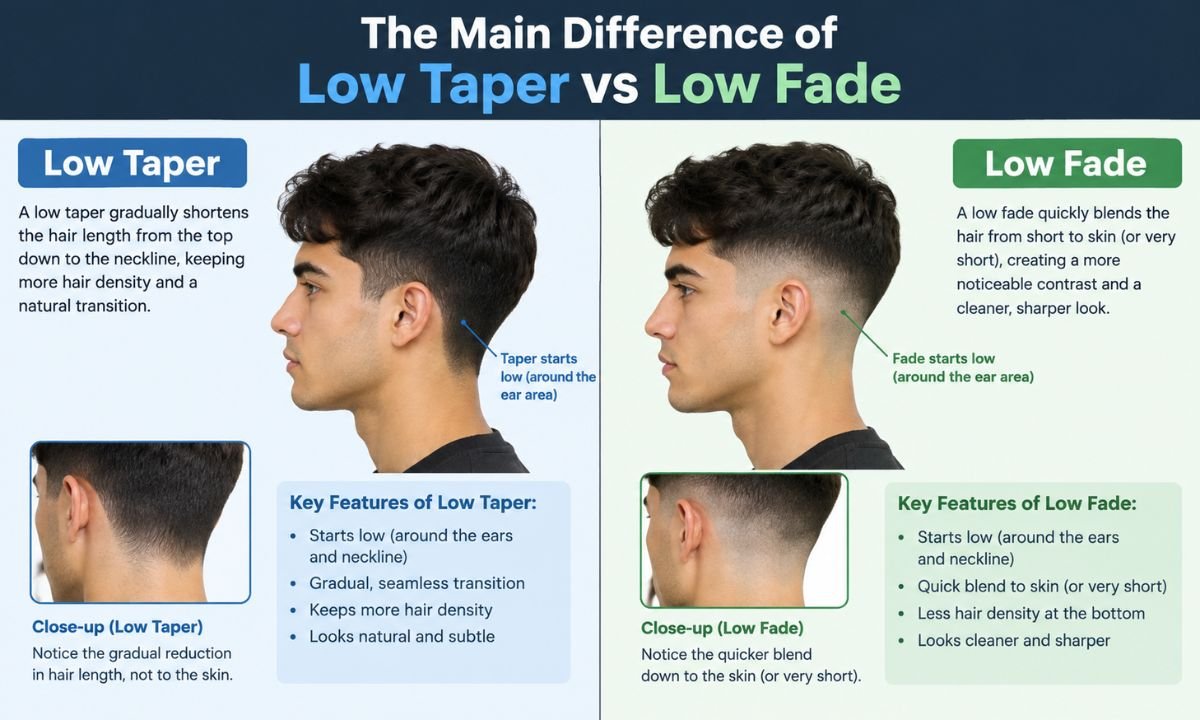
The real difference is how much hair is left at the shortest point. A taper trims the sides and back in a gentle slope, but it never goes bare. A fade keeps going until the hair blends into skin or a very faint shadow.
Think about a dimmer switch and a light switch. A taper dims the room slowly and leaves a glow. A fade takes it almost to black before the hairline ends.
That single detail changes everything else. It changes how your cut looks on day one, how it looks on day twenty and how often you’ll sit in the chair. Once you understand this, the rest of the decision gets easy.
What Is a Low Taper?
A low taper is a haircut where the hair gets shorter as it moves toward the sideburns and the neckline. The shortening happens low on the head, around the ears and the nape. Everything above that zone stays longer.
Your barber usually starts with a longer clipper guard and steps down to a shorter one near the edges. The hair never reaches bare skin. You keep a soft outline, with a little fuzz around the ears and the back of the neck.
Picture the haircut your dad wore to a wedding, then update it for today. That’s the low taper. It doesn’t shout for attention, and that’s exactly why so many people love it.
What Is a Low Fade?
A low fade starts in the same low zone as a taper, just above the ears and around the back. The difference is how far it travels. It often ends in a skin fade, where the hair melts into bare skin.
To get there, your barber uses several guards, a trimmer or even a razor. The blending is where the skill shows. When it’s done right, you can’t spot the line where one length ends and the next begins.
The result looks crisp and modern. The contrast between skin and the longer top gives your hair more shape. That’s why fades keep dominating barbershop photos year after year.
Low Taper vs Low Fade at a Glance
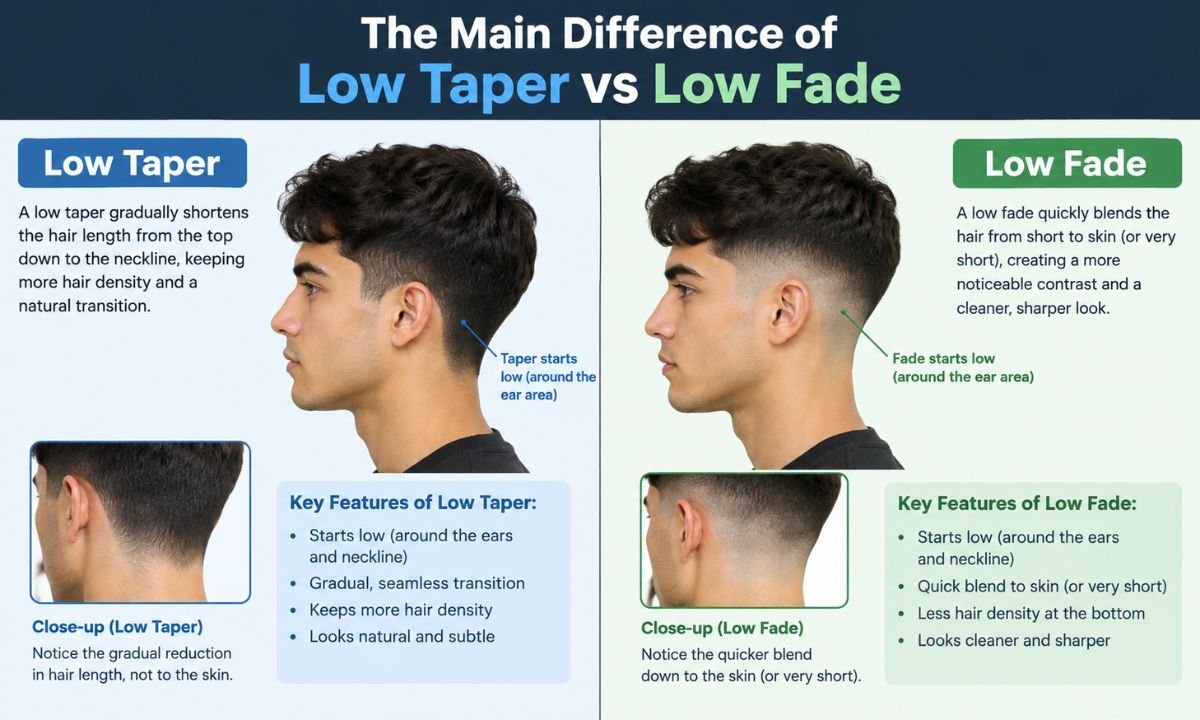
Sometimes a quick comparison beats a long explanation. Here’s how the two cuts compare.
| Feature | Low Taper | Low Fade |
| Shortest length | Visible hair remains | Skin or near skin |
| Overall look | Soft and classic | Sharp and bold |
| Contrast | Subtle | High |
| Grow out | Graceful | Fuzzy after 2 weeks |
| Visits needed | Every 4 to 6 weeks | Every 2 to 3 weeks |
| Best setting | Formal and low fuss | Style forward and social |
Use this table as your first filter. If the left column sounds like you, go taper. If the right column sounds like you, go fade.
Remember that most barbers can adjust either cut. You can ask for a taper that goes a bit shorter, or a fade that stays a touch softer. Your hair, your face and your taste decide the final result.
Low Taper vs Low Fade on Black Hair
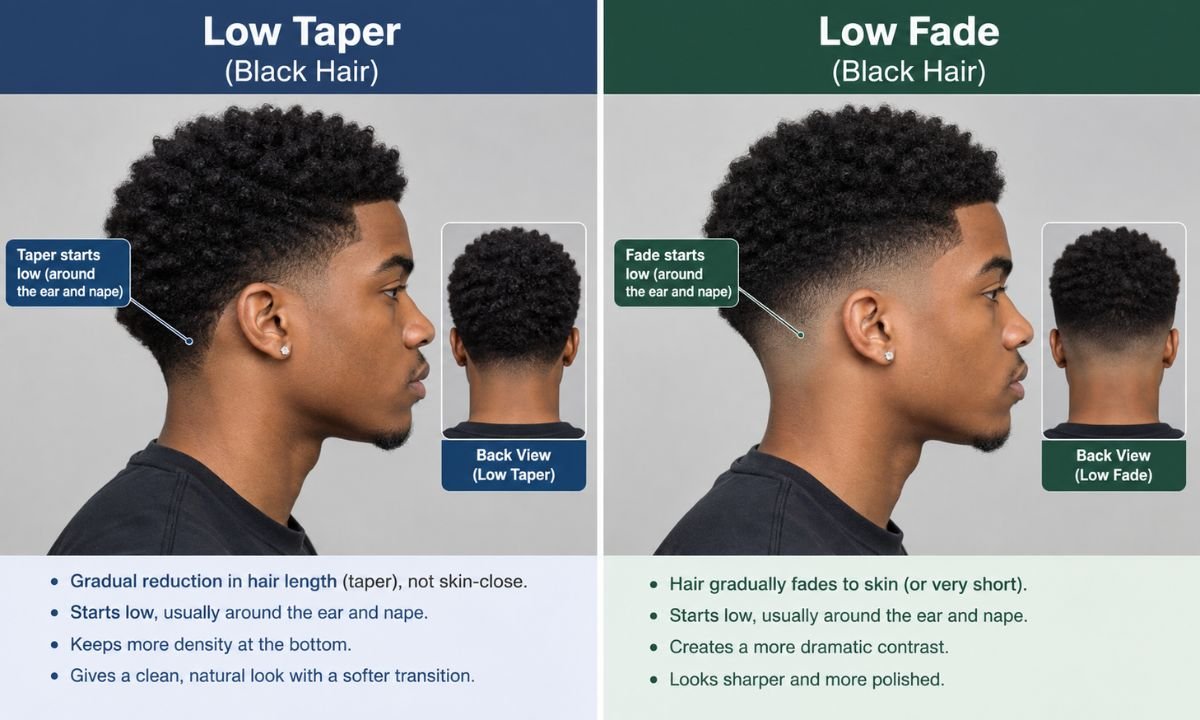
This is where the choice gets interesting. Black hair and coily hair hold their shape beautifully, so both cuts look sharp when done well. The texture also shows every mistake, so your barber needs steady hands.
A low fade on black hair creates strong contrast. Clean skin against dense curls or waves makes the top look fuller, and a crisp line up makes the whole cut pop. Many people add a temple fade or a shape up for extra definition.
A low taper looks just as good and often feels more refined. It suits 4C hair, waves and twists, and it leaves a soft edge around the ears. If you wear twist sponge curls or dreads on top, a taper frames them without stealing the spotlight.
Which Cut Suits Your Lifestyle: Work, School and Events

Your daily routine matters more than you’d think. A cut that looks amazing but wrecks your schedule won’t last long. So start by asking where you spend most of your week.
A low taper fits corporate offices, interviews and formal events easily. It looks neat without drawing attention. If your dress code is strict, this is the safer bet.
A low fade works in most modern workplaces, especially creative ones. Some conservative settings still see skin fades as edgy. Check your school or company rules first, then decide.
Time and Cost in the Barber Chair
Fades take longer. A proper skin fade can eat 30 to 45 minutes, while a taper often wraps up sooner. That extra time is why many shops charge a little more for fades.
Then there’s the repeat cost. Fade fans book every two to three weeks to keep the look sharp. Over a full year, those visits add up to a real number.
Taper fans usually stretch visits to five or six weeks. If you’re watching your budget, that’s a big win. Ask your barber about pricing before you sit down, because rates vary by city and shop.
Which One Looks More Natural, and Where Each Works Best
If natural is your goal, the low taper wins. It looks like hair that was freshly trimmed, not sculpted. Nobody will guess you just left a barbershop.
The low fade looks styled by design. It tells people someone cared about your hair. That’s great when you want attention, and less great when you’d rather blend in.
Here’s where each one shines:
- Low taper: interviews, weddings, client meetings, family photos
- Low fade: nights out, creative jobs, sports, social media photos
Neither choice is wrong. You’re simply matching the cut to the moment.
Choosing Based on Your Face Shape
Your face shape changes how a cut lands. Hair frames your features, so the right contrast can flatter you. Here’s a simple way to think about it.
Round faces benefit from a low fade. The sharp contrast adds structure and makes the face look longer. Pair it with some height on top for extra lift.
Square faces already have strong angles, so a low taper keeps things balanced. The soft edges stop the jaw from looking harsh. Oval faces suit both options, so choose by preference. Long faces do better with a taper and less height on top, since a fade plus tall hair can stretch the face further.
Choosing Based on Your Hair Type
Hair type changes how a cut grows out and how easy it is to maintain. Let’s break it down by texture.
Straight hair shows fades cleanly but grows out with a fuzzy halo. A taper hides that stage better. Wavy hair loves both cuts, and the top length adds natural movement.
Curly and coily hair holds a fade very well because the density keeps the shape crisp. Thin or receding hair often looks better with a taper, since a high contrast fade can spotlight a thinning hairline. If your hair grows fast, expect more barber trips either way.
Maintenance and How Long Each Lasts
A low taper lasts longer because the gap between the sides and the top is small. Most people get four to six good weeks. Even after that, it still looks decent.
A low fade loses its shape faster. Once the skin area fills in with stubble, the gradient gets muddy. Plan on two to three weeks for peak sharpness.
You can stretch both cuts at home. Use a small trimmer to clean the neckline, and keep a soft brush ready for the nape. Just don’t try to blend the sides yourself, because that’s where most home haircuts go wrong.
Pairing With Popular Styles on Top
The sides tell only half the story. What you do on top completes the look. Here are combinations that work well in 2026.
- Textured crop: short, messy and easy. It pairs well with either cut.
- Quiff: volume in front with a clean fade underneath gives a retro punch.
- Pompadour: a taper keeps it classic, and a fade makes it dramatic.
- Slick back: works best with a low taper for a refined finish.
- Curly top: a low fade keeps the curls looking intentional.
- Comb over: a low taper gives a gentleman feel, and a fade adds edge.
Try one change at a time. If you switch both the sides and the top, you won’t know what you actually liked.
Low Taper Fade: The Middle Ground
Plenty of people don’t want to choose. That’s where the low taper fade steps in. It mixes a taper’s soft finish with a fade’s smooth gradient, and it leaves a light shadow instead of bare skin.
Your barber may call it a shadow fade or a “fade with fuzz.” It looks sharper than a classic taper and softer than a bald fade. If you’re torn between the two, this option usually settles the debate.
Ask for it by describing the result, not just the name. Barbers use different words for the same cut, so photos remove the guesswork.
How to Ask Your Barber
Walking in and saying “just a fade” is a gamble. Barbers read that request in a dozen different ways. A little detail saves you from a bad surprise.
Bring a photo, ideally showing the front, side and back. Then mention three things: how short you want the sides, where the shortening should start and how much length stays on top. Words like “low,” “skin” and “shadow” help a lot.
You can also say:
- “Low taper, keep some length around the ears.”
- “Low fade to skin, start just above the ear.”
- “Blend it soft, no harsh lines.”
Speak up if something feels off during the cut. Good barbers welcome feedback, and fixing a problem early is far easier than fixing it later.
Common Mistakes to Avoid
Many bad haircuts come from small misunderstandings. Knowing the usual traps helps you dodge them. Most of them are easy to fix before the clippers even start.
First, people ask for a fade when they really want a taper. They leave frustrated by how short it looks. Second, they choose a fade without thinking about upkeep, then let it grow out messy.
Third, they ignore their hairline and face shape. A cut that works on your friend might look wrong on you. Take a moment to think about your own features before you copy a photo.
Aftercare and Products That Help
A good cut still needs a little care. Simple habits keep it fresh longer. You don’t need a shelf full of products.
Wash your hair regularly and moisturize your scalp, especially after a skin fade. Dry skin flakes show up fast against shaved sides. A light oil or lotion fixes that.
On top, use a product that matches your hair. Clay gives texture, pomade adds shine and sea salt spray builds volume. Apply it to damp hair and style with your fingers. If you have curly hair, a curl cream keeps definition.
Low Taper vs Low Fade for Teens and Kids

Parents often ask which cut suits a growing boy. The answer depends on school rules and how much upkeep the family can handle. Kids also move around a lot, so their hair gets messy fast.
A low taper is usually the easier pick. It grows out evenly and doesn’t demand a barber visit every two weeks. It also passes most school dress codes without any drama.
A low fade works for teens who care about style. Some schools set limits on skin fades, so check the rules first. Let your teen pick a reference photo, because a cut they love makes them wear it with confidence.
Summer vs Winter: Seasonal Haircare
The season changes how you feel about your cut. In summer, shorter sides keep you cool and sweat under control. A low fade fits that mood nicely.
In winter, your ears and neck get cold quickly. A low taper leaves a bit more hair to soften the chill. It also hides dry winter skin better than a bare fade.
Sun matters too. A fresh skin fade exposes pale skin to strong sunlight, so apply sunscreen after a haircut in summer. Your scalp will thank you.
Myths About Fades and Tapers

Barbershop talk is full of half truths. Let’s clear up a few. Believing them can lead you to the wrong cut.
Myth one: a fade damages your hair. It doesn’t. Clippers only touch the hair that’s already dead, so your hair health stays the same.
Myth two: only young people wear fades. Plenty of men in their fifties wear a neat low fade. Myth three: a taper is boring. A well blended taper looks sharp, and it pairs with almost any style on top.
Cost Breakdown: What You’ll Really Spend
Let’s talk money for a second. A taper haircut typically costs less per visit than a fade in most shops. The gap depends on your city and the barber’s experience.
The bigger difference shows up across the year. If you visit every two weeks for a fade, that’s around 26 visits. A taper at every five weeks means about 10 to 11 visits.
Do the math for your own budget before you commit. If you love the fade look but hate the cost, ask about a low taper fade. It sits in the middle for both price and upkeep.
So, Which Should You Choose?
Let’s wrap this up with a plain answer. Choose the low taper if you like a clean, classic, low effort haircut. It suits formal spaces, thin hair and anyone who dislikes frequent barber visits.
Choose the low fade if you want contrast and a modern look. It suits dense hair, bold styles and people who enjoy a fresh cut. Just accept the upkeep that comes with it.
Still stuck? Try the taper first, since it’s easy to go shorter next time. A fade can’t be undone, but a taper can always turn into one.
Frequently Asked Questions
Which is better, fade or taper?
Neither wins outright, because the better cut depends on you. A taper is better for a soft, professional look with less upkeep. A fade is better for sharp contrast and a trendy finish.Your hair type, lifestyle and comfort with regular barber visits should decide it.
What lasts longer, a taper or fade?
A taper lasts longer. It keeps some length at the edges, so growth is less noticeable. Most tapers look good for four to six weeks.
A fade starts looking fuzzy after two to three weeks, so it needs more frequent touch ups.
Is tapered the same as fade?
No, though they overlap. Both shorten hair gradually. A taper stops at a short length, while a fade continues down to skin or almost skin.
Barbers often mix the terms, so always show a photo.
How often should you get a low fade?
Most people refresh a low fade every two to three weeks. If you want it razor sharp, go every two weeks. If you don’t mind some softness, three weeks is fine.
Is a low fade or low taper better for thin hair?
A low taper usually looks better on thinning hair. It keeps a soft edge and doesn’t spotlight a receding hairline. A high contrast fade can make thin areas more obvious.
Can you get a low fade with a beard?
Yes, and it looks great. Your barber can blend the fade into your sideburns and beard for one smooth line. Ask for a beard fade so the transition looks seamless.
What is the difference between a low fade and a mid fade?
The starting point. A low fade begins near the ears and the nape. A mid fade begins around the temples, so more of the sides get shortened.
Does a low taper work on curly hair?
Absolutely. It keeps curls intact on top and cleans up the sides. Many people with curly or coily hair prefer it because it grows out evenly.
How much does a low fade or taper cost?
Prices vary by city and shop. Fades often cost slightly more because they take longer. Call ahead or check the shop’s menu so you know before you sit.
Can you get a low fade with long hair on top?
Yes. Long hair on top with a low fade underneath is a popular look. The contrast makes the length stand out, and you can tie it back or wear it loose.
Is a low taper good for a receding hairline?
It often is. A low taper leaves soft edges and avoids a stark contrast near the temples. Keep the top slightly longer to draw attention away from the hairline.
Do you need to wash your hair before a fade?
Come with clean, dry hair if you can. Clean hair cuts more evenly, and your barber can see your natural texture. Many shops also wash it after the cut.
Final Thoughts
Low taper and low fade share a family tree but not a personality. One is calm and classic. The other is sharp and confident.Think about your face, your hair, your job and your patience for barber visits. Then bring a photo, speak clearly and trust a good barber to handle the rest.
Have you tried both? Drop a comment and tell us which one you wear, or share this guide with a friend who keeps saying “just a fade.” You might save them from a haircut they regret.
