


Looking for a haircut that says “I put thought into this” without screaming for attention? The low taper fade with design might be exactly what you need. It’s sharp, it’s personal, and honestly, it works on almost anyone willing to sit in the chair a little longer.
This guide breaks down everything, from what the cut actually is, to how it looks on different hair types, face shapes, and skin tones. No filler. Just what you came here to learn, explained the way a friend would explain it over coffee, not the way a textbook would.
By the end, you’ll know exactly what to say to your barber, what mistakes to dodge, and which design actually suits your face instead of just looking good on someone else’s Instagram.
What is a low taper fade with design?

A low taper fade trims the hair gradually near the ears and the back of the neck, keeping the fade close to the skin without climbing too high up the sides. Add a design, meaning a shaved line, pattern, or shape carved into the hair, and you get a cut that’s clean at the base but full of personality up top.
Think of it like a canvas with a frame. The taper is the frame, subtle and controlled. The design is the artwork, whatever you want it to say about you. Barbers usually use clippers with a zero or half guard and a trimmer for the fine detail work on the design itself.
What makes the “low” part important is restraint. A high fade can look loud on its own, even before you add a design. A low taper keeps things grounded, so the design becomes the star of the show instead of fighting for attention against a dramatic fade line. That’s part of why this combo has become such a go to request in barbershops lately.
Why it’s popular in 2026
Style trends in 2026 lean toward personalized grooming, not cookie cutter looks. People want a haircut that photographs well for social media but still feels wearable to the office on Monday. The low taper fade with design hits that sweet spot.
It’s also low maintenance compared to a high fade with a full undercut. You don’t need to visit the barber every ten days to keep it sharp. And because the taper stays low, it grows out more gracefully, giving you a few extra days before it looks messy.
There’s another reason behind the rise too. Social platforms have turned haircuts into a form of self expression, almost like a mini tattoo you can change every few weeks. A design gives people a way to signal personality, culture, or even a mood, without committing to something permanent. Combine that with barbers getting genuinely skilled at freehand detail work, and you’ve got a trend that isn’t slowing down anytime soon.
Best low taper fade with design ideas for men and boys

Whether you’re a teenager heading back to school or a grown man who wants a fresh weekend look, there’s a version of this cut for you. Here are some ideas worth showing your barber.
- Single line part: one clean shaved line separating the fade from the top
- Zigzag design: playful, works great for younger guys and boys
- Star or lightning bolt: bold, a favorite among teens
- Curved side part: subtle and grown up, good for professional settings
- Geometric pattern on the temple: modern, minimal, still eye catching
- Dual line design: two thin parallel lines for a bit more edge without going overboard
- Arrow accent: small and sharp, usually placed near the hairline
Boys tend to enjoy bolder, more graphic designs, while men often go for something understated like a single razor line or a small fade pattern near the temple. Age isn’t a hard rule though. Plenty of adult men rock a bold design and pull it off just fine, as long as the rest of their grooming stays neat.
Simple line designs for a clean look

Not everyone wants a loud statement on their head, and that’s fair. A simple line design is the low taper fade’s best friend. One thin line, carved with precision, running from the hairline to the crown or just across the temple.
It’s subtle enough for a job interview and sharp enough to notice in a photo. Barbers love this style too because it takes less time and gives a crisp, professional finish without overcomplicating the cut.
If you’re new to getting designs altogether, this is the safest starting point. It lets you test how the design holds up against your hair growth speed and texture before committing to something more detailed. Once you see how it grows out over two weeks, you’ll know whether you want to go bolder next time or keep it minimal.
Back and neckline design ideas
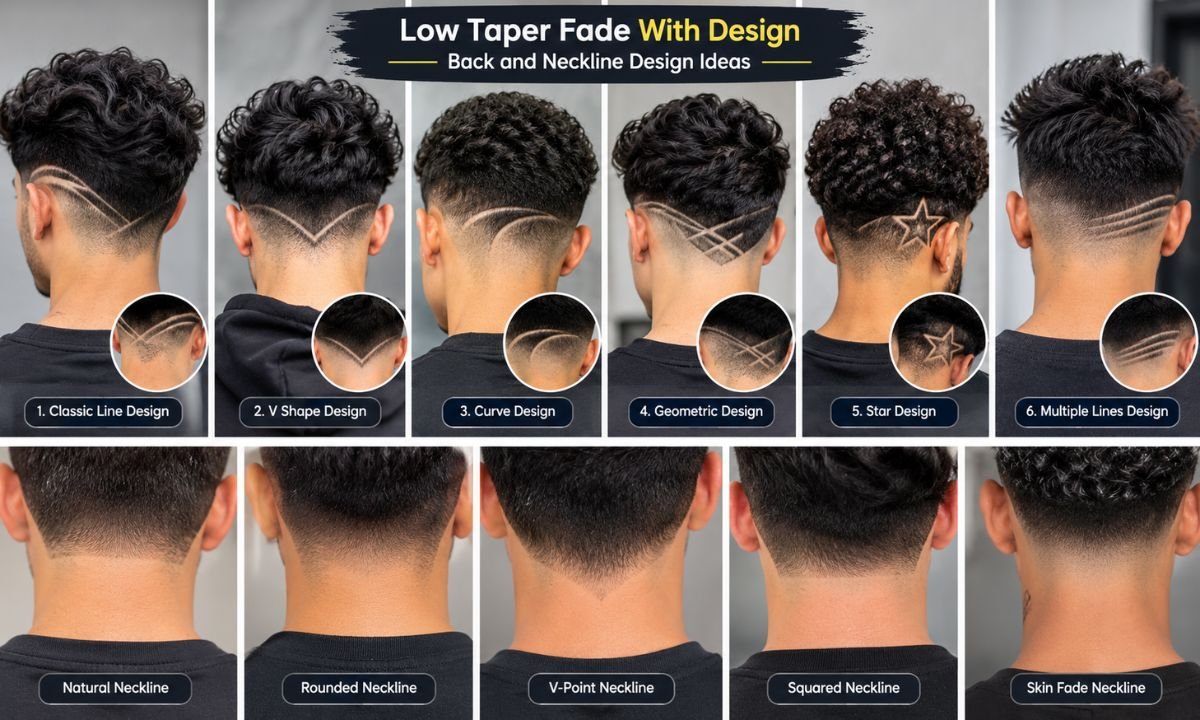
Most people focus on the front of the haircut and completely forget the back. Big mistake. The neckline is where a fade either looks finished or looks lazy.
A shaved neckline design, like a small arch or a subtle curved line at the nape, gives the whole haircut a polished edge. Some guys even add a tiny geometric shape at the back of the head, hidden until they turn around. It’s a nice surprise detail that barbers rarely bring up unless you ask.
Necklines also matter for a completely practical reason. A rounded or square neckline shape can subtly change how your head looks from behind, especially if you have a shorter or thicker neck. Ask your barber to shape it based on your build, not just cut a straight line out of habit.
Low taper fade with design straight hair

Straight hair takes to a low taper fade with design beautifully because the strands lie flat, letting every line show clearly. There’s no texture fighting against the pattern, so even intricate designs stay crisp for weeks.
The downside? Straight hair grows fast and shows regrowth quickly around the design. Expect to touch up every two to three weeks if you want the lines looking freshly cut.
Styling straight hair on top of this cut is fairly simple too. A light matte paste keeps the top textured without making it look greasy, and since straight hair doesn’t hold much volume naturally, a blow dryer on low heat can add a bit of lift before you style.
Low Taper With Design On Side

A side design is one of the most requested styles right now. It usually sits just above the ear, blending into the taper, and can be as simple as a slanted line or as detailed as a small emblem.
This placement works well because it’s visible from the front without overwhelming the whole look. It also pairs nicely with a side part or a comb over on top, giving you two style choices in one haircut.
One thing worth mentioning, side designs are also the easiest for barbers to touch up quickly. Since they sit in a smaller, contained area, a fifteen minute appointment is usually enough to keep the lines fresh between full haircuts.
Low taper fade with design black male
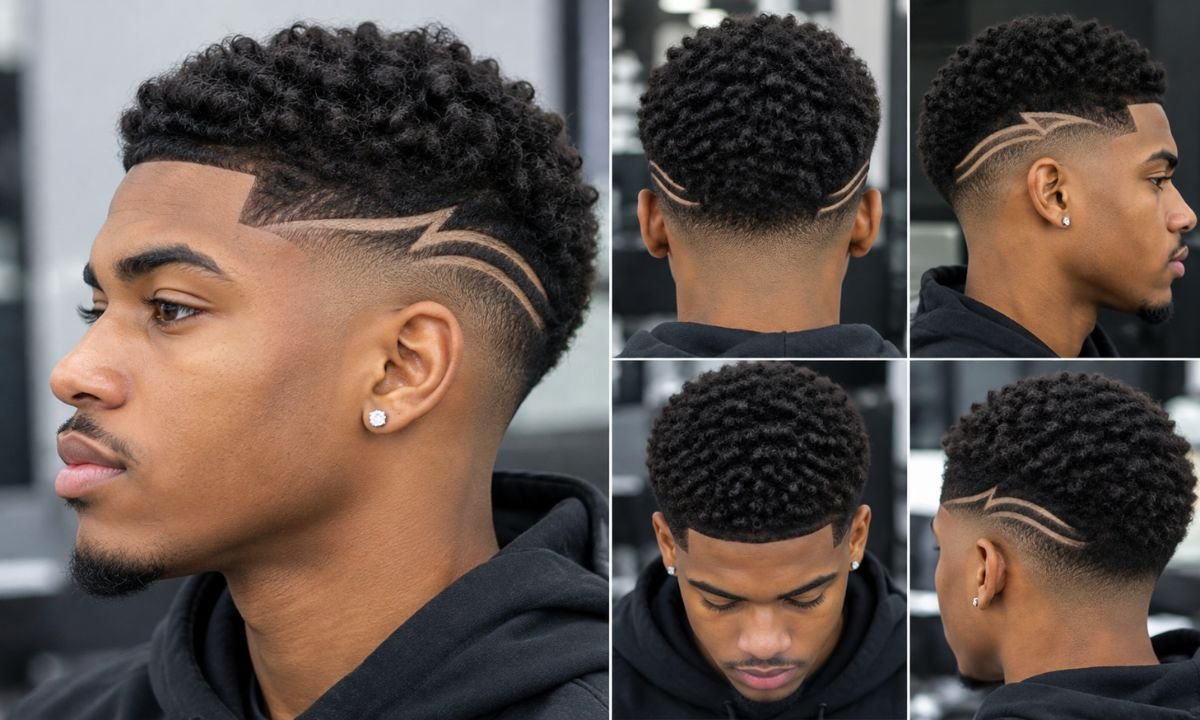
For black men, the low taper fade with design pairs naturally with textured hair, twists, or a short afro on top. The contrast between the tight, coiled texture and the crisp shaved lines creates serious visual impact.
Barbers experienced with coily hair know how to keep the taper blended so it doesn’t look chopped or uneven. If you’re booking an appointment, look for a barber who specializes in textured cuts, because not every shop handles this hair type the same way.
Designs also tend to last longer on coily and tightly curled hair, since the curl pattern doesn’t grow out and flatten the lines as fast as straight hair does. That makes this combination one of the more forgiving options if you can’t make it to the barber every two weeks.
Low taper fade with design male
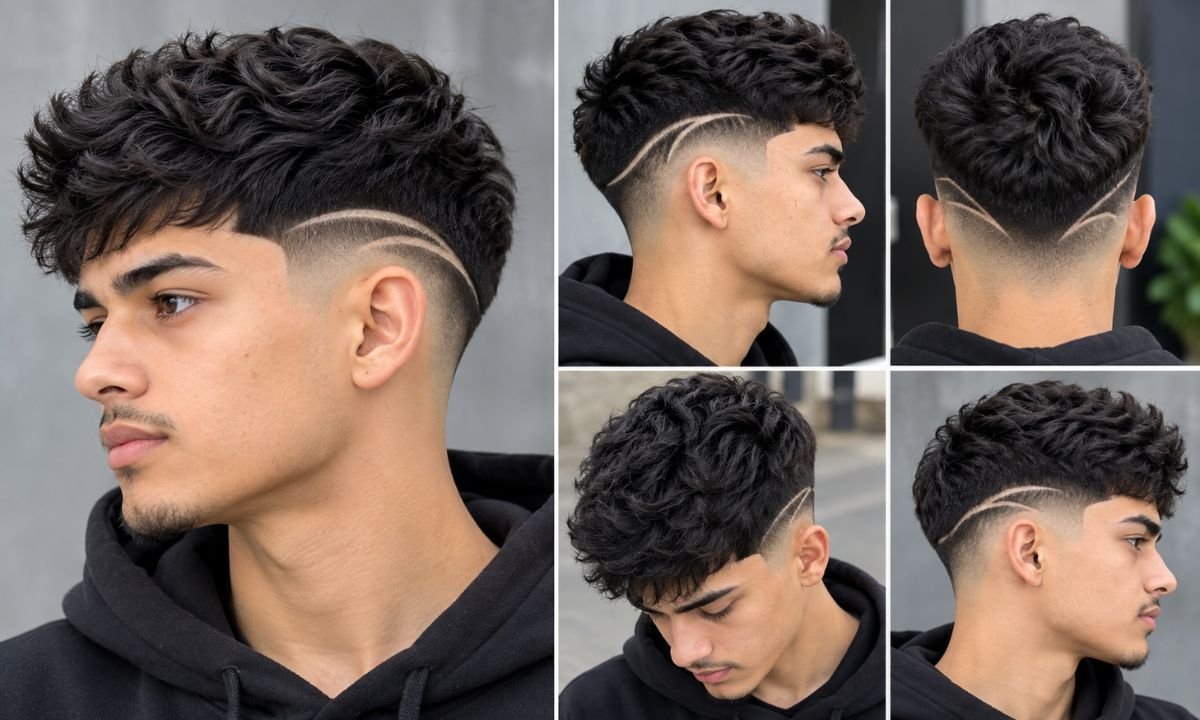
Men across every age group are picking up this cut because it works in nearly every setting. It’s professional enough for the office, casual enough for the weekend, and stylish enough for a night out.
The key for adult men is usually restraint. A single line, a subtle part, or a small pattern near the temple reads as intentional rather than trying too hard. Go bold if that’s your personality, but a lot of guys find that less really is more here.
For guys working in more traditional or corporate environments, sticking to one clean line is usually the safest bet. It still shows personality without raising eyebrows in a boardroom, and it grows out gracefully if you can’t make a barber appointment on schedule.
Low Taper With Design on Back
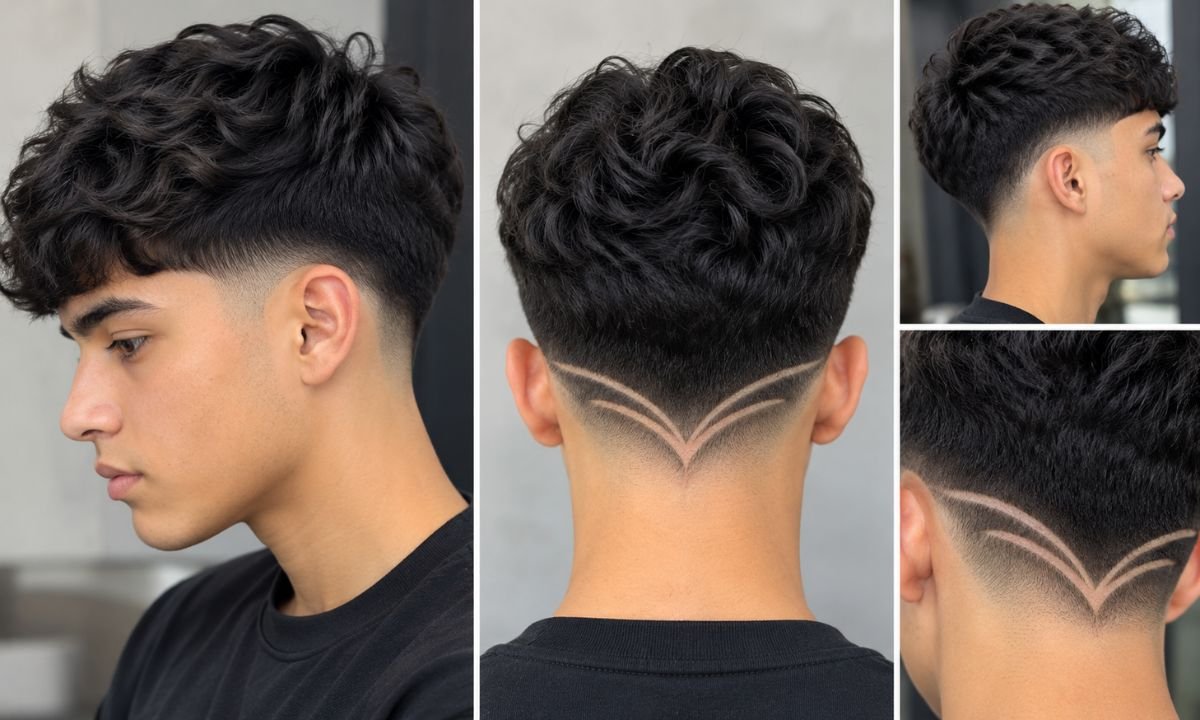
Designs on the back of the head are having a moment, especially with guys who keep their hair a bit longer on top. A curved pattern, initials, or even a small crest carved into the back adds a personal touch that most haircuts skip entirely.
Just keep in mind you’ll need a mirror setup, or a lot of trust in your barber, since you won’t see this design in the moment it’s being cut. Bring a reference photo so there’s no guessing involved.
Back designs work particularly well for special occasions, weddings, graduations, or events where photos will be taken from multiple angles. It’s a small detail that turns heads once people catch a glimpse from behind.
Low taper fade with design for curly, wavy, and straight hair

Hair texture changes everything about how a design reads once it grows out. Here’s how each type holds up, and what to expect from each one over time.
Curly hair
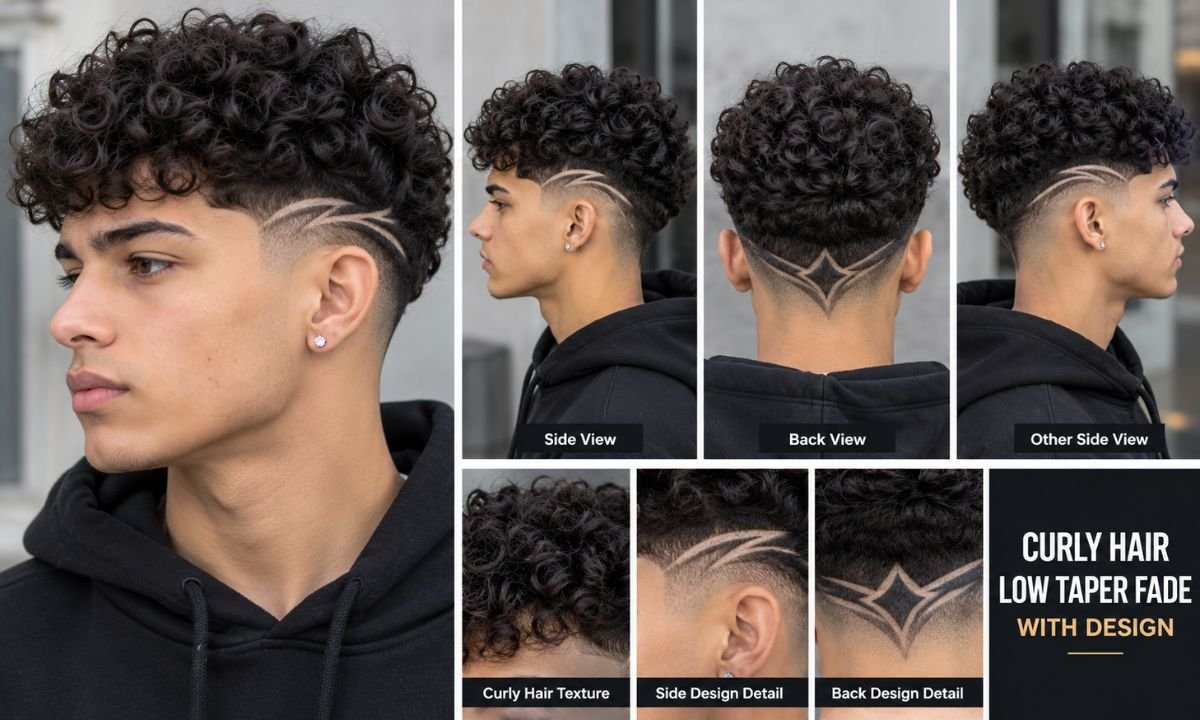
Curly hair adds volume and bounce on top, which contrasts nicely with the tight, defined lines of the taper and design. The curls draw the eye upward, so even a simple line design underneath looks more dramatic than it would on straight hair. Curl definition products like a curl cream can help keep the top looking intentional rather than frizzy.
Wavy hair

Wavy hair sits somewhere in the middle, giving you natural texture without too much volume. This makes it easier to maintain the design longer, since waves don’t grow out as noticeably as straight hair does. A light sea salt spray can enhance the wave pattern without weighing the hair down.
Straight hair

As mentioned earlier, straight hair shows off the design with total clarity. It’s the easiest texture for a barber to work with when carving detailed patterns, though it does require more frequent touch ups to keep the lines from blurring.
Coily or thick hair
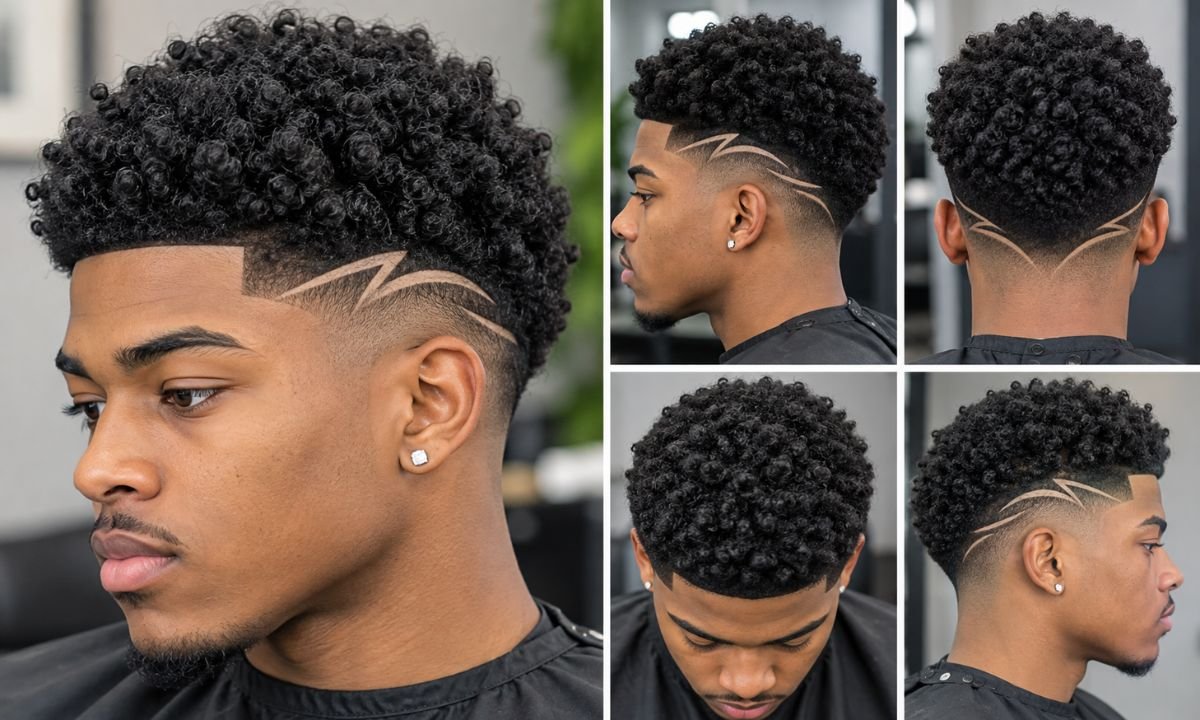
Coily and thick hair need a skilled hand, since the density can hide a fade if it’s not blended properly. Once done right though, this texture holds the shape of a design longer than most other hair types, sometimes lasting three weeks or more before it needs a refresh.
Fine hair
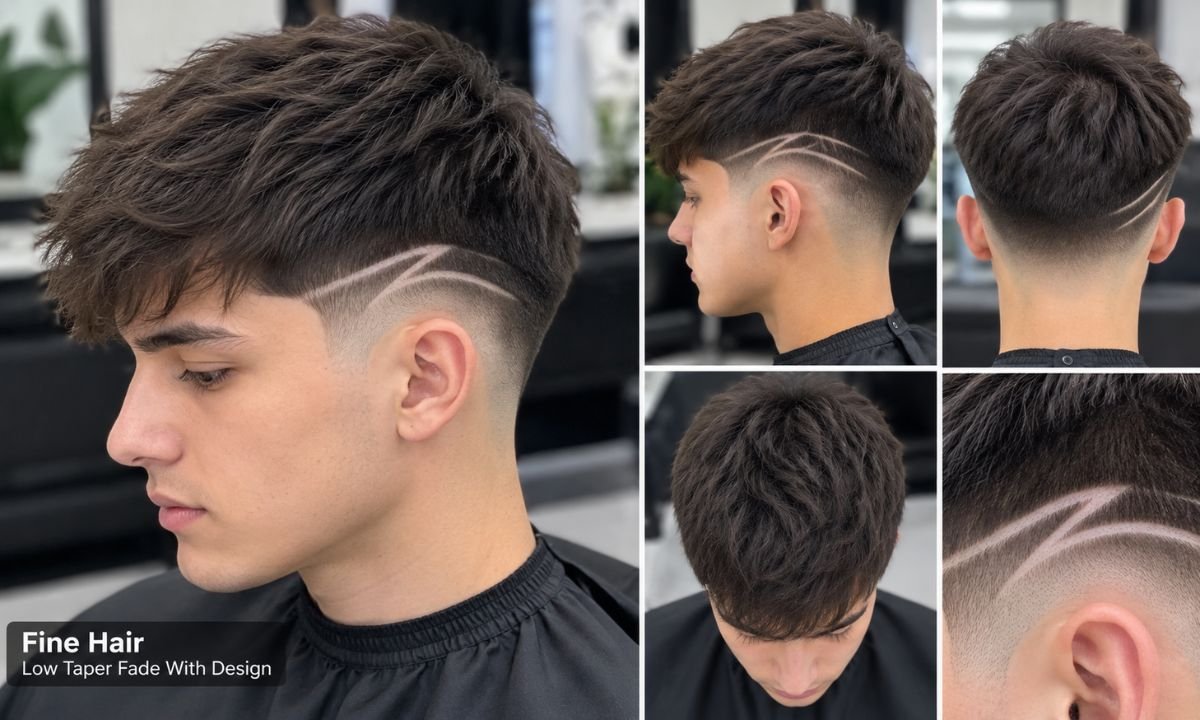
Fine hair can be tricky because there’s less volume to work with on top. Barbers usually keep the design simple and close to the skin, since thinner strands don’t hide imperfections the way thicker hair does. A lightweight volumizing powder can help fine hair look fuller without weighing it down.
Low taper fade with design for different face shapes
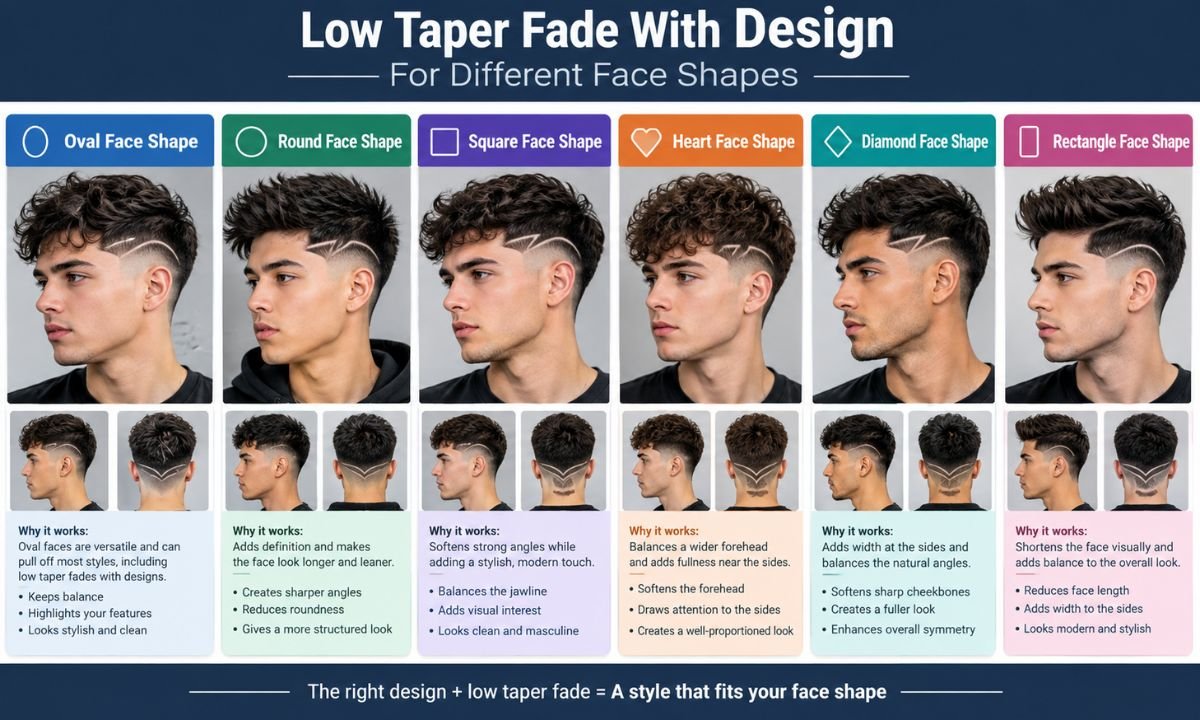
Not every design flatters every face, and this part gets overlooked constantly. Matching a design to your face shape makes a bigger difference than most people expect.
- Round face: vertical lines or a side part design help elongate the face
- Square face: soft curved lines soften strong jaw angles
- Oval face: almost any design works, this is the most flexible face shape
- Long face: horizontal lines or a fuller top balance out the length
- Heart shaped face: a design near the temple draws attention away from a wider forehead
- Diamond face: a design placed slightly off center helps balance the narrower forehead and chin
A good barber will glance at your face shape before recommending a design placement. If yours doesn’t, it’s worth asking directly during your consultation. Don’t be afraid to ask them to sketch it out or show you a similar reference on someone with your face shape before the clippers touch your head.
How to ask your barber for a low taper fade with design
Communication makes or breaks this haircut. Walking in and saying “give me a fade with a design” leaves way too much open to interpretation. Instead, try this approach.
- Bring 2 to 3 reference photos from different angles
- Specify the taper height you want, low, mid, or skin
- Point out exactly where you want the design (temple, side, back, neckline)
- Mention your hair texture and any past issues you’ve had with fades
- Ask how often you’ll need touch ups to keep the design sharp
- Ask if the design will still look good once your hair grows out a bit
Barbers appreciate clear direction. It saves time, avoids miscommunication, and gets you closer to the exact look you pictured. A quick five minute conversation before the cut starts is worth more than any amount of pointing at a phone screen mid haircut.
Maintenance and styling tips
A fresh cut looks great on day one, but keeping it sharp takes a little effort.
- Book touch ups every 2 to 3 weeks, sooner if your hair grows fast
- Use a light pomade or clay to style the top without weighing it down
- Moisturize the scalp around the faded area to prevent dryness and flaking
- Avoid tight hats that rub against the design and blur the lines
- Sleep with a satin cap or pillowcase if you have curly or coily hair, it protects the design from friction
- Keep a small trimmer at home for light touch ups between barber visits, especially around the neckline
Consistency matters more than product here. Even the best pomade can’t save a design that’s three weeks overgrown. Think of it less like a one time haircut and more like an ongoing style you’re maintaining, similar to how people care for a beard.
Cost of a low taper fade with design
Pricing depends heavily on your location and the barber’s experience, but here’s a rough breakdown to set expectations.
- Basic single line design: usually adds $5 to $10 on top of a regular fade
- Detailed pattern or multiple lines: can add $15 to $25
- Back or neckline custom design: typically the most expensive, ranging from $20 to $40 extra
- Touch up appointments: often cost less than a full haircut, sometimes half the price
Shops in bigger cities or those known for freehand design work tend to charge more, but the extra cost usually reflects the skill and time involved. A rushed, cheap design rarely looks as clean as one done by someone who specializes in the craft.
Low taper fade with design for kids and teens

Kids and teenagers often go for the boldest versions of this cut, and there’s nothing wrong with that. School aged kids tend to prefer playful shapes like stars, initials, or simple patterns that feel personal without being too mature.
Barbers who work regularly with younger clients usually keep the clippers a bit more forgiving, using lighter pressure and simpler shapes that still look sharp even if the child moves around during the cut. If it’s your child’s first time getting a design, start with something simple like a single line before working up to anything more detailed.
Products that help a design last longer
The right products won’t replace a barber visit, but they can stretch the time between appointments and keep the design looking sharp for longer.
- Beard and scalp oil: keeps the shaved skin around the design from getting flaky or itchy
- Matte clay or paste: styles the top without making the design underneath look greasy
- Edge control or gel: useful for touching up small flyaways near the design line
- Soft bristle brush: helps distribute natural oils and keeps curly or coily hair looking neat on top
- Cooling aftershave balm: reduces irritation right after a fresh cut, especially around sensitive neckline skin
A small toolkit at home, even just a trimmer and a comb, makes a noticeable difference in how long your design stays crisp between barber visits.
Low taper fade with design and beard combos
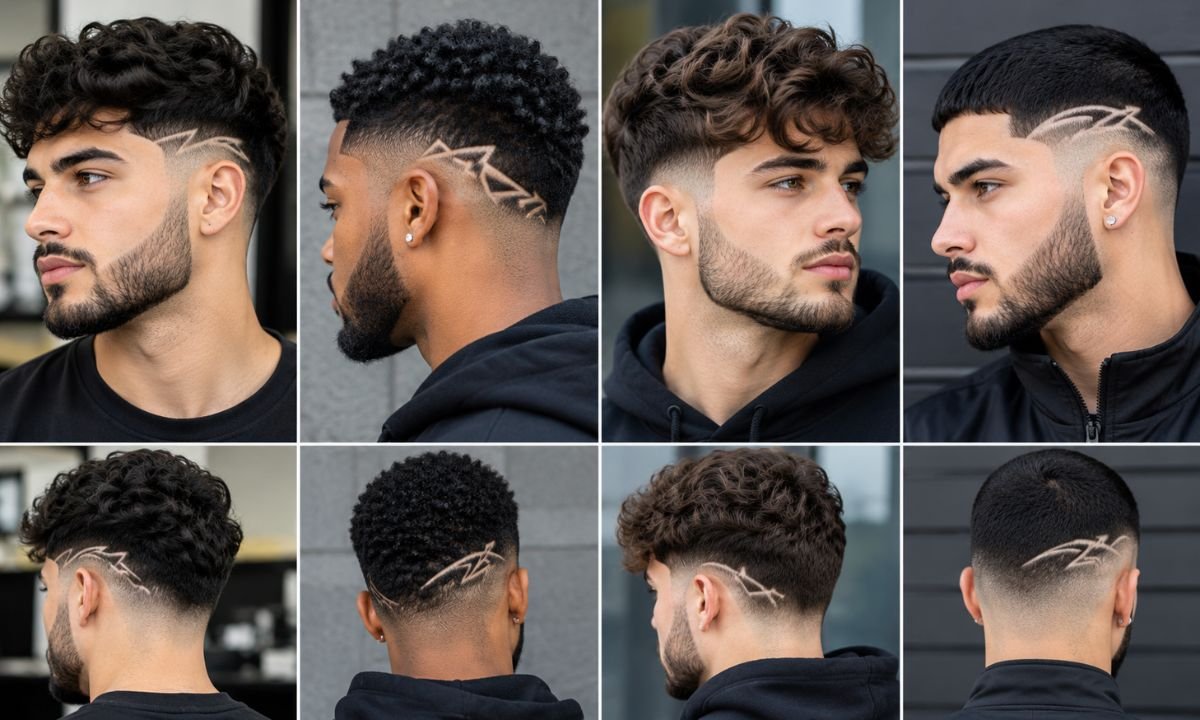
A lot of guys pair this haircut with a well shaped beard, and honestly, it’s a combination that works. The low taper keeps the sides controlled, the design adds detail up top, and a clean beard line ties the whole look together from jaw to hairline.
Barbers often suggest lining up the beard and the haircut design on the same day, since it keeps the edges consistent and avoids that mismatched look where the hair looks fresh but the beard looks a week overdue. If you’re growing a beard out, ask your barber to keep the taper and design a little more understated so the beard gets to be the main focus instead of competing with a bold pattern.
Common mistakes to avoid with haircut designs
Plenty of guys walk out of the barbershop disappointed, and it’s usually avoidable.
- Choosing a design too complex for your hair texture, which fades out faster than expected
- Skipping the consultation, leading to a design that doesn’t match your face shape
- Ignoring aftercare, causing irritation or ingrown hairs along the shaved lines
- Ghost fading, when the taper isn’t blended properly and leaves a visible line
- Ignoring hair growth speed, showing up too late for a touch up and losing the design entirely
- Copying a design without considering your own hairline, which can look off if your hairline shape is different from the reference photo
Avoiding these mistakes usually comes down to one thing: talk to your barber before, not just after, the clippers come out. A ninety second conversation can save you from a haircut you regret for the next two weeks.
Frequently Asked Questions
Can you get a design with a low taper?
Yes, absolutely. A low taper fade provides plenty of room near the temple, side, or neckline for a barber to carve a clean design. It’s actually one of the most popular combinations in barbershops right now.
How long does a low taper fade with design last?
Most designs stay sharp for 1 to 2 weeks before regrowth starts blurring the lines. Straight and fine hair types may need touch ups closer to the one week mark, while thicker or coily hair can stretch closer to three weeks.
Does a low taper fade with design work for thinning hair?
Yes, and it can actually help. A low taper draws attention away from thinning areas on top, while a subtle design adds visual interest without highlighting hair loss.
Is a low taper fade with design good for job interviews?
Generally yes, as long as the design stays minimal. A single line or a small pattern near the temple reads as neat and intentional, not distracting.
How much does a low taper fade with design cost?
Prices vary by location and design complexity, but expect to pay $5 to $40 more than a standard fade depending on how detailed the design is and where it’s placed.
Can I do a low taper fade with design at home?
It’s possible with steady hands and a good trimmer, but designs require precision that most people don’t have without practice. A professional barber is strongly recommended for anything beyond a single straight line.
What’s the difference between a low taper fade and a high taper fade with design?
A low taper keeps the fade close to the neckline and ears, while a high taper climbs further up the head. Designs on a low taper tend to look more subtle, while high taper designs stand out more since there’s more visible skin around them.
Does a low taper fade with design suit older men?
Yes, particularly with simple, understated designs like a single line or a subtle side part pattern. It offers a fresh, modern edge without looking like it’s trying too hard.
What tools does a barber use for a low taper fade with design?
Barbers typically use clippers for the taper itself and a detail trimmer for carving the design. Some also use a straight razor for extra sharp, clean lines near the hairline.
How do I stop my haircut design from itching?
Apply a light, fragrance free moisturizer or aftershave balm to the shaved areas. Itching usually comes from dryness or short hairs growing back, and keeping the scalp hydrated helps a lot.
Final Thoughts
The low taper fade with design isn’t just a trend, it’s become a genuine style category with room for personal expression. Whether you go for a single subtle line or a full pattern across the temple, the cut adapts to your hair texture, face shape, and lifestyle.
Talk to your barber, bring reference photos, and don’t skip the aftercare. Do that, and this haircut will keep looking sharp appointment after appointment, whether you’re heading to work, school, or just want to feel a bit more put together on a random Tuesday.
