
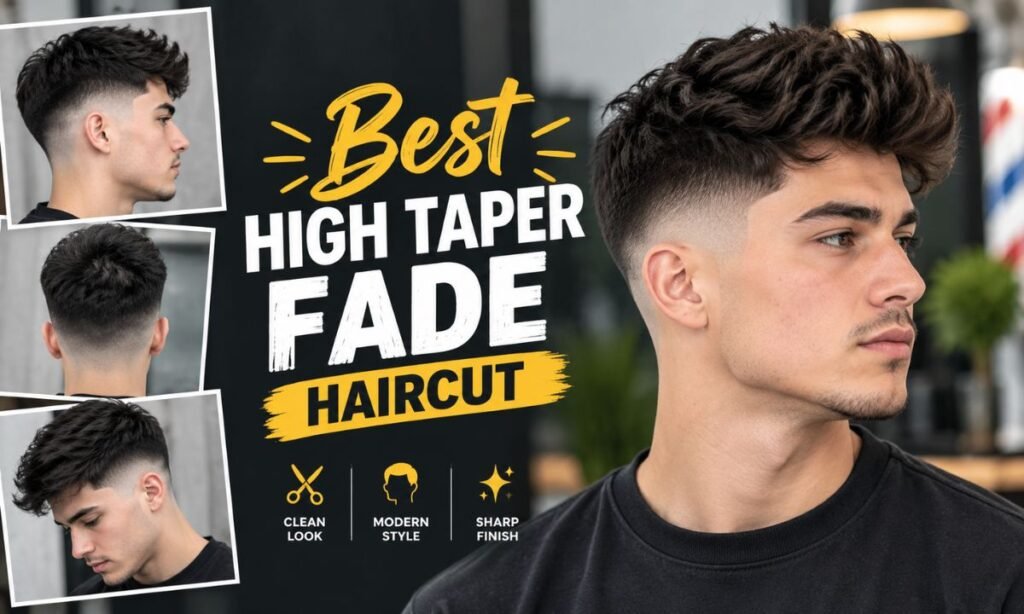
Thinking about a high taper fade haircut but not sure what you’d actually walk out with? You’re not alone. Plenty of guys sit in the chair, nod at the barber, and hope for the best. Then the mirror comes out, and the sides look higher, tighter, or patchier than the photo on their phone. It’s a frustrating moment, especially when the cut costs real money and takes weeks to grow back.
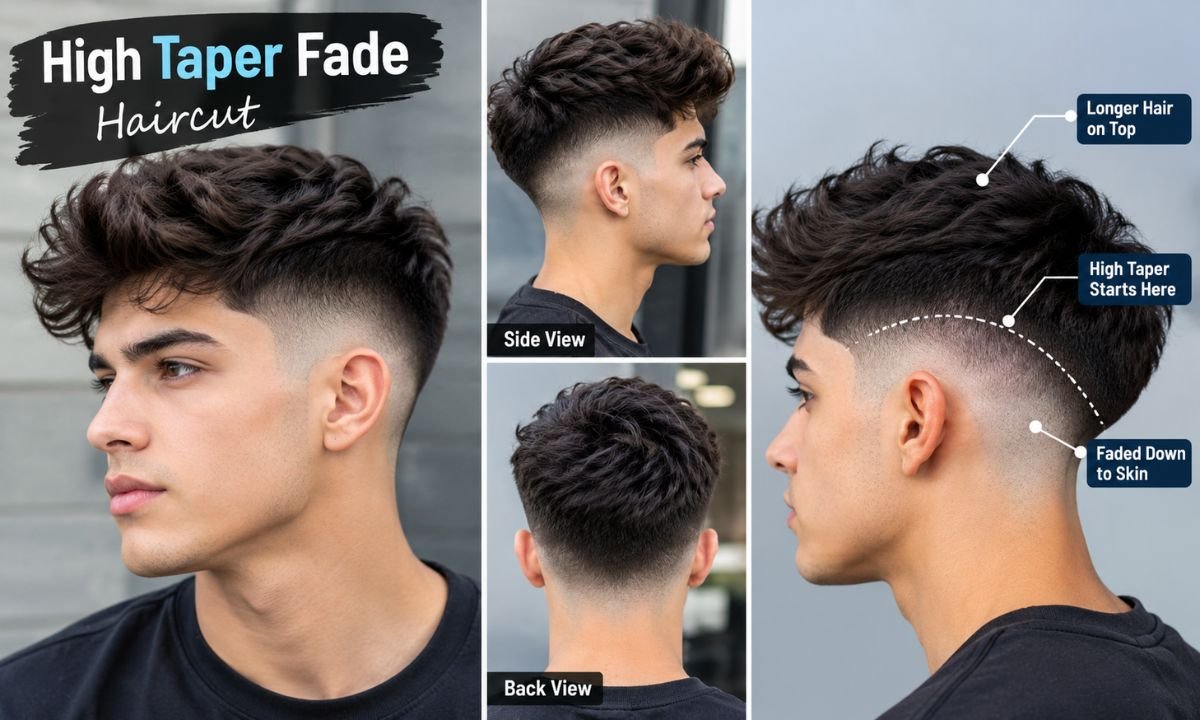
Here’s the direct answer. A high taper fade is a haircut where the sides shorten gradually, starting high near the temple. The hair stays tidy around the ears and neckline, while your top keeps its length and shape. Unlike a bold skin fade, it leaves short hair at the bottom, so the shift looks soft instead of stark. That’s why it works for the office, the gym, and a night out without much fuss.
Why does it matter? Because it gives you a sharp, modern outline without going fully bald on the sides. This guide covers the cut itself, who it suits, how to ask for it, and how to keep it looking fresh.
What Is a High Taper Fade?

So, what is a high taper fade? Picture a gentle slope that starts up near your temples and slides down toward your ears and nape. The hair gets shorter as it goes down, but it rarely hits bare skin.
Think of a dimmer switch on a lamp. A skin fade flips the light off at the bottom. A taper fade just lowers it, so the shift looks soft and natural.
Most barbers use this cut because it frames the face well. It also leaves enough hair on the sides that you don’t feel exposed. That balance explains why the high taper fade hairstyle keeps showing up on barber boards.
Cut Anatomy: Fade Zone, Blend, and Retained Length

Every high taper has three parts. The fade zone is the band where hair changes length. The graduated blend is how smooth that change looks. And the retained side weight is the hair left above the fade.
On a high version, the fade zone starts higher on the head, often around the temple line. Below it, the shortest length sits near the sideburns and nape. Above it, the hair stays longer and blends into the top.
Here’s why this matters. If the blend is rough, you’ll see stripes. If the fade zone sits too high for your head shape, the cut looks harsh. A good barber balances all three on purpose.
Terminology: Why the Name Varies Between Barbers

Ask three barbers for a high taper and you might get three slightly different cuts. That’s not because anyone is wrong. The words aren’t standardized, and shops use their own shorthand.
Some barbers say high taper fade. Others say high fade or taper fade and mean the same thing. A few use classic taper to describe a lighter, shorter version around the ears and neck only.
The fix is simple. Don’t rely on the name alone. Agree on height, guard length, and finish before the clippers start, and bring reference photos so everyone pictures the same thing.
High Taper Fade vs High Fade, Low Taper, and Mid Taper

People mix these up constantly, so let’s sort them out. Each one differs in two things: where the shortening starts and how low the hair goes. A high taper fade vs high fade comparison mostly comes down to the finish.
A high fade usually drops to the skin finish or close to it, creating strong fade contrast. A high taper keeps a bit more hair at the bottom, so it looks softer. A low taper fade starts just above the ear. A mid taper fade sits halfway between low and high.
Use this table as a quick cheat sheet.
| Cut | Starts at | Bottom finish | Overall look |
| High taper fade | Temple area | Short hair, rarely skin | Sharp but soft |
| High fade | Temple area | Often skin or near skin | Bold, high contrast |
| Mid taper | Mid side of head | Short hair | Balanced, versatile |
| Low taper fade | Just above the ear | Short hair | Subtle, conservative |
If you like standout contrast, lean high. If you want something quieter for work or school, go mid taper or low. And if you can’t decide, a mid taper is the safest middle road.
What Are the Main Benefits of a High Taper Fade?

The biggest perk is shape. A high taper cleans up the head contour and makes the top look fuller by comparison. Even an average cut looks intentional once the sides get tight and smooth.
It also works with almost any top. You can pair it with a textured crop, a quiff, or a defined curly top. The sides stay consistent while the top does the talking.
Another plus is flexibility. You can keep the fade soft for the office or push it tighter for weekends. Because the cut tapers instead of dropping to skin, it’s easier to wear in more settings than a bold high fade.
Who Does a High Taper Fade Suit?

Good news: most people can pull this off. Still, a few details decide whether the cut looks great or just okay. Think about your hair, your head, and your lifestyle before you book.
Ask yourself three questions. How thick is my hair, and which way does it grow? What does my head shape look like from the side? And how often will I realistically visit the barber? The next three sections tackle each one.
Hair Texture, Density, and Growth Pattern

Your hair texture changes how the fade looks. Straight hair shows every line, so blending has to be clean. Wavy hair hides small flaws and adds movement. Curly hair and coily hair make the transition look fuller and softer.
Hair density matters too. Thick hair and dense hair hold shape well but can look bulky on the sides, so a high taper trims that weight. Fine hair or thin hair benefits from a tighter top so the scalp doesn’t show through.
Don’t forget your growth pattern. A cowlick at the crown or temple can push the hair in odd directions. Tell your barber about it so they can cut with the grain, not against it.
Face, Head Shape, Hairline, and Scalp Visibility

A high taper draws attention upward, so it flatters certain face shapes. A round face gains height and definition. An oval face handles it with ease. A square face looks even stronger, while a long face works best if the top stays shorter.
Look at your head shape too. Bumps, flat spots, or a pronounced parietal ridge show up more when the sides are short. A good barber leaves a bit more length over those spots to soften them.
Then there’s the hairline and scalp visibility. If your hairline is receding at the temples, a high fade can make it more obvious. In that case, ask for a slightly lower start or a softer line-up.
Lifestyle and Upkeep Tolerance

Be honest about your habits. A high taper fade maintenance routine means regular barber visits. If you hate booking appointments, a lower taper with a longer guard will grow out more gracefully.
Think about your job and your schedule too. A tight cut looks fresh for about two weeks, then starts to soften. If you work in a polished setting, that upkeep matters more.
Also consider your skin. Short sides mean more exposed skin, which can feel dry or irritated. If your skin is sensitive, a longer finish may suit you better than a tight one.
Which High Taper Fade Style Fits Your Hair?

The sides stay the same, but the top changes everything. A high taper fade with a quiff feels different from one with twists or a buzz cut. Start with your hair type, then pick the shape.
Below you’ll find options grouped by texture and effort. Save a couple of favorites so you can show your barber exactly what you mean.
High Taper Fade Styles for Curly and Coily Hair

Curls and coils love a high taper. The tight sides make the texture on top stand out, and the whole shape looks deliberate. A curly hair fade or coily hair fade also keeps the sides neat between washes.
The main choice is how much length you keep. Shorter tops give a clean, sporty look. Longer tops give you volume and movement.
Rounded Afro or Defined Curly Top
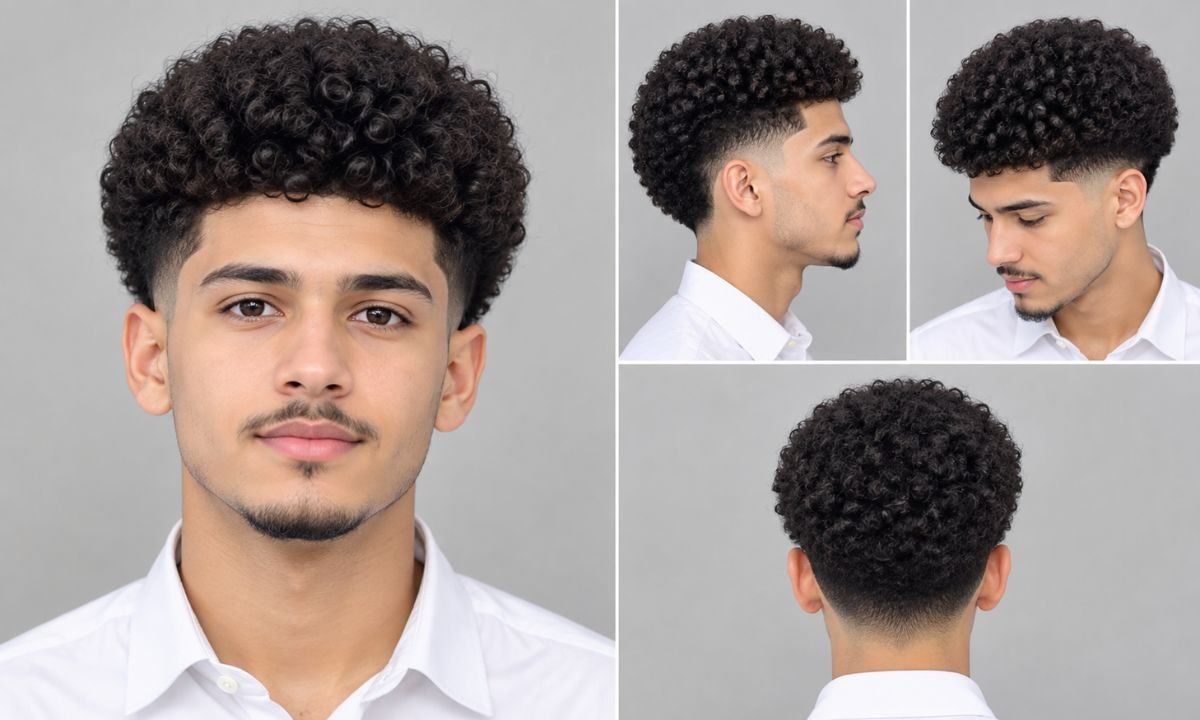
A rounded afro with a high taper is a classic for a reason. The curve of the afro balances the fade and makes the head look symmetrical. Keep the shape trimmed so the outline stays crisp.
A defined curly top works the same way with softer edges. Use a curl cream to keep the curls clumped and glossy. Ask your barber to leave extra length on top so the curls can bounce.
Twists, Locs, or Braids with a High Taper

Twists, locs, and braids look sharp with a high taper because the fade cleans up the sides. The contrast shows off the pattern on top. It also keeps the scalp area tidy, which is great for cornrows.
If you wear locs, ask for a taper that blends into the tapered nape. A clean line behind the ears helps the whole style look maintained. Retwist or re-braid on schedule so the top matches the sharp sides.
High Taper Fade Styles for Straight and Wavy Hair

Straight and wavy hair gives you the most styling variety. You can push the top forward, comb it sideways, or build height. The high taper keeps everything framed.
Product matters more here than with curls. Light texture goes a long way, especially on fine strands.
Textured Crop or Forward Fringe

A textured crop is short, messy, and easy to wake up with. Pair it with a forward fringe if you want some cover over the forehead. It’s popular because it takes about two minutes to style.
Use a pinch of matte clay and rough it up with your fingers. A high taper fade with textured fringe also hides a high forehead nicely. If your hair is fine, add a bit of volume powder at the roots.
Side Part, Quiff, or Pompadour
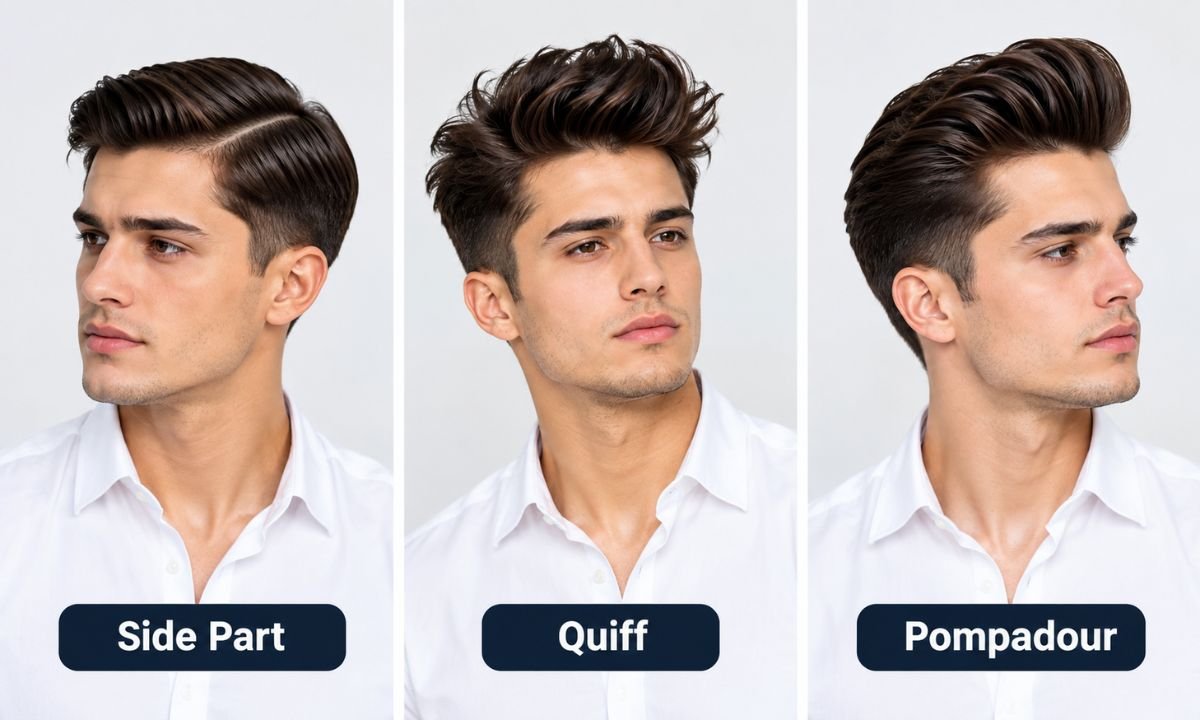
A side part gives you a clean, grown-up look that works in any office. The high taper adds sharpness without changing the mood. Use a light pomade and a comb for a neat finish.
A quiff or pompadour adds height and attitude. A blow-dry and a bit of strong paste lift the front. These styles need longer top hair, so check with your barber about how much to leave.
Short High Taper Fade Options with Less Daily Styling
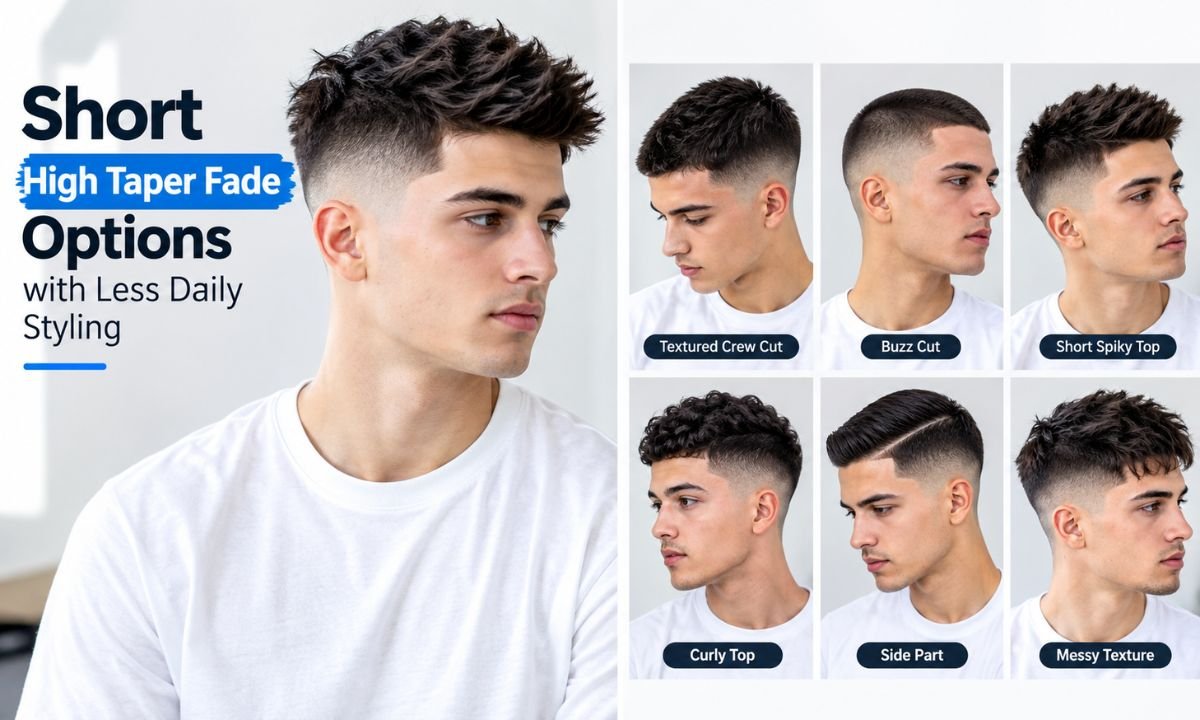
Not everybody wants a morning routine. If you’d rather roll out of bed and go, a shorter top does the job. The high taper keeps the cut from looking plain.
These styles also grow out well. You’ll see a bit of fuzz at three weeks, but nothing dramatic.
Buzz Cut or Crew Cut
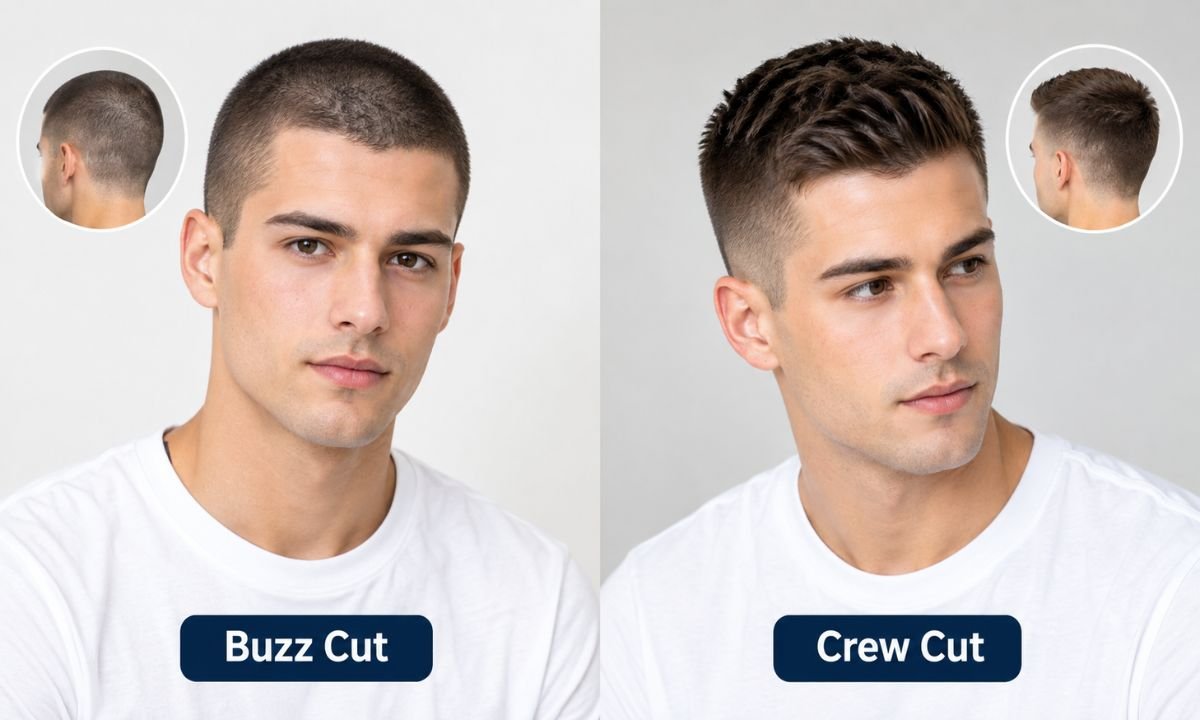
A buzz cut with a high taper fade looks athletic and clean. The fade adds shape to what would otherwise be a flat cut. It’s a smart option if your hair density is low and you want less scalp contrast.
A crew cut keeps a little more length at the front. You can brush it forward or leave it flat. Either way, it needs almost no product, which makes it ideal for busy mornings.
Short Textured Top

A short textured top gives you movement without the effort. Your barber cuts it with a razor or point-cutting technique to create choppy layers. Add matte paste and you’re done.
This works well on wavy hair and thick straight hair. It also pairs nicely with a high taper fade and a trimmed beard. The whole look stays tidy but relaxed.
Beard and Neckline Pairings
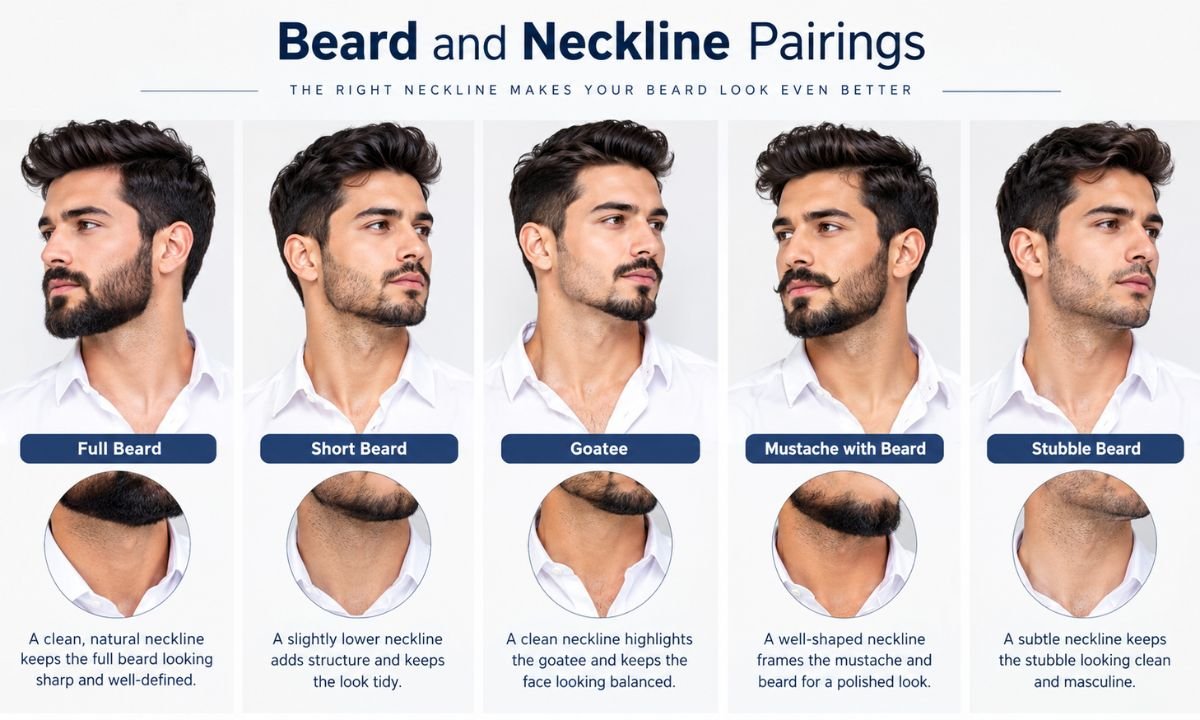
A beard changes how the fade should end. The side of the cut needs to connect smoothly with the facial hair, or the two will look like separate haircuts. Planning this upfront saves a lot of awkward trimming.
You’ve got two main decisions. How do you blend into the beard, and how do you finish the back of the neck?
Temple-to-Beard Blend

A temple-to-beard blend connects the fade at the temple with the beard along the jaw. A high taper fade with beard looks best when the sideburn tapers straight into the facial hair. The result is a seamless beard fade.
If you’d rather have separation, ask for beard separation. That leaves a small gap between hair and beard for a more defined look. Be clear about which you want, because the two feel very different.
Tapered Nape vs Defined Neckline
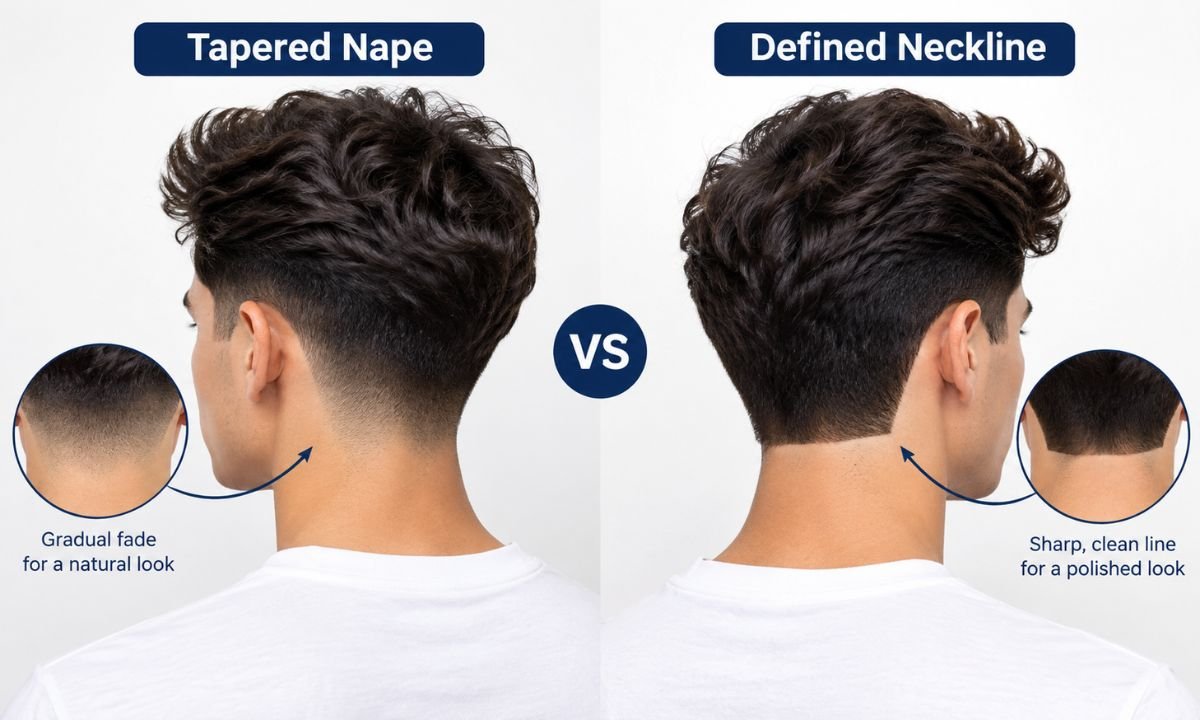
A tapered nape fades naturally into the skin at the back of your neck. It grows out gracefully and looks relaxed. This is the safer pick if you can’t visit often.
A defined neckline has a clean, squared or rounded edge. It looks sharp for a few days but needs frequent touch-ups. Choose based on how much upkeep you’ll put in.
How Do You Ask a Barber for a High Taper Fade?
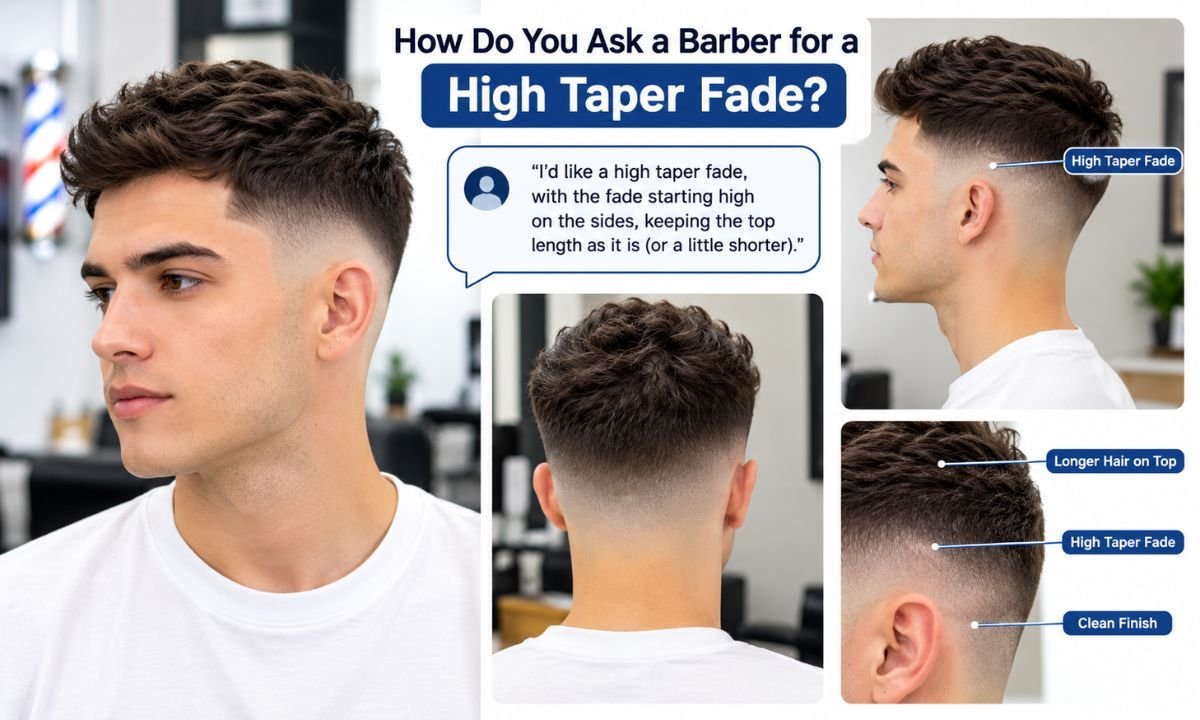
Walking in with “high taper, please” can work, but it’s a gamble. Barbers fill in the blanks with their own habits. A little preparation gets you a cut that matches your picture.
The next four sections give you the exact details to cover. Use them and you’ll have a much smoother barber appointment.
Seven Haircut Specifications to Agree On
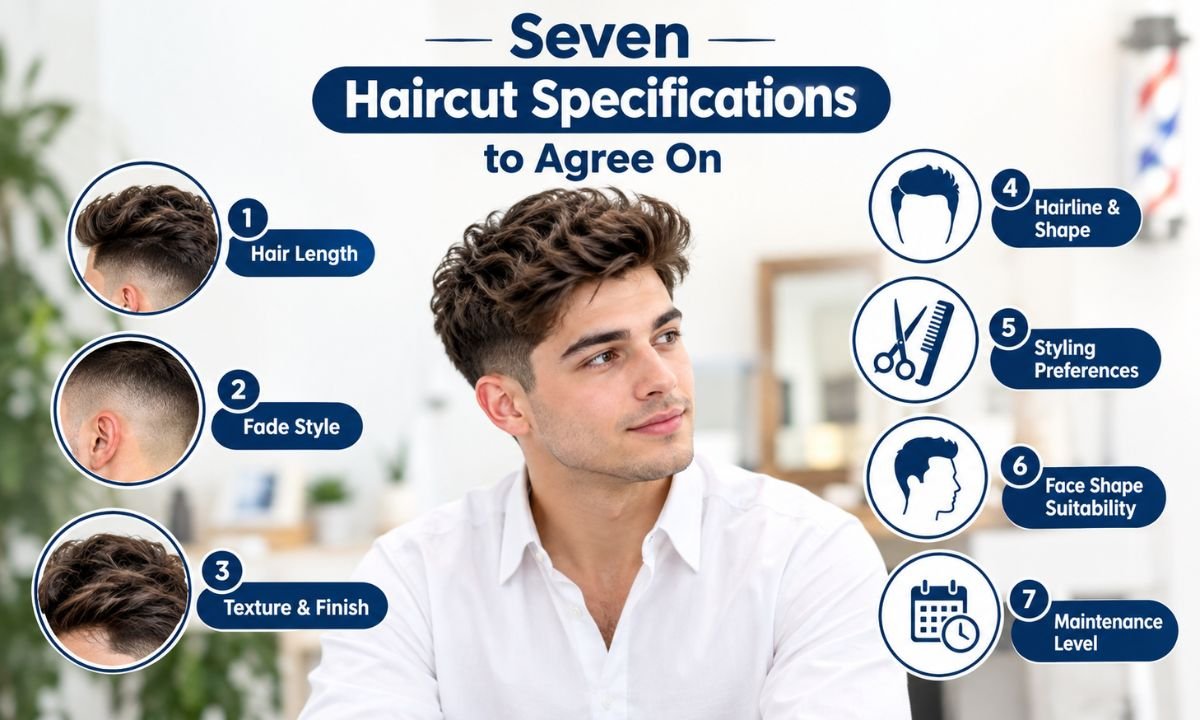
Before the clippers turn on, agree on these seven points:
- Fade start height: where the taper begins, such as temple level.
- Shortest length: the guard length at the bottom, such as a number one or a zero finish.
- Finish type: skin finish, shadow finish, or short hair.
- Neckline: tapered or defined neckline.
- Sideburns: a sideburn taper or a clean edge.
- Top length: how many inches or which guard.
- Line-up: natural edge or sharp line-up at the front.
That list covers most misunderstandings. Even if your barber knows you well, a quick recap keeps everyone on the same page.
Reference-Photo Checklist
Photos beat descriptions every time. Bring two or three clear images, not blurry screenshots. Make sure they show the front, side, and back.
Pick photos of people with a similar hair texture and head shape. A pic of straight hair won’t guide a barber working on tight curls. Circle or note what you like, such as the fade height or the top.
Also include one photo of what you don’t want. It sounds odd, but it helps your barber avoid a miss.
Copyable Barber Script
Here’s a script you can use almost word for word:
“I’d like a high taper fade. Start the taper at my temples and blend down with a number one at the bottom. Keep it soft, no skin. Leave my tapered nape natural, and take the sideburns down in a taper. I want about three inches on top with a textured finish.”
If you’re unsure about the guard number, say so. Try: “How high should the taper go for my head shape?” Good barbers enjoy that conversation. It shows you care about the result.
Your Pre-Appointment Checklist
A few minutes of prep go a long way. Run through this list before you leave home:
- Save two or three reference photos.
- Wash your hair so the barber sees your natural texture.
- Decide how often you can come back.
- Think about your beard, if you have one.
- Note any cowlick or thin spots.
- Know your budget and time.
Arrive a few minutes early and speak up if anything looks off during the cut. It’s much easier to adjust early than to fix a finished mistake.
How Do You Maintain and Style a High Taper Fade?
A high taper fade looks its best in the first week. After that, the short hair around the ears and neck starts to creep out. That’s normal, and a bit of routine keeps it under control.
The goal isn’t perfection. It’s staying neat enough that people think you just left the barbershop.
Refresh Schedule and Grow-Out
Most people get a fade refresh every two to three weeks. If your finish is close to skin, aim for two. With a longer guard, you can stretch it to four. That’s the heart of how often should you get a high taper fade.
A rough timeline looks like this:
| Week | What you’ll notice | What to do |
| 1 | Crisp and clean | Enjoy it |
| 2 | Slight fuzz at ears and neck | Book a touch-up if your finish is tight |
| 3 | The fade zone softens | Do a safe between-visit cleanup |
| 4+ | Grow-out begins | Schedule a full visit |
If you decide to let it go, a high taper fade grow out is easy. Tidy the neckline, keep the top shaped, and the cut turns into a regular taper before you know it.
Daily Styling by Hair Texture
Daily care depends on your hair type. For straight hair, use a pinch of matte clay and a quick blow-dry. For wavy hair, a light cream with scrunching gives you shape.
For curly hair and coily hair, start with a leave-in conditioner and a curl cream. Define the curls with your fingers and let them air dry. Skip heavy gels that flake.
The right styling products are simple. A good shampoo, a pomade or paste, and a soft brush will cover almost every situation.
Safe Between-Visit Cleanup
Between appointments, you can clean up small stray hairs. Use a small trimmer, not a razor. Go slowly and stay in the neckline area.
Never try to redo the fade yourself. That’s how patchy lines happen. Stick to the sideburns, the nape, and light edging.
If you’re not confident, wait for the barber. A quick trim costs far less than fixing a mistake.
High Taper Fade for Black Men
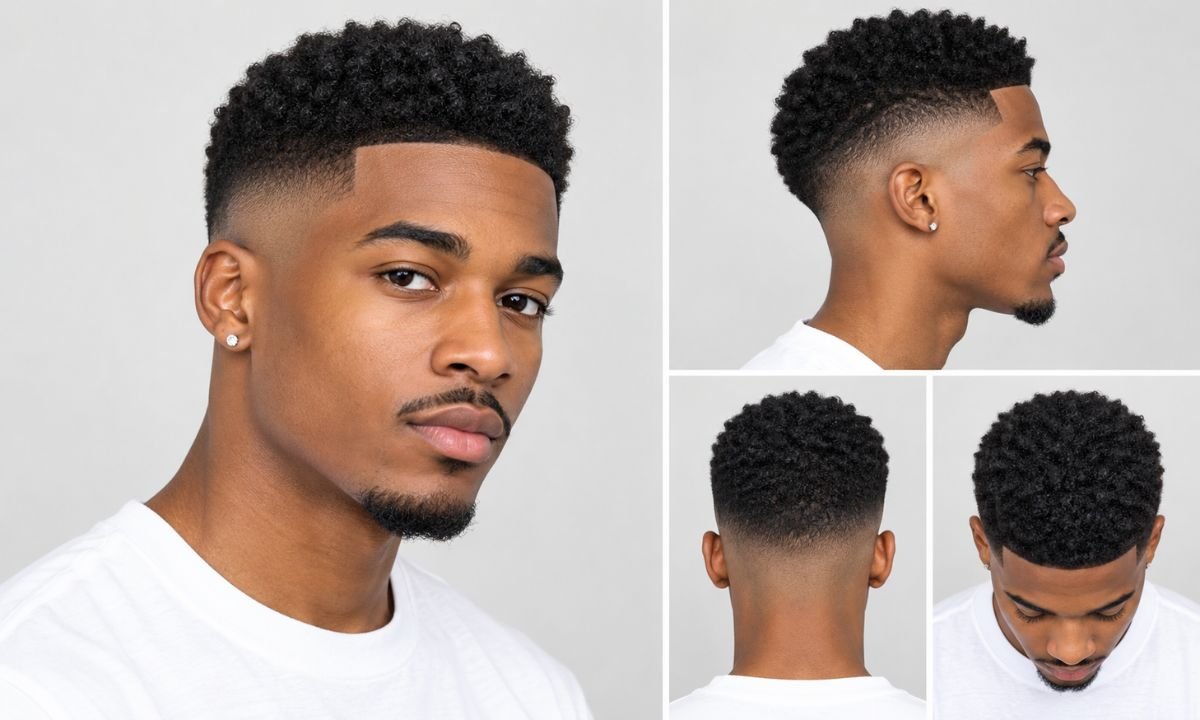
A high taper fade is one of the most popular cuts for Black men, and for good reason. It shows off afro texture, coily hair, and 360 waves while keeping the sides neat. The sharp outline makes natural hair look polished.
Different textures call for different tweaks. A rounded afro with a high taper looks bold and symmetrical. A waves cut pairs well with a slightly lower taper so the pattern keeps flowing around the head.
Skin care matters here, too. Tight fades can lead to irritation or razor bumps, so ask your barber to cut with the grain and avoid a very close razor finish. Moisturizing afterward helps, and the shadow finish is a good middle option.
What Are the Drawbacks and Safety Considerations?
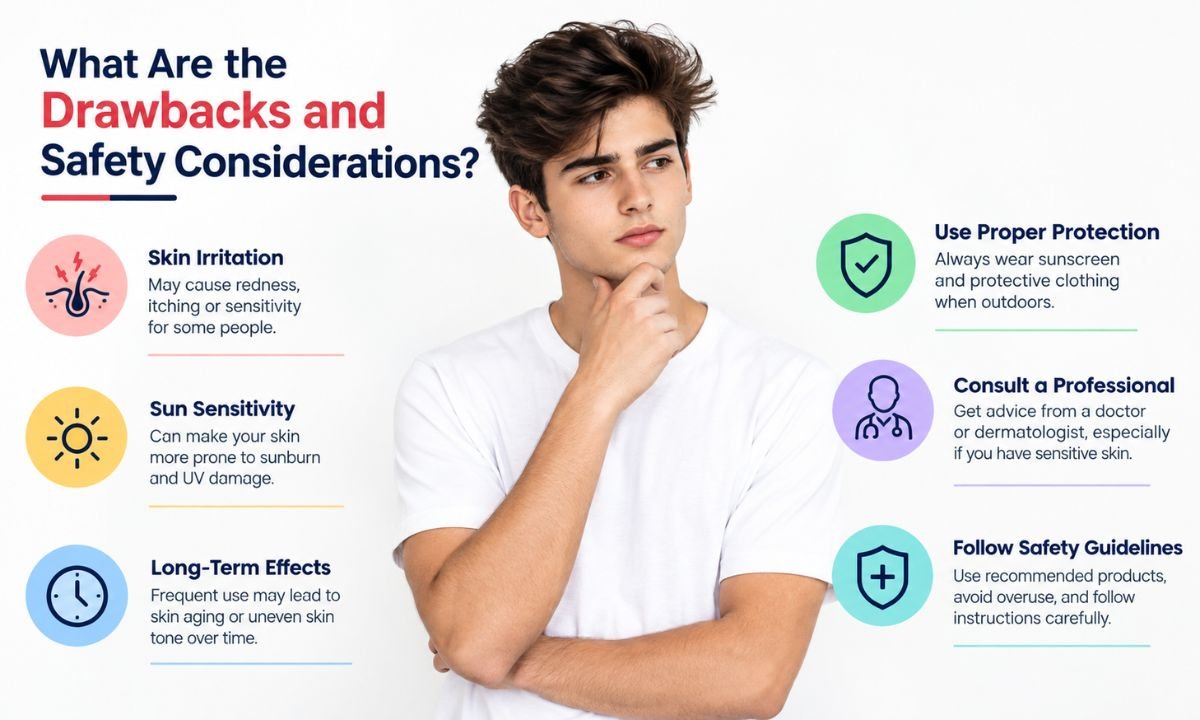
No haircut is perfect, and it’s fair to know the downsides. A high taper takes upkeep, and the shape can look off on certain heads. The good news is that most issues are easy to avoid.
Safety also matters. A haircut involves clippers, blades, and skin, so cleanliness counts. Let’s go through both.
Practical Drawbacks and Edge Cases

The main drawback is maintenance. The cut loses its sharpness within a couple of weeks, so you’ll need regular visits. That adds up in cost and time.
Some heads don’t suit a high start. If you have a lot of bumps, a prominent parietal ridge, or a receding hairline, a high taper may highlight them. A lower start can look better.
Another edge case is thin or patchy hair. Very short sides can make thinning more visible. Ask for a longer guard and a softer blend in that case.
Irritation, Razor Bumps, and Barber-Tool Hygiene

Irritation and razor bumps are common after tight cuts, especially on curly or coily hair. Hairs can curl back into the skin as they grow. Cutting with the grain and skipping a very close shave lowers the risk.
Hygiene is non-negotiable. Your barber should disinfect clippers and combs between clients, use clean blades, and wash their hands. If you don’t see that, it’s okay to ask.
If you notice redness or bumps after a cut, use a gentle moisturizer and avoid scratching. See a doctor or dermatologist if it gets painful or doesn’t clear up.
What Are the Best Alternatives to a High Taper Fade?

Maybe the high version isn’t for you. That’s fine. Several cuts give you a similar clean look with different levels of contrast and effort.
- Mid taper fade: A balanced pick that works in most settings.
- Low taper fade: The quietest option, ideal for offices and schools.
- Drop fade: Curves behind the ear for a more stylish outline.
- Burst fade: Wraps around the ear and pairs well with longer tops. A taper low burst fade is a softer version of this idea.
- Low taper drop fade: A blend of subtle and stylish.
- Classic taper: Only trims the neckline and sideburns.
If you want less upkeep, a classic taper or low taper wins. If you want more edge, try a burst fade or drop fade. Show your barber a photo so they get the curve right.
Common Barber Terms Explained

Barber talk can sound like a foreign language. You hear words like taper lever, clipper guards, and transition and just nod along. Let’s translate the ones that matter so you feel confident in the chair.
Clipper guards are plastic combs that attach to the clippers. Each number sets a length. A number one leaves about 3 millimeters, while a number two leaves about 6. The taper lever is the small switch on the side of the clippers. It lets your barber change the blade length without swapping guards, which is how smooth blending happens.
Blend and transition describe how the hair moves from short to long. A good blend has no visible lines or steps. Contrast is the difference between the shortest and longest parts of the cut. And a line-up, also called an edge-up, is the crisp outline along the front hairline and temples.
Here’s a quick glossary you can screenshot before your next visit.
| Term | What it means | Why it matters |
| Guard length | The number on the clipper attachment | Sets how short the sides get |
| Taper lever | Switch that adjusts blade height | Creates a smooth blend |
| Fade zone | The band where length changes | Decides how high the fade sits |
| Line-up | Sharp outline at the hairline | Frames your face |
| Nape | Back of the neck | Where the tapered neckline ends |
Once you know these words, your barber appointment gets easier. You can say “number one at the bottom, soft blend up” and be understood right away. Most barbers love clients who speak their language.
High Taper Fade Cost and Time in the Chair
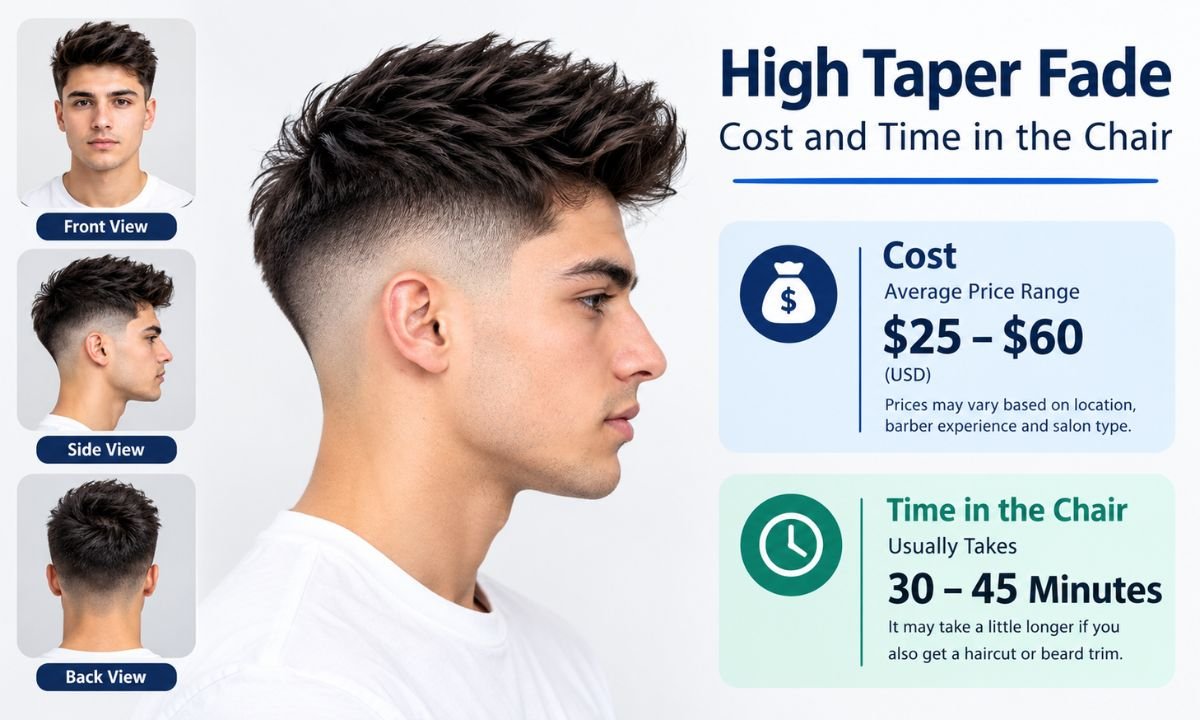
Let’s talk money, because nobody mentions it until the bill arrives. Prices change a lot by city, shop, and barber experience. A fade usually costs a bit more than a basic trim, since blending takes skill and patience.
Plan on 30 to 45 minutes in the chair for a full cut. A high taper fade with beard or a detailed line-up can stretch that closer to an hour. If a barber finishes in 10 minutes, be careful. Rushed blending often shows up as patchy lines by the next morning.
Since you’ll visit every two to three weeks, those costs add up. Here are a few ways to keep the budget in check:
- Ask if your shop offers a fade refresh or edge-up only service at a lower price.
- Book at a regular time so your barber knows your cut by heart.
- Choose a slightly longer guard length so the fade lasts longer between barber visits.
- Learn a safe between-visit cleanup for the neckline so you can stretch appointments.
Think of it as an investment in how you look every day. A good barber who remembers your head shape, growth pattern, and favorite finish is worth a fair tip. Loyalty usually gets you better results, and sometimes better prices too.
Frequently Asked Questions
What is a high taper fade?
It’s a haircut where the sides shorten gradually, starting near the temples. The bottom stays short but usually isn’t bald.
How high should a taper fade be?
Most high tapers start around the temple. Your head shape and hairline decide the exact spot.
Does a high taper fade go to skin?
Not usually. A skin fade does. A taper keeps short hair at the bottom, though you can ask for a shadow finish if you want it closer.
What’s the difference between a high taper fade and a high fade?
A high fade tends to drop lower, often to skin, with stronger contrast. A high taper is softer and keeps more hair.
What’s the best guard number?
Many people choose a number one or two at the bottom, but it depends on your hair and style. Ask your barber what suits you.
Does it work with a beard?
Yes. A high taper fade with beard blends the sideburn into the facial hair for a clean look.
Is it good for thin hair?
It can be. Keep the top short and use a longer guard on the sides so the scalp doesn’t show too much.
How often should I get a touch-up?
Every two to three weeks for a tight cut. Four weeks works for longer finishes.
Does it suit curly or coily hair?
Absolutely. The tight sides make curly hair and coily hair stand out.
What are good alternatives?
Try a mid taper, low taper fade, drop fade, or burst fade.
Final Thoughts
A high taper fade gives you structure, contrast, and flexibility in one cut. It works with curls, waves, and straight hair. It also pairs with a beard, a buzz, or a full top.
The key is clear communication. Bring photos, use the script, and agree on the specifics before the first buzz. Then book regular refreshes so the fade zone stays crisp.
Have you tried a high taper? Tell us in the comments which top style you chose, and share this guide with a friend who keeps saying “just a little off the sides.”
