
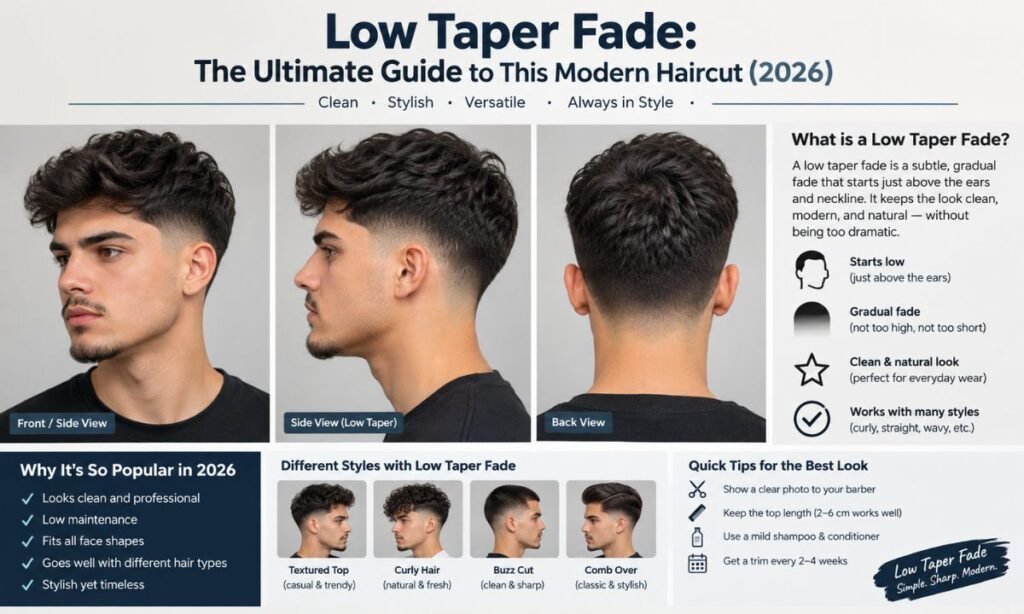

Quick answer: A low taper mullet is a short back and sides cut where the hair tapers gently down around the ears and neckline, then keeps extra length on top and at the back. It gives you the mullet’s attitude without the wild, unfinished look. Most barbers build it on a low taper fade base, so that’s where we’ll start.
Have you ever shown a barber a photo, then walked out with something totally different? It happens to almost everyone. This guide fixes that, with plain language, real barber terms, and steps you can follow.
Here’s what you’ll get: how the cut works, who it suits, how to ask for it, and how to keep it sharp at home. Grab a coffee and let’s get into it.
What Is a Low Taper Fade Haircut?
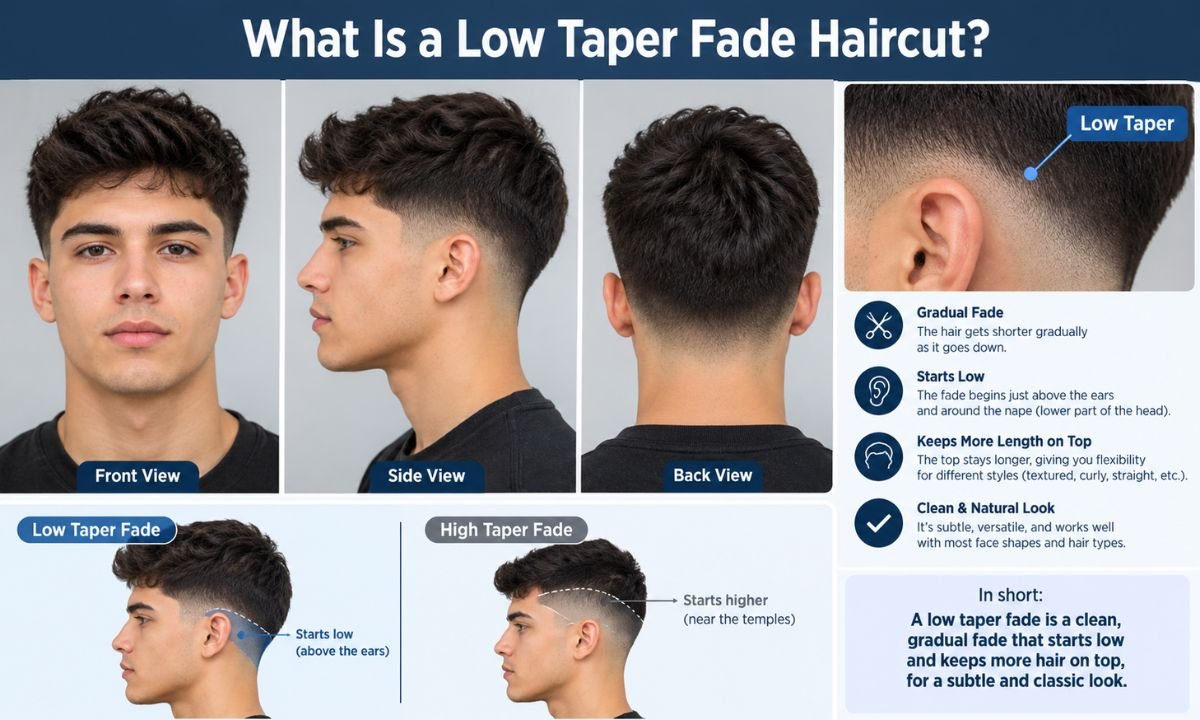
A low taper fade is a haircut where the hair gets shorter in small steps as it moves down toward the ears and neckline. The change starts low, near the bottom of the hairline. That’s why people call it “low.”
Unlike a bald fade, a taper doesn’t strip everything down to skin. It leaves a soft, clean edge instead. You get a clean neckline and neat sideburns without looking like you just left boot camp.
Think of a sunset. The color doesn’t switch off, it fades gradually. A taper works the same way: gradual blending from longer hair on top to very short hair at the edges.
Low Taper Fade vs Low Fade: What’s the Difference?
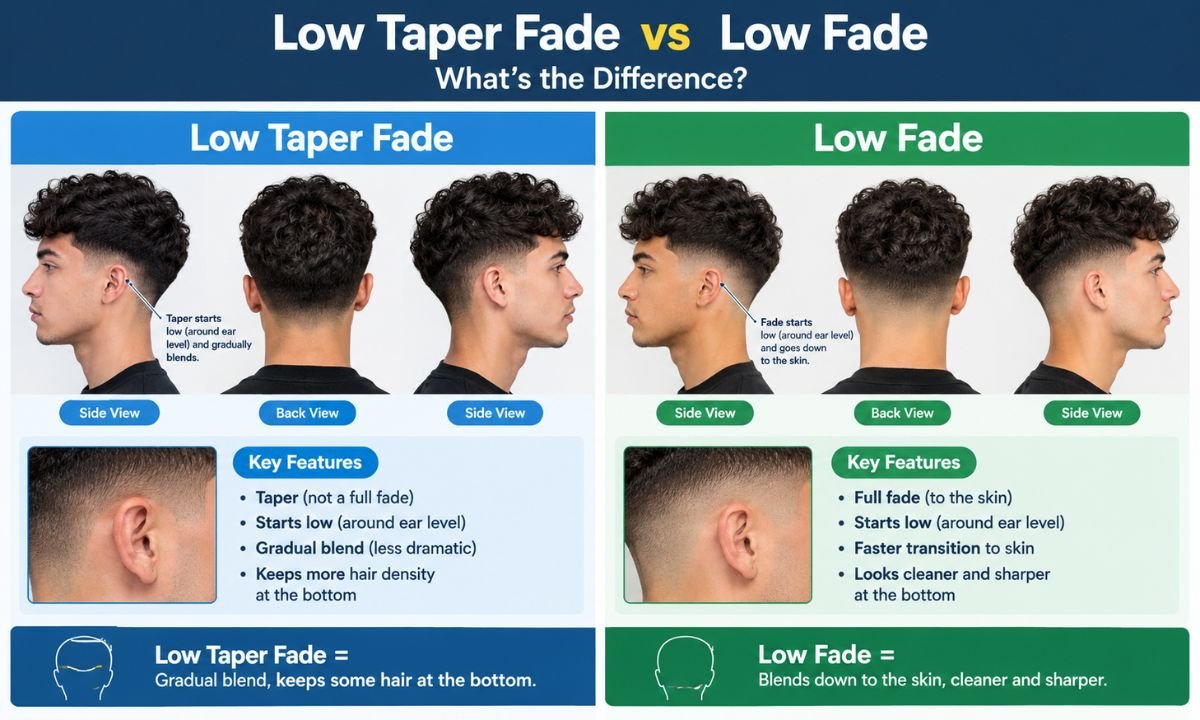
This is the question that trips up most guys. Both cuts start low, but they finish differently. A low fade usually goes shorter, often down to skin, and shows more contrast. A low taper stays subtle and keeps some length at the edges.
Here’s a simple way to compare them:
| Feature | Low Taper Fade | Low Fade |
| Starting point | Just above the ear and nape | Just above the ear and nape |
| Shortest length | Short but visible hair, often a #1 or #2 guard | Skin or near skin, often a #0 or foil shave |
| Overall look | Soft, classic, natural | Sharp, high contrast |
| Best for | Office, school, everyday wear | Bold styles, events, creative looks |
Not sure which one you want? Go with the taper if you want low drama. Choose the fade if you want the cut to stand out. Either way, tell your barber exactly how short you want the bottom.
Why Low Taper Fade Haircuts Are So Popular
Part of the appeal is simple: it works almost everywhere. You can wear it to a job interview, a wedding, or a Saturday game. Few men’s haircuts cover that much ground with so little effort.
It’s also friendly to different hair types. Straight, wavy, curly, and coily hair all take a taper well. And because it grows out slowly and evenly, you don’t panic at week three.
Social media pushed it further, and barbershops gave it a name people could ask for. Clients now show up saying “low taper” instead of “just a trim.” That clarity helps barbers deliver better results.
Best Low Taper Fade Haircuts for Men
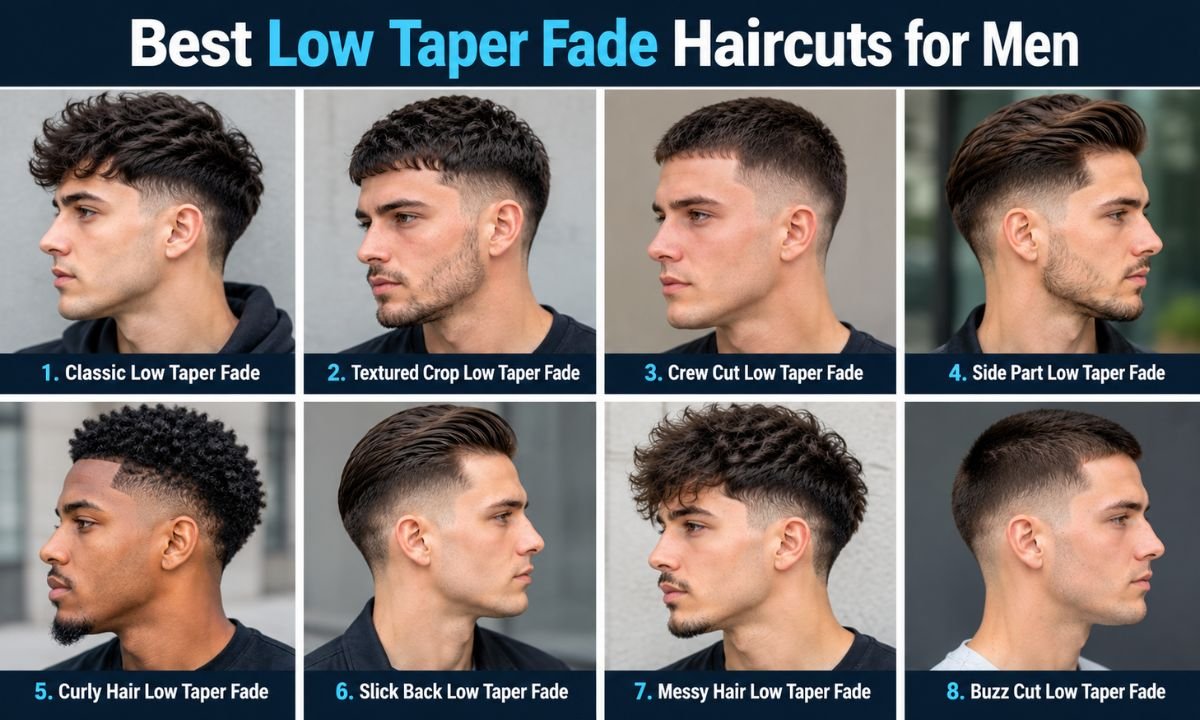
You have plenty of choices once the taper is in place. The top decides the personality. Here are the combinations barbers request most often:
- Low taper with a textured crop: short, choppy, and easy to style.
- Low taper with a quiff: more lift at the front and a polished finish.
- Low taper with a side part: classic, neat, and safe for formal settings.
- Low taper with a comb over: clean lines and a strong, professional feel.
- Low taper with a curly top: natural volume and a soft contrast.
- Low taper mullet: short sides, longer back, and modern edge.
Pick based on your hair density, your daily routine, and how much time you’ll spend styling. If you hate mornings, choose a low-maintenance crop. If you enjoy a mirror and a blow dryer, try a quiff.
The Low Taper Mullet: What It Is and Why It Works
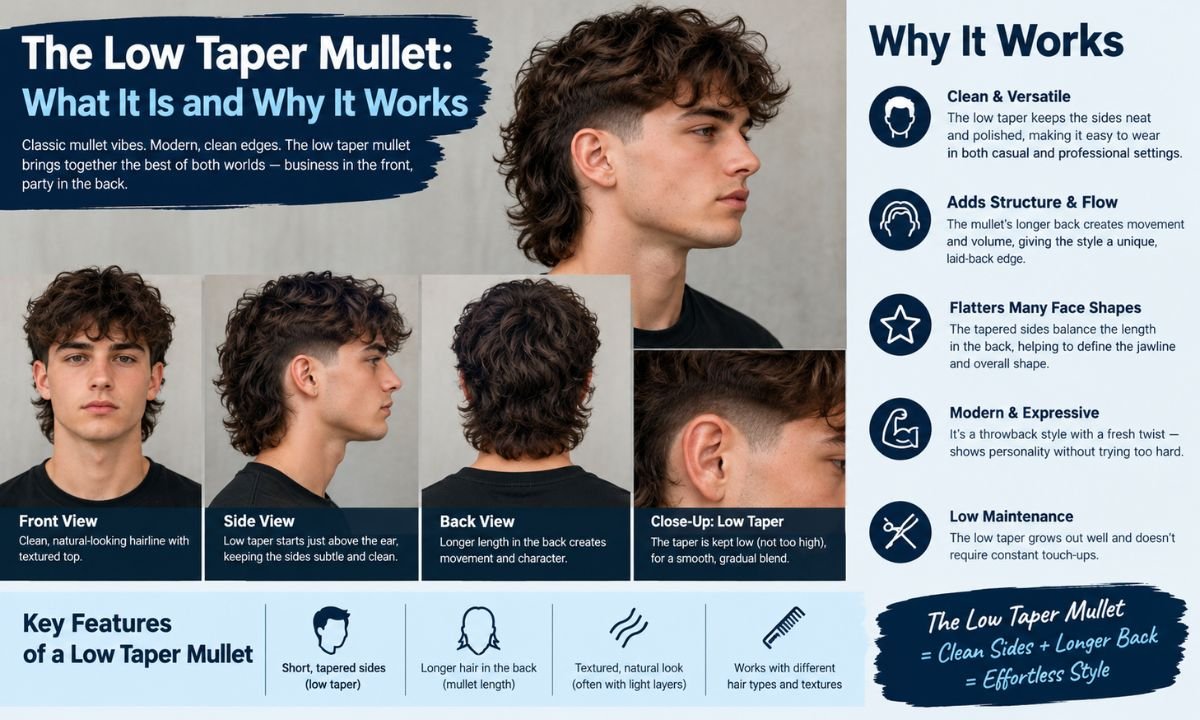
The mullet had a rough reputation for a while. The old version was business in the front and party in the back, with little shaping between. The modern mullet keeps the length but adds structure.
That’s where the low taper comes in. It cleans up the sides and neckline so the longer back looks intentional. Instead of shaggy, it looks styled.
Here’s how a low taper mullet usually breaks down:
- Sides: tapered short, starting low around the ears.
- Back: left longer, often to the collar or past it.
- Top: textured and layered, from short to medium length.
- Neckline: tapered or slightly rounded to match the lengths.
You can dial it up or down. A subtle version reads as a longer taper haircut with some back length. A bold version, with more contrast and volume, is a full statement cut. If you’re nervous, start subtle and grow into it.
Low Taper Fade for Curly Hair

Curly hair and tapers get along really well. The short sides keep the shape from looking heavy, while the top shows off your curls. It’s like framing a picture.
Ask your barber to leave enough length on top so the curls can bounce and define. Cutting too short flattens the pattern. Aim for at least two to four inches, depending on how tightly you curl.
Moisture matters here. Use a leave-in conditioner or curl cream after washing, then let the hair air dry or diffuse it gently. Skip brushing when dry, because it turns curls into frizz.
Low Taper Fade for Straight and Wavy Hair
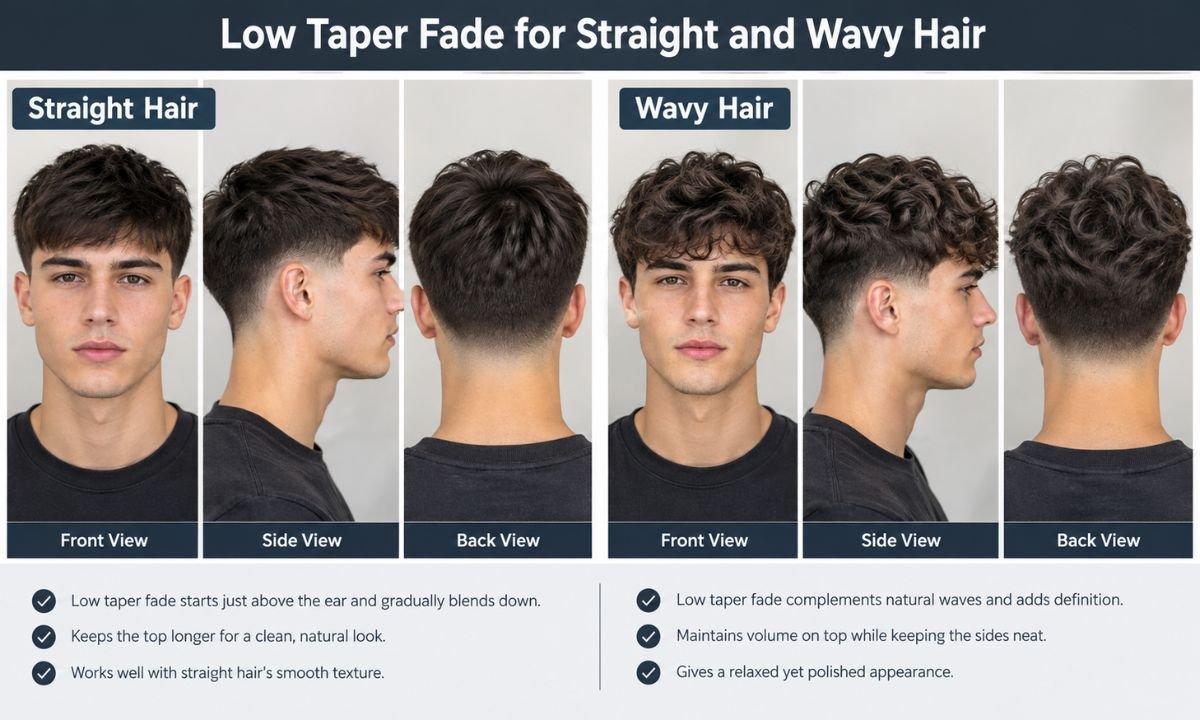
Straight hair shows every line, so the taper needs to be clean. A good barber blends the transition so smoothly you can’t spot where one length ends. That’s the whole point.
Wavy hair sits in the middle. It gives you texture without too much work, and it looks great with a slightly messy top. Use a bit of sea salt spray or a light paste for shape.
Fine, straight hair often needs a volumizing product. Try a matte clay or powder to add grip. A thin dab goes a long way, so don’t overdo it.
Low Taper Fade for Black Men
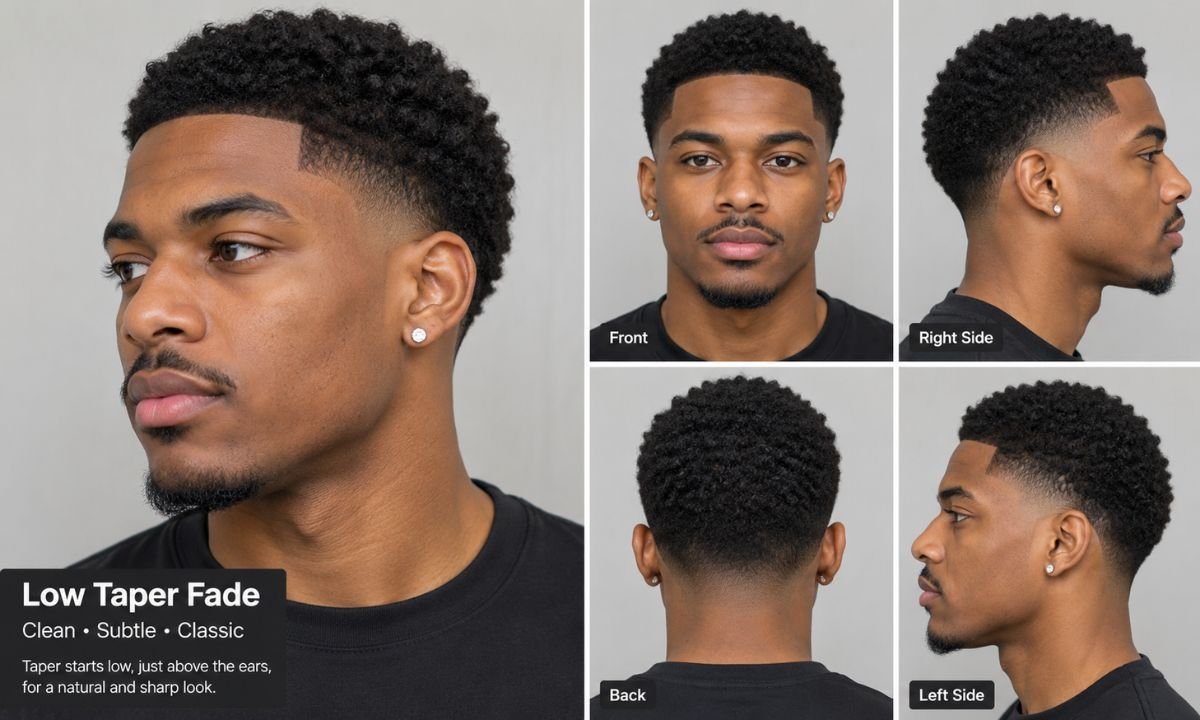
A low taper fade is one of the most popular cuts among Black men, and for good reason. It suits coily and kinky hair well, and it gives a sharp, tidy shape with a clean lineup at the front. The contrast between the crisp edge and the natural texture on top looks great.
Popular pairings include twists, waves, a short afro, and a textured crop. Some clients also add a shape up to define the hairline. If you want waves, ask your barber about a 360 wave approach with the taper.
Scalp care counts as much as the cut. Moisturize with a light oil or cream, wear a satin or silk durag at night if you brush for waves, and avoid over-washing. Pick a barber who works with your hair type every day, because experience shows in the blend.
Low Taper Fade V (V Cut and V Shape at the Nape)

The V-shaped neckline is a small detail with a big payoff. Instead of a straight or rounded edge at the back, the hair comes to a point at the center. It makes the whole cut feel more designed.
This works especially well with a mullet or a longer back. The point draws the eye down and adds shape. Most guys with thick hair at the nape can pull it off.
Ask your barber if it suits your hairline growth pattern, because some necks grow in odd directions. A good barber will tell you honestly. Keep in mind that a V edge needs regular touch ups, or it turns messy fast.
Modern Low Taper Fade
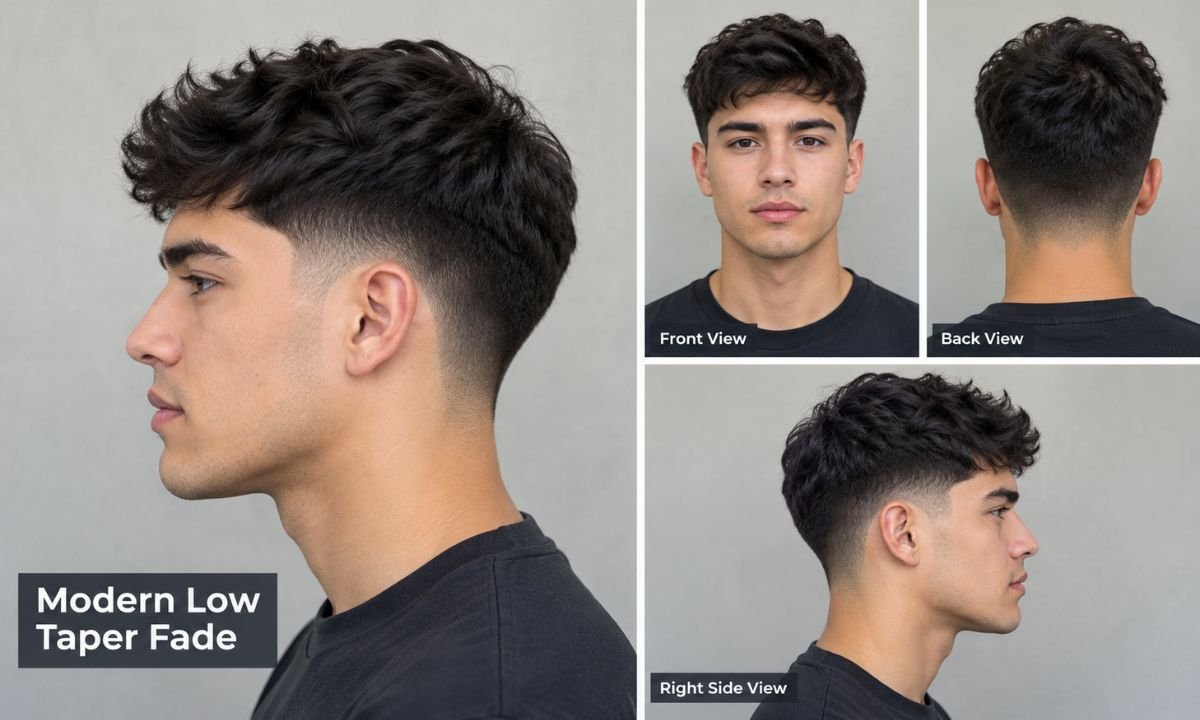
The modern take on the low taper isn’t about being flashy. It’s about texture, movement, and balance. Barbers now leave more length on top, then add layers so the hair moves naturally.
You’ll see more textured fringes, soft curtains, and French crops. The sides stay tidy, but the top feels relaxed. It reflects a broader shift toward looks that seem effortless.
In 2026, expect longer napes, slight shaggy layers, and blended edges instead of hard lines. That fits the mullet trend perfectly. If you want a fresh look without a big risk, this is the sweet spot.
How to Style a Textured or Messy Top

A textured top looks casual, but it takes a little technique. Start with towel-dried hair, then add a small amount of product. Work it through with your fingertips instead of a comb.
Here’s a simple routine:
- Dry your hair with a blow dryer on medium heat.
- Warm a pea-sized amount of matte paste or clay between your palms.
- Rub it through the roots and pull the ends upward.
- Twist small sections for extra separation.
- Finish with a light texture spray if you want more hold.
Don’t use too much product, or the top looks greasy. If it feels heavy, wash it out and try again with half the amount. Practice makes this faster, and you’ll get it down in a week or two.
How to Ask Your Barber for a Low Taper Fade

Clear words beat fancy terms. Start by bringing two or three photos, ideally showing the front, side, and back. Then explain what you like about each one.
Use these phrases to be exact:
- “I want a low taper starting just above the ear.”
- “Leave the top about three inches, textured.”
- “Use a #1 or #2 guard at the shortest point.”
- “Keep the neckline natural (or tapered).”
- “For a mullet, leave the back around collar length.”
Also tell the barber how much you can style at home. That one detail changes the recommendation. And if you don’t like something midway, say it early, because it’s easier to fix while the clippers are still out.
How to Style and Maintain a Low Taper Fade

A low taper looks great for about two to three weeks. After that, the edges start to fuzz. Book a touch up every two to four weeks to keep the blend clean.
Here’s what to do between appointments:
- Wash your hair two or three times a week, not daily.
- Use a shampoo and conditioner that matches your hair type.
- Keep a small trimmer for the neckline, but don’t cut the fade itself.
- Sleep on a silk pillowcase if your hair frizzes easily.
- Apply product to damp hair for the best hold.
Watch for split ends if you’re growing the back for a mullet. Trim them every couple of months. Healthy length looks intentional, and dry, damaged ends look neglected.
Does a Low Taper Fade Suit Your Face Shape?

Most face shapes can wear a taper, but the top matters more than the sides. Balance is the goal. Use volume and length to soften or sharpen your features.
- Oval: almost anything works, so experiment freely.
- Round: add height on top with a quiff or textured crop.
- Square: soft, textured tops balance the strong jaw.
- Heart-shaped: side-swept or fringe styles even out the forehead.
- Long or oblong: avoid too much height, and try a fringe or side part.
Not sure about your shape? Pull your hair back and look at the outline of your face in the mirror. If you’re still unsure, ask your barber. They see hundreds of faces every month.
Low Taper Fade Products That Actually Help
You don’t need a whole shelf of products. A few well-chosen items cover most looks. Here’s what to keep at home:
- Matte clay: strong hold with a natural finish.
- Sea salt spray: instant texture for waves and mullets.
- Light pomade: shine and control for slicked or classic tops.
- Curl cream: softness and definition for curls.
- Beard oil: worth it if your beard blends into the taper.
Start small and test one product at a time. What works for your friend may not work for you, because hair type changes everything. Give each product a week before deciding.
Common Low Taper Fade Mistakes to Avoid
The biggest mistake is skipping the consultation. Barbers can’t read your mind, and “just clean it up” means something different to everyone. Spend two minutes explaining what you want.
Another common problem is going too short too fast. You can always take more off, but you can’t add it back. If you’re trying the mullet, tell the barber to leave extra length in the back.
Finally, many guys wait too long between cuts. A taper depends on clean edges, so it falls apart faster than a longer style. Set a reminder on your phone so you don’t forget.
How Much Does a Low Taper Fade Cost?
Prices vary a lot by location and barber. In many places, a taper fade costs anywhere from about $25 to $60 in the US. Prices in other countries depend on local rates, so check with a shop near you.
Add a beard trim, a lineup, or a longer style like a mullet, and the price climbs. Premium barbershops may charge more for extra detail work. It’s worth asking for a quote before you sit down.
Remember that tipping is standard in many places. If the barber does great work, a 15 to 20 percent tip is common in the US. A regular barber who knows your hair is worth the loyalty.
The Bottom Line
A low taper fade is a smart, flexible haircut. It works for nearly every hair type, and it looks good in casual or formal settings. Add a mullet back and you get a modern twist.
The key is a good barber and a clear conversation. Bring photos, use real terms, and be honest about your routine. Those steps beat any product on the shelf.
If you’re nervous, start with a subtle taper and a slightly longer back. You can always go bolder next time. A haircut is one of the easiest ways to change how you feel.
Go Deeper: Low Taper Fade Guides
Want to keep learning? Once you’re comfortable with the basics, explore related cuts and topics. Each one builds on the same taper principles.
Useful next reads include:
- Mid taper vs low taper: how the starting height changes the look.
- High taper fade: a bolder and cleaner variation.
- Taper fade with beard: blending the cut into facial hair.
- Textured crop guide: the best top for a taper.
- Mullet grow out tips: how to get length without looking messy.
- Curly hair maintenance: routines for defined curls.
Bookmark whichever fits your hair. You’ll come back to them as your style evolves.
Frequently Asked Questions
Is low taper fade a thing?
Yes, it’s a real and very popular haircut. Barbers worldwide use the term. It describes a taper that begins low, near the ear and neckline, with a gradual blend to short hair.
What is the most attractive fade?
Attractiveness depends on your face shape, hair type, and personal style. That said, many people find the low taper and mid fade the most flattering because they look clean without being extreme. The best fade is the one that suits your features and that you can maintain.
What is a #1 fade?
A #1 fade uses a #1 clipper guard, which leaves hair about 1/8 inch (3 mm) long at the shortest part. The hair then blends upward into longer lengths. It’s short but not bald.
How often should I get a low taper fade touched up?
Most people need a touch up every two to four weeks. If you like very crisp edges, aim for two weeks. If you’re comfortable with a softer look, four weeks is fine.
How much does a low taper fade cost?
Prices vary by city and shop, but many barbers charge somewhere between $25 and $60 in the US. Extras like a beard trim or lineup cost more. Ask for a quote before the cut.
Is a low taper fade professional enough for work?
Yes. It’s one of the safest haircuts for offices, interviews, and formal events. Keep the top neat and choose a side part or short crop for the most polished look.
Does a low taper fade work with a receding hairline?
It often does. A taper draws attention away from thinning at the temples, especially with a textured or forward-swept top. Ask your barber to keep the sides soft rather than very short.
How do I grow out a low taper fade or mullet?
Stop cutting the top and back, but keep tidying the neckline and sides. It takes roughly two to three months to see meaningful length. Get a trim every six to eight weeks to remove split ends and keep the shape.
Final Thoughts
The low taper mullet is proof that an old trend can come back better. With clean edges, controlled length, and a little texture, it looks confident instead of chaotic. Whether you choose a simple taper or the full mullet, the best haircut is the one you feel good in.
Have you tried a low taper fade? Drop your questions in the comments, share this guide with a friend who needs a new cut, and tell us which style you’re trying next.
