


Wondering which Caesar haircuts for men actually look good right now? The best picks in 2026 are the classic Caesar, the modern Caesar haircut with a low fade, the textured Caesar, and the short Caesar. They all share a short, horizontal fringe and tidy sides.
Maybe you worry about a receding hairline. Maybe your hair is thin, curly, or just stubborn. Good news, because this cut bends to fit almost any head.
Below you’ll find 22 styles with plain advice on each one. You’ll also get a barber script, a styling routine, product picks, and real costs. Let’s get into it.
What Is a Caesar Haircut?
A Caesar haircut is a short men’s cut with a horizontal fringe brushed straight across the forehead. The sides and back stay short and neat. The whole look takes about five minutes to style.
The name points to Julius Caesar. Roman busts show short hair combed forward, and historians reportedly link that habit to his thinning hair. Centuries later, the cut came back in a big way. Many people credit actor George Clooney’s 1990s TV look for the modern revival.
So why do guys keep asking for it? It works as one of the best low maintenance men’s haircuts around. It also hides a receding hairline and suits most hair texture types. Few cuts do that much with so little effort.
22 Best Caesar Haircut Styles for Men
Each style below changes the sides, the length, or the texture. Read through and pick two or three favorites. Then take screenshots to your barber.
1. Classic Caesar Cut
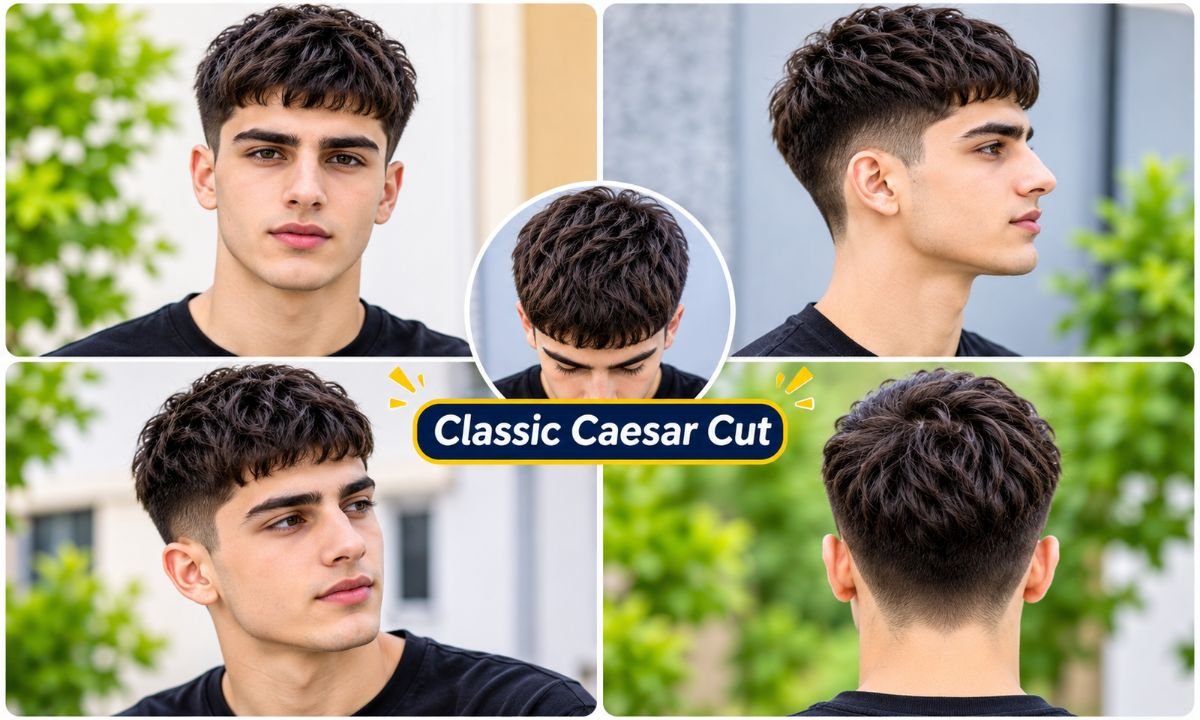
The classic Caesar cut keeps the top about 2 to 4 cm long. The fringe lies flat and straight across the forehead. The sides get a simple, even trim.
It’s the original, and it never looks dated. You can wear it to the office or the gym. Most men finish styling in under two minutes.
Use a little styling cream or pomade to hold the fringe. Comb it forward and let it dry. That’s really all it takes.
2. Modern Caesar with Low Fade
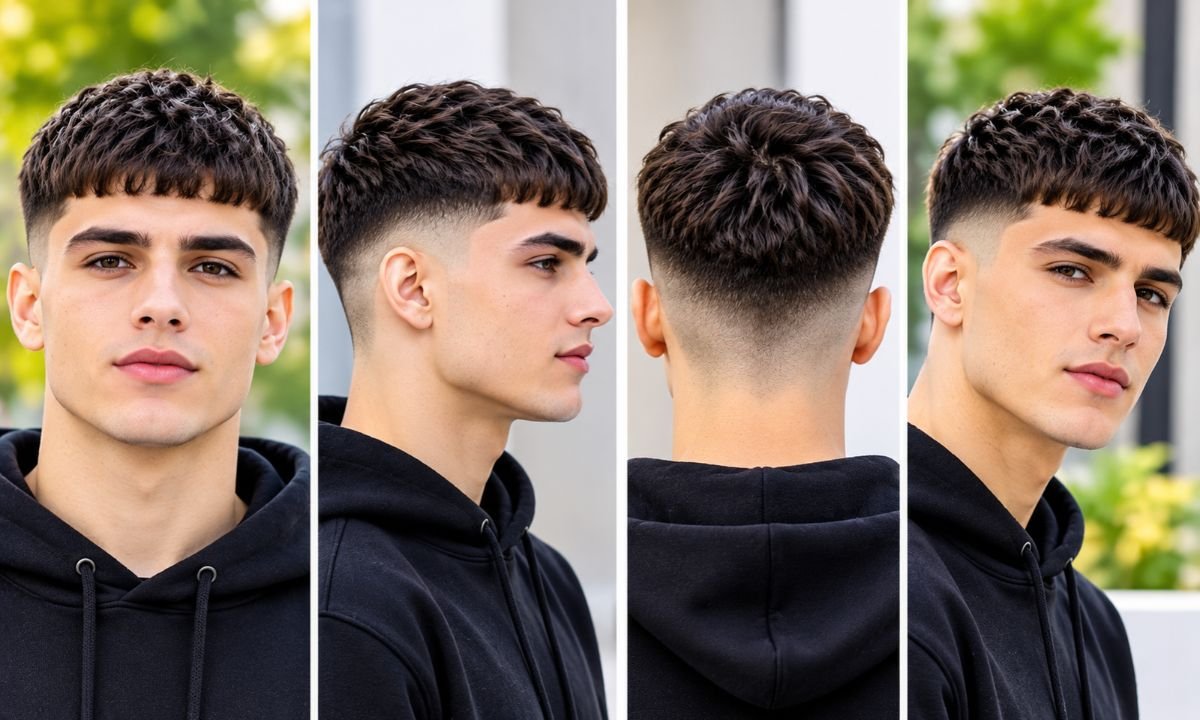
The modern Caesar haircut pairs the fringe with a Caesar haircut with low fade. The fade starts just above the ear and curves around the back. It adds polish without looking harsh.
This version suits men who want a clean, current look. It also grows out nicely over three or four weeks. Your fade transition stays soft and subtle.
Ask for a #1 or #2 guard at the bottom. Let the barber blend upward with a larger clipper guard. Keep the tapered neckline natural.
3. Textured Caesar Cut
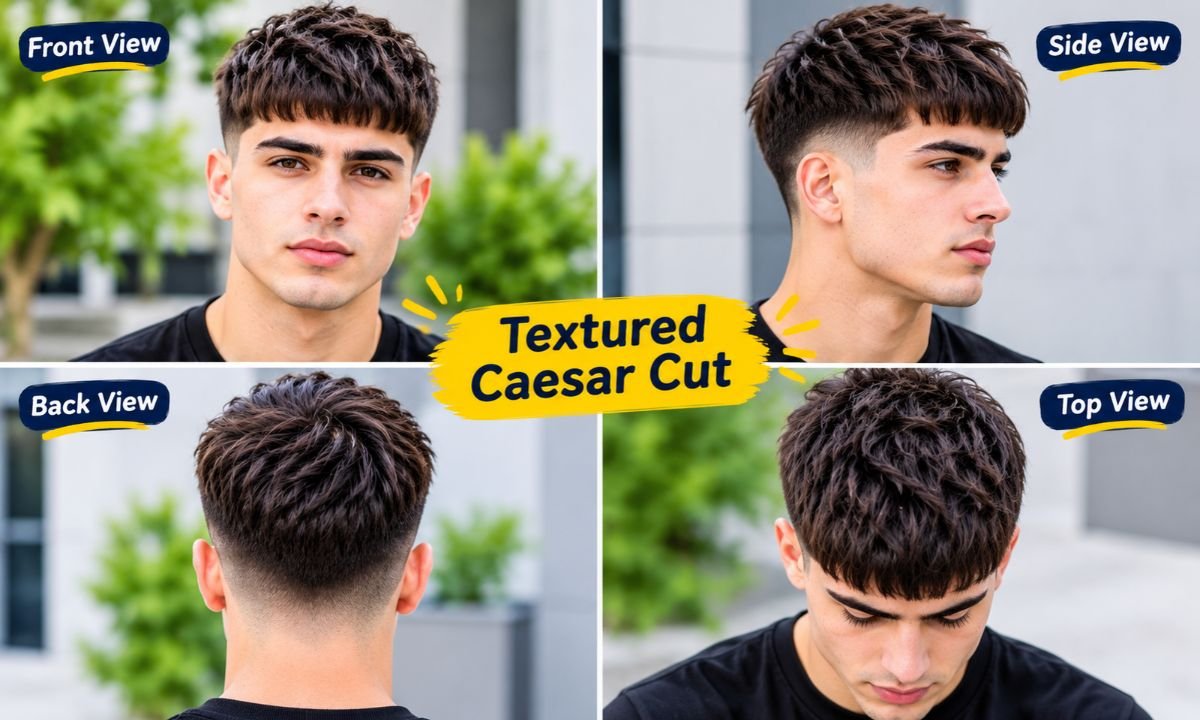
The textured Caesar cut uses choppy layers on top for movement. Your barber cuts into the ends with point cutting to break up the bulk. The result looks lived in, not stiff.
It’s a favorite for thick hair and wavy hair. The texture hides cowlicks and uneven spots. It also looks great with a little product.
Work in a bit of matte clay or texture powder. Rake your fingers forward and sideways. Don’t overthink it.
4. Short Caesar Cut
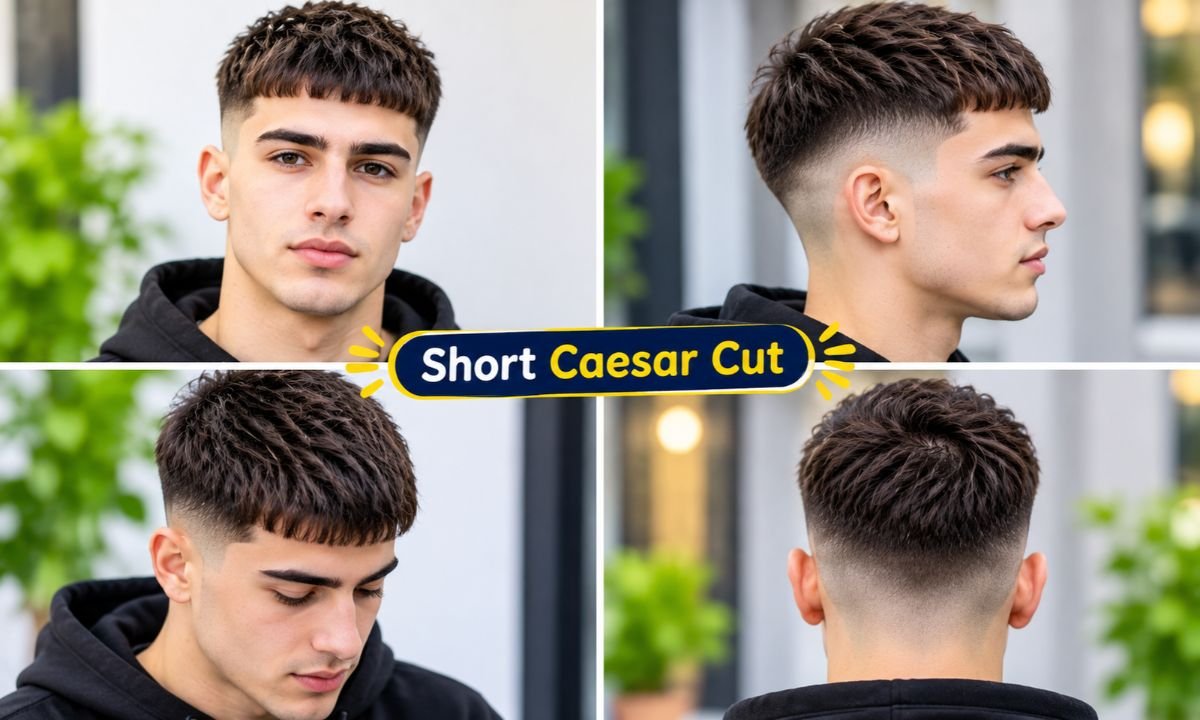
The short Caesar haircut keeps the top near 1 to 2 cm. The fringe barely reaches the hairline. It’s neat, fast, and perfect for busy mornings.
Men with fine or thinning hair love this length. Short hair looks denser than long hair. It also hides crown thinning better.
Skip heavy products here. A dab of styling cream is plenty. Short hair holds its shape on its own.
5. Long Caesar Cut
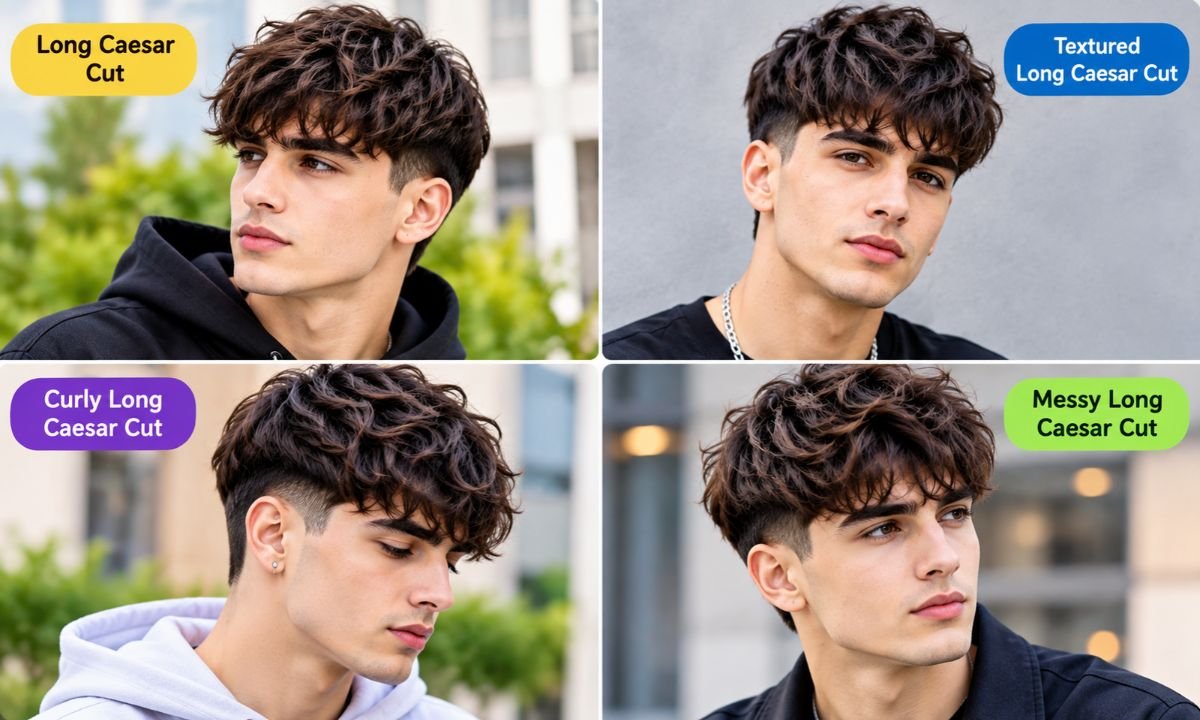
The long Caesar leaves 5 to 7 cm on top. The fringe falls lower on the forehead and moves more. It’s a bold take on the classic.
Thick, straight hair works best for this length. Fine hair can look flat. Ask your barber to add light layers for lift.
Blow dry the fringe forward with a small brush. Finish with sea salt spray for grip. You’ll get relaxed, beachy volume.
6. Caesar Mid Fade
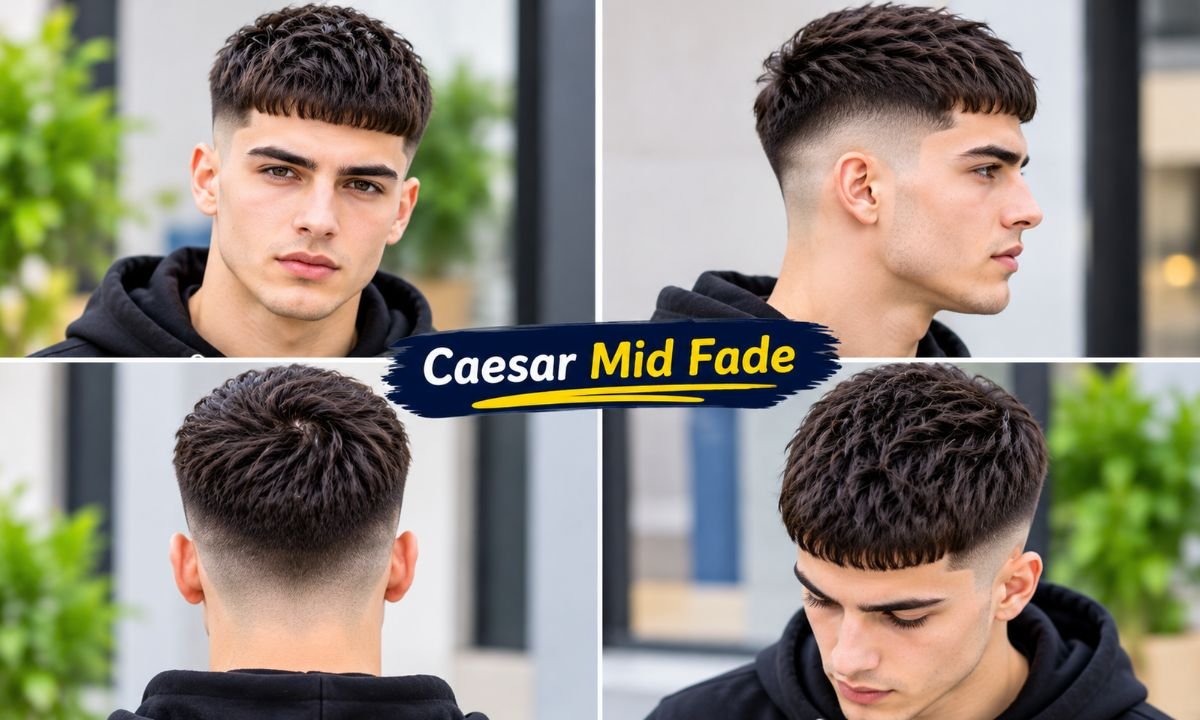
The Caesar mid fade starts the fade around the middle of the sides. It sits between the low and high options. Most men find it the safest middle ground.
It frames the face and shows off the jawline. The temple area looks clean and sharp. It also pairs well with a beard.
Ask for a #1 at the bottom and blend up to a #3. The blend should look smooth, not striped. Check the mirror after the first pass.
7. Caesar High Fade
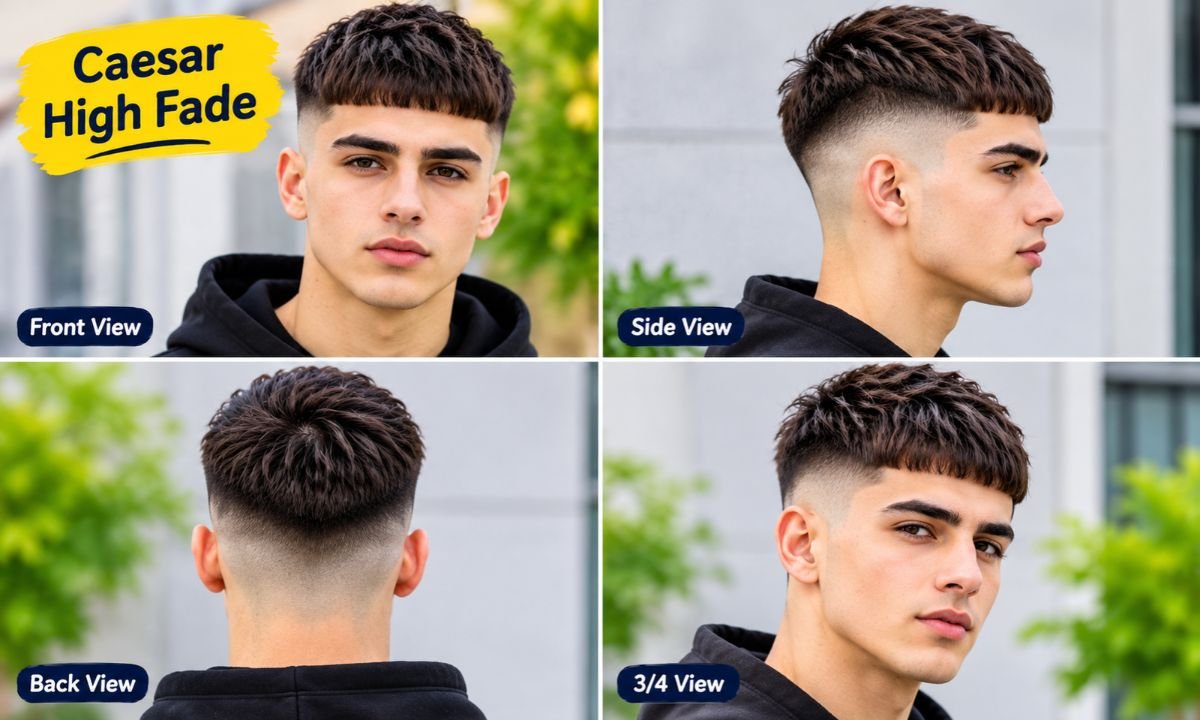
The Caesar high fade begins near the temples. Short sides rise high on the head. The contrast with the fringe looks bold and sharp.
This cut gives a strong, modern feel. It suits men with oval or square faces. Round faces may find it too severe.
Plan to visit your barber every two to three weeks. High fades lose shape fast. Regular upkeep keeps the fade transition crisp.
8. Caesar Skin Fade
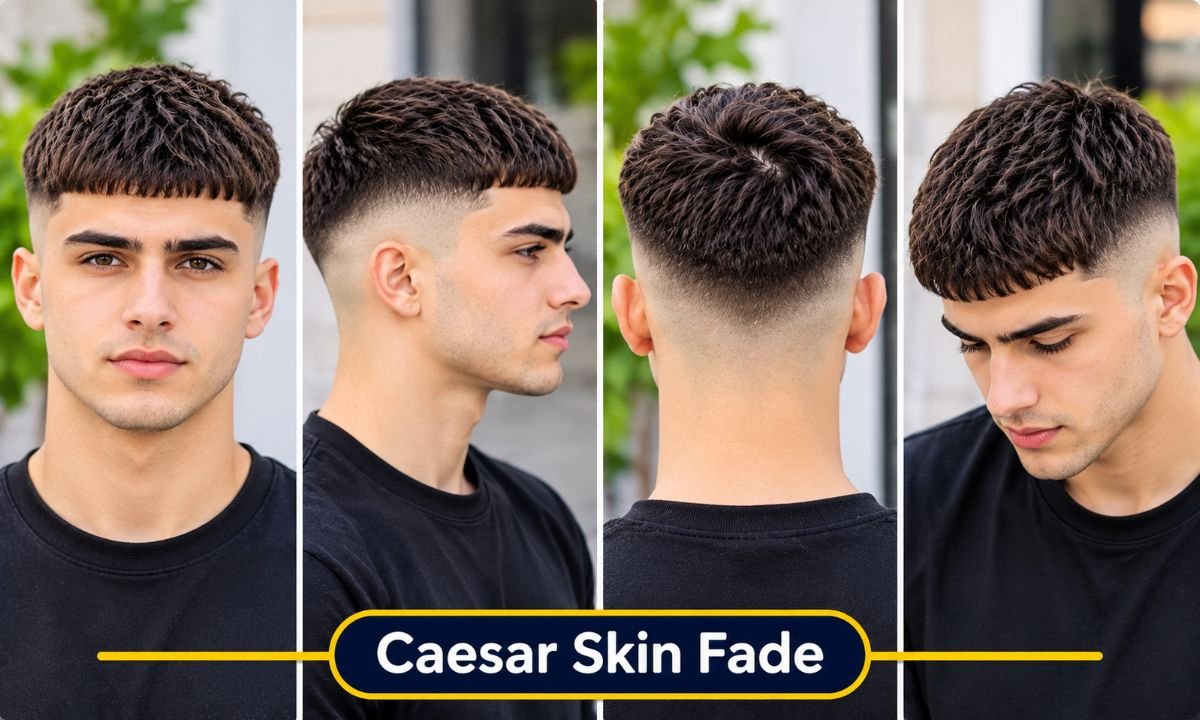
The Caesar skin fade drops to bare skin at the bottom. A razor or foil shaver finishes the edge. It’s the cleanest version you can get.
The look is sharp and eye catching. It also makes the top look thicker by contrast. Many barbers call it the “reset” cut.
Moisturize the exposed skin after each cut. Fresh fades can feel dry or itchy. A small bit of argan oil helps.
9. Caesar Taper
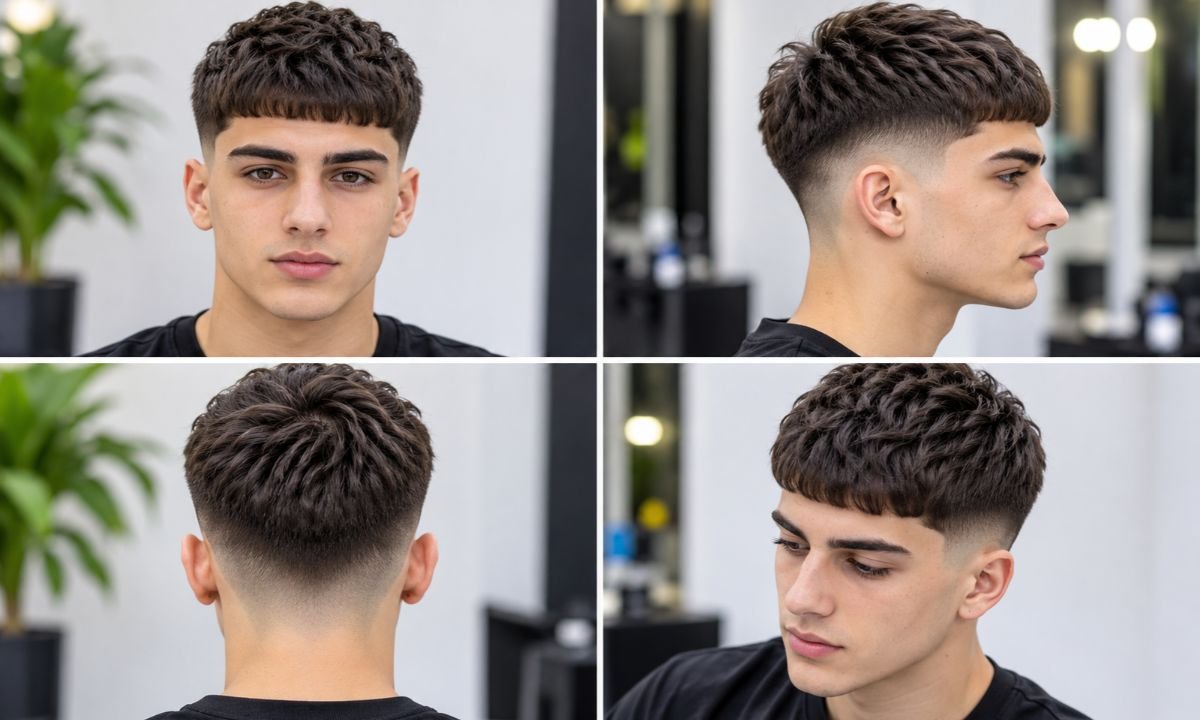
The Caesar taper shortens the hair gradually around the ears and neck. It never drops to skin. The sides keep a soft, natural finish.
It’s ideal for the office. The look stays tidy without a harsh edge. Grow out is easy too.
Ask for a tapered neckline and a classic fringe. Most barbers know this one by heart. It’s quick and cheap.
10. Caesar Drop Fade
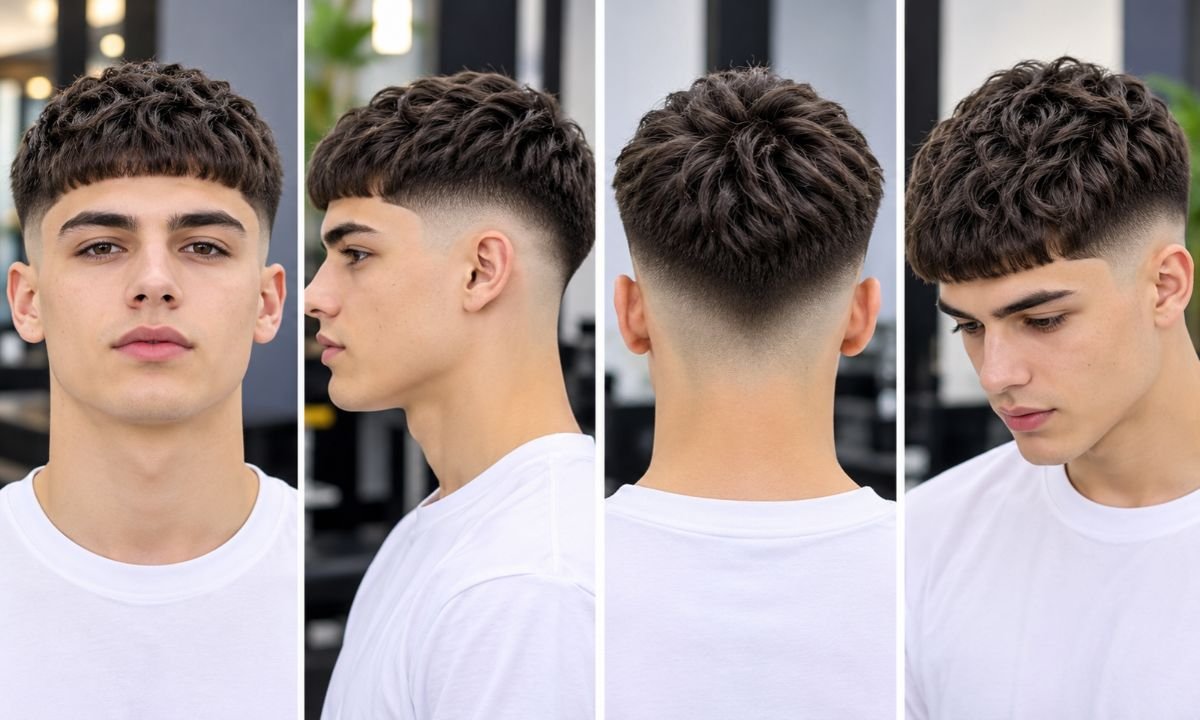
The Caesar drop fade curves down behind the ear. The line “drops” toward the nape. It follows the natural shape of your head.
This adds a stylish twist to the usual cut. It suits men with a rounded skull. It also draws the eye toward the back.
Pick a skilled barber for this one. The curve needs a steady hand. Show a photo to avoid mix ups.
11. Caesar Buzz Cut
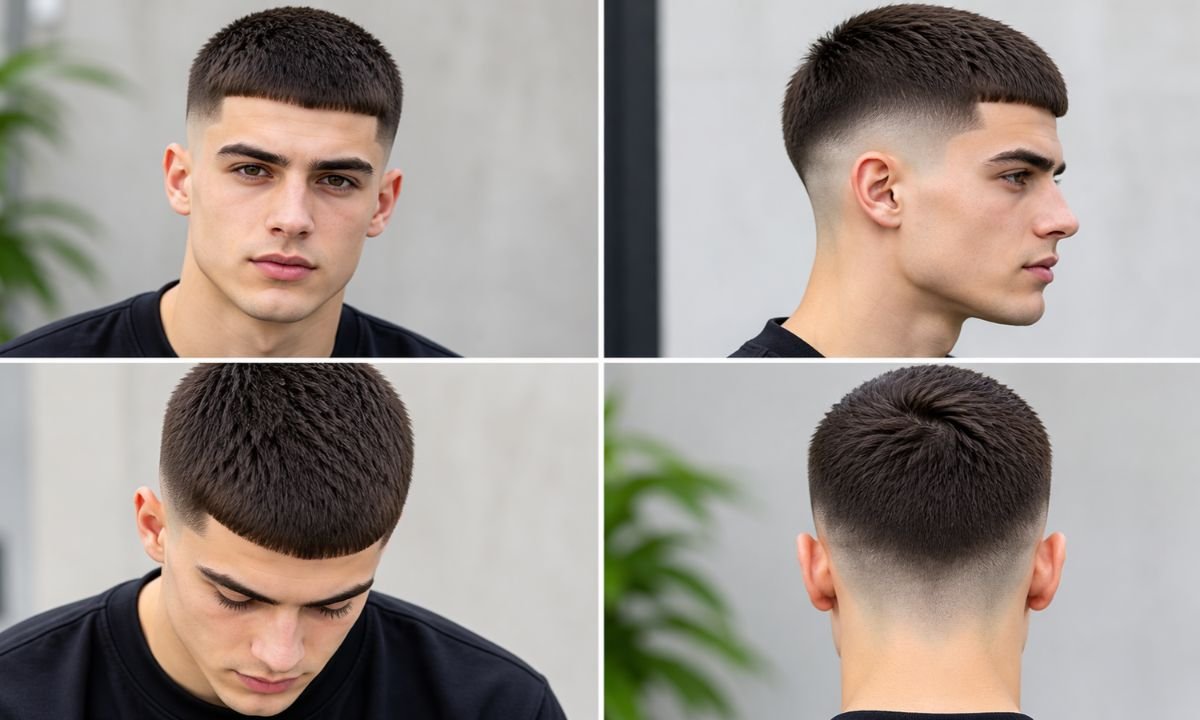
The Caesar buzz cut trims everything short, with a slight fringe on top. Think a #3 guard on top and a #1 on the sides. It’s the easiest option on the list.
Heat, sweat, and busy schedules love this cut. You can clip it at home. It also hides hair loss well.
Keep the fringe tiny. Overgrown buzz cuts lose the Caesar look quickly. Trim every two weeks to hold the line.
12. Messy Caesar Cut
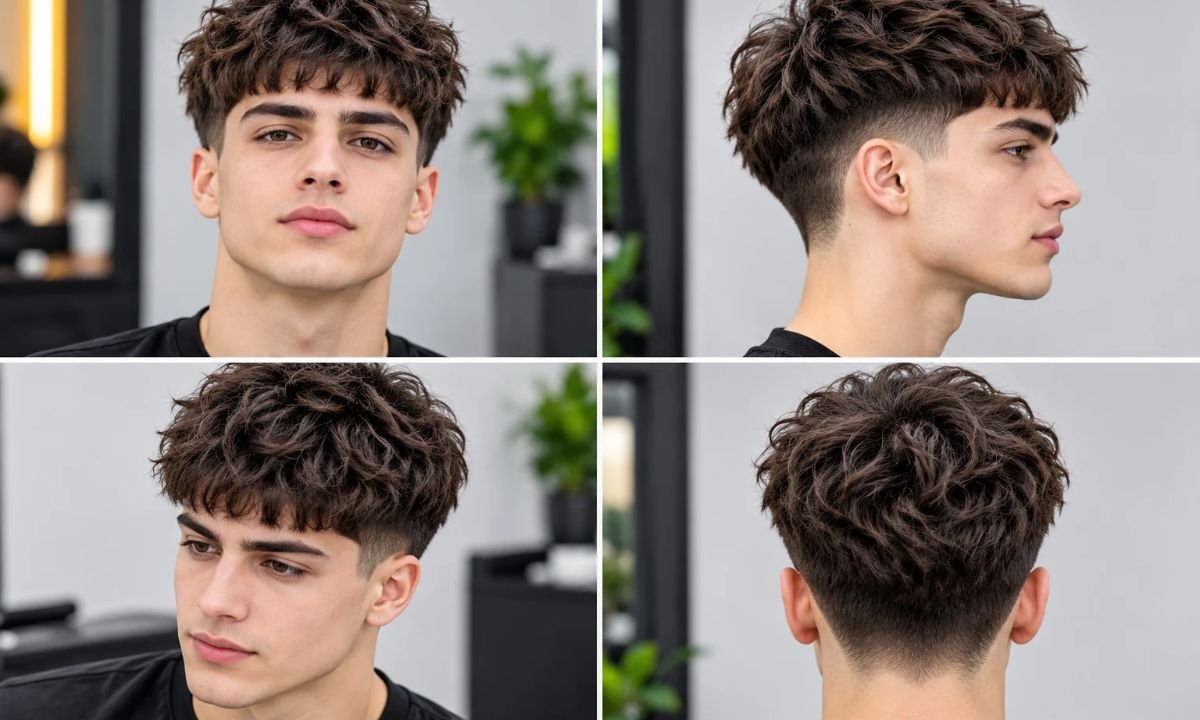
The messy Caesar leans into disorder on purpose. Layers run uneven and the fringe sits at slight angles. It looks careless in a good way.
Younger guys and creative types love it. It works with straight hair or soft waves. It forgives bad hair days.
Use sea salt spray and a bit of texture powder. Scrunch the hair and let it dry. No comb needed.
13. Curly Caesar Cut
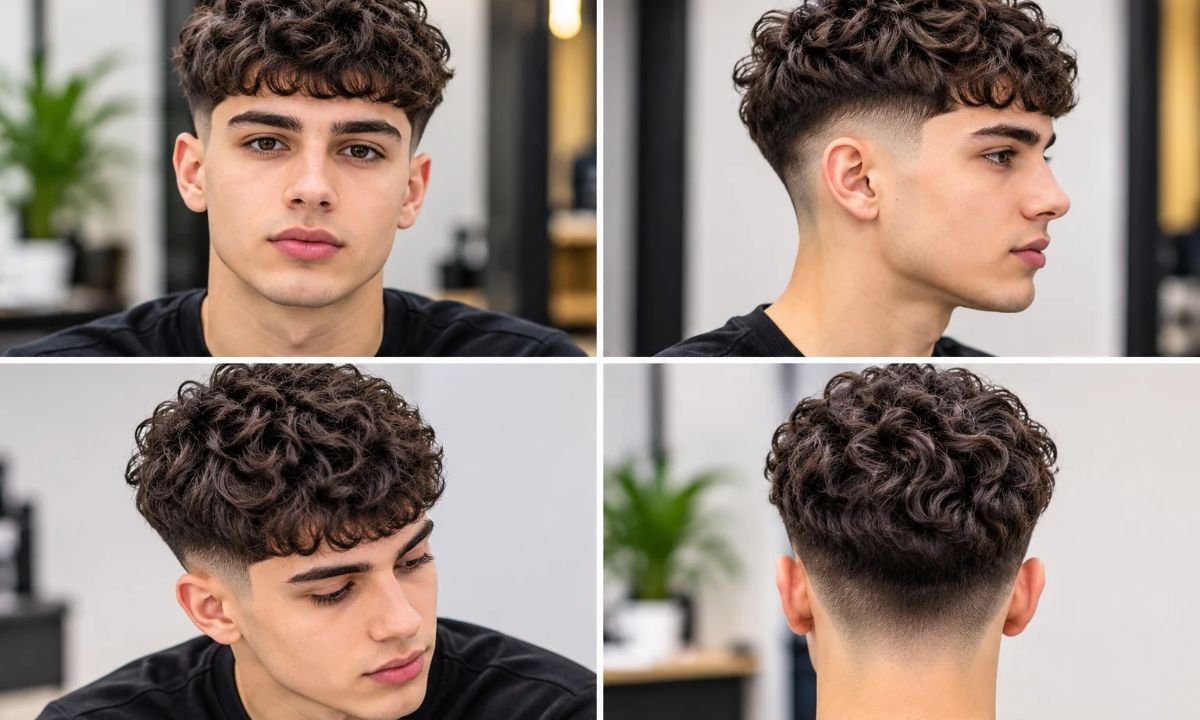
The curly Caesar celebrates natural curls on top. The fringe curls forward and looks soft and full. The sides stay short and neat.
Curly hair needs a slightly longer fringe. Curls shrink when they dry. A 3 cm cut can spring up to 1.5 cm.
Use curl cream on damp hair. Scrunch and air dry or diffuse. Skip brushing, since it breaks up the curl pattern.
14. Wavy Caesar Cut
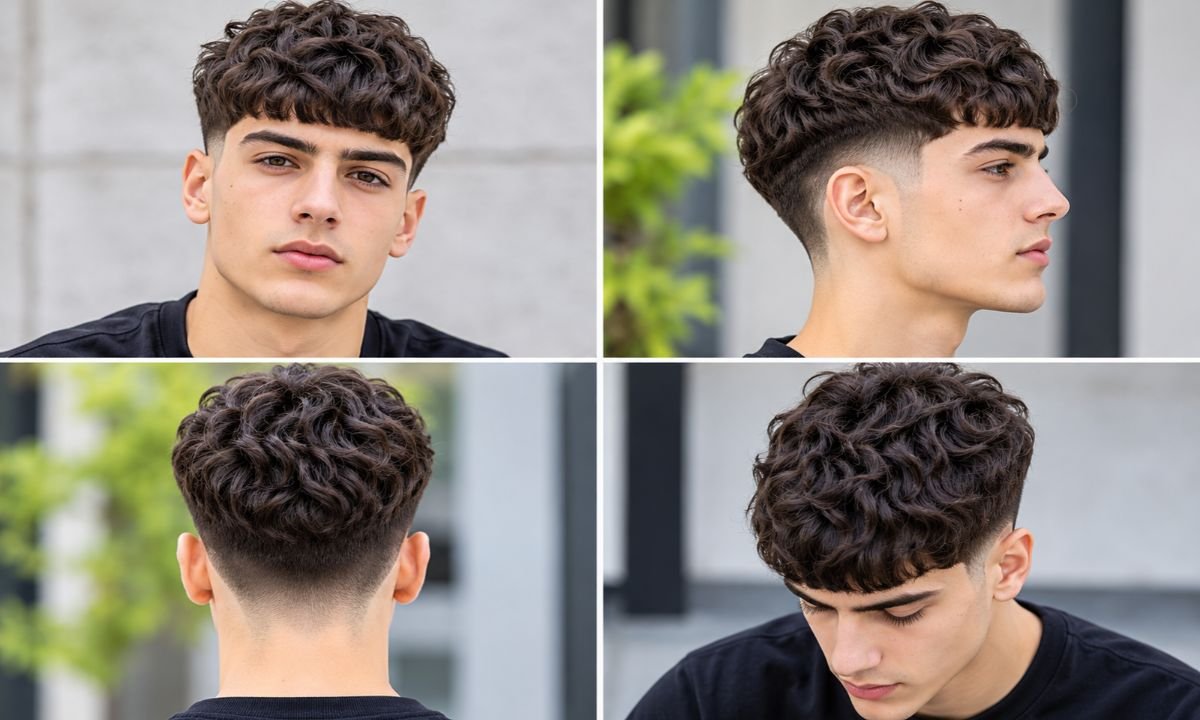
The wavy Caesar keeps loose waves in the fringe. It sits between straight and curly in feel. Many men find it easy to manage.
Waves add natural volume. Your hair texture does half the work. Barbers just shape the edges.
Apply a light styling cream and let it air dry. Add a pinch of matte clay for hold. The waves stay soft and defined.
15. Caesar for Receding Hairline

A Caesar for receding hairline is the cut’s best known talent. The fringe covers the temple area and the front hairline. Nobody sees the thin spots.
Keep the fringe long enough to reach across. Cut it straight, not too heavy. A slightly textured Caesar blends the front softly.
Avoid slicking hair back. It exposes the problem. Use texture powder to add fullness at the front.
16. Caesar Undercut
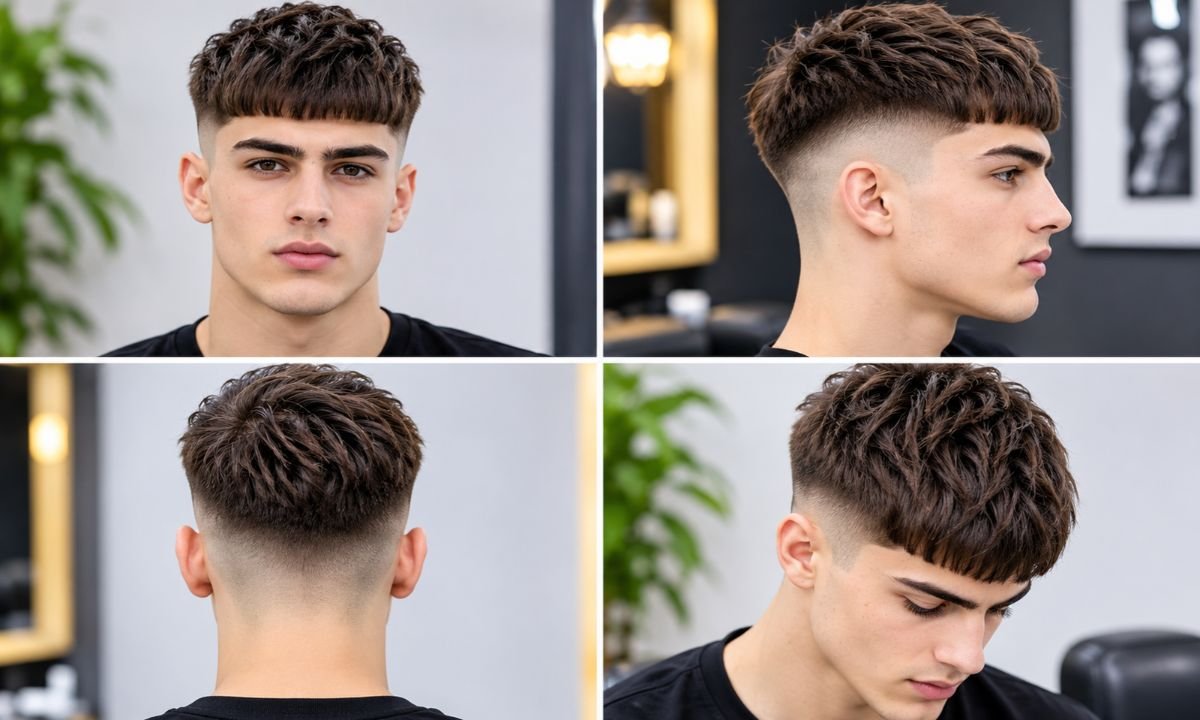
The Caesar undercut keeps the top long and the sides buzzed short. A clear line separates the two sections. It gives strong contrast.
This style suits men with thick, dense hair. It also helps tame heavy hair on warm days. The look feels edgy yet clean.
Ask your barber to disconnect the top from the sides. Style the top forward with pomade. Re-cut the sides every three weeks.
17. Caesar Mullet
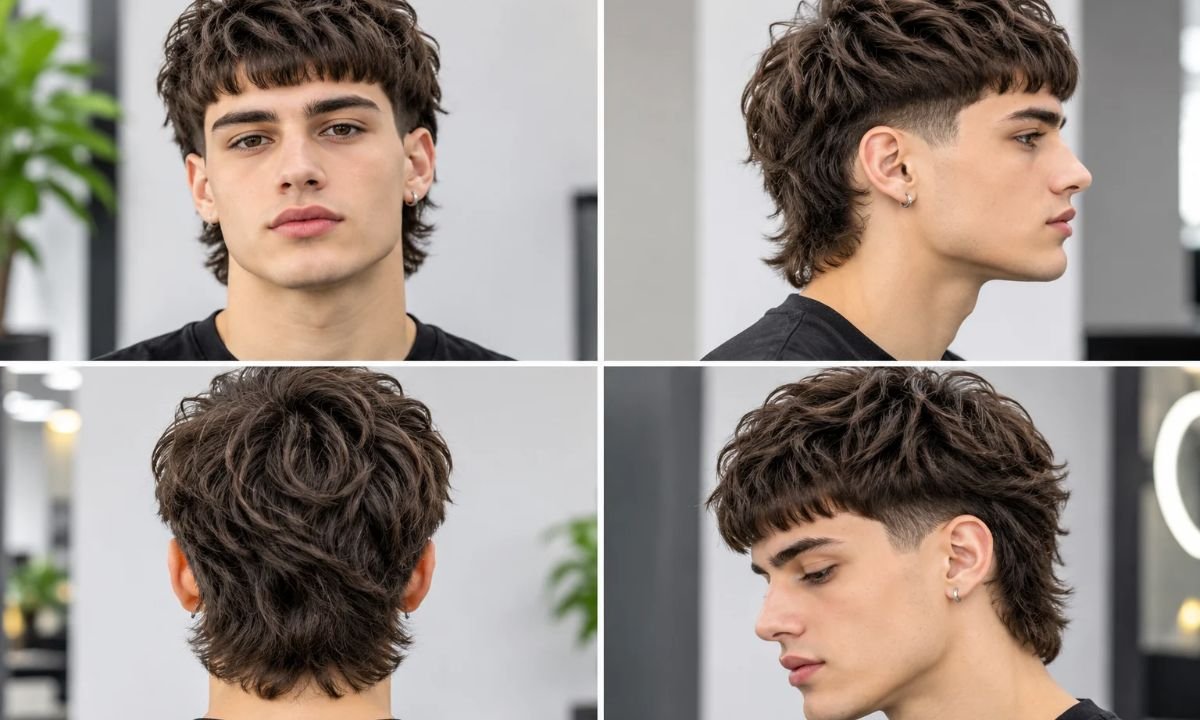
The Caesar mullet mixes a short fringe with a longer back. It adds a playful, retro feel. Business in front, party in back, but toned down.
Keep the back length modest, near the collar. Too long and it loses the Caesar vibe. Wavy hair carries this cut best.
Style the top forward and let the back flow. Use a light sea salt spray. Embrace the attitude.
18. Dark Caesar (Black Men)
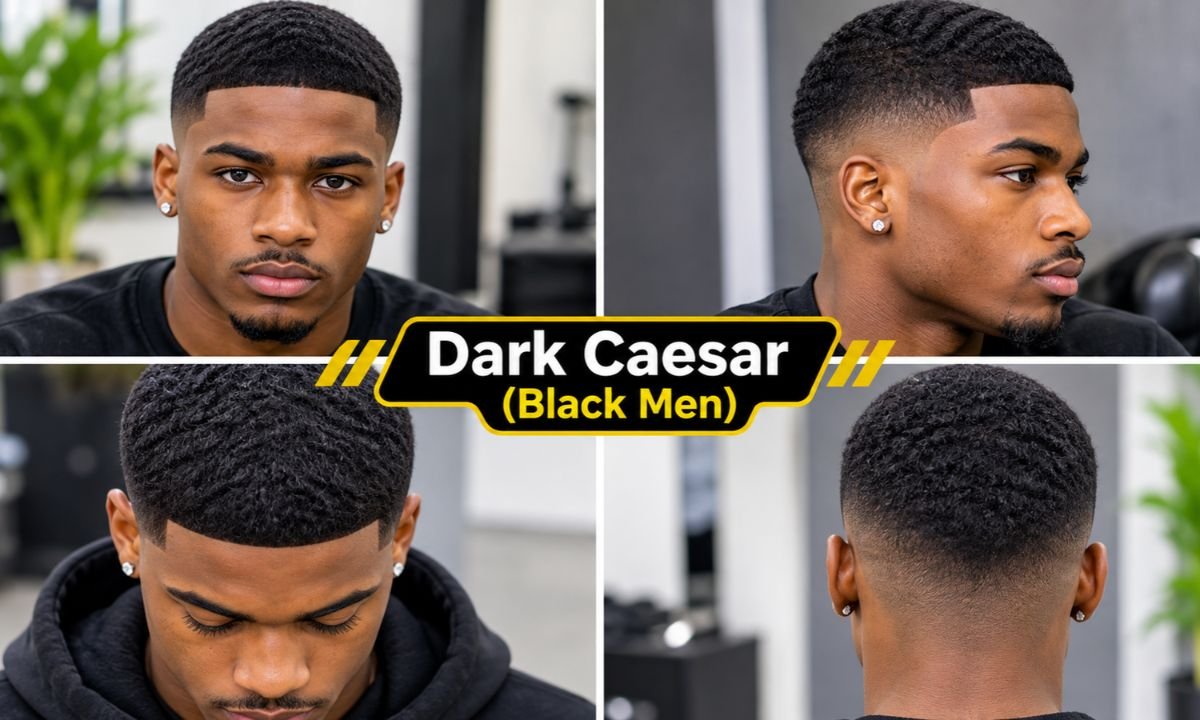
The dark Caesar works great on tightly coiled type 4 hair. The top gets a short, even cut with a soft, brushed fringe. A fade or taper cleans the sides.
Many Black men pair it with a skin fade or a sharp lineup. A Caesar haircut for Black men looks best with waves or defined coils. Brushing builds the wave pattern over time.
Keep the scalp moisturized. Use argan oil or a light hair oil daily. Protect your hair at night with a durag or satin cap.
19. Caesar with Beard

A Caesar with beard balances a clean top with a framed face. The beard fills out the jaw. The fringe adds a smooth, contrasting shape.
A Caesar haircut with beard works well with a short boxed beard or stubble. Fade the sideburns into the beard for a clean link. It looks put together fast.
Match the beard length to the haircut. Short sides pair with a short beard. A big beard can overwhelm a small fringe.
20. Layered Caesar Cut

The layered Caesar adds light hair layering to the top. The layers give lift and movement. It’s softer than the classic cut.
It’s ideal for fine hair and thin hair. Layers create the illusion of volume. They also help the fringe lie right.
Ask your barber for subtle layers, not heavy steps. Blow dry forward for shape. Finish with a touch of matte clay.
21. Caesar for Thin Hair
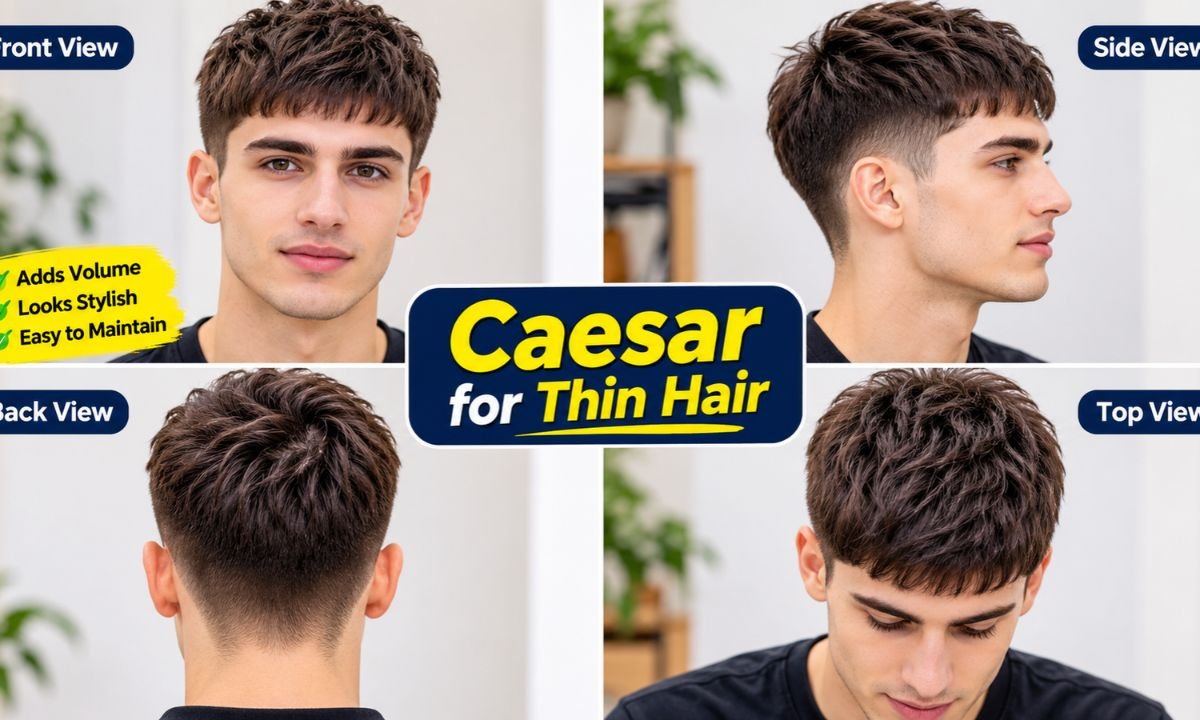
A Caesar haircut for thin hair keeps the top short and light. The fringe stays slightly textured to look fuller. Short sides add contrast and density.
Avoid long lengths. Thin hair shows scalp when it grows out. A neat, short cut hides the gaps.
Use texture powder at the roots for lift. Skip heavy waxes that weigh hair down. Light products keep it airy.
22. Blunt Fringe Caesar (Horizontal Fringe)
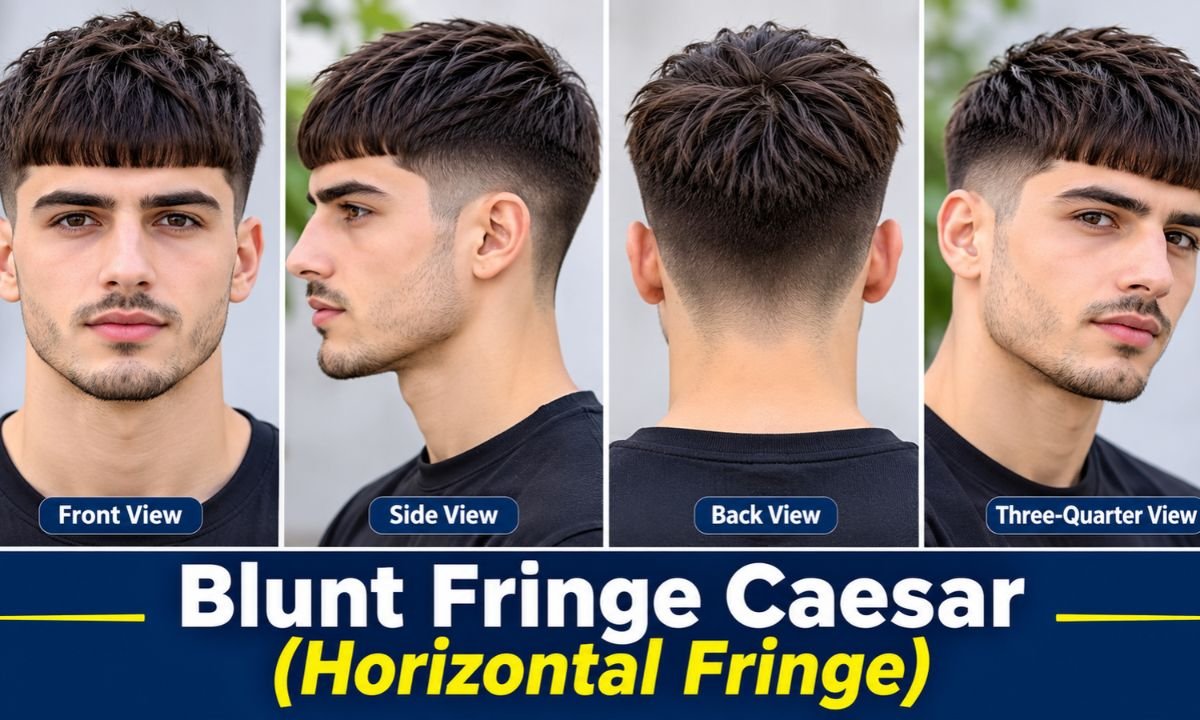
The blunt fringe Caesar cuts the front in a crisp, straight line. Some people call it a horizontal fringe. It’s the most dramatic take on the cut.
Straight, thick hair shows this off best. The clean line sits just above the brows. It gives a sleek, modern look.
Ask for a clean line, but keep it soft with light point cutting. Too harsh and it looks like a bowl. A good barber knows the balance.
How Do You Choose the Right Caesar Cut for Your Face Shape?
Your face shape decides which Caesar looks best. The aim is balance. You want the cut to soften sharp lines or add length where needed.
| Face shape | Best Caesar styles | What to avoid |
| Oval | Almost any Caesar | Very long fringes |
| Round | Textured Caesar, high fade, layered Caesar | Very short, boxy sides |
| Square | Classic Caesar, taper, short Caesar | Overly sharp, blunt fringes |
| Oblong | Messy Caesar, low fade | Very high fades |
Oval faces enjoy the most freedom. Round faces gain length from height on top and short sides. Square faces benefit from softer fringes that calm strong corners.
Your jawline also plays a part. A strong jaw shines with a skin fade or mid fade. A softer jaw looks better with a taper and a bit of beard.
By Hair Type
Hair type matters as much as face shape. Choose a Caesar that works with what you have.
- Straight hair: Classic, blunt fringe, or short Caesar. Straight hair shows clean lines best.
- Wavy hair: Wavy Caesar or textured Caesar. Let the waves add volume.
- Curly hair: Curly Caesar with a longer fringe. Remember that curls shrink.
- Coiled hair (type 4): Dark Caesar with a fade. Moisture and brushing are key.
- Thin or fine hair: Short or layered Caesar. Keep products light.
- Thick hair: Textured Caesar or undercut. Ask for thinning or point cutting.
A good barber can read your hair density in seconds. Be honest about your routine. Nobody needs a cut that needs 20 minutes of daily work.
Caesar vs French Crop vs Crew Cut: What’s the Real Difference?
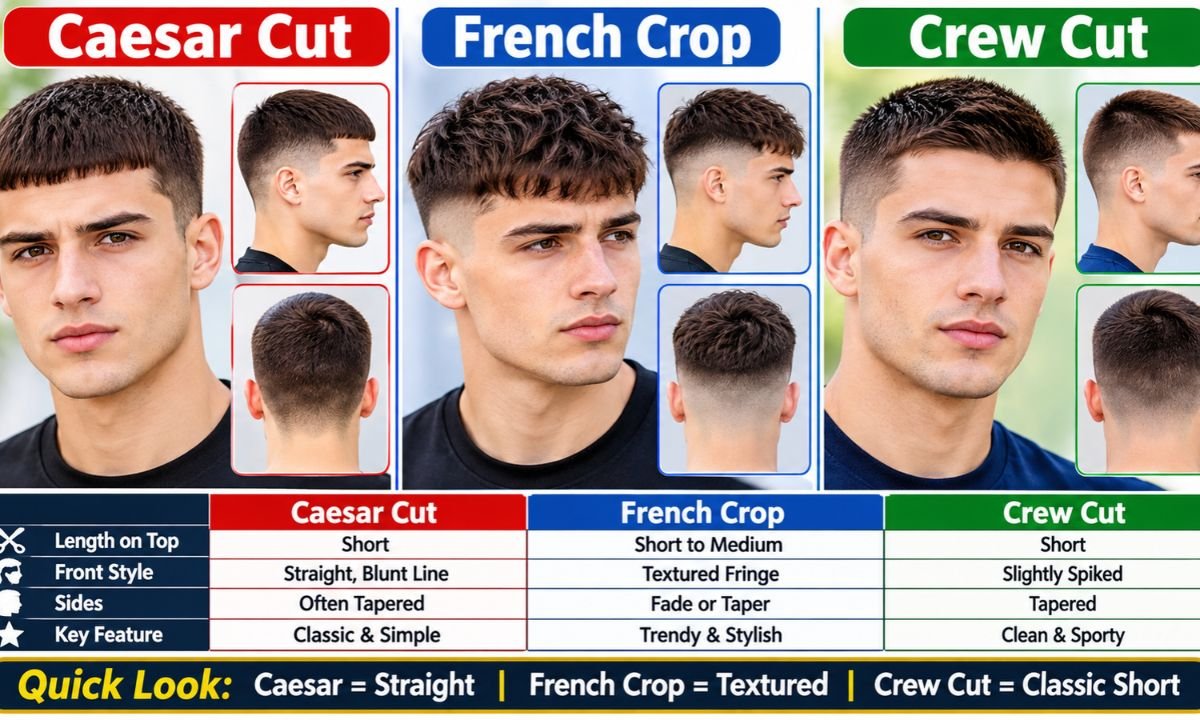
These three get mixed up all the time. All have short sides and a short top. The difference lies in the fringe and the length.
| Feature | Caesar | French crop | Crew cut |
| Top length | 2 to 4 cm | 3 to 6 cm | 1 to 3 cm |
| Fringe | Short, horizontal, brushed forward | Short, blunt, usually textured | Short, often brushed up |
| Sides | Fade or taper | Fade or taper | Short and tapered |
| Style | Soft and neat | Textured and modern | Military and clean |
The Caesar has a softer, flatter fringe. The French crop usually has more texture and length on top. A crew cut sticks to a uniform short length, often lifted at the front.
If you want the easiest option, go Caesar. If you want more texture, try the French crop. If you want the military look, the crew cut wins.
What Should You Tell Your Barber for a Caesar Cut?
Show a photo and use simple words. Barbers love clear instructions. Photos remove most of the guesswork.
Here’s a script you can use:
- “I’d like a Caesar cut with a low fade.”
- “Leave about 3 cm on top and cut the fringe straight across.”
- “Use a #1 on the sides and blend up.”
- “Keep the neckline tapered, not squared.”
- “Add some texture on top with point cutting.”
Know the common clipper guards. A #1 leaves about 3 mm, a #2 about 6 mm, and a #3 about 10 mm. A #4 leaves roughly 13 mm.
Ask questions too. “How will this look as it grows out?” is a good one. A good barber enjoys that kind of talk.
How Do You Style a Caesar Haircut at Home?
Styling takes five minutes or less. Start with towel dried or slightly damp hair. Then follow these steps.
- Apply a pea sized amount of product to your palms.
- Rub it in until it warms up.
- Run your fingers through the hair from back to front.
- Shape the fringe with your fingers or a small comb.
- Blow dry on a low setting if you want extra volume.
- Finish with a light spritz of sea salt spray if you like texture.
For a sleek look, use pomade and a comb. For a messy look, use matte clay and your fingers. Match the product to the mood.
Don’t overdo it. Too much product makes hair stiff and greasy. Less is nearly always better.
How Often Should You Trim a Caesar Cut?
Trim your Caesar every three to five weeks. Hair grows about 1.25 cm each month. That’s enough to change the fringe and the fade.
Fades need more care. High fades and skin fades lose shape in two to three weeks. Tapers and classic cuts last a bit longer.
Good haircut maintenance saves you money in the end. A quick fringe trim keeps the look sharp. Small visits beat big fixes.
| Style | Trim every |
| Classic Caesar | 4 to 5 weeks |
| Low fade or taper | 3 to 4 weeks |
| Mid fade | 3 weeks |
| High or skin fade | 2 to 3 weeks |
| Caesar buzz cut | 2 weeks |
How Much Does a Caesar Haircut Cost?
Most Caesar cuts cost between $20 and $60 in the United States. Prices vary by city, shop, and barber skill. Fades usually cost a little more than classic cuts.
Premium barbershops may charge $60 or more. Budget chains often charge under $25. Add a tip of 15 to 20 percent as a general rule.
Here’s a rough guide. Treat the numbers as estimates, since prices change.
| Type of shop | Typical price |
| Budget chain | $15 to $25 |
| Neighborhood barbershop | $25 to $40 |
| Premium barbershop | $45 to $70 |
Want to save? Learn to clip a basic Caesar buzz cut at home. Leave fades to the pros.
What Are the Best Products for a Caesar Cut?
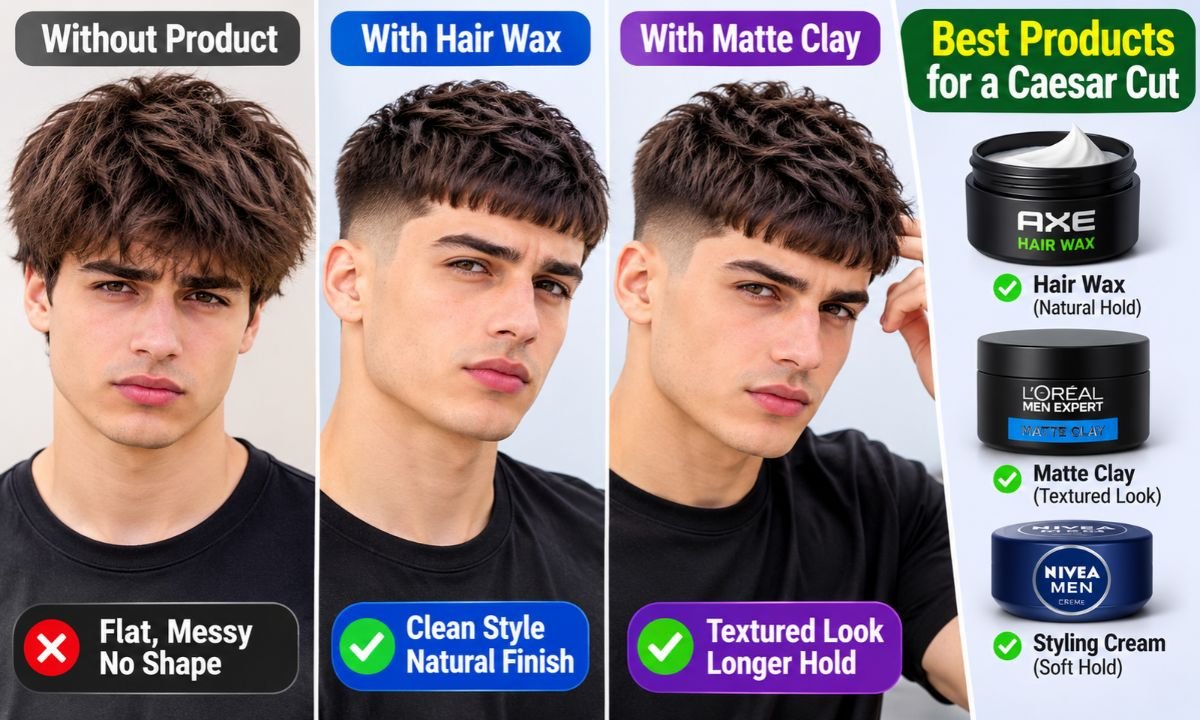
The right product depends on your hair type and the finish you want. You don’t need many. Two or three solid products cover everything.
| Product | Best for | Finish |
| Matte clay | Thick and wavy hair | Natural, no shine |
| Sea salt spray | Fine and straight hair | Textured, beachy |
| Texture powder | Thin hair | Volume and lift |
| Styling cream | All types, especially short cuts | Soft hold, light shine |
| Pomade | Sleek looks, thick hair | Shine and strong hold |
| Curl cream | Curly hair | Defined curls, less frizz |
| Argan oil | Dry or coiled hair | Moisture and gloss |
Read labels before you buy. Avoid heavy waxes if your hair is thin. They can weigh it down and expose the scalp.
Wash product out each night. Buildup clogs pores and dulls hair. Healthy hair always styles better.
Common Caesar Haircut Mistakes to Avoid
Even a simple cut goes wrong sometimes. These mistakes show up again and again. Skip them and you’ll look sharper.
- Fringe too long: It falls into your eyes and looks sloppy. Keep it above the brows.
- Fringe too thick: It looks like a bowl cut. Ask for thinning or point cutting.
- Wrong fade for your face: A high fade can make a round face look wider on top.
- Too much product: Heavy product makes hair look greasy and flat.
- Skipping trims: A fade grows out fast. Book your next visit before you leave.
Mistakes are easy to fix. Talk to your barber and adjust next time. Every haircut teaches you something.
Frequently Asked Questions
What is a Caesar haircut?
It’s a short cut with a horizontal fringe brushed forward. The sides stay short and neat.
Is the Caesar haircut good for a receding hairline?
Yes. The forward fringe covers the temples and front hairline nicely.
Does a Caesar haircut work with thin hair?
Yes. Keep the top short and add light texture for a fuller look.
Can you wear a Caesar cut with curly hair?
Yes. Leave a slightly longer fringe because curls shrink when they dry.
What’s the difference between a Caesar and a French crop?
A Caesar has a softer, flatter fringe. A French crop has more texture and a blunt front.
What is the difference between a Caesar and a crew cut?
A Caesar brushes the fringe forward. A crew cut keeps the top short and often lifted.
How long should hair be for a Caesar cut?
You need about 2 to 4 cm on top. Shorter works for buzz versions.
How often should I trim my Caesar haircut?
Every three to five weeks keeps it fresh. Fades may need trims every two to three weeks.
What product is best for a Caesar haircut?
Matte clay or styling cream works for most men. Use sea salt spray for texture.
Is a Caesar cut good for Black men?
Yes. It pairs well with a skin fade and brushed waves on type 4 hair.
How much does a Caesar haircut cost?
Most cost between $20 and $60 in the United States. Premium shops may charge more.
Conclusion
The Caesar cut earns its popularity. It’s quick, sharp, and flexible across face shapes, hair textures, and ages. You can wear it classic, faded, messy, or curly.
Pick your favorite from the 22 styles above. Show your barber a photo, and be clear about your routine. Keep up with trims and use light products.
Which Caesar are you trying first? Tell us in the comments, and share this guide with a friend who needs a fresh cut.
