


Want a sharp cut that still keeps your natural volume? A mid taper fade afro does exactly that. The sides and back fade down short, while the top stays full and shaped.It sits between a low taper and a high taper. The fade starts around your temple, so the contrast looks clean without going extreme.
Maybe you’ve asked yourself a few things before booking. Will it suit my curl pattern? Will I be stuck at the barbershop every week? Can I wear it to work?Short answers: yes, probably not, and yes. This guide covers 10 styles, who they suit, and how to ask for them. You’ll also get care tips that hold up at home.
What Is a Mid Taper Fade Afro? [4C Hair Basics]

A mid taper fade afro has short, blended sides and a full, rounded top. The taper fade begins at mid-height on the head, close to the temple line. From there, the hair gets shorter toward the sideburns and the neckline.
Afro-textured hair, especially 4C hair, grows upward and outward in tight coils. That makes it a great match for a taper. The coils hold their shape, so the blend looks soft instead of patchy.
Here’s one detail people mix up. A classic taper keeps a little length at the bottom, while a skin fade goes down to bare skin. Most men ask for a #1 or #0.5 guard at the base, so you get to pick how close it goes.
10 Best Mid Taper Fade Afro Styles: Top Visual Guide
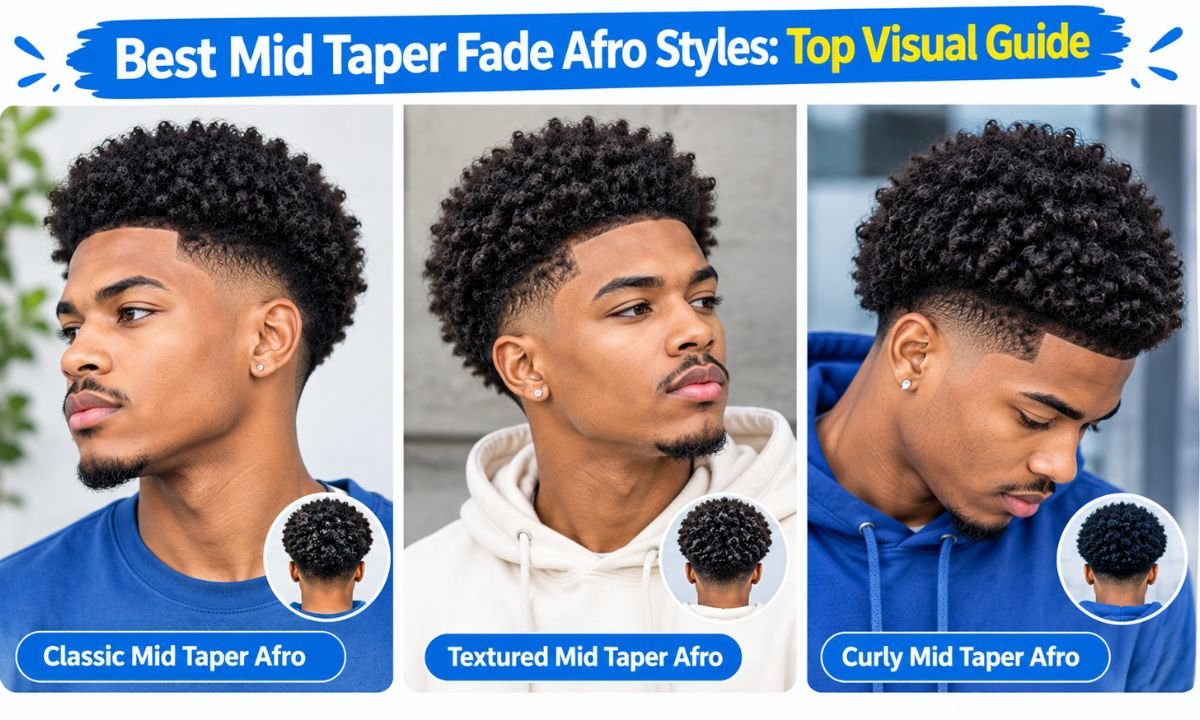
Every style below works on natural texture. Pick one based on your hair density, your job, and how much time you want to spend each morning.
Photos help a lot. Save two or three reference pictures before your appointment, because barbers love a visual.
Classic Afro Styles
1. Full Afro Mid Taper

This is the classic. You keep full length on top, shaped into a round, even crown. The sides fade from a #1 near the temple to a #0.5 around the neckline.
It works best on dense 4C hair that stands up on its own. Ask your barber to trim the outline gently so the shape stays soft and natural.
Maintenance is moderate. Pick it out daily, and book a fade refresh every two to three weeks.
2. Mini Afro Mid Taper
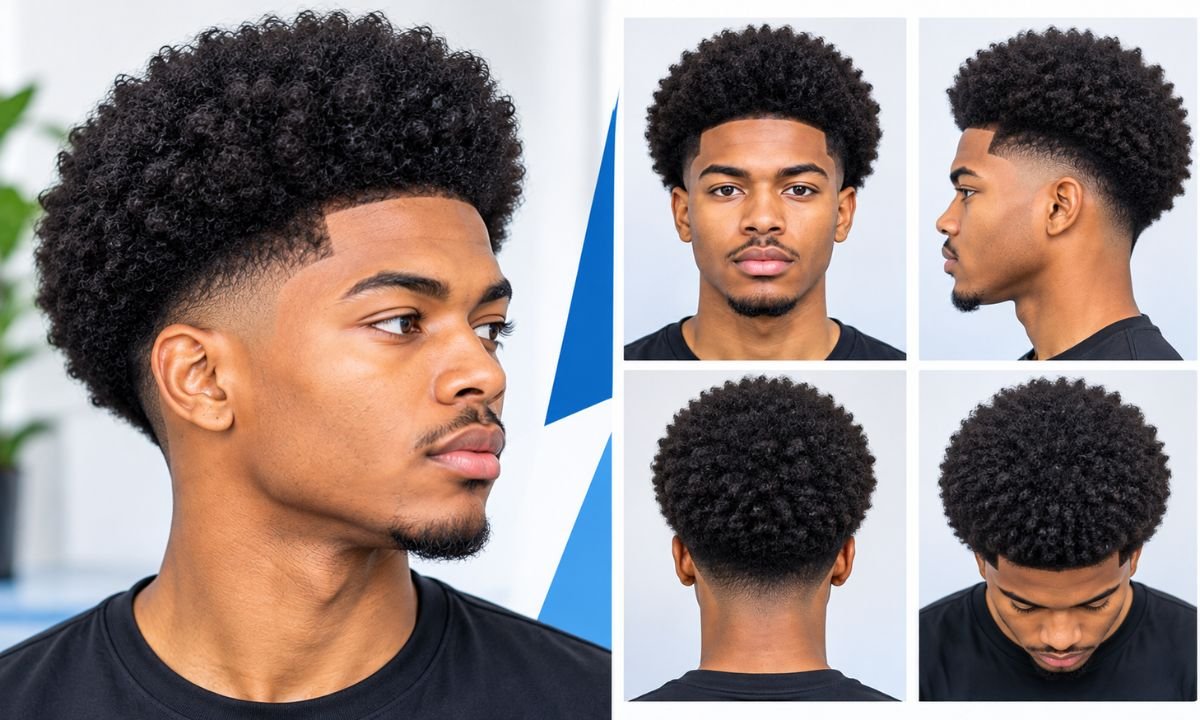
Think of this as the tidy middle ground. The top sits a couple of inches long, so it still reads as an afro. You just spend far less time styling it.
Students, office workers, and anyone who hates a long morning routine will like this one. It also looks neat on short hair that’s still growing out.
Because the top is shorter, your hairline and fade take center stage. Keep the edges clean, and the whole cut looks intentional.
3. High-Top Afro Mid Taper
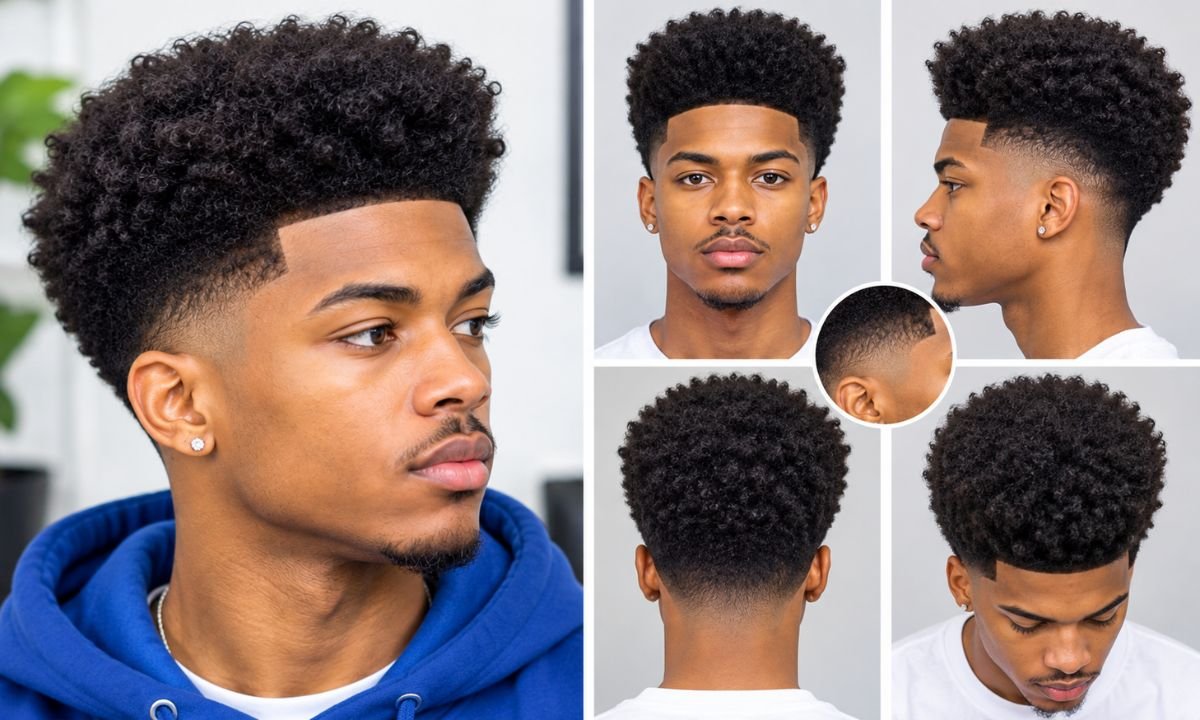
The high-top rises flat and tall above a clean taper. It’s a bold throwback that keeps finding new fans. The contrast between the flat top and the faded sides is the whole point.
You need enough length and density to build it, usually four inches or more. Use an afro pick and a light moisturizer to lift the top evenly.
Go easy on hairspray. Heavy hold products dry out coils and cause breakage over time.
Detail and Combination Styles
4. Afro Mid Taper with Line-Up

A line-up, also called a shape-up or edge-up, sharpens the hairline and temples with a trimmer. Paired with a mid taper, it makes the whole cut look crisp.
Ask for a natural line if you want a soft look. Ask for a squared, sharp line if you like a bolder frame.
Keep in mind that a line-up grows out fast. Many men refresh it every week or two.
5. Afro Mid Taper with Beard Connect

Here, the fade on the sides runs straight into your beard. This beard connect removes the gap between hair and beard, so your face looks balanced.
It suits men with fuller beards. Your barber blends the sideburn area slowly, which avoids any harsh line.
Condition your beard with a little beard oil. Dry facial hair can spoil a smooth fade.
6. Afro Mid Taper with Design
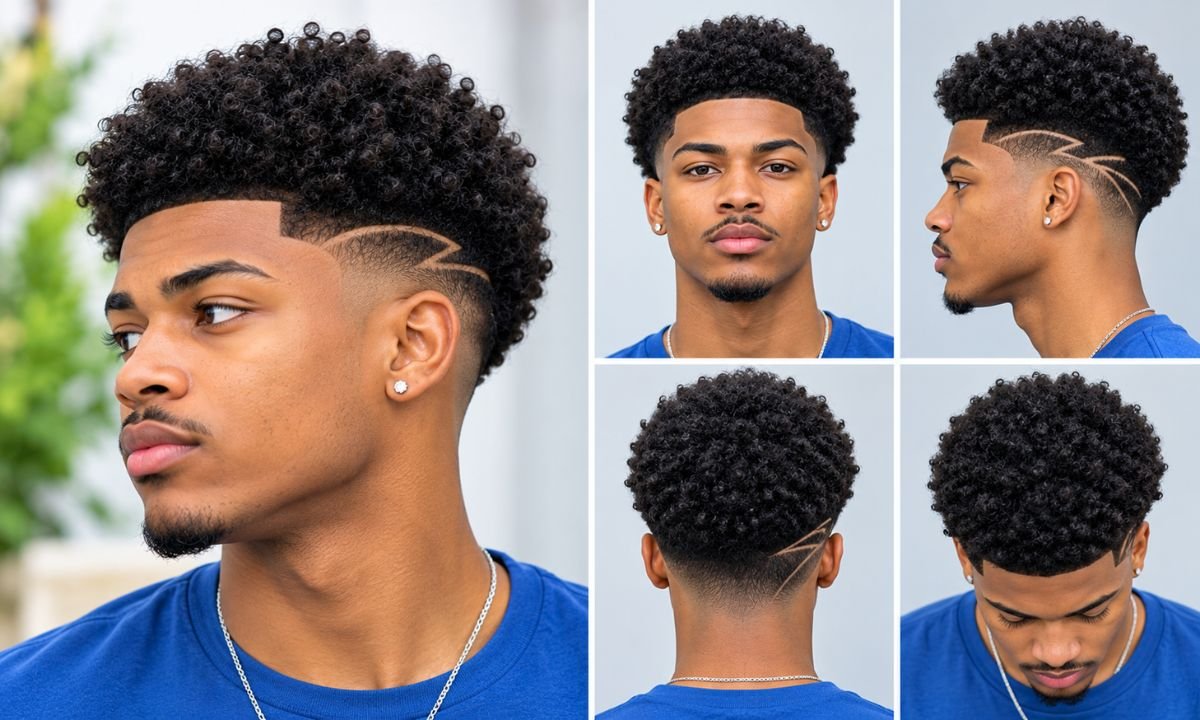
A hair design adds a thin razor line, a curve, or a small pattern to the faded sides. It turns a simple cut into a personal one.
Start small. A single line near the temple looks sharp and costs less chair time. Complex art needs a skilled barber and patience.
Designs fade as your hair grows. Plan a touch-up every two weeks to keep the lines clear.
Low-Maintenance Afro Styles
7. Textured Afro Mid Taper

This one skips perfect shaping. The top looks soft and a bit loose, with natural volume and visible texture. It feels relaxed but still tidy because of the fade.
Use a curl sponge or finger coils to define the pattern. You can also leave it undefined for a fluffier look.
Day to day, you just moisturize and fluff. That’s it.
8. Afro Puff Mid Taper

An afro puff pulls longer hair up into a soft, rounded puff. The mid taper keeps the sides neat, so the puff looks planned, not messy.
You’ll need roughly five inches or more on top to hold it. Lengths vary by density, so test it at home first.
Use a soft scrunchie or satin band. Tight elastic bands snap strands and tug at the hairline.
More Mid Taper Fade Afro Styles Worth Trying
9. Hard Part Afro Mid Taper

A hard part is a razor-thin line shaved into the side of the top. It adds structure without changing your length. Pair it with a short or medium afro for a polished look.
This style fits work settings well. It looks sharp, and the afro stays natural.
Expect fast upkeep. The line fills in within days, so many men redo it weekly.
10. Twist-Top Mid Taper Afro
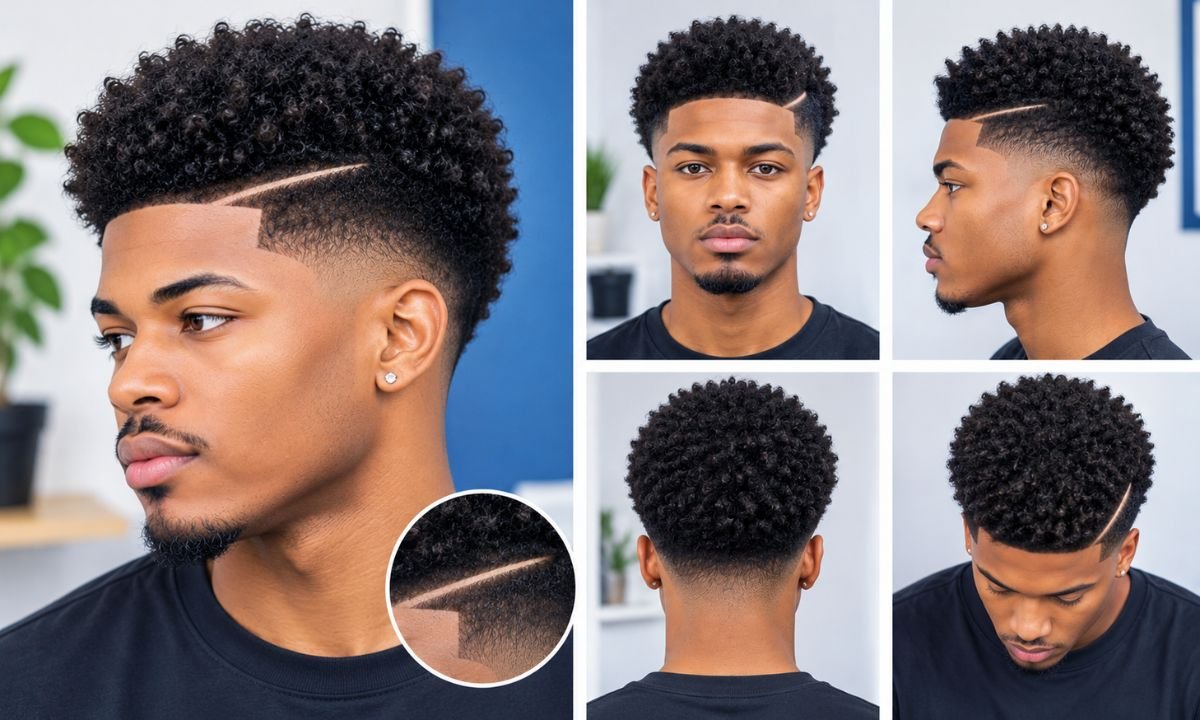
Instead of a loose afro, the top gets styled in sponge twists or two-strand twists. The taper keeps the sides clean while the twists add pattern.
You can try sponge twists at home with a curl sponge and a bit of curl cream. It takes about ten minutes once you get the motion.
Twists work well on 3C and 4C hair. Expect a few days of definition before they fluff out.
Why the Mid Taper Fade Afro Is Popular [2026 Trend]

Three things drive its popularity. The cut looks tidy without hiding your natural texture. Barbershop culture and social media also keep fade haircuts in front of everyone.
More men are embracing their natural hair instead of relaxing or straightening it. The mid taper gives that choice a clean frame.
It’s also flexible. You can wear it to class, a client meeting, or a night out with tiny tweaks. One cut, many settings.
Mid Taper Fade Afro Pros & Cons [Quick Breakdown]
No haircut is perfect. Here’s an honest look at what you gain and what you give up.
| Pros | Cons |
| Looks clean and professional | Needs a fade refresh every 2 to 3 weeks |
| Keeps your natural volume | Barber skill matters a lot |
| Works on many face shapes | Poor blending looks obvious fast |
| Easy to pair with a line-up or beard | Extra products and tools add cost |
The biggest trade-off is upkeep. A fade looks best when it’s fresh, so plan your visits around events.
The biggest win is versatility. You can grow the top, cut it short, or add a design without changing the base.
Low Mid Taper Fade Afro Haircuts

A low mid taper starts the fade a little lower than standard, around the top of the ears. It keeps more hair on the sides. The look is softer and more conservative.
Choose it if you want something subtle or work in a formal space. The upper sides stay full, so your afro keeps its round shape.
Low tapers also grow out gracefully. The jump in length is small, so a late touch-up won’t look sloppy.
Mid Taper Fade Afro Short Hair

Short hair works great with this cut. Even if your afro is only an inch or two, the fade still shows clearly. You get a sharp look without waiting months to grow it.
On short hair, the blend is the star. Ask for a smooth gradient and keep the top slightly longer for contrast.
You can add a line-up or a hard part too. A short afro with a taper looks tidy for school, work, and sports.
How to Choose Based on Afro Type & Density [Match Your Curls]
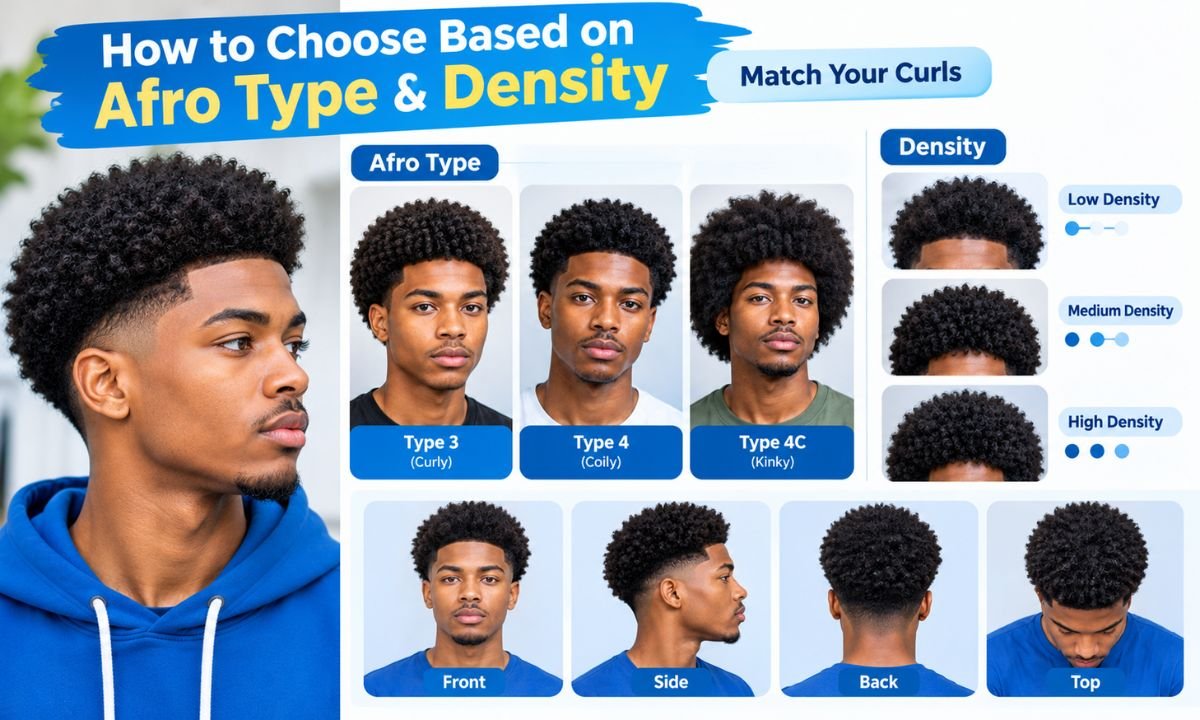
Your hair type and hair density decide which style will look best. Two men can ask for the same cut and get very different results. Texture changes everything.
Before you pick, check how your hair behaves when it’s dry. Notice how much it shrinks, how thick it feels, and where it grows in odd directions.
4C Hair
4C hair has tight, zigzag coils with little visible curl definition. It can shrink a lot, sometimes to less than half its stretched length. That’s why a two-inch afro may be four inches when pulled out.
Full afros, high-tops, and puffs all work well here. The tight coils give you volume and a firm shape.
Ask your barber to cut it dry and picked out. That way, they see the real length and avoid taking off too much.
Coily or 3C Hair
Coily or 3C hair forms springy curls or tight corkscrews. It has more visible definition than 4C. You get a bouncy look with less effort.
Textured afros and twist-tops suit this type best. A curl cream or sponge brings out the pattern.
Keep the top a bit longer, because curls need weight to show their shape. Too short, and they look flat.
Thick, Dense Hair
Thick, dense hair holds a shape beautifully. It also hides blending mistakes better than thin hair. If you have high density, a high-top or full afro is easy to build.
The catch is bulk. Dense hair can grow wide fast, so shape the top every four to six weeks.
Use a wide-tooth pick and thin the sides with a trimmer. The mid taper helps, since it removes weight where it matters.
Other Natural Textures
Wavy or loosely curly hair can wear a mid taper too. The top will look softer and less round. A mini afro or textured top usually works best.
Mixed textures are common. Some men have tight coils at the crown and looser curls near the temples.
Tell your barber about that. A good one will adjust the fade so the pattern grows in evenly.
Best Mid Taper Fade Afro Styles by Face Shape [Visual Guide]
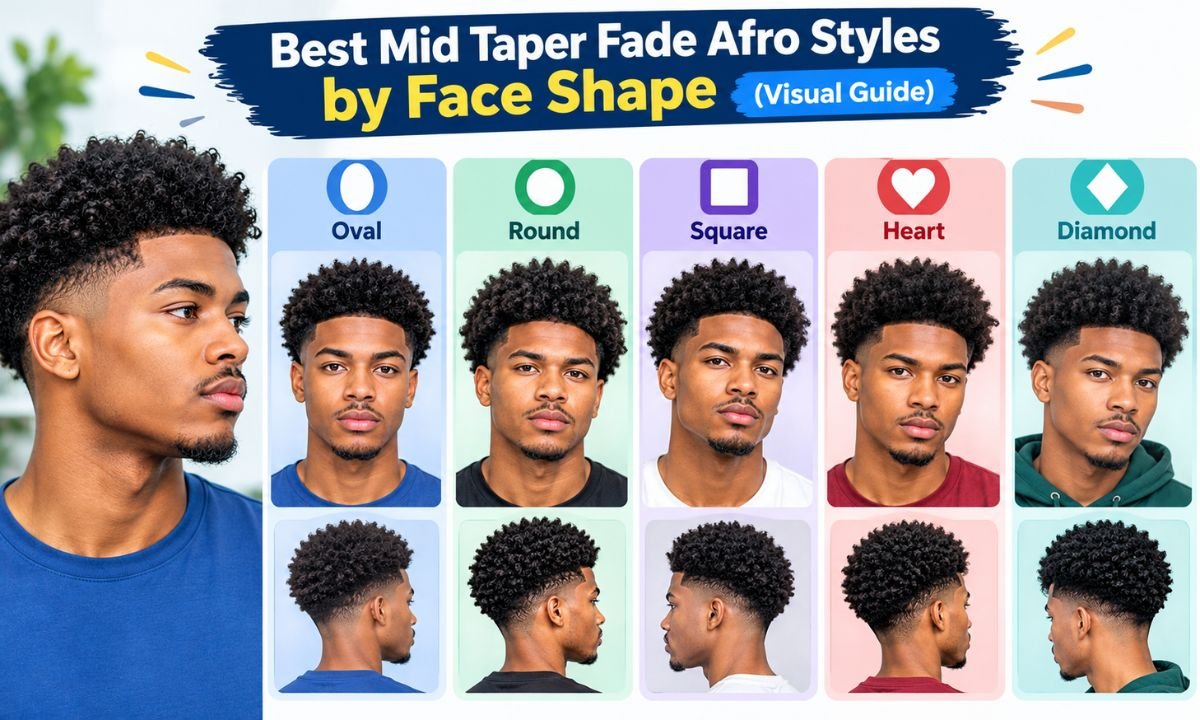
Your face shape changes how the haircut frames you. The goal is balance. You add height where you need length, and you add width where you need softness.
These are guides, not rules. If you love a style, try it and see how it feels.
Oval Face
Oval faces are the easy ones. Most styles fit, from a full afro to a high-top. The proportions already look balanced.
Pick based on lifestyle, not shape. Go bold with a design if you like, or keep it simple.
Round Face
Round faces look longer with extra height on top. A high-top or afro puff creates that vertical line. Keep the sides tight with a firm mid taper.
Avoid very wide, round afros. They add width and make the face look fuller.
Square Face
Square faces have a strong jaw and forehead. A rounded afro softens those angles nicely. A full or textured afro works well here.
Skip anything too boxy on top. A flat high-top can double the squared effect.
Heart-Shaped Face
Heart-shaped faces are wider at the forehead and narrower at the chin. Medium volume on top keeps things in proportion. A mini afro or textured top is a safe pick.
A beard connect helps too. The beard adds weight to the jaw and balances the forehead.
Long Face
Long faces need less height and more width. Skip the high-top. A full, round afro or mini afro keeps the proportions friendly.
A low mid taper also helps. It leaves fuller sides, which adds width.
Diamond Face
Diamond faces have wide cheekbones and a narrower forehead and chin. A textured afro with some forehead coverage balances the shape. Keep the sides slightly fuller near the cheekbones.
A short beard adds width at the chin. That evens out the overall look.
Rectangular Face
Rectangular faces are long with a straight jaw. Avoid height, since it stretches the face further. A wider, rounded afro is a better choice.
A low mid taper or mini afro keeps the cut balanced. Add a clean line-up to sharpen the forehead.
Best Mid Taper Fade Afro Styles for Every Age [Teens to 40s+]

Age shapes your choices, mostly through school rules, work dress codes, and your own comfort. The same fade can look youthful or polished depending on the top.
Men in their 40s and beyond can wear all of these too. Keep the shape neat, and consider a beard connect if gray hairs show up.
Teenagers
Teens usually want something trendy that won’t break school rules. A mini afro or textured afro with a mid taper works well. Hair designs are popular, but check your school’s policy first.
Keep care simple. A leave-in conditioner and a pick are enough.
Book a barber who’s comfortable with natural hair. Good early experiences build confidence.
Young Men
Young men in their 20s and early 30s can experiment most. High-tops, puffs, twist-tops, and designs all fit. This is the age for bold choices.
Switch things up every few months. Your barber can help you grow the top, then cut it back.
Just keep your hair healthy. Constant styling without moisture leads to dryness.
Professional Men
In a work setting, clean and consistent wins. A mini afro, hard part, or low mid taper looks sharp. A tidy line-up adds polish.
A full afro works too, as long as the shape stays even. Trim the top regularly so it doesn’t look uneven by Friday.
Schedule your cut before big meetings. A fresh fade gives you quiet confidence.
How to Ask Your Barber for a Mid Taper Fade Afro [Guard Numbers]
Clear communication prevents bad haircuts. Show a photo, name the style, and describe the guard numbers you want. That’s three details, and they cover most of the conversation.
Guard numbers refer to clipper attachments. A smaller number cuts closer. Brands differ slightly, so confirm with your barber.
| Guard | Approx. length | Common use |
| #0.5 | 1.5 mm | Base of the fade, near the neckline |
| #1 | 3 mm | Lower sides |
| #2 | 6 mm | Mid sides |
| #3 | 10 mm | Upper blend, near the temple |
| #4 | 13 mm | Softer, higher blend |
Here’s a simple script you can use. “I’d like a mid taper fade, starting at my temple. Take the bottom down to a #1, and leave my afro full on top.”
Add details if you want them. Mention a line-up, a beard connect, or a design. Also tell the barber how much length to keep. If you’re unsure, ask for less trimming on top. You can always take more off later.
How to Cut a Mid Taper Fade Afro [Video Breakdown]
Think of this as a video walkthrough in text form. Watching a barber work is the best way to learn. Reading these steps helps you know what to look for.
Home cuts take practice. If it’s your first time, try a friend’s help, or let a professional handle the fade. You can still do the top yourself.
- Prep the hair. Start with clean, dry, picked-out hair. Cutting dry shows the true length.
- Set the guideline. Mark the mid point near the temple with a comb. This is where the fade begins.
- Cut the base. Use a #1 or #0.5 guard at the neckline and around the ears. Work upward in short strokes.
- Move to mid sides. Switch to a #2 guard. Blend upward, keeping the transition smooth.
- Finish the upper blend. Use a #3 guard up to your guideline. Flick the clipper outward at the end of each stroke.
- Check the blend. Brush the hair and look for harsh lines. Go over any spots with a lighter touch.
- Detail the edges. Use a trimmer for the hairline, sideburns, and neckline.
- Shape the top. Pick the afro out evenly. Trim with scissors or clippers over comb until the outline looks round.
- Final check. Look from the front, side, and back. Fix any uneven spots.
Take your time with the blend. A smooth gradient separates a good fade from an average one.
Common Mid Taper Fade Afro Mistakes [Fix These First]
Most bad fades come from a handful of repeat errors. Knowing them helps you spot trouble early. Some are the barber’s fault, and some are yours.
- Fading too high. A mid taper shouldn’t climb into the crown. If the fade looks like a high fade, you’ve gone too far.
- Choppy blending. Visible lines between guard lengths mean the barber rushed. Ask for more blending.
- Cutting wet. Wet coils stretch, so you may end up with a shorter result than expected.
- Skipping moisture. Dry coils look dull and break easily. Moisturize every day.
- Over-trimming the line-up. Pushing the hairline back too far can’t be undone.
- Uneven shape. An afro that’s wider on one side looks off. Check the outline in a mirror.
- Waiting too long between cuts. A fade grows out fast. Past three weeks, it looks fuzzy.
The good news is that most mistakes are fixable. A skilled barber can re-blend a poor fade. Just give it a day, because swelling and new growth change how it looks.
How to Maintain a Mid Taper Fade Afro
A great cut needs a little care. The routine isn’t hard. Spend ten minutes a day and a little more each week, and your afro stays healthy and sharp.
Daily Care
Start your day with a light moisturizer or leave-in conditioner. Work it through the top with your fingers. Then fluff the hair gently with a pick.
Pick from the roots outward. Don’t yank at the ends, since coils tangle easily.
At night, wrap your hair in a satin scarf or sleep on a satin pillowcase. It cuts friction and helps retain moisture.
Products That Work Best
Keep your product list short. Most men need a leave-in conditioner, a curl cream, and a light oil like jojoba. Shea butter works well for very dry coils.
For the sides, use a soft brush to smooth the faded area. This keeps the blend looking neat between visits.
Skip heavy gels or alcohol-based sprays. They dry out the hair and cause flaking.
Washing Routine
Wash every one to two weeks. Afro-textured hair is naturally dry, so frequent shampooing strips it. Use a sulfate-free shampoo or a co-wash.
Follow with a deep conditioner every second wash. Leave it on for ten to twenty minutes.
Detangle while the conditioner is still in your hair. It makes the process gentler and faster.
Touch-Up Frequency
Book a fade refresh every two to three weeks. That keeps the taper crisp. If you wear a line-up, many men go in weekly or biweekly.
The top needs shaping every four to six weeks. Longer styles, like a high-top, might need it sooner.
If budget is tight, ask your barber for a quick “edge-up only” visit. It costs less and still refreshes the look.
How Much Does a Mid Taper Fade Afro Cost?
Prices vary by city, shop, and barber experience. A mid taper usually costs a bit more than a basic cut. Extras like a line-up, beard trim, or design add to the total.
Always ask for the price before you sit down. It avoids awkward surprises at the register.
In many places, tipping is customary. Check local norms if you’re unsure.
How to Find the Right Barber for Afro Hair
Not every barber works with 4C hair daily. Look for someone who has experience with afro texture. Check their portfolio on social media, and focus on fades and shape-ups.
Book a short consultation if you’re nervous. Ask how they handle blending on coily hair. Their answer tells you a lot.
Also watch hygiene. Clean, disinfected clippers and fresh capes are basic signs of a professional shop.
Mid Taper Fade Afro vs Other Styles
It helps to compare your options before you commit. Each style has its own look and upkeep level. The table below gives a quick summary.
| Style | Look | Upkeep |
| Mid taper afro | Balanced, versatile | Every 2 to 3 weeks |
| Low taper afro | Soft, subtle | Every 3 to 4 weeks |
| High-top afro | Bold, tall | Every 2 to 3 weeks |
| Twist-out | Natural, defined | Re-twist every few days |
Mid Taper Afro vs Low Taper Afro
A mid taper starts at the temple. A low taper starts near the ears. The mid version shows more contrast, while the low version looks gentler.
Choose mid if you want a clear fade. Choose low if you prefer something conservative.
Mid Taper Afro vs High-Top Afro
A high-top is a top style, and a mid taper is a side style. They actually work together. Many men pair a high-top with a mid taper for strong contrast.
A plain mid taper afro stays rounded and soft. A high-top is flat and structured.
The high-top needs more daily shaping. The mid taper afro is easier to wear without effort.
Mid Taper Afro vs Twist-Out
A twist-out is a styling method. You twist damp hair, then unravel it for defined curls. A mid taper is a haircut. The two work well together.
A twist-out on top gives you pattern and definition. The taper keeps the sides neat.
Twist-outs need more routine work. Without it, the pattern fades in a day or two.
Frequently Asked Questions
How long should my hair be for a mid taper fade afro?
About two to four inches on top works for a mini or standard afro. For a high-top or puff, you’ll need more length. Your barber can check what your hair type allows.
How often should I get a mid taper fade afro refreshed?
Every two to three weeks is typical. A line-up may need a visit every week or two. Stretch it to four weeks if you don’t mind a softer look.
What guard numbers do barbers use for a mid taper?
Most start with a #0.5 or #1 at the base and blend upward through #2 and #3. Some go to #4 for a softer finish. Your barber will adjust based on your hair.
Is a mid taper fade afro good for work?
Yes. A mini afro, hard part, or low mid taper looks clean in most offices. Keep the shape even, and refresh the edges regularly.
Can I get a mid taper fade afro with thin or low-density hair?
Yes, but choose a shorter top. A mini afro or textured top hides thin spots well. Ask your barber to keep the sides blended softly.
What’s the difference between a mid taper and a mid fade?
A taper leaves some length at the bottom. A fade usually goes shorter, sometimes to the skin. Many barbers use the two terms loosely, so show a photo.
Conclusion
A mid taper fade afro gives you the best of both worlds. The sides stay sharp, and the top keeps its natural volume. With ten styles to choose from, you’ve got plenty of room to experiment.
Pick a style that fits your hair type, face shape, and routine. Then find a barber who understands afro texture. Small details like guard numbers and a good blend make a big difference.
Which style are you thinking about trying first? Drop a comment, share this with a friend who’s due for a cut, and tell us how it turned out.
