


A burst fade haircut is a fade that curves around your ear in a rounded, half-moon shape. It doesn’t run straight across the side of your head like a regular fade. You keep length on top, at the crown, and often at the nape. That’s why it pairs so well with mullets, curls, quiffs, and textured crops.
Maybe you’ve saved a photo and don’t know what to call it. Maybe you’re worried a high version will look too bold at work. Or maybe you’re tired of leaving the barber with a cut you didn’t ask for. This guide covers 38 styles, face shapes, hair types, tools, costs, and a script you can use at your next visit. Burst Fade Haircut Guided here!
Quick Guide
A burst fade is a shape, not a length. The curve sits behind the ear, and the hair gets longer as it moves away from that point.
You choose the fade height separately: low burst fade, mid burst fade, or high burst fade. You also choose whether it goes to bare skin.
Here’s the fast version:
- Want subtle? Ask for a low burst fade.
- Want balance? Ask for a mid burst fade.
- Want bold contrast? Ask for a high burst fade or a skin burst fade.
- Want a mullet? Ask for a burst fade mullet and say how much length you want at the back.
What is a Burst Fade Haircut?

A burst fade haircut is a men’s style where the fade line curves around the ear in a rounded fade shape. Picture a semi-circular fade that radiates outward from behind your ear.
The hair is shortest right behind the ear. It grows longer toward the temple, the crown, and the nape.
This curved guideline is what separates it from other fades. A straight fade runs level across the head, while a burst frames the ear like a halo.
That’s also why people mix it up with other cuts. A mullet is a length style, while a burst fade is a fade shape. They often appear together, but they aren’t the same thing.
Who Should Get a Burst Fade Haircut?

Anyone who wants a sharp finish without losing length on top should consider it. It suits straight, wavy, curly hair, and coily hair alike.
It works especially well if you love longer tops. Think mullet, quiff, textured fringe, or a curly top. The fade stays around the ear, so the top and crown keep their weight.
It also fits people who want one cut for work and weekends. A low burst fade reads polished at the office. A high burst fade reads like a statement cut on a night out.
Skip the high version if you have very fine hair or thinning at the temples. The strong contrast can make thin spots stand out more.
Why Burst Fade Haircuts Are Trending in 2026

First, it looks good from every angle. A straight fade looks similar from the front, side, and back, but a burst shows its curve from all three.
Second, it scales. A low burst is barely louder than a taper, while a high burst with a razor design turns heads. One technique serves a first-timer and a fashion-forward regular.
Third, longer tops are back. As mullets, curly tops, and quiffs return, people want sides that stay clean without forcing a buzz cut.
Social media helps too. Barbers post close-up clips of the curve, and clients arrive with reference photos in hand.
Where the Burst Fade Comes From
Let’s be honest here. Nobody can point to a single inventor or a clean start date.
Different sites tell different origin stories, and none of them offer solid proof. What we do know is that it belongs to the wider fade family, which grew out of barbershop and military traditions of shortening hair in a gradient.
The burst shape likely came from barbers who wanted a cleaner blend around the ear. A straight line can look harsh against hair that grows in a curve there. That’s especially true for curly and coily textures.
Short video then pushed it into the mainstream. Today it’s a standard technique alongside the taper, drop, and skin fade.
38 Burst Fade Haircut Styles for Men

Here are all 38 burst fade variations, grouped by what makes each one different. Each entry tells you who it suits, what to say to your barber, and one styling tip.
Remember the two-part rule. The burst is the shape, and the height (low, mid, high) and the finish (skin or shadow) are separate choices.
1: Burst Fade Mullet

The burst fade mullet pairs short, faded sides with real length at the back. The burst keeps the jump from short to long clean behind the ear.
Ask your barber to leave at least three to four inches at the back. Otherwise it reads like a grown-out fade, not a mullet.
Styling tip: Use light mousse or cream to keep the back flowing without frizz.
Low Burst Fade Mullet
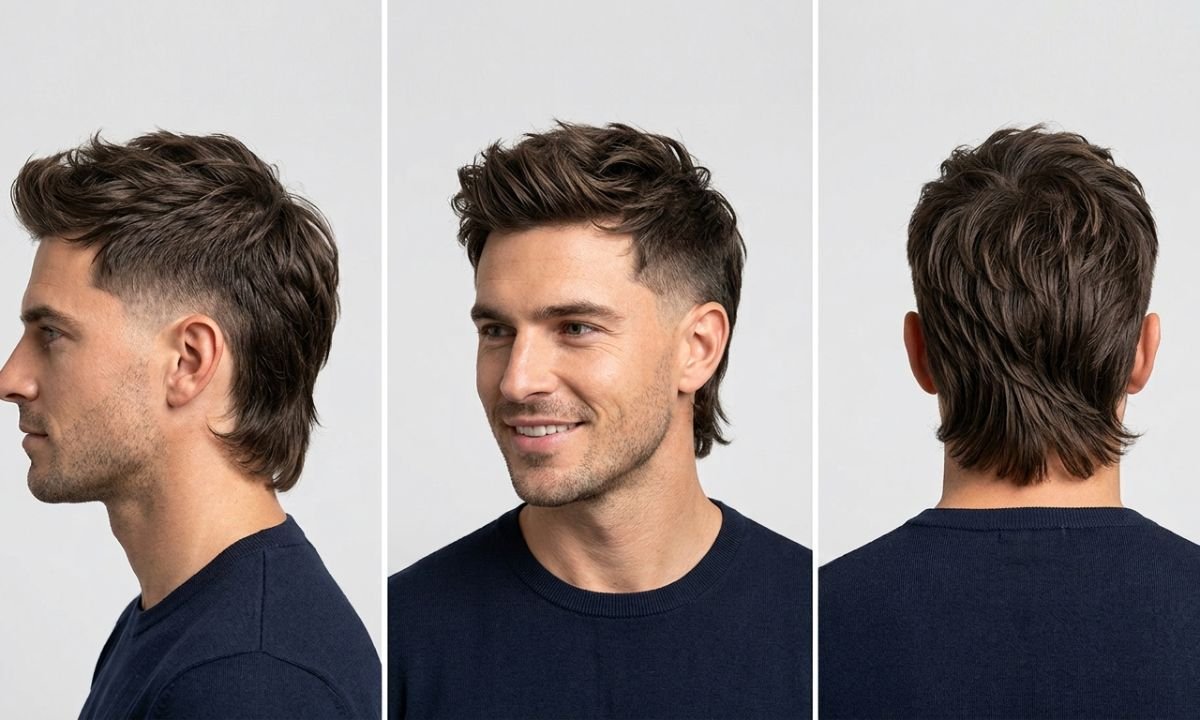
The low burst fade mullet keeps the fade close to the ear and neckline. The change into the longer back looks soft and natural.
It suits guys who want a subtle, clean, modern mullet. It also grows out gently.
Mid Burst Fade Mullet
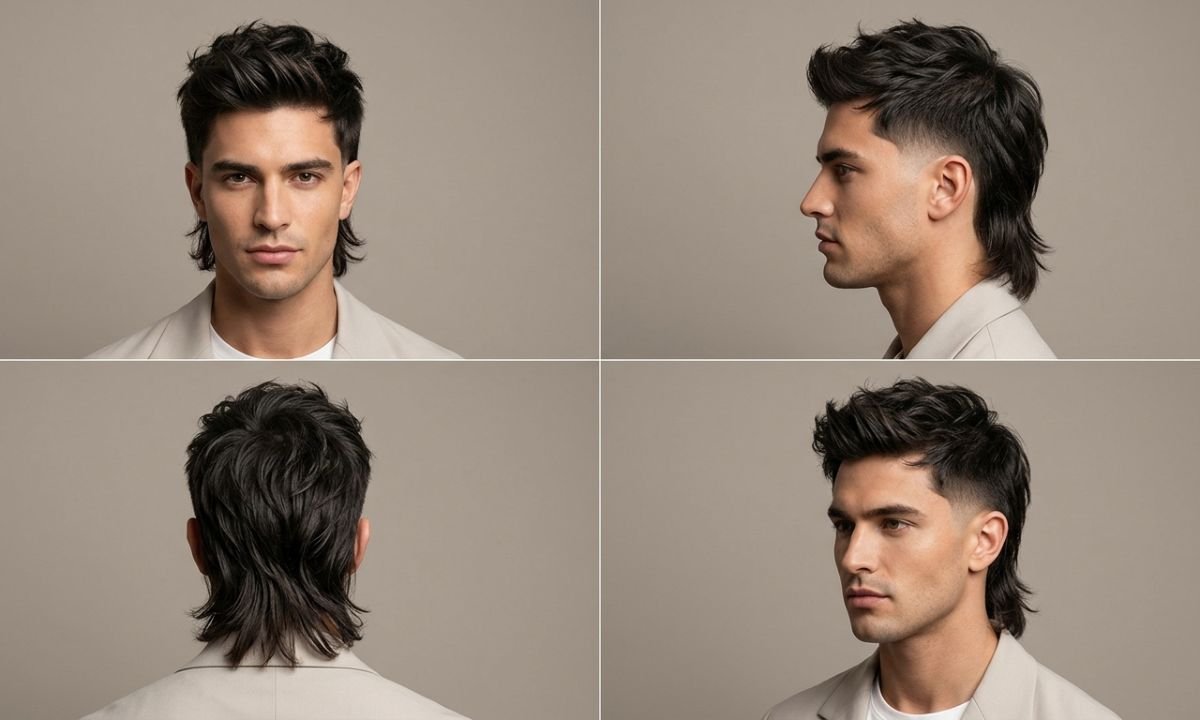
The mid burst fade mullet starts the fade around the middle of the side. It balances faded sides with a longer back.
This version suits most face shapes. It works especially well on straight or wavy hair.
High Burst Fade Mullet
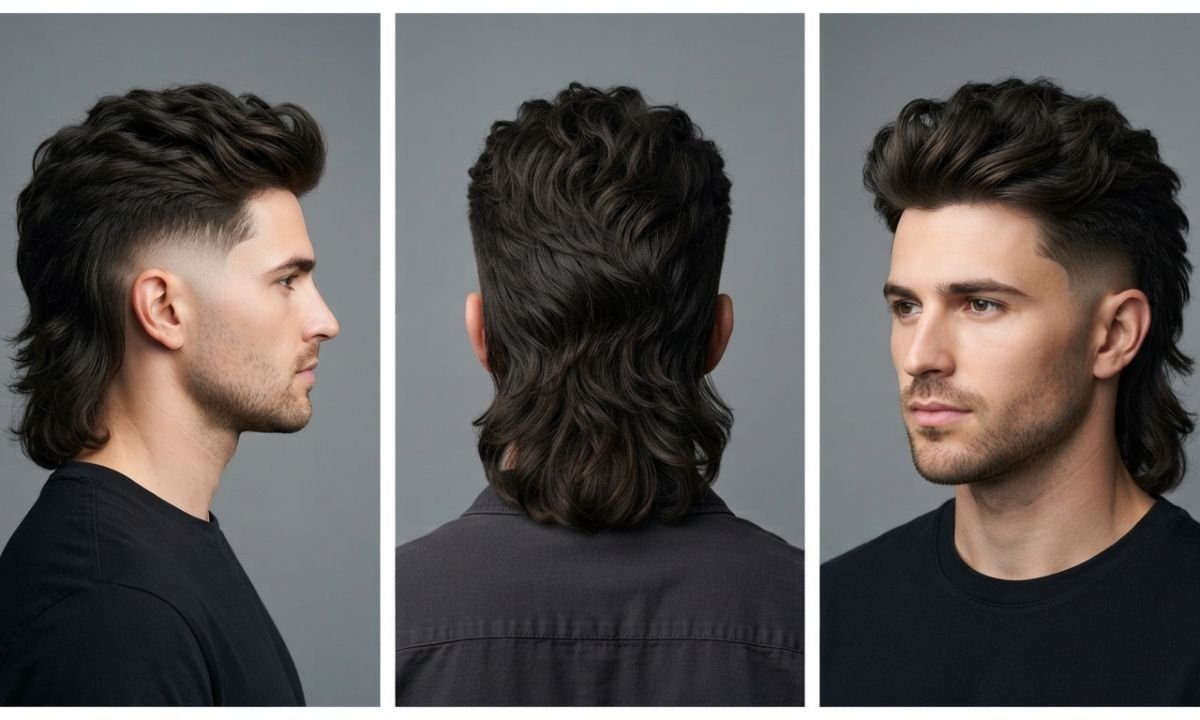
The high burst fade mullet starts above the ear for sharp contrast. The sides look tight and the back looks bold.
Expect a touch-up every two to three weeks. The high fade line shows regrowth quickly.
Straight Hair Burst Fade Mullet
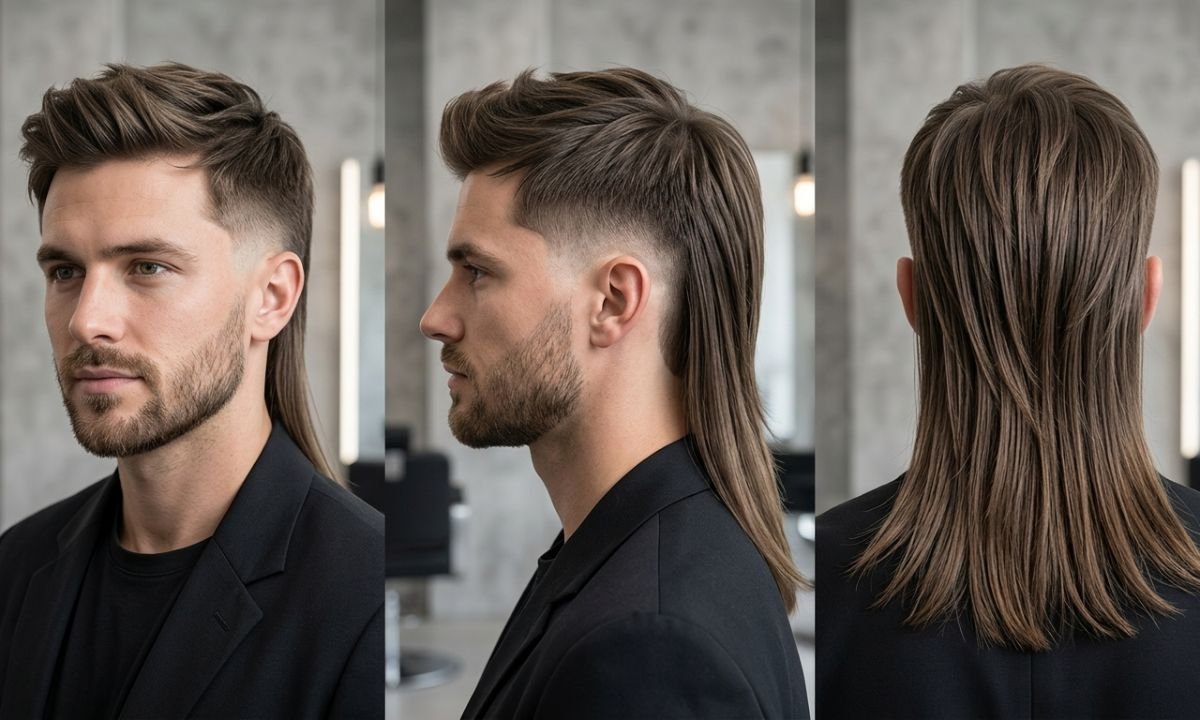
On straight hair, the back lies flat with a clean, controlled line. That’s either perfectly polished or a bit stiff.
Add texture spray if you want more movement between the layers.
Curly Hair Burst Fade Mullet
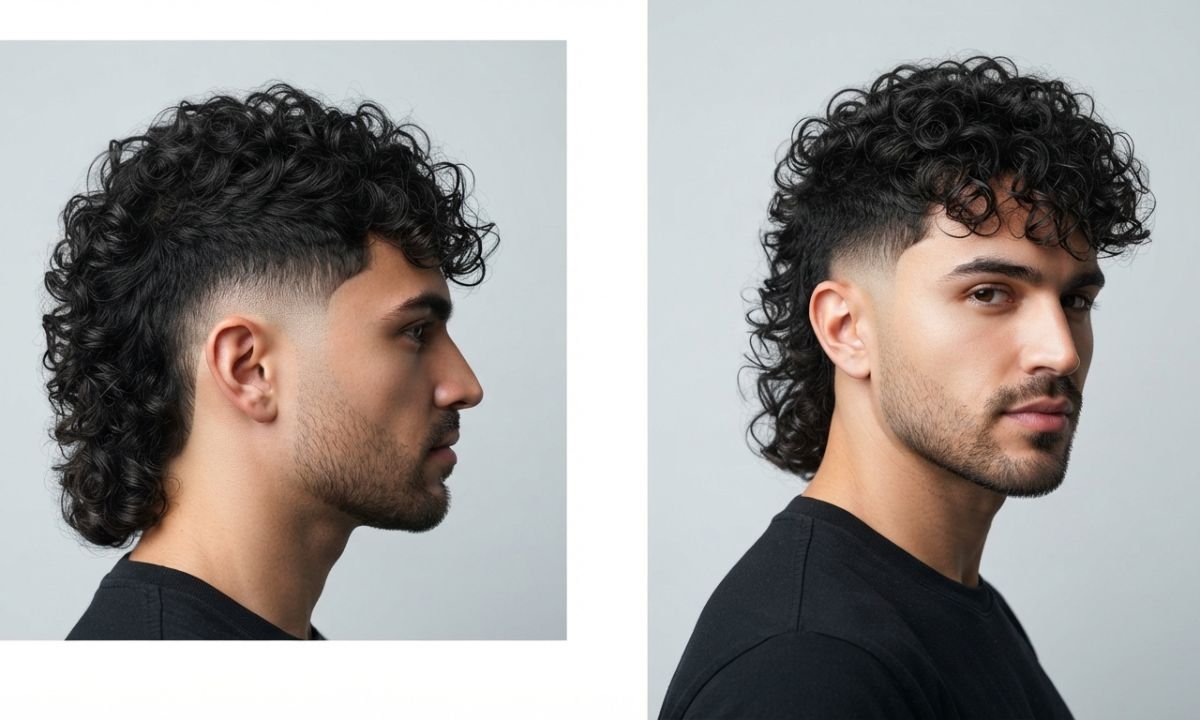
Curly hair adds natural volume to the mullet. The curls make it look fuller and more relaxed.
Styling tip: Use curl cream on damp hair and scrunch lightly to cut frizz.
2: Low Burst Fade
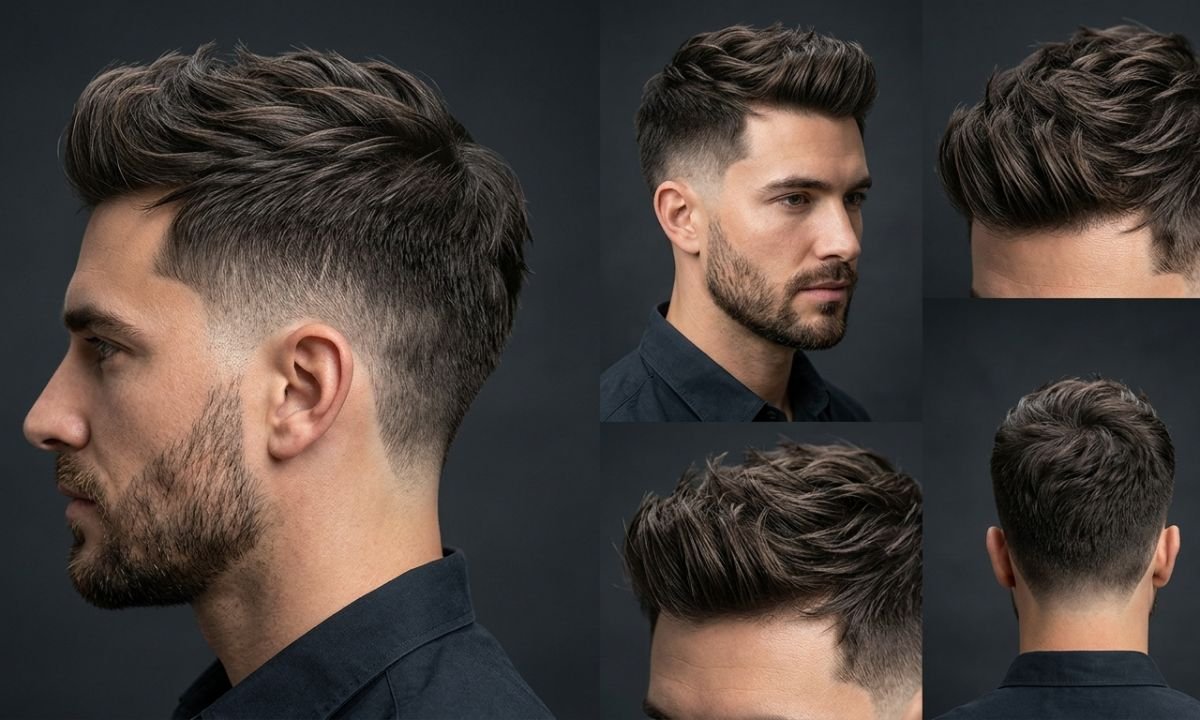
The low burst fade starts just above the ear and stays close to the neckline. It’s the gentlest version and the best starting point.
Because the line sits low, it grows out gracefully. You can often stretch visits to three or four weeks.
Styling tip: Keep hair moisturized and use light pomade for soft control.
3: Burst Fade Curly Hair

This style was made for curly hair. The rounded fade follows the curve of your head and lets curls take center stage.
The sides stay clean while the top stays full. It’s one of the easiest ways to look sharp without cutting your curls short.
Styling tip: Use curl cream and let your hair air dry to protect the curl pattern.
4: Mid Burst Fade
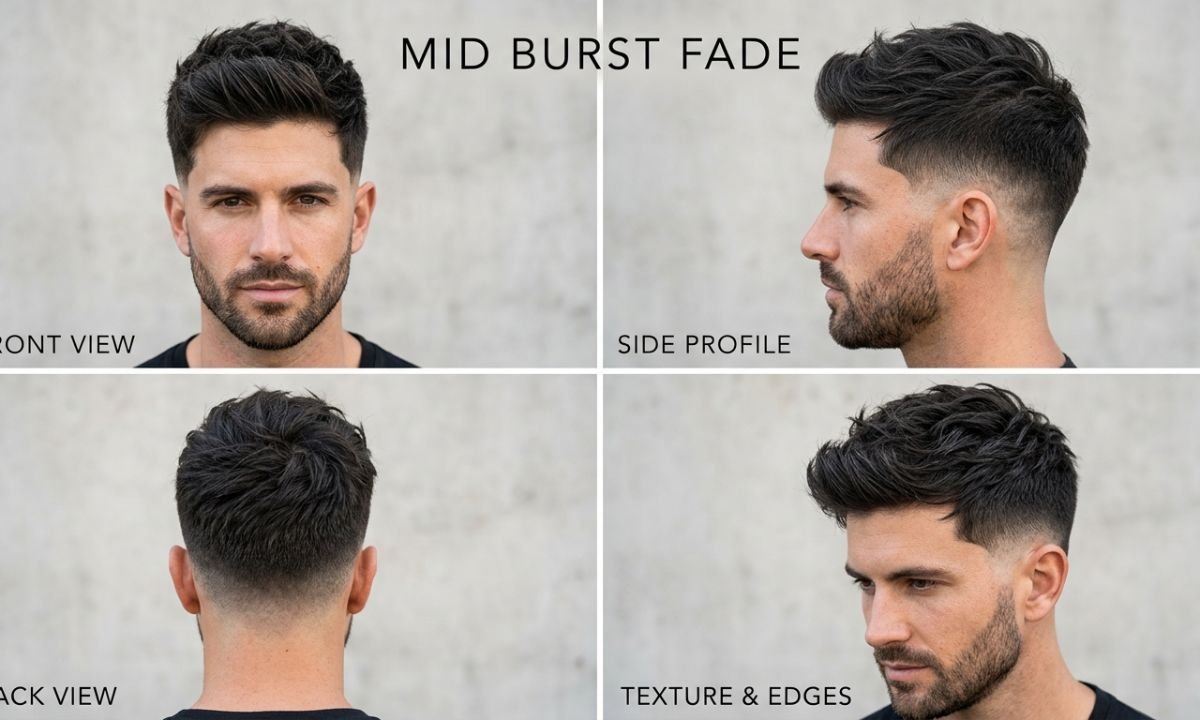
The mid burst fade sits between low and high. It gives noticeable shape without screaming for attention.
It suits almost every face shape and works for casual and formal outfits alike.
Styling tip: Blow dry slightly upward to add volume and keep the shape clean.
5: Burst Fade with Design

A burst fade with design adds a shaved line, pattern, or shape into the fade transition. Common choices are a single line, a geometric shape, or initials.
The design sits in a fast-growing area. Plan a touch-up every seven to ten days to keep it crisp.
Styling tip: Visit your barber every one to two weeks to keep the lines sharp.
6: Burst Fade Mohawk

The burst fade mohawk keeps a strip of longer hair down the center. The sides fade in the rounded burst shape.
Because the burst blends softly, it looks bold without looking like a costume. It’s a more wearable mohawk.
Styling tip: Use strong hold gel or wax to keep the strip standing.
7: Burst Fade Straight Hair

Straight hair shows the fade line with the most precision. No waves or curls soften the transition.
That means every flaw shows. Ask to see your barber’s recent work on straight hair before you book.
Styling tip: Use matte clay for a natural finish with light texture.
8: Taper Burst Fade

The taper burst fade softens the burst into a gradual taper around the sideburns and neckline. It reads more conservative than a skin version.
It’s a smart pick for office life. You get the curved shape without a line that grabs attention.
Styling tip: Keep styling simple, and avoid heavy products for a clean everyday look.
9: High Burst Fade

The high burst fade starts well above the ear. It delivers the strongest contrast between the sides and the top.
Because so little hair remains, plan a touch-up every two weeks. Decide on that upkeep before choosing it.
Styling tip: Keep the top textured for stronger contrast and a better shape.
10: Burst Fade Buzz Cut

The burst fade buzz cut pairs short, even hair on top with the curved fade on the sides. It’s one of the lowest-effort fades available.
You don’t style anything. It’s perfect if you’re easing into short hair.
Styling tip: Skip heavy products. Keep your scalp clean and moisturized.
11: Short Burst Fade

The short burst fade keeps just enough length on top to show texture. It sits between a buzz cut and a textured crop.
You get low daily effort without going fully short. That makes it a solid middle ground.
Styling tip: A pea-sized amount of light cream is plenty.
12: Burst Fade Textured Fringe
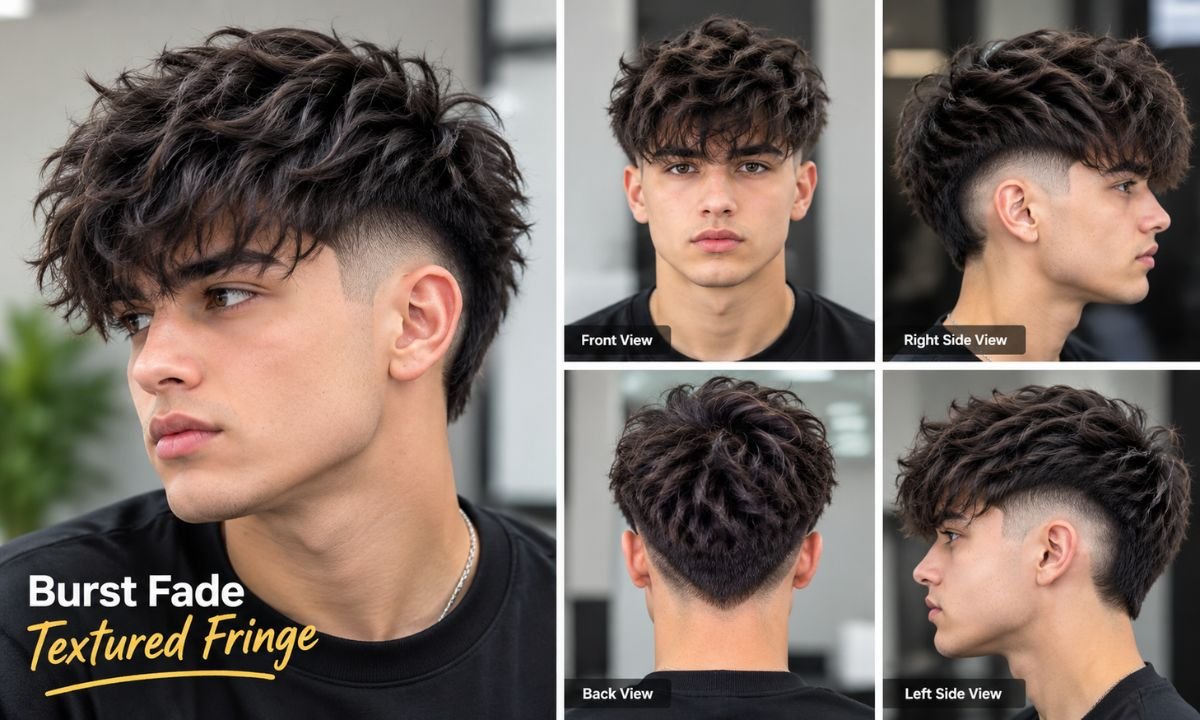
This style brushes the front forward into a messy fringe. The sides stay clean with the burst fade.
The charm is the contrast between tidy sides and loose hair on top. Too much product ruins it.
Styling tip: Use sea salt spray for a natural, voluminous look.
13: V Shape Burst Fade

The V shape burst fade adds a pointed V-shape neckline at the back. It’s a small change that gives the back view a deliberate finish.
It pairs well with a sharp beard line. The angles reinforce each other.
Styling tip: Keep your beard edges crisp to match the V.
14: Burst Fade Long Hair
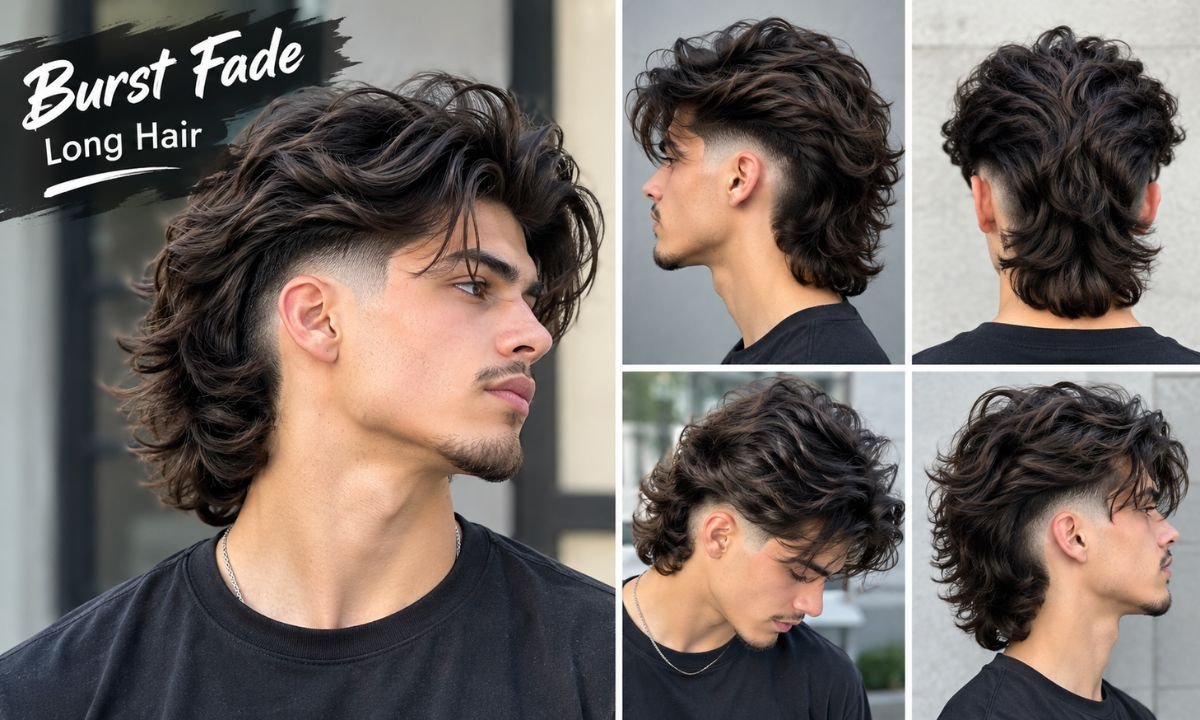
The burst fade long hair style keeps the top long while the sides are faded. The contrast looks modern and works for casual or trendy outfits.
You can tie it back or leave it loose. Both look intentional.
Styling tip: Tie it for a clean look or wear it open for a relaxed vibe.
15: Burst Fade Slick Back
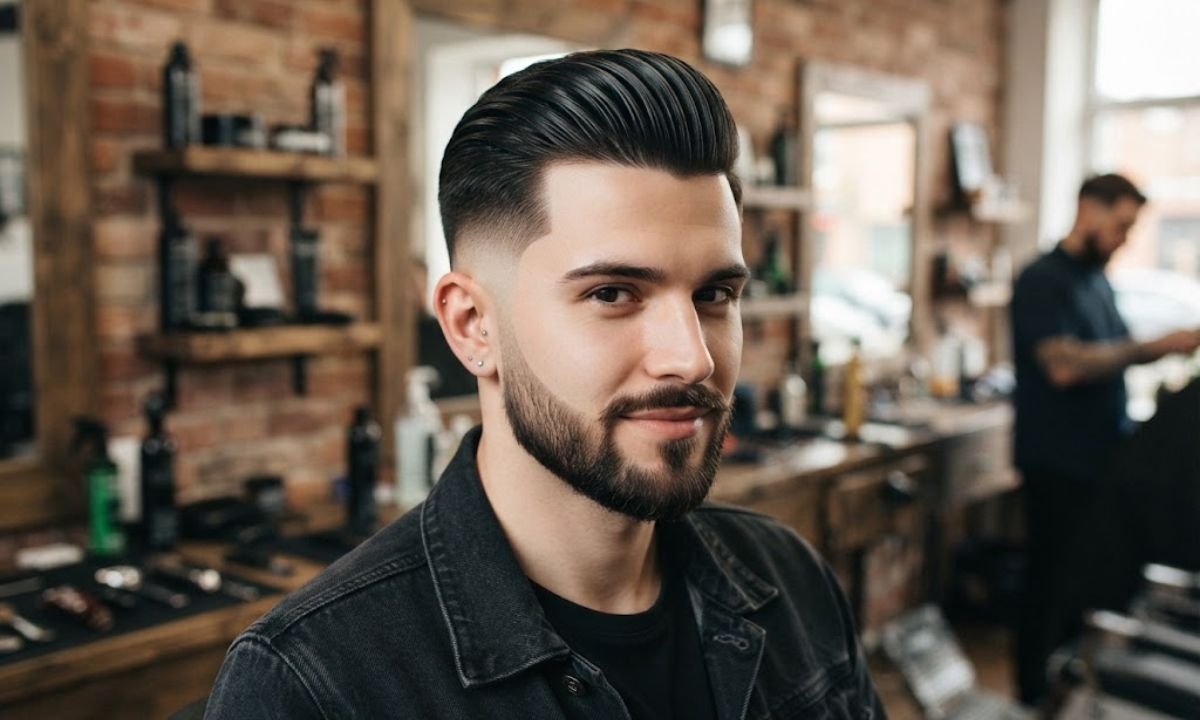
The burst fade slick back combs the top backward into a smooth finish. It’s more formal than most burst variations.
That’s why it shows up at weddings and interviews. The fade adds edge without fighting the polished look.
Styling tip: Use pomade for a smooth, controlled, shiny finish.
16: Comb Over Burst Fade
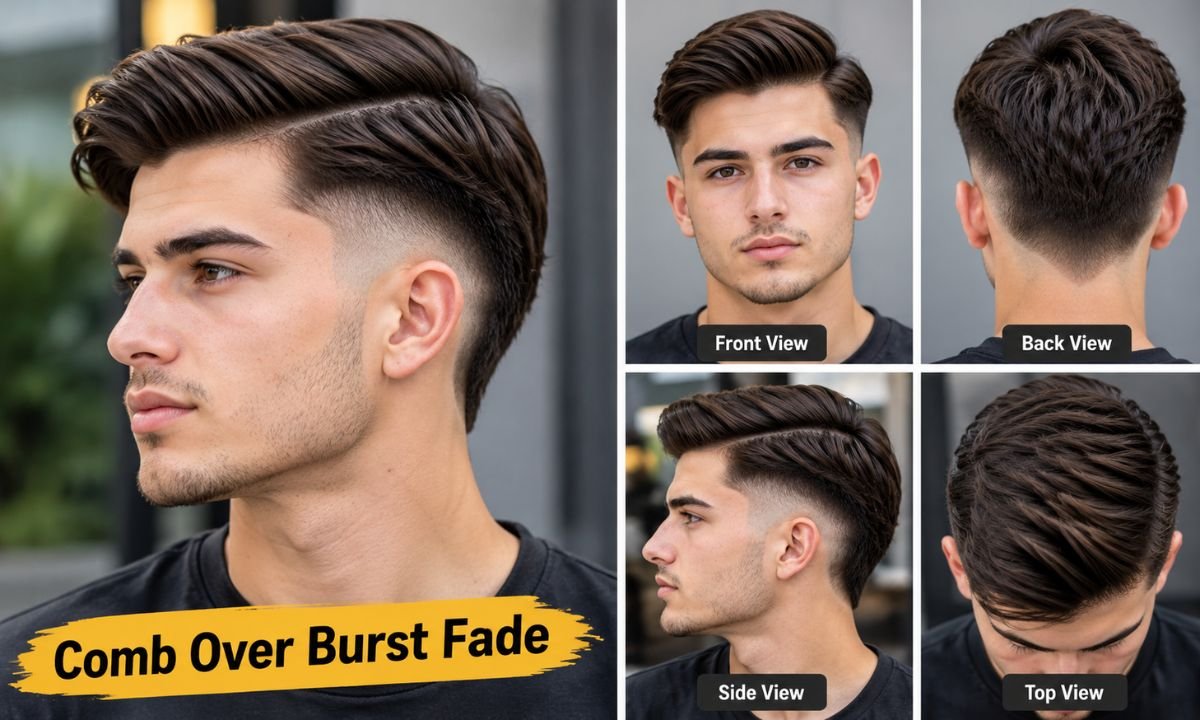
The comb over burst fade combines a side-swept part with faded sides. It’s more traditional and structured than most styles here.
Place the hard part to suit your hair density. Ask your barber where it sits best.
Styling tip: Use a light-hold product for a neat, formal finish.
17: Burst Fade Wavy Hair
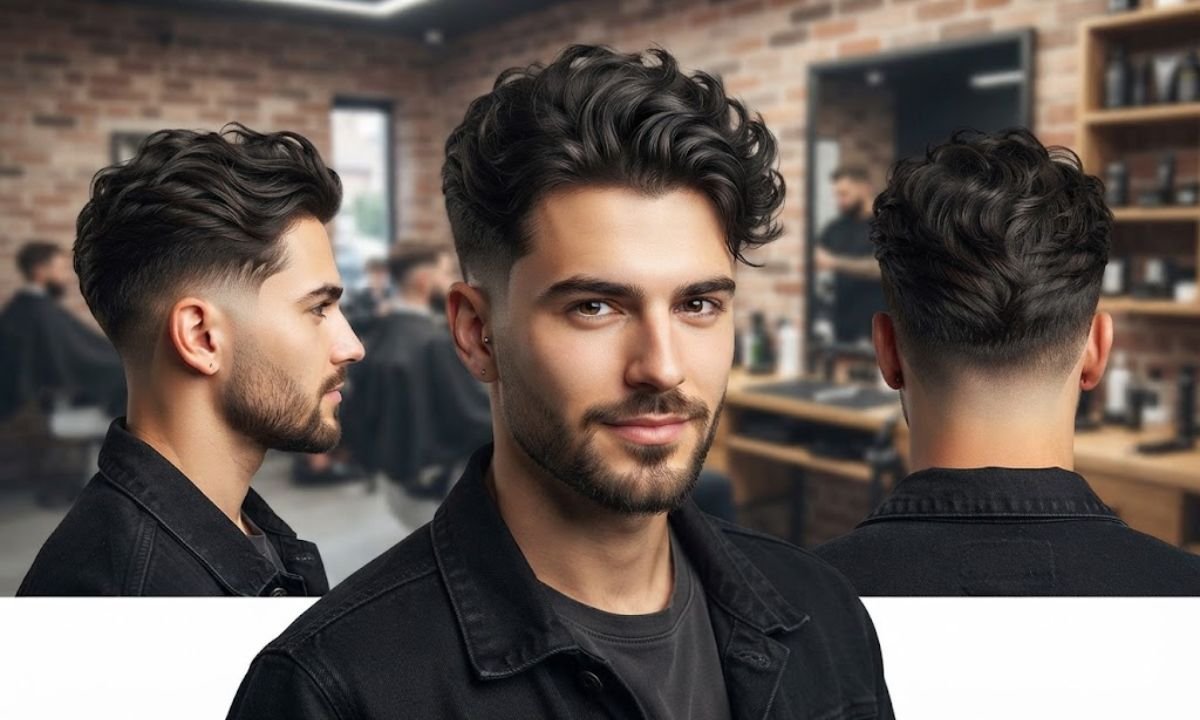
On wavy hair, the burst fade lets natural waves show on top. The sides stay controlled and tidy.
It’s arguably the easiest texture to style. The waves do the visual work.
Styling tip: Use wave cream to keep waves soft and defined.
18: Textured Burst Fade

A textured burst fade keeps the top choppy and voluminous. Barbers use point cutting or texturizing to remove weight.
It’s great if your hair looks flat when cut blunt. The texturizing adds movement.
Styling tip: Use your fingers instead of a comb for natural volume.
19: French Crop Burst Fade

The French crop burst fade pairs a short, straight fringe with faded sides. It needs almost no daily decisions.
It flatters most face shapes, which explains why it stays popular.
Styling tip: Keep the fringe trimmed evenly for a neat, structured look.
20: Burst Fade Back View
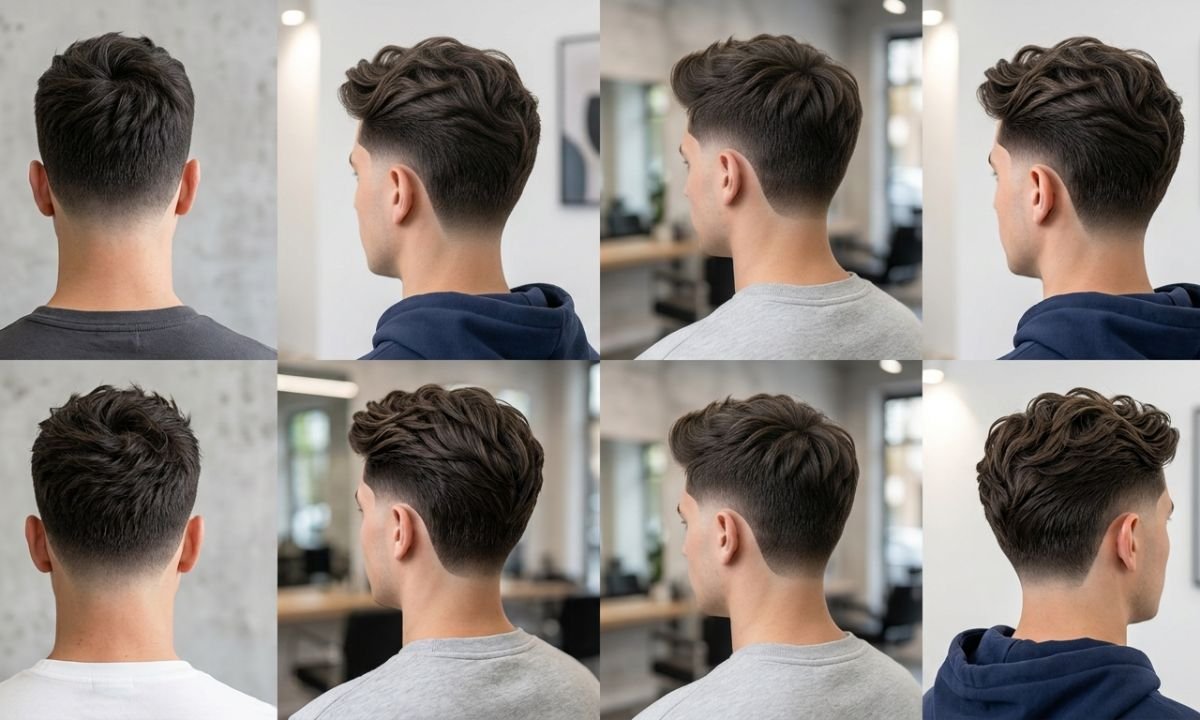
This one is all about the rear. The neckline, the curve behind the ear, and the blend all show from behind.
Ask for a natural neckline for softer grow-out or a sharp neckline for a crisp finish.
Styling tip: Book regular trims to keep the neckline fresh.
21: Burst Fade Edgar
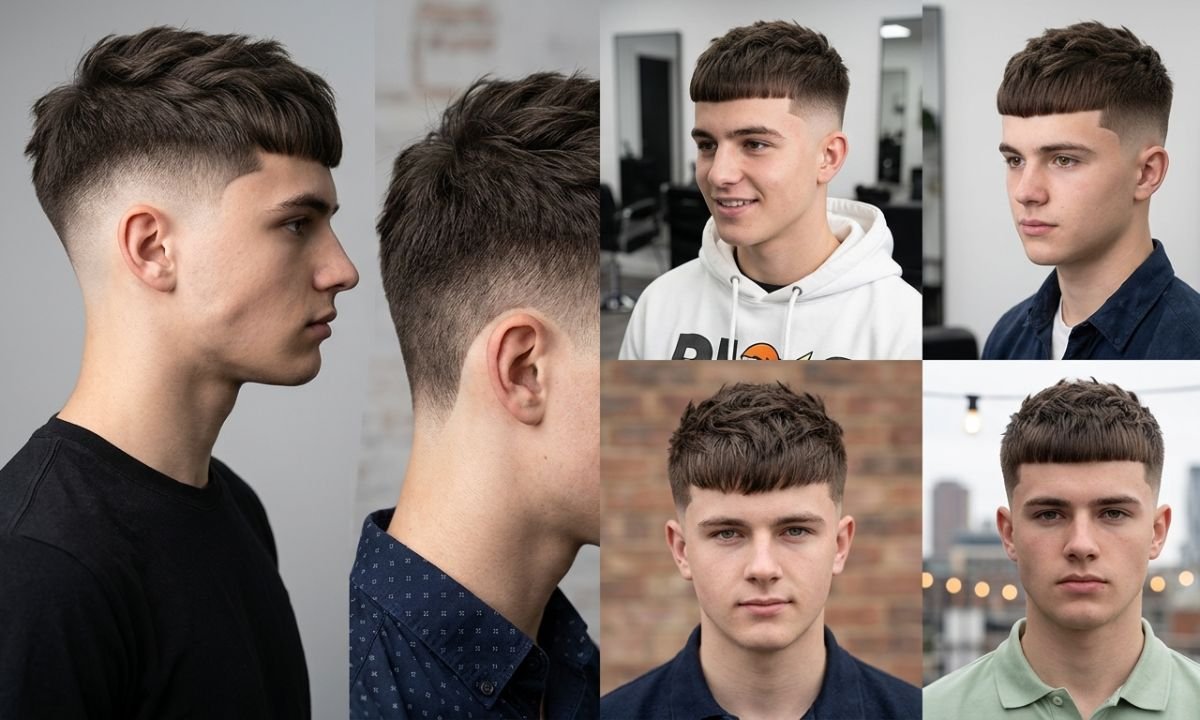
The burst fade Edgar pairs a blunt, straight-across fringe with the burst fade. It became popular through short videos.
The straight fringe needs more upkeep. Any grow-out shows against that hard edge.
Styling tip: Use strong gel to keep the fringe sharp all day.
22: Burst Fade with Beard

A burst fade with beard blends the hair fade straight into the beard fade. You get one smooth transition from hairline to jaw.
That takes skill. Ask your barber whether they blend both in the same visit.
Styling tip: Match the beard fade to the haircut fade for a blended finish.
23: Blowout Burst Fade
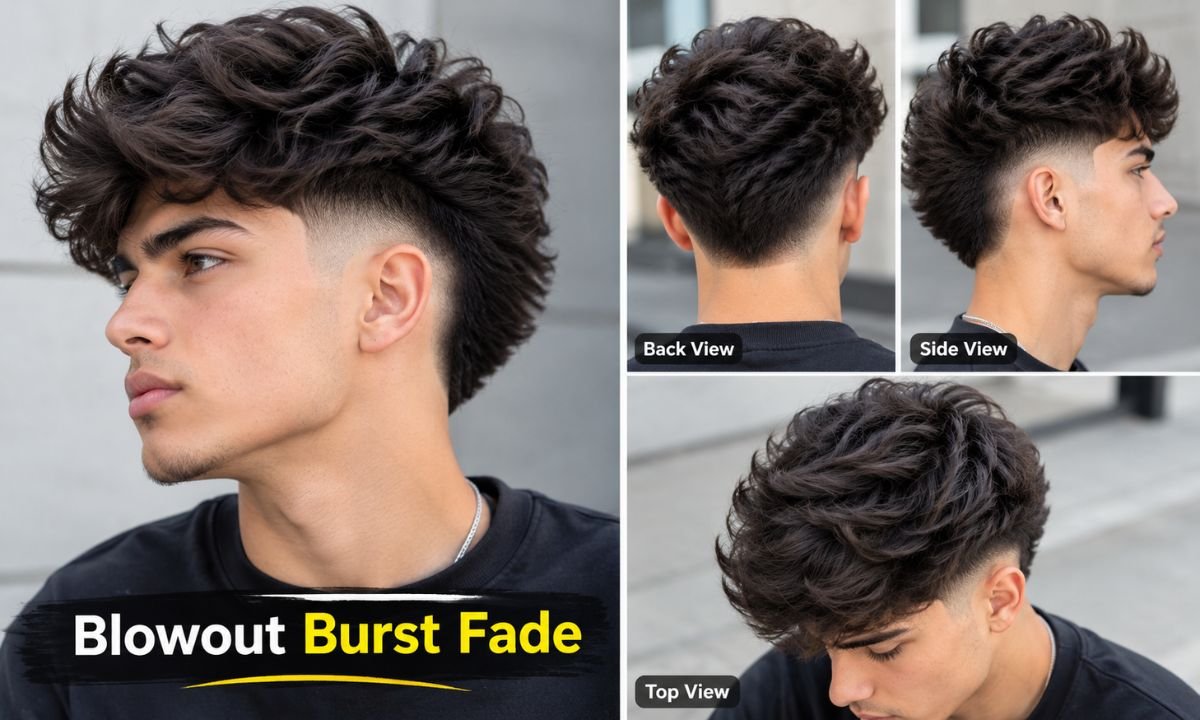
The blowout burst fade pairs a lifted, airy top with clean sides. It adds height and texture.
It suits guys who like volume. The fade keeps the sides from looking bulky.
Styling tip: Blow dry upward for natural lift.
24: Burst Fade for Black Men
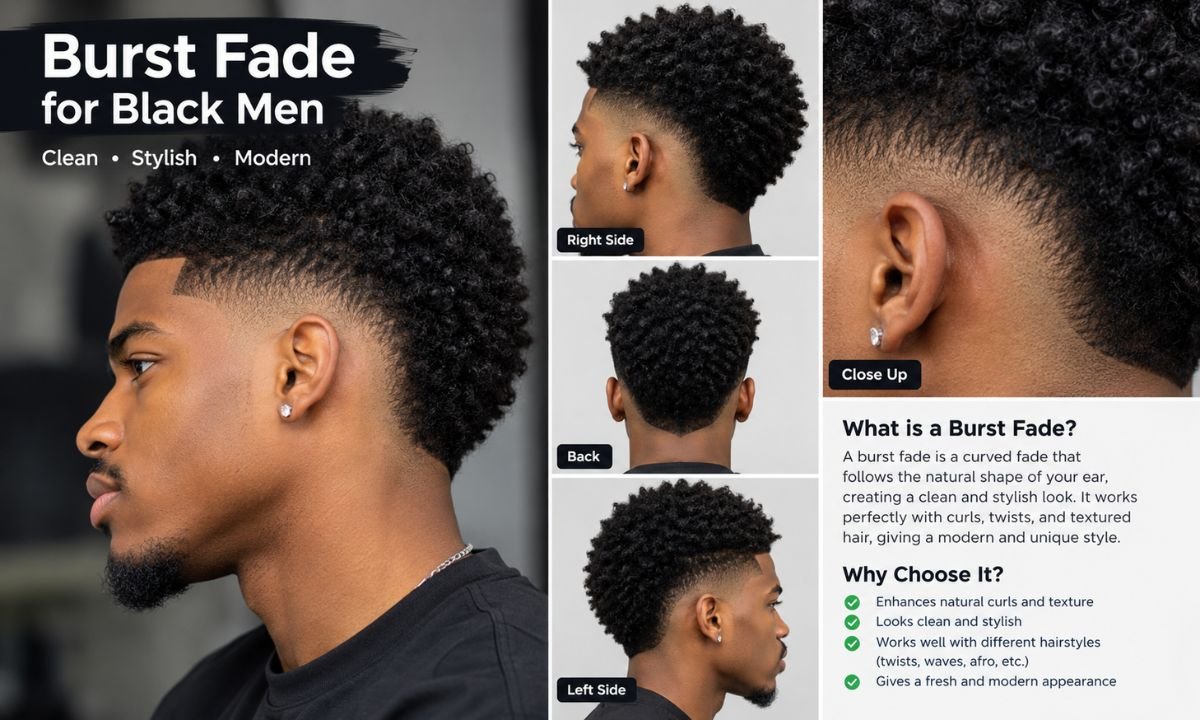
The burst fade for Black men is a favorite for coily and afro-textured hair. The rounded line follows the natural growth pattern around the ear.
It works across curl patterns, from waves to tight coils. Ask your barber to match the technique to your curl pattern.
Styling tip: Moisturize daily to keep curls soft and defined.
25: Asian Burst Fade
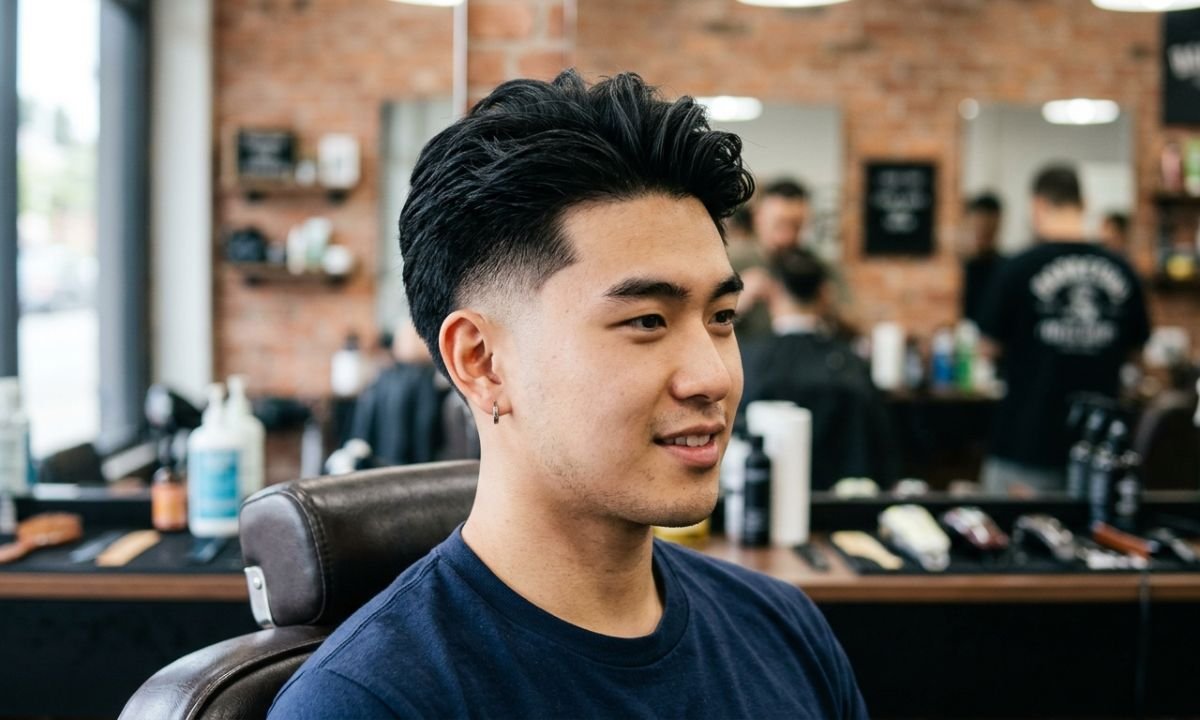
This variation suits straight, dense hair. That hair type often stands stiff once the sides are cut short.
Ask about thinning shears or point cutting at the crown. They stop the top from looking heavy or helmet-like.
Styling tip: Keep the sides tight and the top neat for balance.
26: Burst Fade Blonde Hair
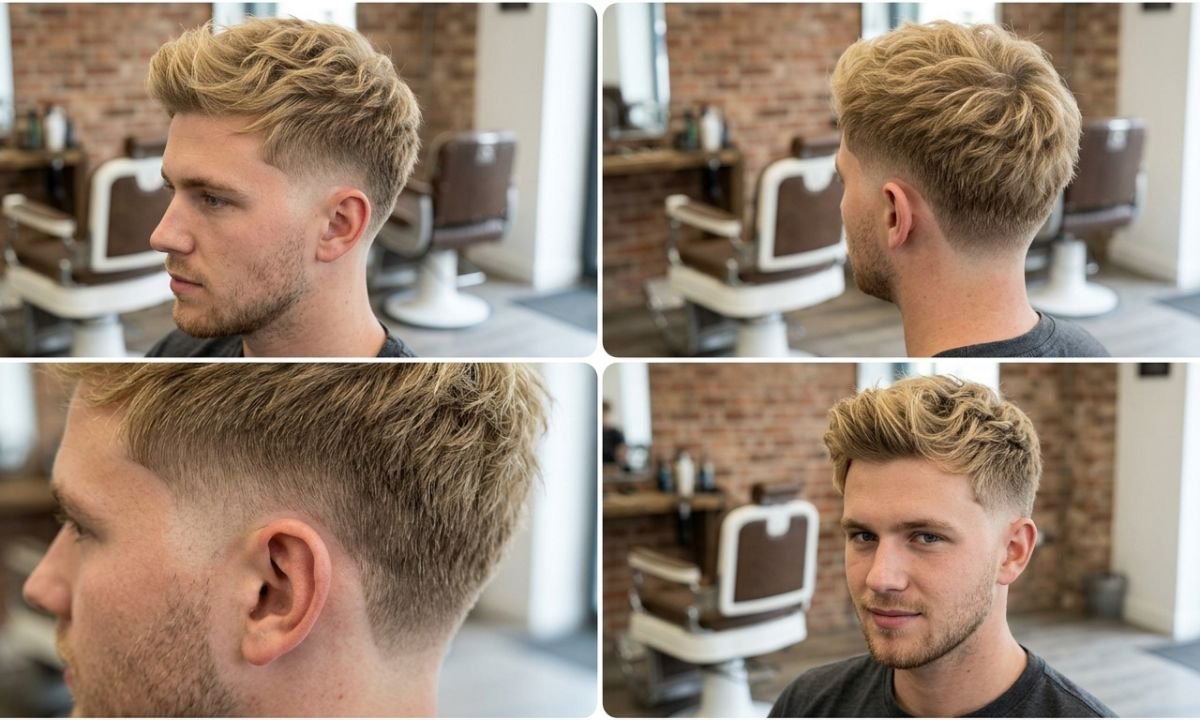
Blonde hair makes the fade look brighter and sharper. The color contrast highlights the clean blend.
Bleached hair needs gentle care. Dry, brittle hair breaks and ruins the shape.
Styling tip: Use purple shampoo to control brassy tones.
27: Burst Fade Afro
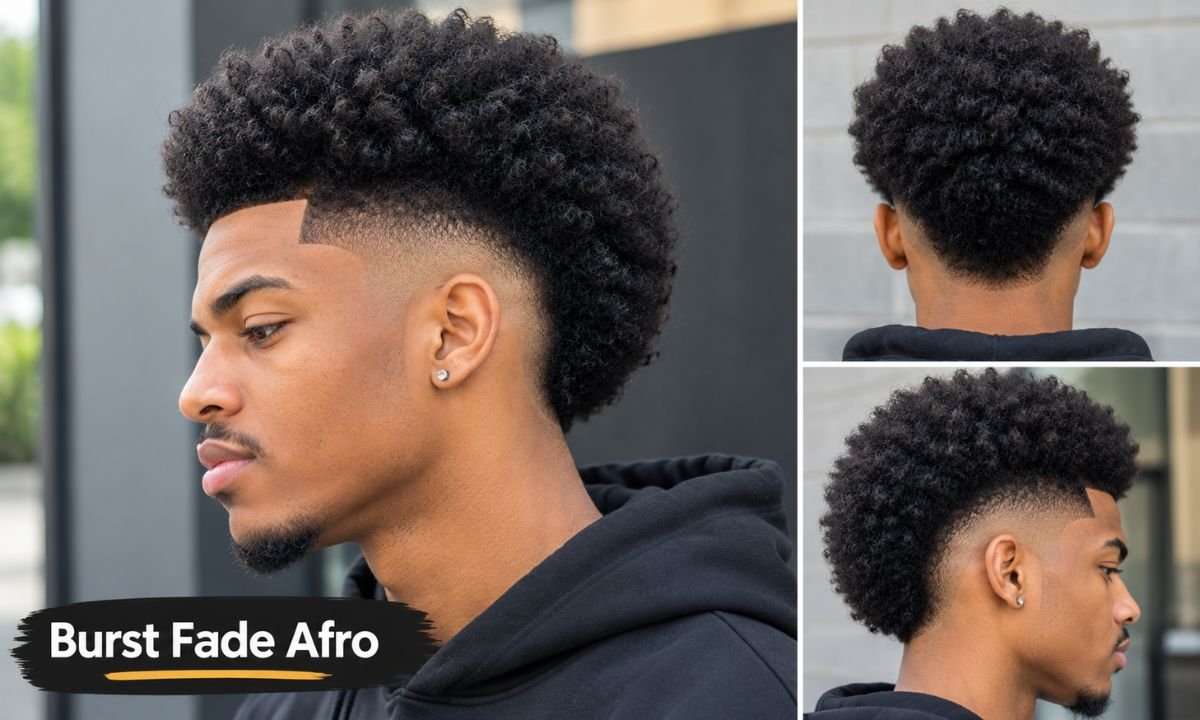
The burst fade afro keeps a full, shaped afro on top. The fade adds a sharp, neat frame around the ear.
It looks bold, natural, and well kept at once.
Styling tip: Use a pick comb to shape and lift the volume.
28: Undercut Burst Fade
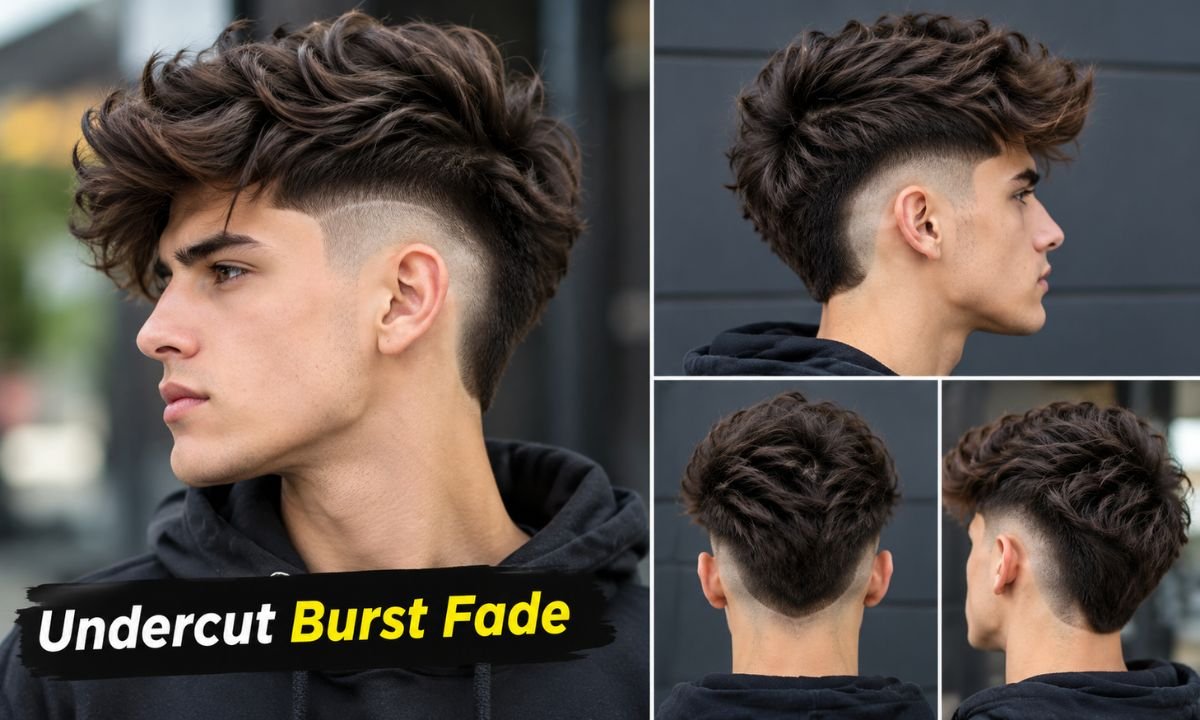
The undercut burst fade pushes contrast further. It keeps a lot of length on top against a tighter fade below.
The big gap in length defines the style. Choose it if you like drama.
Styling tip: Keep a medium-to-long top so the contrast looks balanced.
29: Grown Out Burst Fade
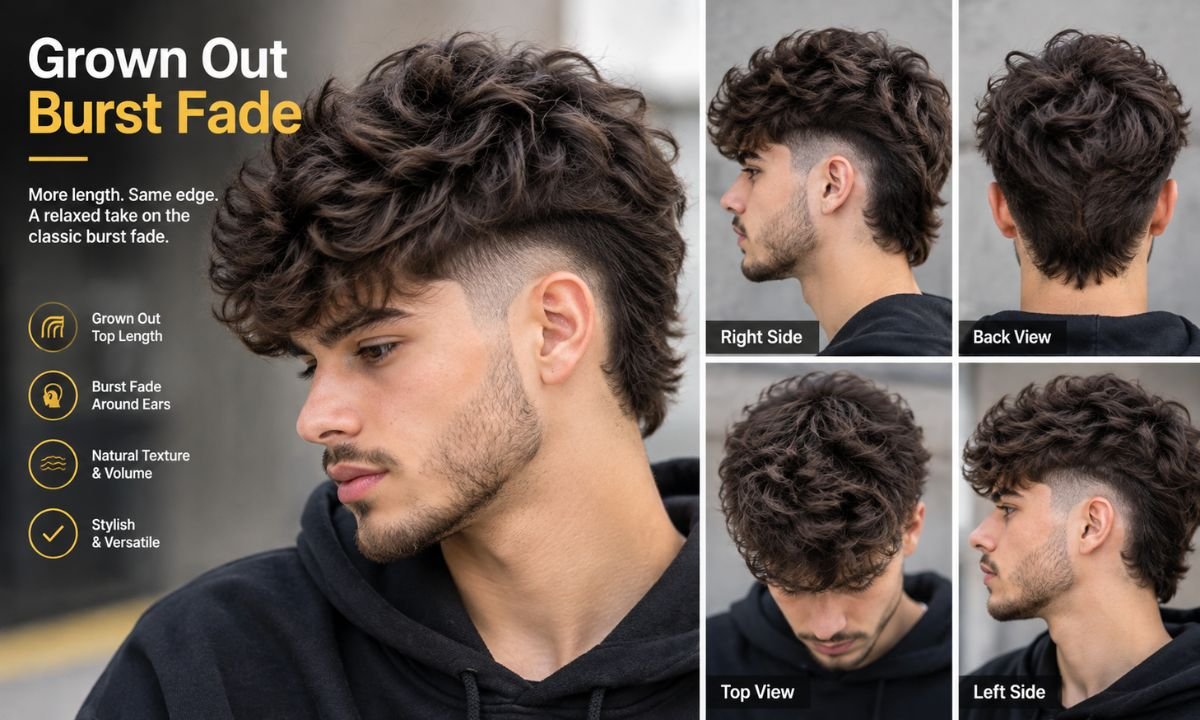
The grown out burst fade is the relaxed version. The fade softens as hair grows back, but the shape stays.
It suits guys who skip barber visits. A low or mid burst ages best.
Styling tip: Clean the edges to hold the shape while the fade grows out.
30: Burst Fade Fluffy Hair
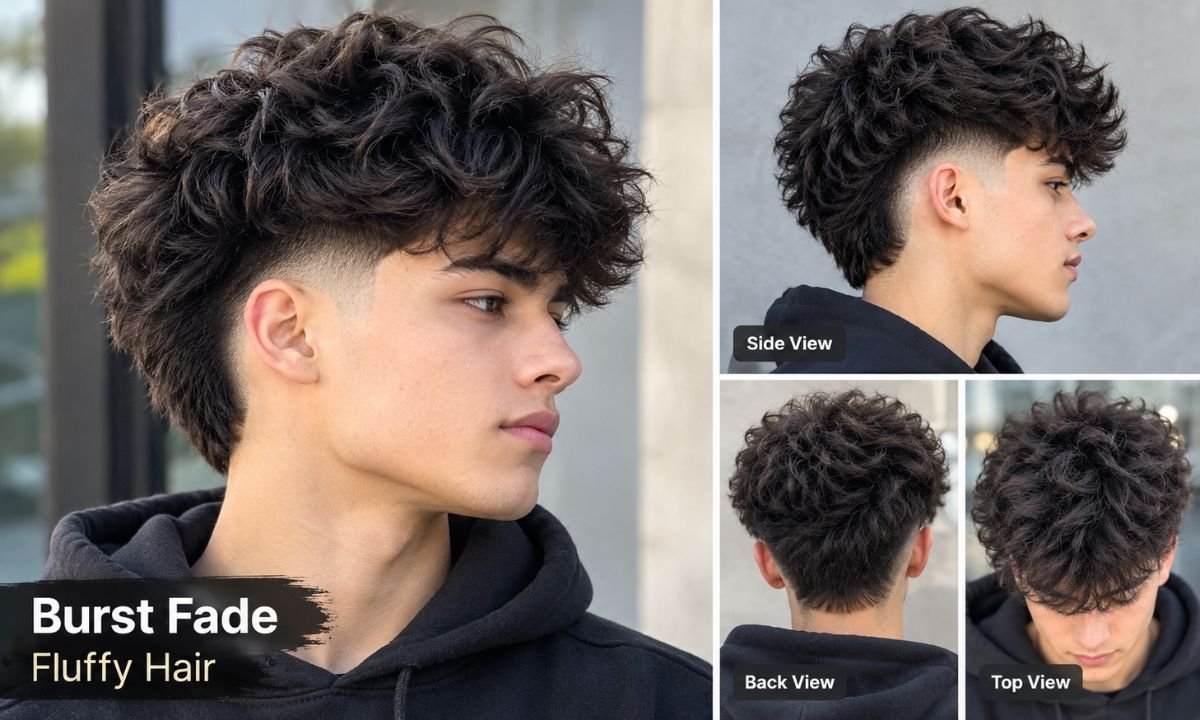
This style features soft, airy volume on top with clean sides. It looks light, natural, and relaxed.
Fine to medium hair works best here. Heavy product kills the fluff.
Styling tip: Use lightweight mousse to keep it airy.
31: Skin Burst Fade
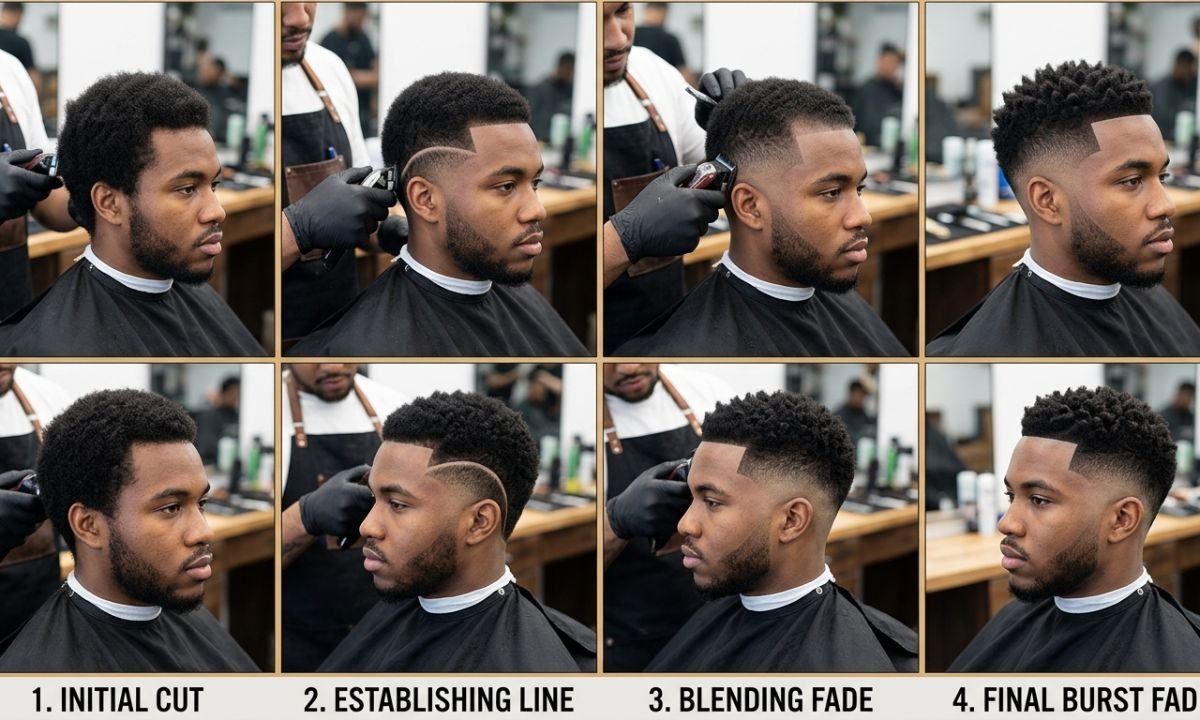
The skin burst fade takes the fade down to bare skin. That creates the sharpest contrast in this list.
Regrowth shows fast against bare skin. Plan on visits every one to two weeks.
Styling tip: Book a touch-up every two to three weeks at the latest.
32: Drop Burst Fade
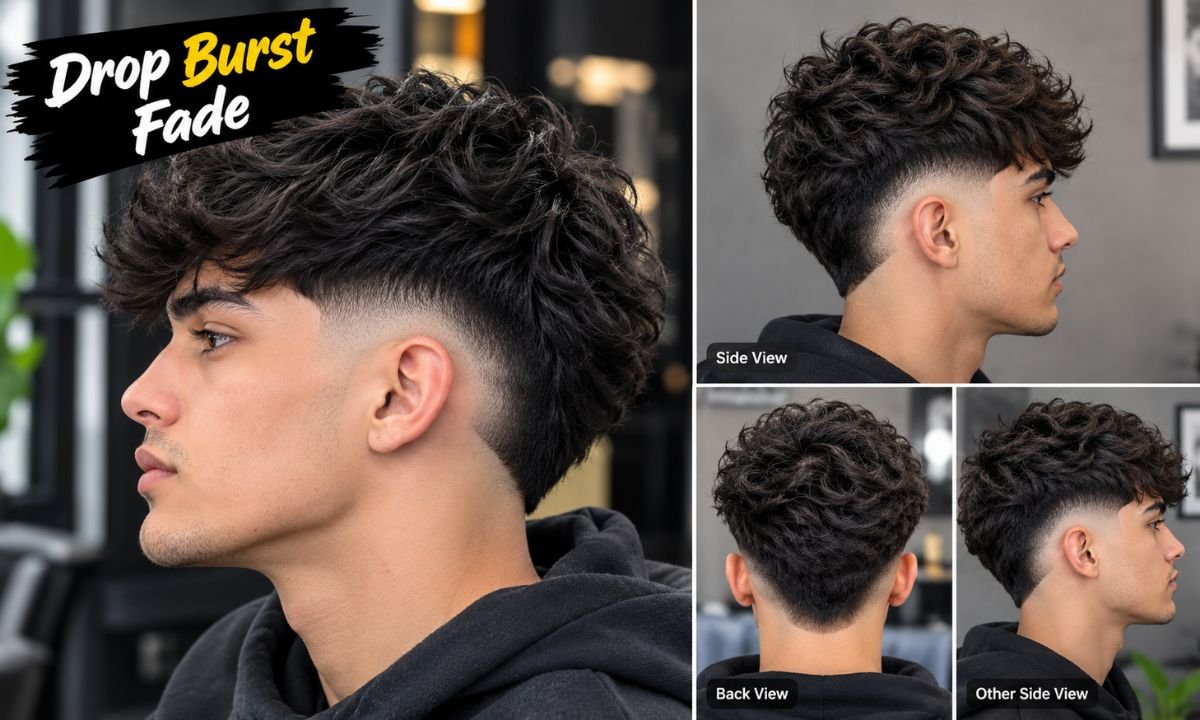
The drop burst fade curves lower behind the ear. It follows the skull toward the nape.
That extra drop adds visual length along the jawline. It suits round faces nicely.
Styling tip: Great for round faces, since it adds structure and definition.
33: Messy Burst Fade
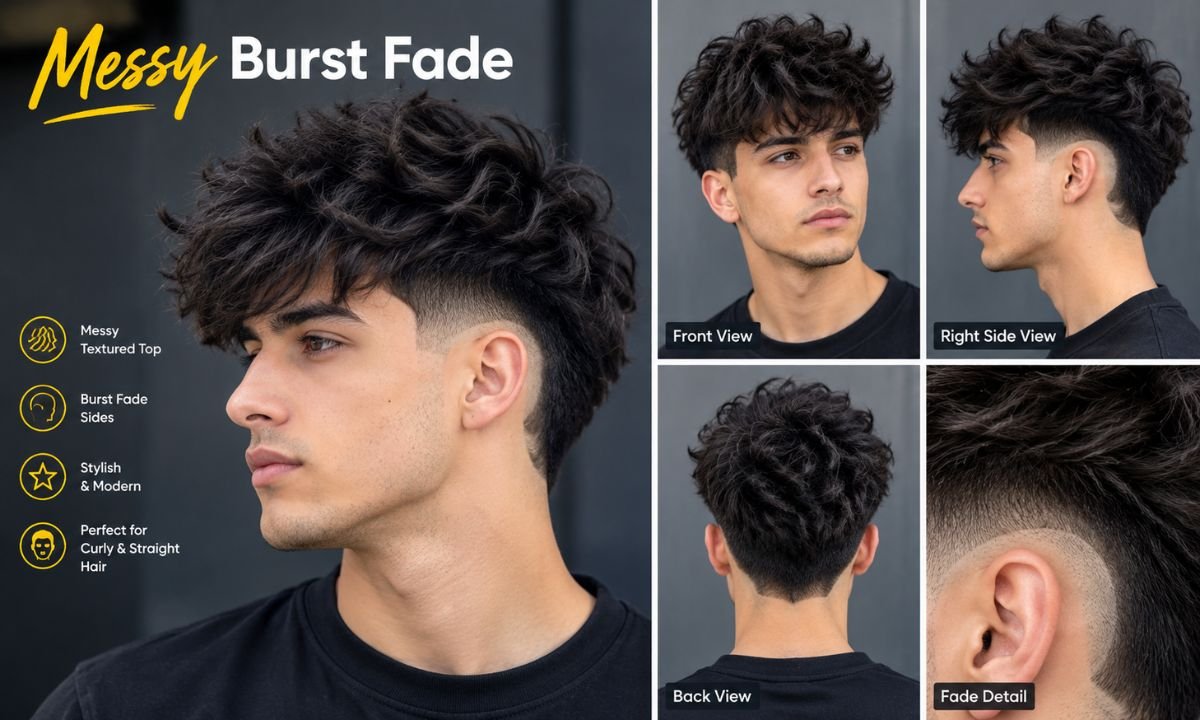
The messy burst fade pairs a tousled top with clean sides. The contrast is the whole point.
It’s like the textured fringe, but applied across the full top.
Styling tip: Use your fingers, not a comb, for a loose finish.
34: Burst Fade Pompadour

The burst fade pompadour combines a high, swept-back front with burst sides. It has vintage roots with a modern edge.
It needs blow drying and a firm product. Give yourself ten minutes.
Styling tip: Blow dry up and back for strong lift.
35: Burst Fade Quiff

The burst fade quiff lifts the front up and slightly back. It’s a shorter, tidier cousin of the pompadour.
It works at the office and on weekends. The shorter front looks less overstyled.
Styling tip: Use a strong-hold spray to keep the lift.
36: Burst Fade Locs and Twists
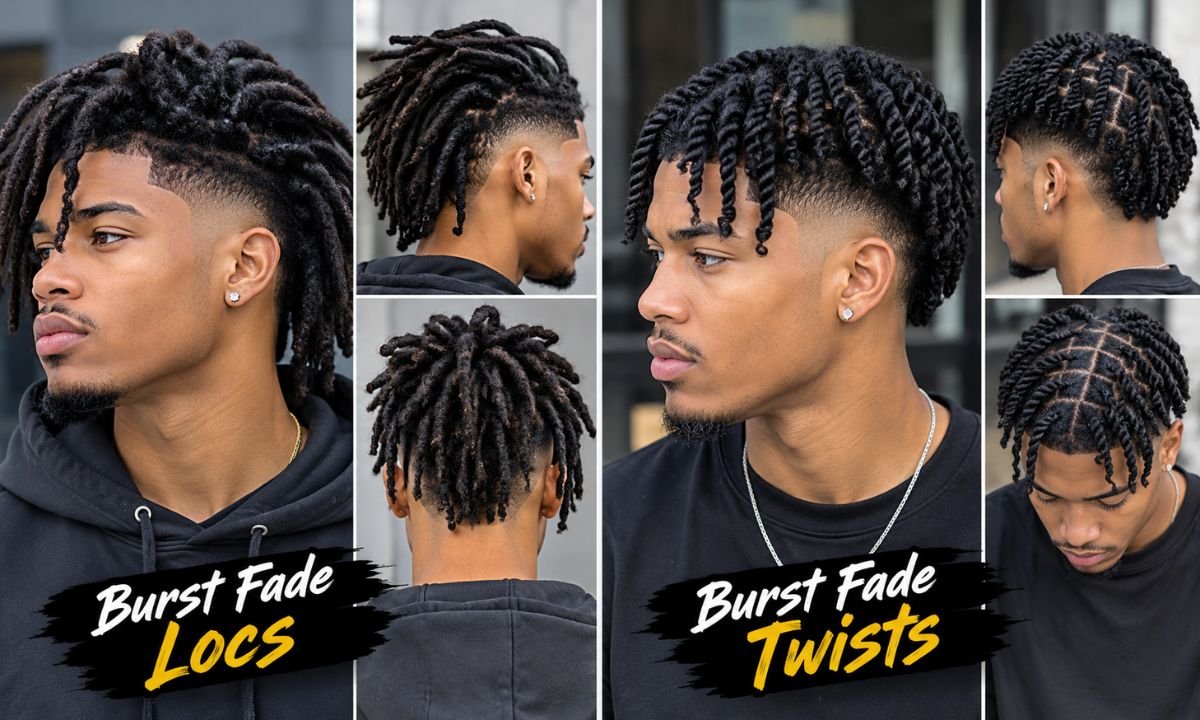
The burst fade with locs or twists keeps long, defined hair on top. The fade frames the ear and keeps the sides clean.
It gives locs a sharp, tidy base. Ask for a clean line-up around the front hairline.
Styling tip: Retwist or tighten on schedule, so the top matches the fade’s neatness.
37: Burst Fade Curtains
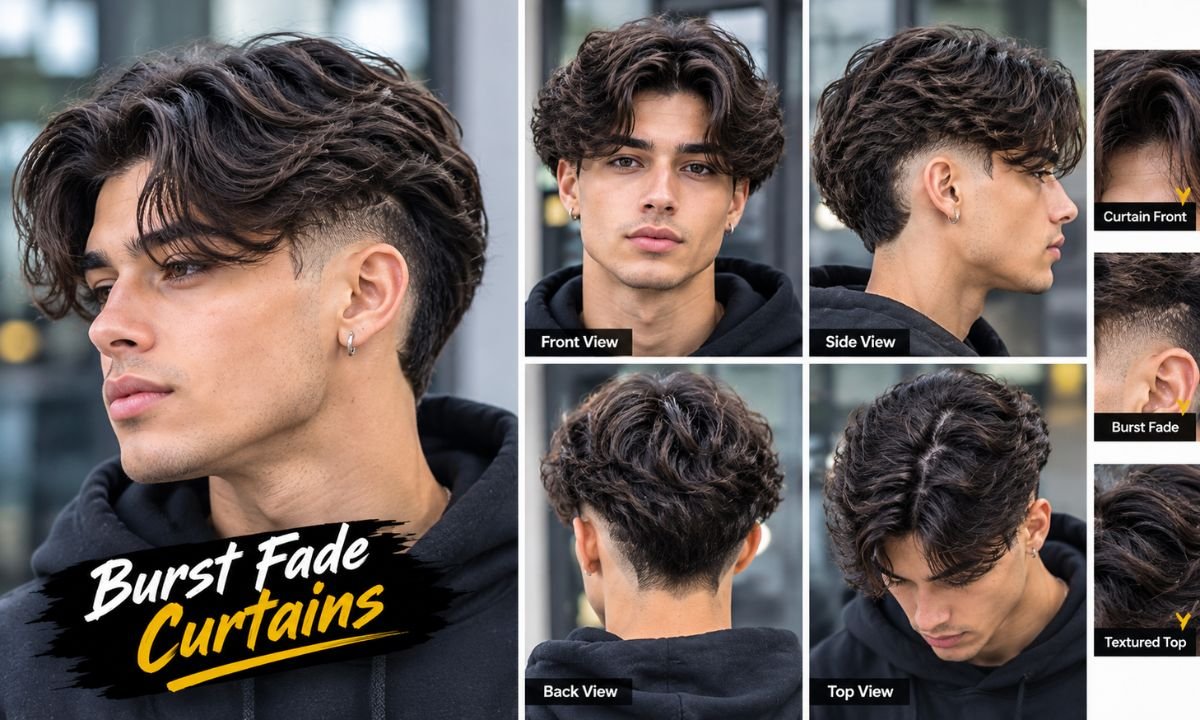
The burst fade curtains style uses a middle part with hair falling to each side. The burst keeps the ears and sides clean.
It’s a throwback look with a modern edge. It works best on straight and wavy hair with some length.
Styling tip: Use light cream and a blow dryer to set the part.
38: Burst Fade Caesar Cut

The burst fade Caesar cut pairs a short, forward fringe with the burst sides. It’s compact and easy.
It suits a receding hairline well. The short fringe softens the front edge.
Styling tip: Keep the fringe even and use a touch of matte product.
How to Choose the Right Barber for a Burst Fade
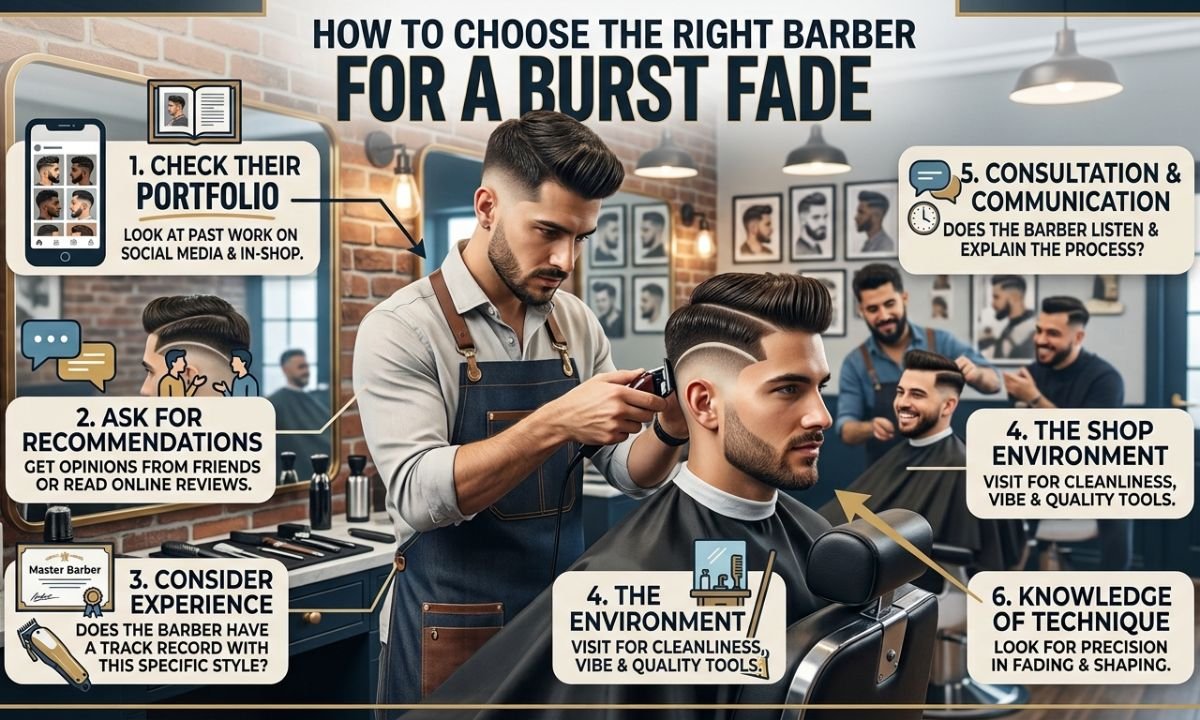
Not every barber who cuts a clean taper can do a clean burst. The curve takes more precision than a straight line.
Screen before you book. Five checks save a lot of regret:
- Check their portfolio. Look for burst fades, not just fades in general.
- Ask about the area behind the ear. A confident barber describes how they build the curve in small sections.
- Match hair type. A great straight-hair barber isn’t automatically great with coily or curly textures.
- Read recent reviews. Sort by newest, because quality changes.
- Ask about the touch-up policy. Many shops fix small issues within a few days.
Start simple with a new barber. Try a mid burst fade with a basic top first, then go bolder.
How to Ask Your Barber for a Burst Fade

Saying “give me a burst fade” leaves too much to guesswork. Be specific, and you’ll get what you pictured.
Cover six details: photos, height, top length, neckline, beard, and schedule.
Bring Reference Photos
Bring two or three clear reference photos. Show the front, side profile, and back.
Words like “high” and “sharp” mean different things to different barbers. A photo doesn’t.
Choose Your Fade Height
| Fade height | Where it starts | Best for |
| Low burst fade | Just above the ear | First timers, subtle contrast, easy grow-out |
| Mid burst fade | Halfway up the side | Most face shapes, everyday balance |
| High burst fade | Near the temple | Bold contrast, shorter gaps between visits |
Decide the Length on Top
Longer tops give you more style choices but need more product and time. Shorter tops cut your routine down.
Tell your barber the length in inches or by guard number. “Medium” means different things to different people.
Specify the Neckline
A natural neckline grows out softly and needs fewer trims. A sharp neckline looks crisp right away but fades faster.
Mention if you want a V-shape neckline or a rounded edge.
Mention Beard Blending
If you have a beard, say if you want it blended with the fade or kept separate. Both are valid choices.
Blending is a specific skill, so confirm before the clippers start.
Ask About Your Maintenance Schedule
Most burst fades need a touch-up every two to four weeks. A skin burst needs one every one to two weeks, and a low burst can stretch to four.
Ask your barber for a plan based on how fast your hair grows.
Quick Barber Checklist
| Detail | Options |
| Fade height | Low, mid, high |
| Finish | Shadow or skin |
| Top style | Mullet, quiff, pompadour, curls, French crop, buzz cut |
| Top length | Short, medium, long |
| Beard | Blended or separate |
| Neckline | Natural or sharp |
| Touch-ups | Every 1 to 2, 2 to 3, or 3 to 4 weeks |
Best Burst Fade Haircut by Face Shape
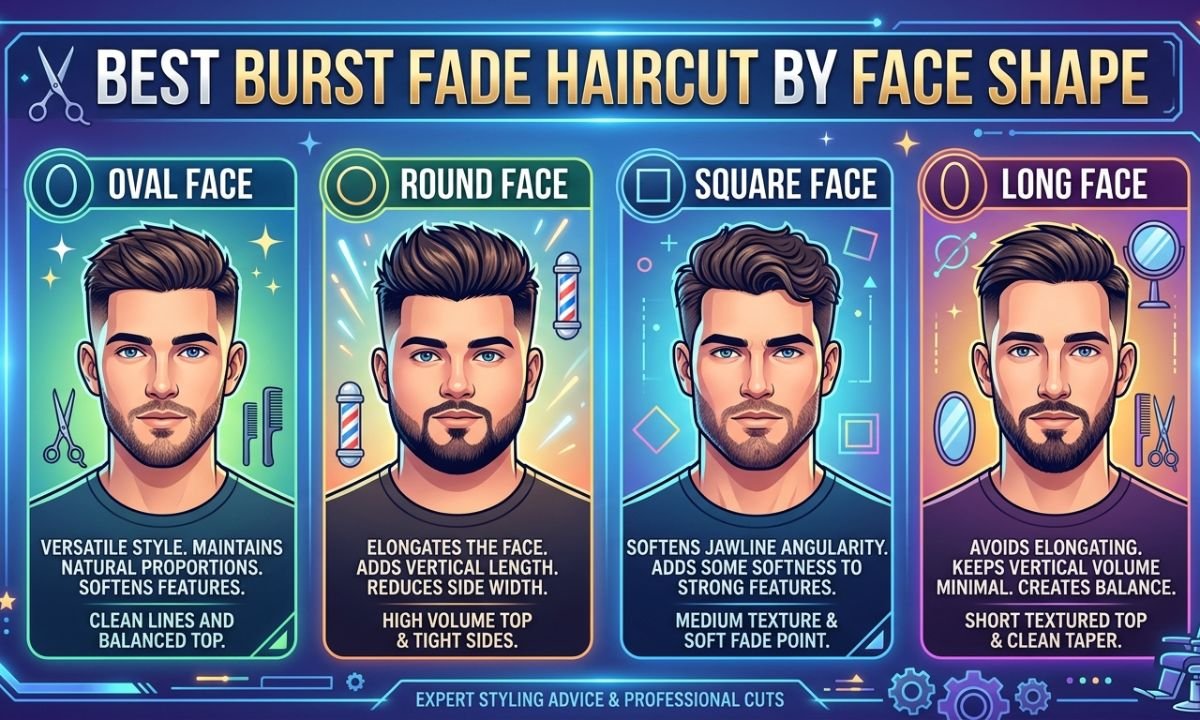
Your face shape should guide the version you choose. Think about facial proportions first and trends second.
The fade height changes how long or wide your face looks. Higher fades slim the sides, and lower fades keep width.
Round Face
You want height to balance width. Try a high burst fade, pompadour, quiff, or drop burst fade.
Avoid wide, side-heavy tops that add more width.
Oval Face
Oval is the most flexible shape. Choose by hair type and lifestyle.
Low, mid, curly, and slick-back versions all work.
Square Face
A strong jawline and broad forehead suit clean, structured cuts. Try a mid or high burst, a buzz cut, or a textured fringe.
A blended beard fade supports the jaw rather than competing with it.
Diamond Face
You have wide cheekbones and a narrower forehead and chin. The goal is to add width up top.
Try curly, wavy, quiff, or textured fringe versions.
Heart Face
A wide forehead and narrow chin like softer tops and more weight below. Try a low burst fade, comb over, slick back, or longer top.
A short beard adds balance at the chin.
Oblong Face
Your face is longer than wide, so avoid extra height. Choose a low or mid burst fade, French crop, or curly top.
Curls add width, which balances the length.
Quick Face Shape Guide
| Face shape | Best burst fade styles |
| Round | High, pompadour, quiff, mohawk, drop |
| Oval | Low, mid, curly, mullet, slick back |
| Square | Mid, high, buzz cut, textured fringe |
| Diamond | Curly, wavy, quiff, textured fringe |
| Heart | Low, comb over, slick back, long hair |
| Oblong | Low, mid, French crop, curly |
Expert Barber Advice
Face shape is only one input. Hair density, beard, and daily routine matter just as much.
Ask your barber to recommend a version for both your face and your hair texture. A quick haircut consultation takes two minutes.
Best Burst Fade Haircut by Hair Type
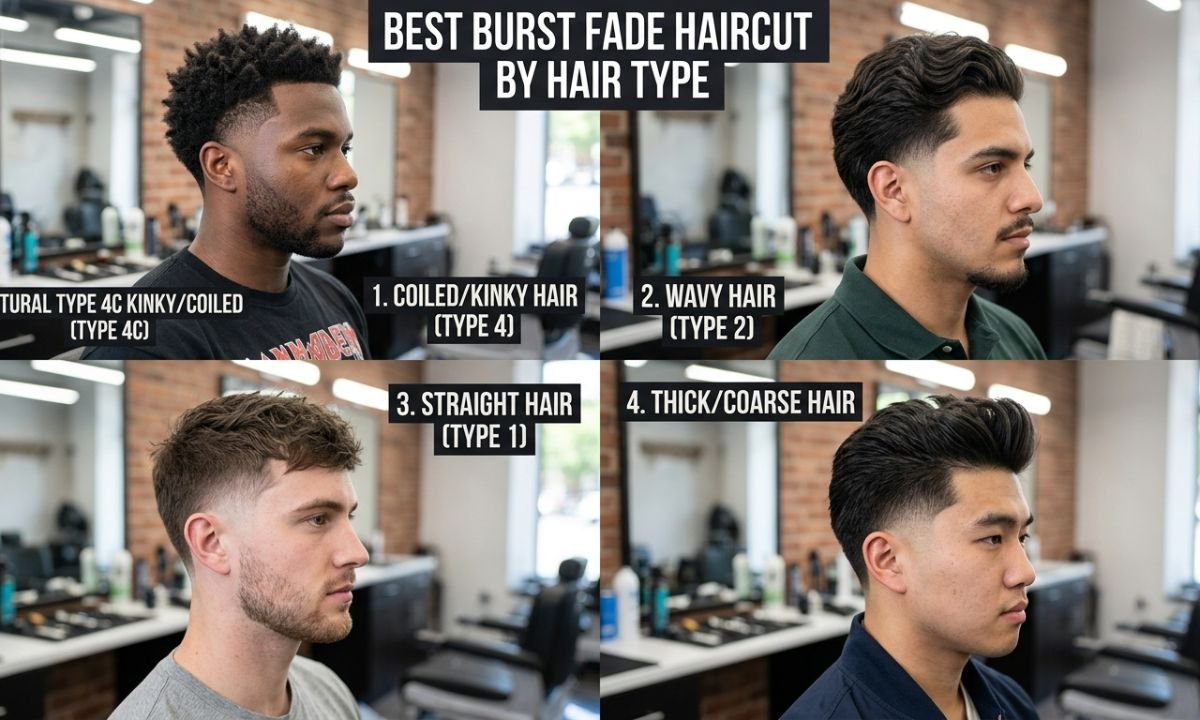
Your hair texture changes how the fade looks and how hard it is to style. The same cut can look very different on different heads.
Here’s what works best for each type.
Straight Hair
Straight hair shows clean lines and sharp transitions. It suits polished, structured styles.
Best picks: slick back, quiff, comb over, pompadour.
Barber tip: Use matte clay or light pomade so straight hair doesn’t look flat.
Curly Hair
Curly hair is one of the best matches. The fade sides contrast with the curls on top.
Best picks: curly burst, curly mullet, mohawk, afro.
Barber tip: Use curl cream or leave-in conditioner to fight frizz.
Wavy Hair
Wavy hair moves naturally and needs little effort. The fade keeps the sides tidy while the waves relax on top.
Best picks: wavy burst, textured burst, quiff, long hair.
Barber tip: Sea salt spray boosts waves and adds light volume.
Thick Hair
Thick hair gives you plenty of volume for bold styles. The fade removes bulk from the sides.
Best picks: pompadour, mullet, blowout, textured fringe, high burst.
Barber tip: Ask for texturizing to lighten the weight on top.
Thin or Fine Hair
Fine hair and thin hair look fuller with lower contrast. A high fade can make density look lower.
Best picks: short burst, buzz cut, French crop, low burst.
Barber tip: Pick lightweight volumizing products. Heavy wax weighs fine hair down.
Coily or Afro Hair
Coily and afro-textured hair build shape and volume naturally. The burst fade adds a crisp frame.
Best picks: afro, burst for Black men, high burst, burst with beard, mohawk.
Barber tip: Keep hair moisturized and use a wide-tooth comb or pick.
Quick Hair Type Guide
| Hair type | Recommended styles |
| Straight | Slick back, quiff, comb over, pompadour |
| Curly | Curly burst, curly mullet, mohawk, afro |
| Wavy | Wavy burst, textured, quiff, long hair |
| Thick | Pompadour, mullet, blowout, high burst |
| Thin | Short burst, buzz cut, French crop, low burst |
| Coily | Afro, burst for Black men, high burst, beard blend |
Best Burst Fade Haircut by Age
Age isn’t a rule, but it nudges what feels natural. Workplace, hair density, and routine all shift over time.
Use these as starting points.
Kids and teens: Keep it low-maintenance. A low or mid burst fade with a simple top holds up between cuts. Special occasions can justify a design.
Young adults (18 to 30): This is prime time for bold versions. Mullets, mohawks, designs, and high contrast are common here.
Professionals (30 to 50): Low or mid burst with a controlled top fits best. Try slick back, comb over, or French crop. Longer gaps between visits also help.
Mature men (50+): Density and texture change, so talk to your barber. A low burst fade is often the most flattering. A groomed beard adds definition.
Burst Fade for Receding Hairlines and Thinning Hair
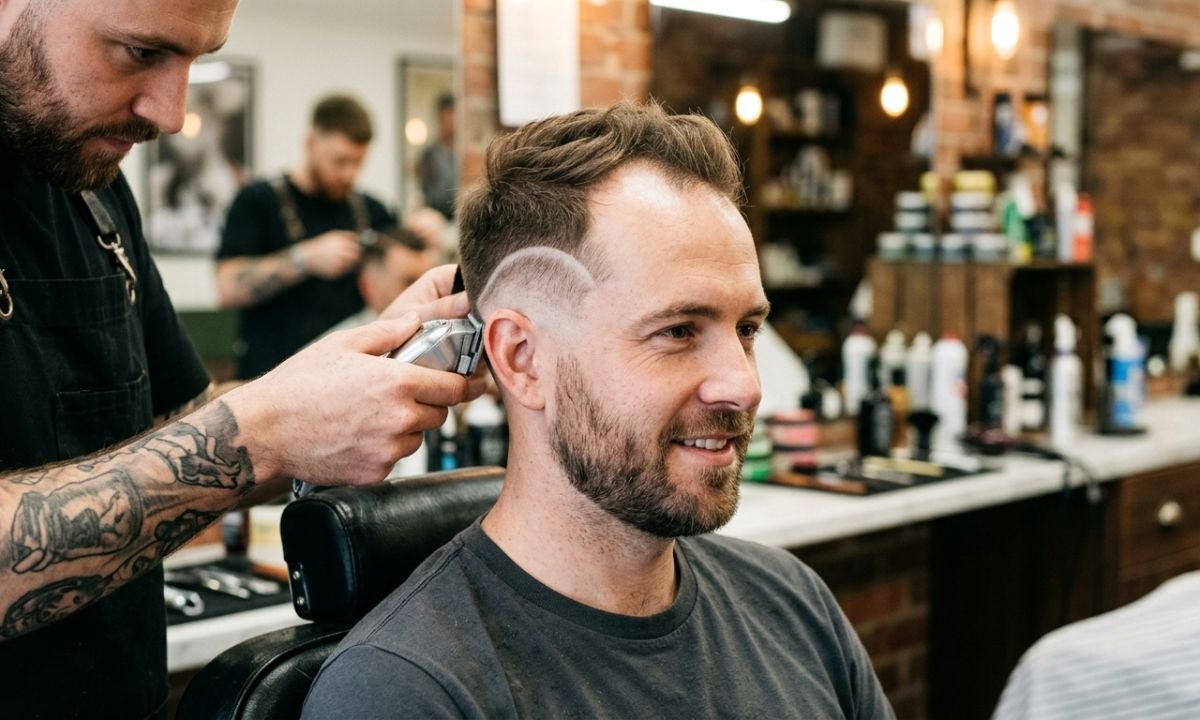
A burst fade can work well here. A confident, deliberate cut often looks better than hiding thin areas.
A few adjustments make a big difference.
- Keep the fade lower. High and skin fades can draw attention to a receding hairline.
- Ask for a soft, blended hairline. A hard edge can make recession more obvious.
- Go shorter on top. Thinning hair often looks fuller when it’s cut shorter and more even.
- Mention your crown. Crown thinning needs different handling than temple recession.
- Consider a beard. Barbers often use one to balance the overall look.
A haircut changes how thinning hair looks, but it doesn’t treat hair loss. If hair loss worries you, talk to a dermatologist. The American Academy of Dermatology (aad.org) has a trusted guide on hair loss. [Add the link here before publishing.]
Best Products for Burst Fade Styling
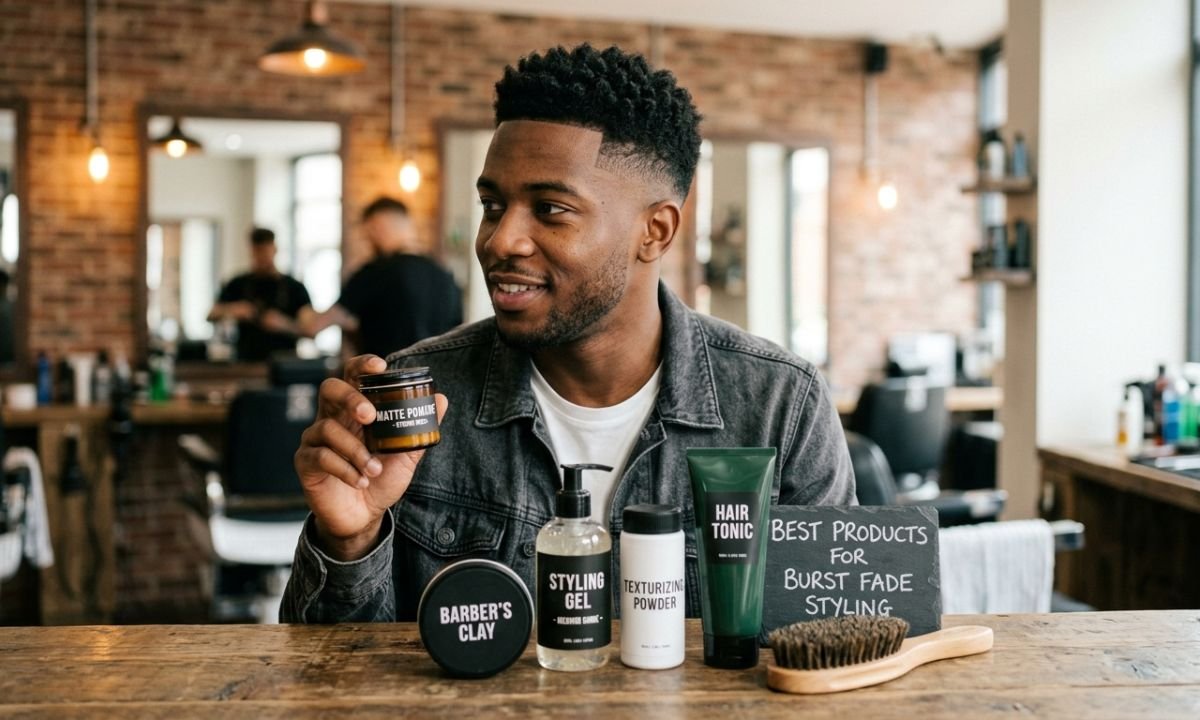
The right product keeps your cut sharp between visits. Match it to your hair type and your top style.
Here’s the short list.
- Pomade: Smooth, polished, flexible hold. Great for slick backs and comb overs.
- Hair wax: Medium to strong hold with a matte finish. Works for crops and fringes.
- Hair clay: Strong hold with texture. Good for thick or coarse hair.
- Hair spray: Locks the style in humid weather or long days.
- Sea salt spray: Adds texture and movement to wavy and messy looks.
- Curl cream and leave-in conditioner: Define curls and fight frizz.
- Mousse: Adds lift without weight, especially for fluffy tops.
Pro Tip
Choose products for your hair type, not the trend. A product that fits your hair makes upkeep much easier.
How to Style a Burst Fade Haircut?
Styling takes five to ten minutes once you know the routine. The steps below cover most hair types.
Start with clean, towel-dried hair.
1. Choose the Right Styling Products for Your Hair Type
Fine hair likes light cream. Thick hair needs stronger wax or clay.
Use less than you think. You can always add more.
2. Blow Dry Technique for a Clean and Voluminous Look
Blow drying builds shape and volume. Dry upward or backward depending on your style.
Use a medium heat setting. Finish with a cooler blast to set it.
3. How to Style a Burst Fade with Curly or Wavy Hair
Apply curl cream to damp hair and avoid brushing dry curls. Let them form naturally.
Scrunch lightly and air dry or diffuse on low. Moisture matters more than hold.
4. Creating Texture and Definition With Pomade or Wax
Warm a small amount in your palms. Run it through with your fingers.
Shape the top, then check the sides in the mirror. A tiny amount keeps the fade visible.
Barber Tools Used to Create a Burst Fade

Tools matter as much as technique. Sharp, clean gear gives a cleaner line.
Here’s what’s in a barber’s kit:
- Clippers with a lever. The clipper lever lets barbers adjust length on the fly for smooth blending.
- Numbered guards. Guard attachments control length. A #1 leaves about 1/8 inch and a #2 about 1/4 inch.
- Trimmer or edger. Detail work around the ear, hairline, and neckline.
- Straight razor. Gives the sharpest finish, especially on skin burst fades.
- Clipper comb and styling comb. Guide the length and check the blend.
- Thinning shears. Used for texturizing and bulk removal.
Dull clippers pull hair instead of cutting it. That shows up as an uneven line, no matter how skilled the barber is.
Step-by-Step Burst Fade Tutorial
This section shows how barbers build the cut. It helps you understand what’s happening in the chair.
Cutting a burst fade at home is hard. Without a second mirror, it’s easy to leave patches.
Step 1: Prep the Hair
Comb the hair in its natural direction. Follow the crown swirl to see how it grows.
This avoids uneven blending later.
Step 2: Create the Burst Shape
Start behind the ear. Draw a rounded guideline that curves around it.
Keep it rounded. Don’t push too deep toward the back.
Step 3: Debulk the Hair
Use a clipper with a guard, often around a #1.5, to remove bulk. This makes blending easier and keeps the structure intact.
Step 4: Set the Fade Lines
Create two guidelines. One sits at the bottom, with the lever closed. The second sits about an inch above, with the lever open.
Keep both smooth and rounded.
Step 5: Blend the Fade
Soften the lines step by step. Work from open to closed levers, then use a half guard for shadow blending.
Use the corner of the blade for control. Check often.
Step 6: Detail the Fade
Go back over the area. Remove dark spots and fix uneven patches.
Work carefully behind the ear. Avoid pushing the fade higher than planned.
Step 7: Clean the Edges
Shape the arch from top to bottom. Clean the hairline with a trimmer, then finish with a straight razor.
Stretch the skin gently while shaving.
Step 8: Final Touch
Style the top. Check symmetry from several angles.
A second mirror helps a lot.
Final Result
You should see a smooth, rounded curve around the ear and a clean blend. The hairline should look natural and sharp.
If it doesn’t, a barber can usually fix it fast.
Burst Fade Haircut vs. Other Popular Fade Haircuts
Several fades look alike at first glance. The difference comes down to shape, height, and finish.
Remember the rule. Burst is a shape, while skin is a length. Combine them and you get a skin burst fade.
Burst Fade vs. Taper Fade
A taper fade shortens hair gradually along the neckline and sideburns. A burst curves around the ear instead.
| Feature | Burst fade | Taper fade |
| Pattern | Curves around the ear | Straight along neckline and sideburns |
| Contrast | Medium to high | Low to medium |
| Best hairstyles | Mullet, mohawk, curls, pompadour | Side part, crew cut, classics |
| Maintenance | Every 2 to 3 weeks | Every 3 to 4 weeks |
Burst Fade vs. Drop Fade
A drop fade arches lower behind the ear. A burst stays tighter around it.
| Feature | Burst fade | Drop fade |
| Shape | Rounded around the ear | Drops toward the nape |
| Look | Balanced and versatile | Sharp and dramatic |
| Best hairstyles | Mullet, crop, curls | Slick back, quiff, pompadour |
| Maintenance | Every 2 to 3 weeks | Every 2 to 3 weeks |
Burst Fade vs. Skin Fade
A skin fade describes the finish, going down to bare skin. A burst describes the shape. You can have both.
| Feature | Burst fade | Skin fade |
| Describes | Shape | Length and finish |
| Contrast | Medium to high | Very high |
| Maintenance | Every 2 to 3 weeks | Every 1 to 2 weeks |
| Best for | Versatile modern styles | Ultra-clean sharp looks |
Why a Burst Fade Haircut Is Worth Trying
It adapts to your hair, your face, and your schedule. You can go subtle or loud with the same base.
If you love longer tops but want clean sides, this is the easiest fix.
How Much Does a Burst Fade Cost?
Prices vary a lot by city and shop. These are rough ranges in US dollars, so check your local barbershops.
A standard burst fade at a mid-range barbershop often costs about $25 to $45. A premium barbershop may charge $45 to $80 or more. Add-ons like a razor design, beard blend, or hot towel finish raise the price.
Think about the yearly cost, not just one visit. A high or skin burst needs visits every one to two weeks, while a low burst can wait three or four.
Ask your barber what they charge for a touch-up between full cuts. Many shops offer a cheaper edge-up.
Burst Fade Haircut Glossary: Key Terms Explained
Knowing the lingo helps you ask for what you want. Here are the key terms.
| Term | What it means |
| Fade | Hair that gradually shortens from longer to very short or skin |
| Burst fade | A fade that curves around the ear in a rounded shape |
| Blending | Smoothing the change between lengths so no lines show |
| Guard | A clipper attachment that sets cutting length, numbered from 0 upward |
| Taper | A gradual shortening, mostly at the neckline and sideburns |
| Drop fade | A fade that curves lower behind the ear toward the nape |
| Skin fade | A fade cut down to bare skin |
| Lever | A clipper control that changes length without swapping guards |
| Neckline | The shaped edge at the base of the hair at the back |
| Line-up / edge-up | Sharpening the hairline with a trimmer or razor |
| Texturizing | Using shears to remove bulk without cutting length |
| Point cutting | Cutting into the hair tips to create texture and soft edges |
Common Mistakes to Avoid with a Burst Fade Haircut
A few simple errors ruin an otherwise great cut. Avoid these and your results improve fast.
Choosing the Wrong Burst Fade Variation
Not every version suits every face or hair type. Pick the height and top style that match yours.
Skipping Regular Barber Visits
The fade loses its shape as hair grows. Waiting too long looks messy and uneven.
Using Too Much Hair Product
Heavy gel, wax, or pomade weighs hair down. It also hides the clean fade.
Ignoring Hair Texture
Straight, wavy, curly, and coily hair need different handling. Choose a version that works with your natural texture.
Forgetting Daily Hair Maintenance
Even a low-maintenance cut needs washing, conditioning, and light styling. Healthy hair holds a style better.
Quick Tip
Match the style to your hair type. Visit your barber every two to three weeks. Keep your product routine simple.
Frequently Asked Questions
How to properly do a burst fade?
A barber starts behind the ear and draws a rounded guideline. They remove bulk, set two fade lines, then blend them with the clipper lever and guards.
Then they detail the curve and clean the edges. It takes skill, so a trained barber is the safest route.
What is the 3:2:1 rule for haircuts?
It’s a guard sequence. A #3 guard goes on top, a #2 on the sides, and a #1 around the edges and neckline.
It’s usually used for buzz cuts and simple tapers. It isn’t a burst fade technique, though a barber could use similar guard steps while blending.
Is a burst fade just a mullet?
No. A burst fade is a fade shape around the ear, while a mullet is a length style with longer hair at the back.
They pair well, which is why they’re often confused. You can wear a burst fade with a quiff, crop, or curls instead.
What is a burst fade haircut?
It’s a fade that curves around the ear in a rounded shape. The hair is shortest behind the ear and grows longer outward.
You pick the height (low, mid, or high) and finish (shadow or skin) separately.
What’s the difference between a burst fade and a drop fade?
A burst fade stays rounded around the ear. A drop fade arches lower behind the ear toward the nape.
From behind, they look different. Ask your barber to show you each on a reference photo.
How often should you touch up a burst fade?
Most need a touch-up every two to four weeks. Low versions stretch longest, and high or skin versions need visits every one to two weeks.
Hair growth speed matters too. Fast growers need more frequent trims.
Is a burst fade good for curly hair?
Yes, it’s one of the best matches. The rounded line follows how curls grow around the ear, and it keeps the top full.
Ask for a barber who has real experience with curl patterns.
Is a burst fade professional enough for an office job?
A low or mid burst with a tidy top usually looks polished. A slick back, comb over, or French crop fits well.
A high skin burst with a design may be too bold for strict workplaces.
How much does a burst fade cost?
Roughly $25 to $45 at mid-range shops and $45 to $80 or more at premium shops, in US dollars. Add-ons raise the price.
Local prices vary, so check a few shops near you.
Can you do a burst fade at home?
It’s possible, but hard. You can’t easily see behind your own ear, so the curve often comes out uneven.
Use a barber for the fade and handle only edge cleanup at home.
Final Thoughts
The burst fade haircut wins because it adds shape without forcing short hair on top. Pick the fade height, decide on skin or shadow, and match the top to your face shape and hair type.
Bring reference photos, use the barber checklist, and book touch-ups on a schedule. A great barber matters more than a great photo.
Tried a burst fade yet? Tell us which version you chose in the comments. And if this guide helped, send it to a friend who’s still saying “just a fade” at the barbershop.
